Search
Close
  • The Pattern Shop
  • Our Free Patterns
    • Browse All Our Free Patterns
    • Our Free Knitting Patterns
    • Our Free Crochet Patterns
  • Blog
    • All Blog Posts
    • All Free Patterns
    • Dibble Dabble Inspiration
    • Giveaways
    • Make-Alongs
    • Product Reviews
    • Roundups
    • Tips, Tricks, Techniques for Knitting and Crochet
Stylized bird with pink and gray swirling tail above elegant “Marly” text, logo for crochet accessories and home decor.
  • Marly Bird House
  • Learn to Knit & Crochet
    • Newbie? Start Here
    • Video Tutorials
    • Knitting Definitions
    • Crochet Definitions
    • Common Techniques
    • Size Charts for Knitting and Crochet Projects
  • About
×
  • The Pattern Shop
  • Free Patterns
  • Blog
  • Marly Bird House
  • Learn to Knit & Crochet
    • Newbie? Start Here
    • Video Tutorials
    • Knitting Definitions
    • Crochet Definitions
    • Common Techniques
    • Size Charts for Knitting and Crochet Projects
  • About
Stylized bird with pink and gray swirling tail above elegant “Marly” text, logo for crochet accessories and home decor.
Search
Close

New Patterns NOW Available in Ad-Free PDF! Check out The Pattern Shop

How To Crochet a Granny Square: 2 Ways to Make the Basic…

June 25, 2021 By Marly Bird 1 Comment

Everyone who starts to crochet quickly wants to learn how to crochet a granny square. It’s the classic crochet motif. Plus, once you know how to do it, there is so much you can do with it. You can make little ones, large ones, and all kinds of variations on the basic design. Therefore, let’s talk about how to crochet a granny square. Therefore, that’s what we’ll talk about in this post.

how to crochet granny squares

What Is a Classic Crochet Granny Square?

When people talk about how to crochet a granny square, they might refer to many different things. Some people will say that any crochet square is a granny square, Others will argue that any crochet square worked in the round from the center out is a granny square. However, there is a traditional, classic granny square motif. That’s the first thing you should learn when you learn how to crochet a granny square.

Fun Fact: Marly’s History with the Granny Square

My first granny square was made using red, light pink and white yarn. I didn’t fully understand how to do the corners of my granny square. Therefore, it began to pucker at the center. When I was done, it looked like a boob! I’m not even kidding. Once I realized what I was doing wrong, I was fascinated with the granny square. And as soon as I had figured out how to crochet a granny square, I totally understood why so many crocheters like to use it. It is a no-brainer project which is nice to have after a long day at work.

how to crochet a granny square two ways

Marly’s Two Ways to Crochet a Classic Granny Square

So, after many years of making granny squares I realized that each granny square pattern has the same basic construction. However, there may be a tweak here and there that people prefer. For me, I found the best granny square pattern for me is one that ends with a sc join instead of a slip stitch. WHAT, you say, YOU CAN DO THAT? Yes you certainly can and I am going to show you how. But don’t worry; I’ll also show you the classic way to do it, too.

Below you’ll find the instructions for both options. Then, you’ll find the video tutorial for how to crochet a granny square. In that video, I’ll show you option one through round one. Then I’ll show you my preferred method after that, which is option two. From there, you can decide which you like best. Either one will give you the design of the classic granny square motif.

Recommended Materials

Note that you can use whatever materials you’d like to make a crochet granny square. They come in all sizes. For the purposes of learning, I recommend a basic worsted weight yarn in a light color and a size G or H crochet hook. You’ll also want stitch markers.

How to Crochet a Granny Square: Option 1

Set-up round: Chain 4 (remember the stitch on your hook does not count as a chain), join with a slip stitch to the first chain to form a ring,

Round 1: 

  • Chain 3 (counts as a double crochet so place a stitch marker in the 3rd chain of the chain 3)
  • 2 double crochet in the center of the ring
  • Chain 1
  • 3 double crochet in the ring
  • Chain 1
  • 3 double crochet in ring
  • Chain 1
  • 3 double crochet in ring
  • Chain 1
  • Join with a slip stitch to 3rd chain of original ch-3 (the stitch that is marked)
  • Turn work

Round 2:

  • Chain 3 (counts as a double crochet, place a stitch marker in the 3rd ch of this)
  • 2 double crochet (dc)  in ch-1 space
  • Ch 1, 3 dc in same ch-1 space (You have now created a corner that consist of 3 dc, a chain 1 and 3 more dc)
  • In next ch-1 space do everything that is in the bracketsL [ch 1, 3 dc, ch 1, 3 dc]. You now have a second corner made.
  • Again, in next ch-1 space do everything that is in the brackets: [ch 1, 3 dc, ch 1, 3 dc] (You now have a 3rd corner made)
  • In next ch-1 space do everything that is in the brackets: [ch 1, 3 dc, ch 1, 3 dc] (You now have 4 corners made and should be at the end of the round)
  • Ch 1, join with a slip stitch to 3rd ch of original ch-3 (the stitch that is marked)
  • Turn work

Rounnd 3:

  • Chain 3 (counts as a double crochet, place a stitch marker in the 3rd ch of this)
  • 2 dc in ch-1 space
  • *[ch 1, 3 dc, ch 1, 3 dc] in the corner ch-1 space, ch 1, 3 dc in next ch-1 space
  • Repeat from * twice more
  • Ch 1, join with a slip stitch to 3rd ch of original ch-3 (the stitch that is marked)
  • Turn work

Rounnd 4 and beyond: You now can see a sequence beginning. From this point forward, at all of the ch-1 spaces between the corners you will only do ch 1, 3 dc.  Then, at all of the ch-1 spaces in the corner  you will do the [ch 1, 3dc, ch 1, 3 dc] so that the corner continues to grow and your square will not pucker.

You can repeat this as many times as you wish to get a square as large as you desire! People make small granny squares that they stitch together into bigger projects. However, you can also crochet a large granny square to use as a shawl or blanket.

granny square video tutorial

How to Crochet a Granny Square: Option 2

The other way to crochet a classic granny square is my variation. In this one, you don’t turn the work after each round. Here’s how to do it this way:

Round1:

  • Chain 3 (counts as a double crochet so place a stitch marker in the 3rd chain of the chain 3)
  • 2 double crochet in the center of the ring
  • Chain 1
  • 3 double crochet in the ring
  • Chain 1
  • 3 double crochet in ring
  • Chain 1
  • 3 double crochet in ring
  • Sc in 3rd chain of original ch-3 (the stitch that is marked). Doing the join this way places your loop and hook in the appropriate place for the next round
  • DO NOT TURN.

Round 2:

  • Chain 3 (counts as a double crochet, place a marker in the 3rd ch of this)
  • 2 double crochet (dc) around the joining single crochet (sc) that you used to join the last round. (This is the first half of the first corner. Don’t worry; this will make more sense as you come back to this).
  • In next ch-1 space do everything that is in the brackets: [ ch 1, 3 dc, ch 1, 3 dc] (Therefore, you now have a complete 2nd corner created.)
  • Again, in next ch-1 space do everything that is in the brackets: [ ch 1, 3 dc, ch 1, 3 dc] (As you might guess, you now have a complete 3rd corner created)
  • In next ch-1 space do everything that is in the brackets: [ ch 1, 3 dc, ch 1, 3 dc] (Obviously, you now have a complete fourth corner created.)
  • But remember that you didn’t complete that very first corner. You only did half of it. Therefore now, around the joining sc that you used to join the last round and next to the first ch-3, you’ll make 3 dc. This will complete the first corner.
  • Sc join into the 3rd ch of the original ch-3 (the stitch that is marked)
  • DO NOT TURN.

Round 3:

  • Chain 3 (counts as a double crochet, place a marker in the 3rd ch of this)
  • 2 dc around the joining sc, *ch 1, 3 dc in next ch-1 space, [ch1, 3 dc, ch 1, 3 dc] in the corner ch-1 space
  • Repeat from * twice more
  • Ch 1, 3 dc in next ch-1 space
  • Ch 1, 3 dc around the joining sc and next to the first ch-3
  • Sc join into the 3rd ch of the original ch-3 (the stitch that is marked)
  • DO NOT TURN.

Round 4 and beyond: You now can see a sequence beginning. From this point forward, you begin with a ch 3 and 2 dc in the sc join. After that, at all of the ch-1 spaces between the corners you will only do ch 1, 3 dc. On the other hand, at all of the ch-1 spaces in the corner you will do the [ch 1, 3 dc, ch 1, 3 dc] so that the corner continues to grow and your square will not pucker. Again, you can grow this crochet granny square as big as you want.

Video Tutorial for How to Crochet a Granny Square Both Ways

Okay, here’s how it all works:


You Might Also Like:

  • Granny Square Crochet Books
  • Blooming Granny Square
  • Textured Granny Square Crochet Purse Free Pattern
  • 44 Free Crochet and Knit Squares Projects

Frequently Asked Questions

What exactly IS a classic granny square?

So here’s the thing… when people talk about granny squares, they might mean a few different things. Some say any crochet square is a granny square, others say any square worked in the round from the center out. But there’s a traditional, classic granny square motif that’s the first one you should learn!

I heard you have a special way of making granny squares, right?

Honestly… yes! After making granny squares for years, I realized that while the basic construction is the same, there are little tweaks people prefer. My favorite way to finish a granny square is with a single crochet join instead of a slip stitch. You can totally do that!

What materials do I need to get started?

Yes! You can use any yarn and hook you like, really. But for learning, I recommend a basic worsted weight yarn in a light color and a size G or H crochet hook. You’ll also want some stitch markers to keep track of things!

What’s the difference between Option 1 and Option 2 for making the square?

So the main difference is that Option 1 has you turn your work after each round, while my preferred Option 2 doesn’t have you turn. It uses a single crochet join to keep you in the right spot for the next round. Either way, you’ll get that classic granny square design!

My first granny square puckered… will these patterns help?

Oh, I totally get that! My first one looked like a boob because I didn’t understand the corners… so funny, right? The key is how you handle the chain-1 spaces in the corners. Both of these methods show you how to build those corners so your square stays nice and flat!

Filed Under: Crochet, Pattern, Tips, Tricks, Techniques for Knitting and Crochet

Crochet Shorts Patterns: Dozens of Modern, Vintage,…

June 25, 2021 By Marly Bird Leave a Comment

Every summer, crochet shorts start trending again. They show up on the spring fashion runways. Models and celebrities are captured in photos showing them off. And someone inevitably rediscovers the creative, colorful crochet men’s shorts of Lord Von Schmitt (who is on our list of Top 100 Knit and Crochet Instagrammers.) But where are all of the crochet shorts patterns? Are people really making and wearing crochet shorts? A glance through Instagram shows that they are. And a look through Etsy and Ravelry shows that there are patterns out there in a whole variety of styles.

Disclosure: This post has affiliate links. Therefore I receive a percentage of sales if you purchase the patterns from those links. Your price doesn’t change. Thank you for your support.

best vintage and new crochet
shorts patterns on Etsy

Best Crochet Shorts Designer: DreamCrochetShoppe

Dream Shoppe Crochet best crochet shorts designer

We just have to start by giving a huge shoutout to DreamCrochetShoppe on Etsy. She has such a great array of crochet shorts patterns. There are different styles. Moreover, there are different lengths. She truly offers inclusive designs that flatter different body types. The ones shown above are her Maple Bliss Shorts. But seriously, if you’re looking for great crochet shorts patterns, check out all that she has to offer. She’s also one of our Top 100 Knit and Crochet Instagram Influencers because her work and her photos are all amazing.

Vintage Crochet Shorts Patterns

What’s old is often new again in the crochet world. There are some really fun, funky, colorful, interesting crochet shorts patterns in vintage magazines. And there are folks who have updated those patterns to make them available for sale through sites like Etsy.

Scroll down if you want to see our collection of more modern crochet shorts patterns, but we wanted to share these with you because they’re cute and fun. Even if they aren’t your personal style, it’s neat to look back at those designs.

Granny Squares and Stripes Shorts

Granny squares and granny stripes were particularly popular in the late 1960’s and through the 1970’s. Of course, they’re still popular today. But when you look back at crochet shorts from that era, you’re going to see a lot of them. Here are some of those vintage designs.

Bikini Top With Granny Square Shorts

vintage thread crochet bikini pattern with granny square shorts

You can actually use this pattern to make an entire swimsuit. There’s a bikini top as well as cheeky granny square crochet bikini shorts. It’s a vintage 1970’s crochet pattern worked in cotton crochet thread.

Floral Granny Tank and Shorts Vintage Pattern Set

Crochet floral granny square shorts and tank set in white and black, featured in a blog post promoting a pattern.

This 1970’s crochet shorts pattern uses a variation on a granny square. Switch the colors out for a complementary crochet tank top.

Summer of Love Crochet Shorts

summer of love crochet shorts vintage patterns

Granny striped shorts. Additionally, crochet shorts with a granny square pocket. Classic Summer of Love crochet style.

Overall Shorts and Rompers

Granny Square Crochet Shortalls

1971 crochet shortalls pattern with granny squares

Even if you don’t think you could pull off this style, isn’t it a delight to take a look at it. And really its perfect summer festival wear if you’re into that sort of thing. It’s a 1971 pattern with admittedly limited sizing options.

1970’s All-in-One Crochet Jumpsuit

1970's crochet shorts jumpsuit pattern

This is a UK pattern so make sure you pay attention to that if you’re a US crocheter who decides to craft this one. Here’s a chart if you need more info on that.

Vintage Crochet Kitten Suit

Vintage Crochet Kitten Suit

Need we say more?!

Vintage Crochet Shorts with Matching Tops

Can you wear a whole outfit in crochet? These vintage patterns say yes.

Crop Tank and Pocket Shorts

crochet crop tank and pocket shorts vintage pattern

Not quite granny squares. Also not quite a romper. And yet it’s got the flavor of both, right? The geometric design on this matching tank and shorts is so cute. And who doesn’t love a crochet shorts pattern with pockets?! This is a 1970’s vintage pattern written for three sizes.

Crochet Tank with Matching Shorts and Pants

vintage thread crochet tank top, shorts, and pants pattern

This is a 3-in-1 vintage crochet pattern. There’s a crochet crop tank with unique side closures. Then you can either make the crochet shorts or the crochet pants to match. Or both. It’s a 1970s crochet pattern.

Matching Bolero, Shorts, and Crochet Skirt Pattern

vintage crochet bolero, shorts, skirt patterns

These are exactly the kinds of vintage crochet patterns that make it fun to look back at the past styles. Can’t you see tweaking this to wear today?!

Vintage 1970’s Crochet Outfit Patterns

Vintage 1970's crochet outfit patterns with shorts

Loving that skirt over shorts idea? It was a trend. This is actually a vintage pattern set of six outfits to knit and crochet. It includes several crochet shorts options.

Crochet Swimsuit, Shorts, Waistcoat

Crochet Swimsuit, Shorts, Waistcoat

Here’s another variation on a summer crochet outfit from the 1970’s. First, crochet the bikini top. Then, cover. it with the waistcoast. Lastly, add the shorts. Of course, if you’re just looking for a vintage crochet shorts pattern, then this will do as well.

Modern Crochet Shorts Patterns

Obviously, vintage shorts aren’t the only crochet shorts patterns out there. In fact, yarn has come a long way since the decades when some of those older shorts were designed. As a result, there are some really flattering size-inclusive, beautiful crochet shorts patterns from contemporary designers.

Casual, Comfy Crochet Shorts For Everyone

These crochet shorts patterns are designed as basic comfy shorts. You can wear them in a variety of summer settings. They’re suitable for different ages and sizes. Make them in neutral colors, denim hues or bold choices depending upon your preference.

Beginner-Friendly Crochet Shorts

Beginner-friendly crochet shorts in gray and tan, featuring a textured stitch and adjustable drawstring waist.

These crochet shorts are terrific for so many reasons. They’re a beginner-friendly design. The vertical waist compared to the rest of the shorts’ texture creates a flattering effect on the tummy. Additionally, the dense closed-stitch texture is perfect since you don’t want see-through shorts. These can be cuffed up for length and style preferences. Moreover, they have a great easy drawstring closure. Sizes XS – XXL, pattern includes video tutorial.

Bobble Crochet Beach Shorts

This is labeled as a vintage shorts crochet pattern. However, the date isn’t listed. It looks contemporary. Either way, those bobble stitches add a unique touch to make really cute shorts!

bobble crochet beach shorts pattern

Cabled Crochet Hight Waist Shorts Pattern

cabled crochet shorts pattern

What makes this crochet shorts pattern unique is the cabling on the sides. This gives you a chance to practice more advanced crochet techniques as you craft. Moreover, it adds vertical lines to the shorts, which creates a more flattering look.

Easy Crochet Shorts Pattern with Pockets

Easy Crochet Shorts Pattern with Pockets

Here’s another crochet shorts pattern from the same designer as the cabled shorts shown above. What creative designs right? This one has pockets!

Retro-Inspired Striped Short Shorts

crochet short shorts pattern by EvelynAndPeter

These shorts draw their inspiration from vintage / retro crochet shorts patterns. However, they’re a modern design. Intended to be made with stripes, you can also crochet these short shorts in a solid color if you prefer. Like many other crochet shorts, a drawstring closure keeps them secure on the body. These are high rise, worsted weight shorts, sized XS – 2XL.

Fun in the Sun Crochet Shorts

Fun in the Sun Shorts Pattern on Etsy

You might notice that several of these crochet shorts patterns have a similar basic design. Why? Because it works! It’s not easy to make flattering crochet shorts, so when designers figure out things that work, they stick with it. For example, you’ll again see here the vertical striped waist with the horizontal stitched body and the drawstring closure. However, each design has its own unique features as well. The way the drawstring attaches, combined with the beads added to it, make this a special one. This is a size-inclusive design with nearly a dozen sizes from XS – 5X.

Embroidered Elastic Crochet Shorts Pattern

Embroidered Elastic Crochet Shorts Patterns

Drawstring closures aren’t your only option when it comes to crochet shorts. These are designed with an elastic waist. Of course, many of us find that more comfortable. Another fun thing about these is that they’ve got embroidered flowers on them. Three sizes S, M, L.

Shell Stitch Crochet Shorts

shell stitch crochet shorts pattern

You can use a variety of different stitch patterns to make cute crochet shorts. For example, these use the shell stitch. It’s a closed-enough design that it works for shorts without baring all. And yet, it’s a visually interesting stitch pattern. This crochet shorts pattern comes in seven sizes from. XS – 3X.

Crochet Loungewear Shorts Outfit

Crochet loungewear pattern. -shorts and sweater set

In the colors shown, this looks like a retro outfit. However, you can make it in a variety of colors to get different effects. Either way, you get a terrific loungewear pattern – crochet shorts with a matching sweater that’s perfect for your “Netflix and chill” days.

Daisy Bell Crochet Shorts

floral crochet granny square shorts

Granny squares aren’t just a vintage design, Everyone who crochets wants to learn how to crochet a granny square. And when you change up the center and the colors, you get very chic modern designs. In this case, you have pastel floral shorts that are perfect for summer. They’re accented with a scalloped edge for a nice feminine touch. This is a JAYGO pattern.

Color Blocked Crochet Shorts

Color blocked crochet shorts pattern

These are called the Crayola Shorts because of those great bright colors. The design also takes advantage of the popular color blocking trend. The pattern is soft, washable, durable, and comfortable. Sized S – L with instructions for sizing up as needed.

Summer Crochet Hot Pants Pattern

Summer crochet hot pants pattern

This is a really smart design. All of the important parts are covered up with those dense closed stitches. But then you get the openwork stitches around it for that easy-breezy summer feeling. The high waist adds to a flattering fit.

Bikini-Shorts-Pants 3-in-1 Crochet Pattern!

3-in-1 crochet shorts and pants pattern for the beach

This has got to be one of the most genius designs out there. Why? Because it’s a pattern for terrific flowing crochet summer pants. However, you can stop after specific rows to instead make either bikini-shorts or boxer-style shorts. That portion of the design is made from yarn that’s safe to go in the water, making these truly the best beach pattern ever.

Cheeky Crochet Shorts Patterns

Not all of us want to wear cheeks-bearing shorts. However, there’s a market for them. If you’re looking for crochet shorts that you can wear as swim shorts, then you might want these. If you’re looking for something you can use just to tan in your own yard, you might like this. Or if you’re just young and bold and daring and want to wear cheeky shorts, then these patterns might appeal to you.

Granny Stitch Cheeky Shorts

Granny stripes crochet cheeky shorts pattern

The granny stitch worked in rows can make for a great retro-inspired design. These cheeky shorts are fairly see-through. Therefore, they’re designed to wear over swimsuit bottoms. This is an advanced beginner or intermediate crochet pattern.

Cheeky Crochet Beach Shorts

cheeky crochet beach shorts

Here’s another example of very cheeky crochet shorts. People who are seeking beach shorts to wear over their swim bottoms will definitely like something like this. Available for four sizes XS – L.

Bikini Bottom Crochet Shorts

bikini bottoms crochet shorts pattern

These are super cheeky crochet shorts. They have a very openwork design. But they’re beautiful. So line them, or wear them with swim shorts underneath. Enjoy!

Daisy Flower Crochet Shorts

floral daisy crochet shorts patterns

These are honestly somewhere in between “regular” shorts and “cheeky shorts”. What’s great is they are motif-based. Therefore, you could adapt them to be longer if you wanted. So, we wanted to wrap up the roundup with these because they’re super versatile. Plus, aren’t they super cute for summer? We can see so many ways to style these!

You Might Also Like:

  • My Crocheted Closet Book Review – which includes a pair of crochet shorts in the collection
  • 50 Crochet Summer Tops Patterns
  • 8 Free Crochet Sun Hats Patterns
  • Crochet Water Balloons: Eco-Friendly, Easy, Stashbusting Summer Fun

Frequently Asked Questions

Can you actually wear crocheted shorts?

Yes! Crocheted shorts are a real and wearable garment category, especially for summer and beach wear. The key is construction… crochet shorts typically use a denser stitch pattern for coverage and are lined with a fabric layer for comfort and modesty. Open-mesh crochet shorts as beachwear (worn over a swimsuit) are popular. More structured crochet shorts as actual outerwear require denser stitches and appropriate lining. The range from “barely-there beach coverup” to “actual structured shorts” is covered in this large collection.

What yarn is best for crocheted shorts?

Breathable fibers are essential for anything you’ll wear in warm weather! Cotton is the top choice… it’s comfortable against skin, breathable, machine washable, and holds its shape well. Cotton blends with nylon or elastane add some stretch which helps shorts maintain their fit through movement. Avoid wool entirely for shorts. Bamboo blends are soft and breathable. The weight depends on the stitch pattern… denser coverage stitches work well in DK or worsted, while more open stitch patterns benefit from lighter-weight yarn.

How do I get crocheted shorts to fit properly?

Waist, hip, and inseam measurements are all critical for shorts fit! Take all three measurements carefully and compare to the pattern’s finished measurements. Most shorts patterns provide multiple size options. Crochet shorts with a bit of positive ease through the hips are more comfortable and wearable than very fitted versions. Adding an elastic waistband (threading elastic through the ribbing) helps maintain fit through wear and washing. Always try on as you work if possible… shorts are easier to adjust before you’ve finished them than after.

What skill level do crocheted shorts require?

Intermediate. Garment construction, understanding ease, working in the round for the seat/hips, and potentially some shaping all come into play. More complex shorts with pockets, waistbands, or intricate stitch patterns are advanced. For a first shorts project, look for patterns with simple construction (tube body, minimal shaping, elastic waist) labeled easy or beginner. The shorts in this collection span a wide range from relatively simple to quite complex… always check the pattern’s skill level before committing to a new garment construction challenge.

Do crocheted shorts need to be lined?

For any shorts you’ll actually wear in public… yes. Crochet fabric has openwork that doesn’t provide modesty without a lining. A simple cotton jersey or stretch knit lining fabric sewn inside provides coverage and comfort. The lining also helps the shorts keep their shape and prevents the crochet fabric from rubbing against your skin uncomfortably. For beach coverup shorts worn over a swimsuit, a lining is less critical. For any crochet shorts intended as standalone outerwear, a lining elevates them from craft project to real garment.

Filed Under: Crochet

Caron Little Crafties: Delightful Mini Yarn Balls!

June 24, 2021 By Marly Bird Leave a Comment

Do you enjoy sets of mini yarn balls? You know, the kind where each ball only has a small amount of yarn. However, you get a package filled with a whole assortment of different colors? If that’s your jam, then you need to check out Caron Little Crafties. New from Yarnspirations, this set of 20 colorful mini yarn balls is perfect for summer crafting.
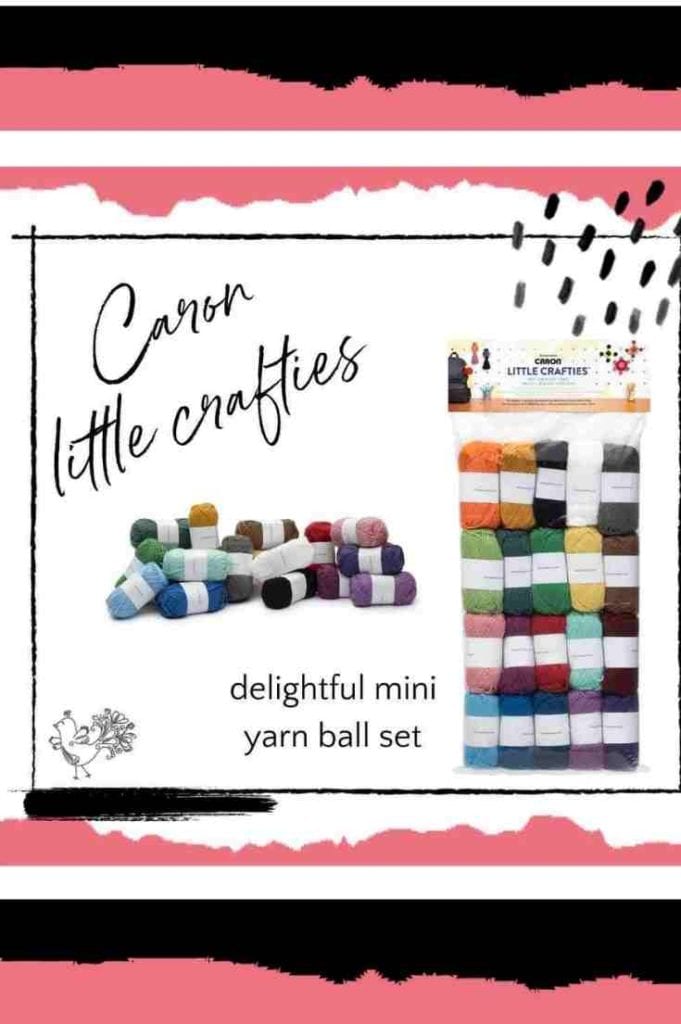
Caron little crafties yarn

400 Grams / 1260 Yards Total Yarn

Each of these mini yarn balls is 20 grams / 63 yards. However, you purchase the Caron Little Crafties as a single set. Within that set, you get twenty different colors. Therefore, you end up with a total of 400 grams of yarn. That’s more than 1200 yards of yarn. Obviously, you can make a whole bunch of small projects with that amount of yarn. Alternatively, you can combine all of the colors into one large project. For example, make a colorful striped simple shawl this summer using all of these mini yarn balls.

How to Find Projects for 1200 Yards of Yarn

Not sure what to make with this amount of yarn? Head over to Ravelry. Choose whether you’re looking for knitting or crochet projects. (Or select both if you’re bicrafty!) Then under the yarn amount, choose under 1200. You’ll come up with an array of different patterns to choose from. The Caron Little Crafties are a size #4 weight, so it’s best if you narrow down your options to worsted weight choices. Need help?

  • Here are all of my crochet patterns on Ravelry that are worsted weight and 1200 yards or less.
  • Here are all of my knitting patterns on Ravelry that are worsted weight and 1200 yards or less.

If you’re a crocheter, the Caron Little Crafties are perfect for making granny squares. You could mix and match the colors to make all sorts of different squares. Then stitch them together to make a scarf, shawl, or baby blanket.
small skeins of yarn

Easy-Care Acrylic Yarn

Caron Little Crafties are 100% acrylic yarn. They’re machine-washable. Moreover, you can dry them in the machine as well. Therefore, these are great for durable projects. For example, make a granny square crochet picnic blanket to use this summer. Take it to the park or the beach. Then, when you’re done with it for the day, toss it in the washing machine.

Basic Worsted Weight Yarn

As aforementioned, these mini yarn balls are each worsted weight #4 yarn. That’s one of the most popular yarn weights out there. You’ll probably use a 4mm crochet hook or 4mm knitting needles when working with this yarn. However, if you’re working with a particular pattern, you can obviously adjust for gauge.

More Caron Little Crafties From Jonah

You probably already know Jonah (known online as Jonah Hands.) If you don’t, then you need to check him out. He’s on our list of Top 100 Instagrammers because he’s just awesome. He’s a young kid who is a terrific crocheter. He’s made a name for himself in the crochet world because of his great skills, fun personality, and enthusiastic love for crafting. J

Jonah did a promotional video for Caron Little Crafties in which he offers some other great suggestions for how to use these mini yarn balls. He suggests making amigurumi and tassels. And he also has some really smart suggestions for how to pair the different colors. For example, he suggests a butternut squash color would look good with a cream and a dark heather grey. Take a look:

You Might Also Like:

  • Yarn Weight Chart + Recommended Yarns for Each Weight
  • DIY Scrap Yarn Bracelet
  • 7 Affordable Yarns That Give Big Bang for Their Buck

Frequently Asked Questions

What are these Caron Little Crafties all about?

So here’s the thing… these are super cute mini yarn balls from Yarnspirations! They come in a set of 20 different colors, and each ball has just a little bit of yarn, perfect for all sorts of small projects or mixing and matching colors for bigger ones.

How much yarn do I actually get in this set?

Honestly… you get a total of 400 grams of yarn, which adds up to over 1200 yards! Each little ball is 20 grams and 63 yards, so it’s plenty to play with for lots of fun crafting.

What kind of projects can I make with this yarn?

Yes! These are perfect for things like granny squares to make a blanket or shawl, amigurumi, or even tassels. You could also make a fun striped shawl using all the colors!

Is this yarn easy to care for?

Oh, absolutely! It’s 100% acrylic, so you can just toss your finished projects right into the washing machine and dryer. Makes them super durable for things like a picnic blanket!

What needle or hook size should I use with these?

You’ll most likely want to grab a 4mm crochet hook or knitting needles. Of course, always check your pattern for gauge, but that’s a great starting point for this worsted weight #4 yarn.
Filed Under: Product Reviews

How to Use a Yarn Bowl (and What To Look For When Buying…

June 24, 2021 By Marly Bird Leave a Comment

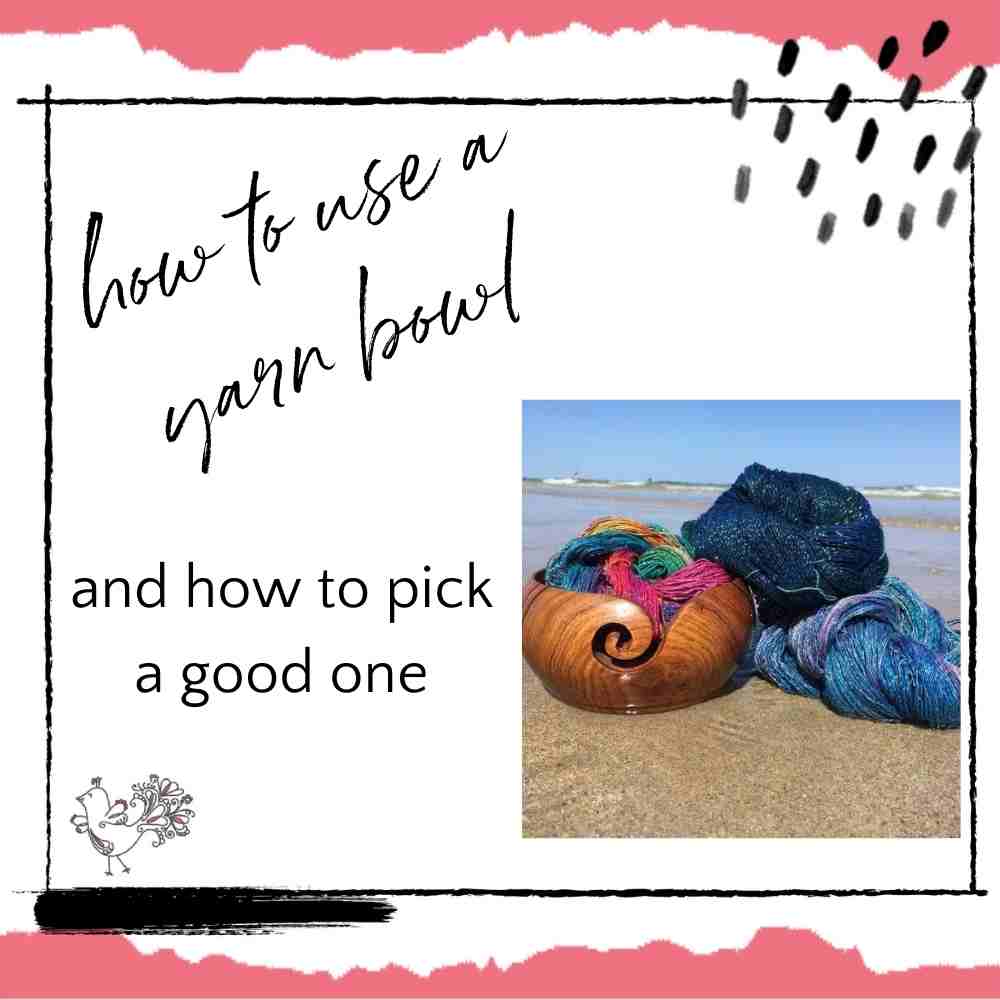
Do you have a yarn bowl? If not, then you’re missing out on a great tool for your knitting and crochet. Many people don’t think a of this as a necessary tool. And while that’s strictly true, you might find that it adds to the ease and joy of your crafting if you get one. Let’s talk about how to use a yarn bowl. And, if you’re going to buy one, what you should look for as you do.

Disclosure: This post contains affiliate links. I receive a percentage of sales from those links but your price doesn’t go up. I appreciate your support.

Using a specialized container for your yarn

What Is a Yarn Bowl?

A yarn bowl is, as the name suggests, a vessel for your yarn. More specifically, you place a single ball of the yarn you’re working with into that container. People who don’t know how to use a yarn bowl are sometimes surprised by this. For example, they assume that the ball holds the yarn decoratively when you’re not using it. While you can certainly display the container – with or without a ball in it – as a form of decoration, that’s not it’s main purpose.

Your yarn bowl is bowl-shaped (although it might also have a slightly more creative shape, like that of a cat or a panda.) It has at least one hole in the side. The hole be a simple circle, a more organic shape, or another decorative design. Regardless of the shape, the point is to thread the yarn end through the hole. Therefore, the ball of fiber stays in the bowl, while you pull on that end to work with the yarn. It’s an easy way to keep your yarn in one place as you work.

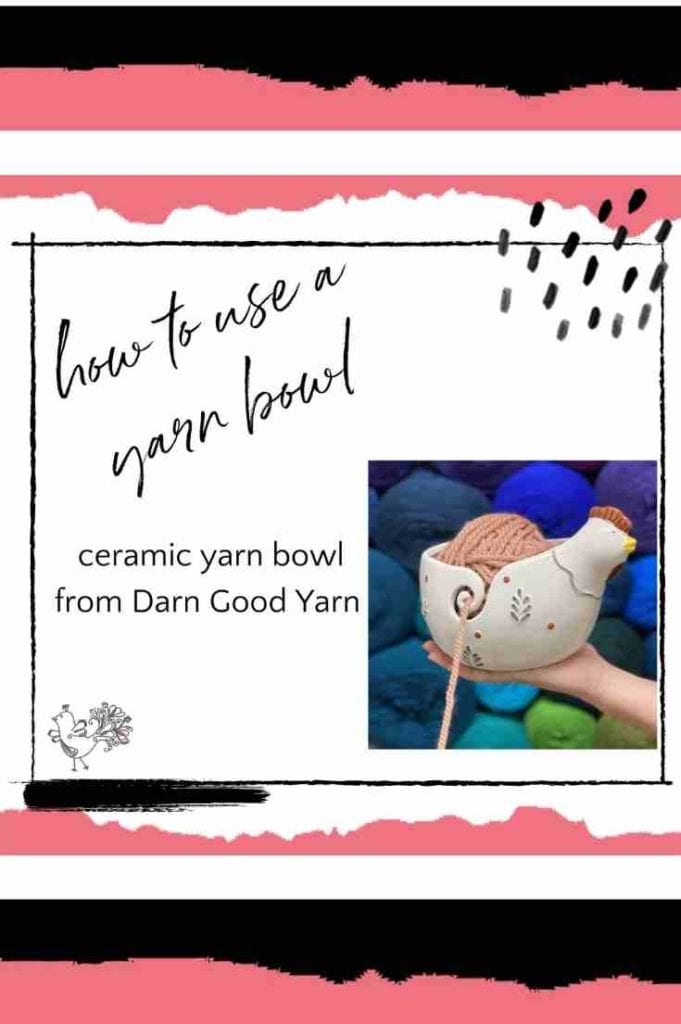
Ceramic chicken for your yarn

How to Use a Yarn Bowl

Basically, here’s how you’re going to make use of this great tool:

  • Place the ball of fiber that you’re working with into the bowl. If you’re working with more than one ball in a project (for example, you’re doing striping), then you’ll put each ball into its own yarn ball.
  • Pull the end of the fiber through the hole in the yarn bowl. Make sure that the ball of yarn is secure in the container. You should be able to tug on the end without the ball popping out of the bowl.
  • Place the container next to you as you craft. You can play around with positions but basically it should be located close to the hand with your working yarn. You’ll be pulling gently on the yarn so that it keeps coming out through the yarn bowl’s hole.
  • If you have two or more yarn bowls, place them far enough apart so that the yarn doesn’t tangle while you work.

If you stop working mid-project, then you may set your project into the yarn bowl atop the ball of yarn. Tuck your crochet hook or knitting needles into the yarn ball. It’s a great way to keep everything organized in one place.

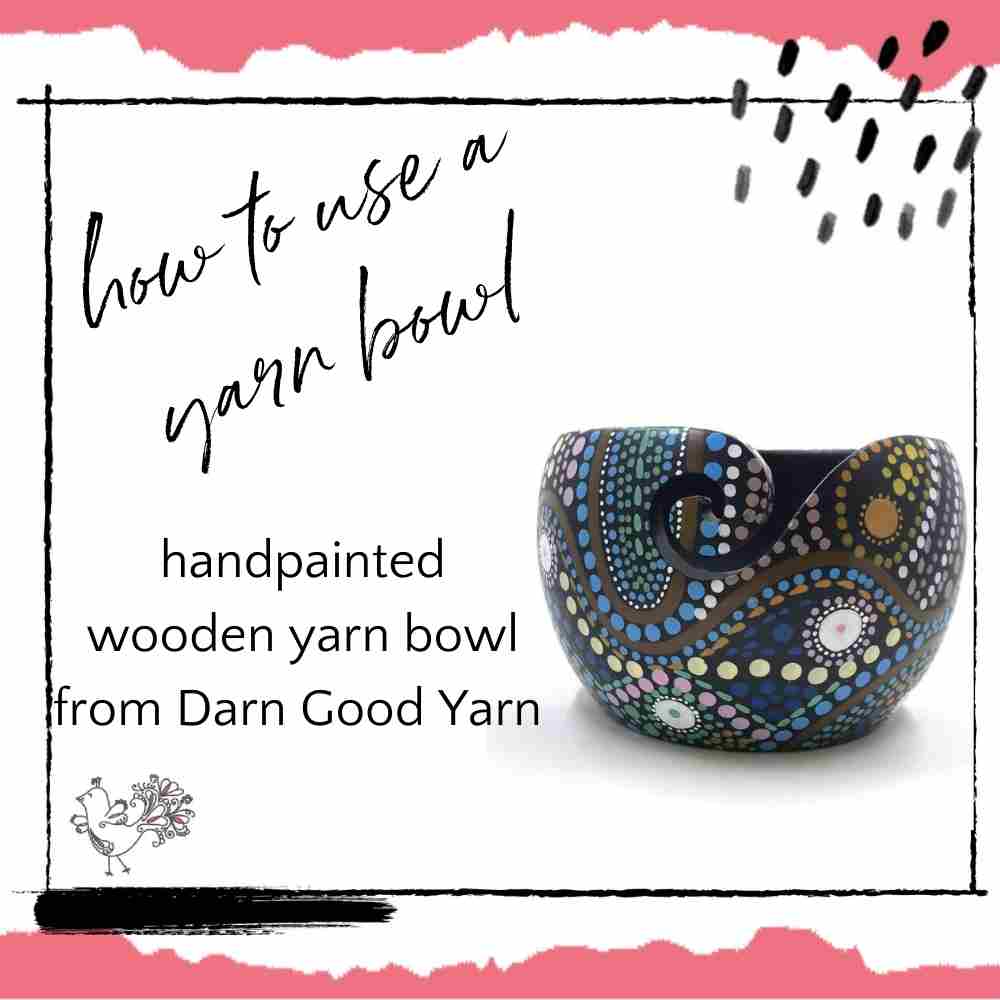
Handpainted from Darn Good Yarn

What Are The Benefits?

These are the main benefits you’ll discover:

  • Your yarn doesn’t get tangled as you work. This is especially helpful when working with two balls of yarn in one project.
  • The balls of yarn don’t stray away from you. How many times have you had to get up to grab the yarn that dropped off your lap?
  • Your yarn stays clean. Yarn easily picks up pet hair, lint, and other stuff when it’s in your lap or on your bed. However, putting it into a yarn bowl keeps it clean.
  • It keeps your yarn in one place when you travel. It’s great for road trips and plane rides.
  • It’s a pretty addition to your craft space. Little things like this enhance the craft experience.
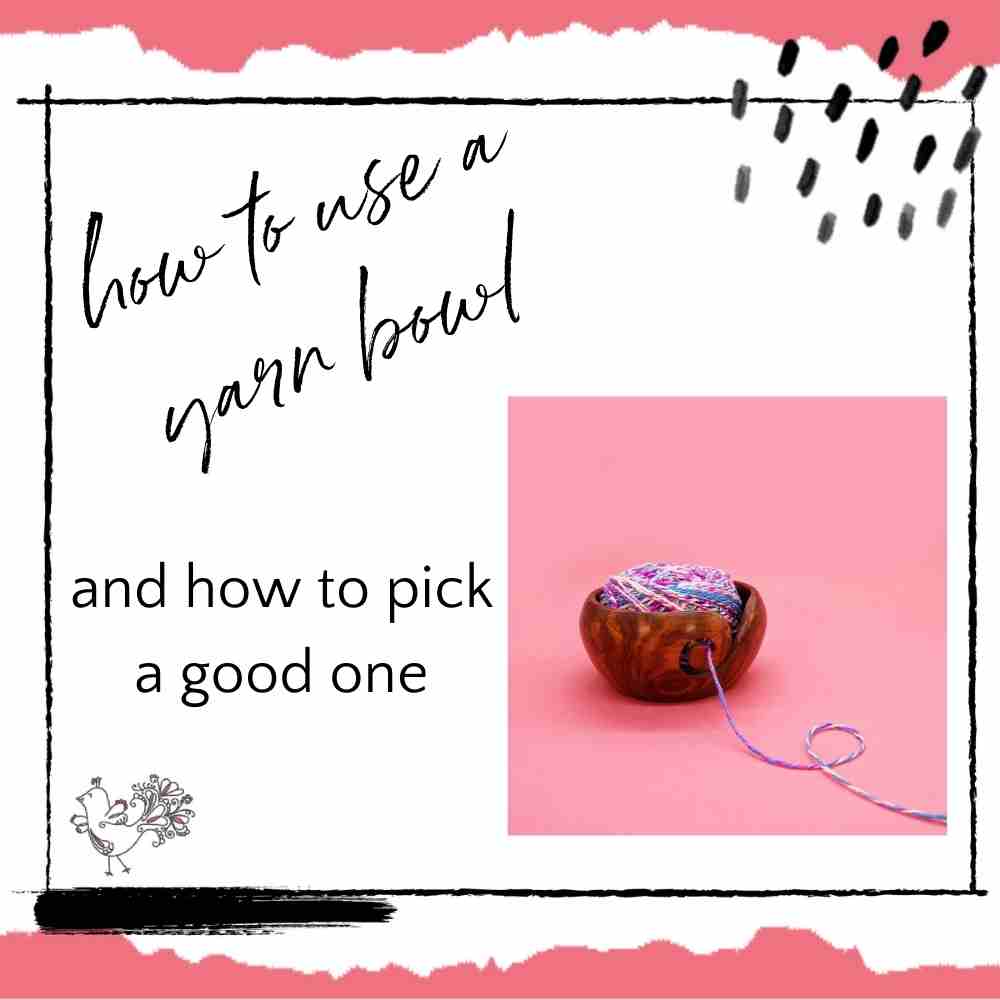
Choose and use a bowl for your yarn

What Features To Look For

So, now you know how to use a yarn bowl. Moreover, you know why you might want to get a few. But how do you know what makes a good yarn bowl?

First, decide on the material that you want for your yarn bowl. They come in a variety of different materials. Many people prefer them made of wood because the yarn moves around smoothly inside. Therefore, it’s easy to pull out the yarn as you work. You’ll find yarn bowls made of different types of wood, such as beautiful teak wood and hand-painted wood. That said, there are also ones made of clay and ceramic, as well as bowls made from a variety of other materials. Test a few out to see what’s right for you.

Next, you’ll want to think about yarn bowl sizes. What size yarn balls / cakes do you typically use? Obviously, if you work with big, bulky ones then you’re going to need jumbo containers. In contrast, you might find that your yarn fits better in a smaller container.

Other than that, it really just depends on your style preferences. You might find that different sizes or shapes of holes work best for you. You might find that you like deeper or more shallow yarn bowls. After you learn how to use a yarn bowl, you can try different ones to find the one that’s truly perfect for you.

You Might Also Like:

  • Yarn Weight Chart and Recommended Yarns for Each Weight
  • 20 Best Super Bulky and Jumbo Weight Yarns

Frequently Asked Questions

What exactly is a yarn bowl and how does it work?

A yarn bowl is a weighted bowl (usually ceramic, wood, or metal) with a curved slot or opening in the side. You place your yarn ball inside the bowl and thread the yarn through the slot. As you knit or crochet, the yarn feeds out smoothly through the slot while the bowl’s weight keeps it from rolling around or falling off the table. The curved slot allows the yarn to move freely while keeping the ball contained. It’s a game changer for anyone whose yarn ball keeps escaping across the floor during projects!

What should I look for when buying a yarn bowl?

A few key things! The opening slot should be wide enough for your yarn weight… a slot that’s too narrow can snag the yarn. The bowl should be heavy enough to stay put while you’re pulling yarn through… lightweight bowls tip over. A curved or spiral slot is better than a straight one because it keeps the yarn secure. Size matters too… a bigger bowl is needed for larger yarn cakes, a smaller bowl is perfect for a sock-yarn ball. And honestly? Get one you love looking at. It’ll sit out on your crafting surface all the time.

What types of yarn bowls are there?

The most popular are ceramic yarn bowls, which are heavy, beautiful, and come in amazing artisan designs from pottery makers on Etsy. Wooden yarn bowls are lighter but still sturdy, with a warm, natural aesthetic. Metal and silicone yarn holders also exist. Magnetic yarn bowls hold the yarn in place with a magnetic insert. There are also yarn bowl alternatives like yarn bags and project bags with feed holes… not technically bowls, but they serve the same purpose for knitting on the go when a ceramic bowl isn’t practical.

Do I need a yarn bowl or are there alternatives?

You don’t need one… crafters made beautiful things for centuries before yarn bowls! But they’re a delightful tool if yarn management drives you crazy. DIY alternatives: a heavy bowl or pot from your kitchen (works fine!), a resealable bag with a small hole poked in the corner, a laundry mesh bag, or a wide-mouth jar. Some crafters simply put their yarn in their project bag and thread out through the zipper gap. For portable crafting, a yarn bag with a built-in holder is often more practical than a heavy ceramic bowl anyway.

Can I use a yarn bowl with center-pull cakes?

Absolutely! Center-pull yarn cakes (wound on a ball winder) actually work beautifully with yarn bowls. Place the cake in the bowl and pull from the center… the bowl keeps the cake from collapsing or rolling as you work. This is one of the best uses for a yarn bowl because center-pull cakes can be annoying to work from without some kind of container. The bowl cradles the cake while you pull from the center, and the sides of the bowl prevent the outside of the cake from catching on anything.

Filed Under: Product Reviews

How to Knit Triangle Lace (BiCrafty Bootcamp…

June 23, 2021 By Marly Bird Leave a Comment

It has been so fun to see everyone working on their BiCrafty Bootcamp complementary hat patterns. If you haven’t checked out the Marly’s Minions Facebook group in awhile, go check it out. There are so many great new knitters in there sharing their Latvian brands, their stranded knitting, and their ups and downs with learning how to knit. In today’s lesson, we continue on with the hat by learning how to knit triangle lace.

Also: If you didn’t catch it earlier today, there’s a blog post or you to get to know more about Marly Bird Team Member Kathryn. And if you never read the Meet Cryssi post, check that out, too. We love collaborating together with you in this bootcamp!

First Knit Hat in the Round knit lace

Your BiCrafty Bootcamp First Knit Hat So Far

Just in case you’re not all caught up, here’s what we’ve done so far on this first knit hat:

  • We started the hat on smaller needles, beginning with the brim. In that same lesson, we switched to larger needles to begin the body of the hat.
  • Next, we talked about how to knit braids. Specifically, we learned how to make a Latvian braid. This adds texture and color to your hat. Even advanced knitters don’t always know this technique so it was really fun to learn this together!
  • From there, we moved into stranded knitting. This was your first foray into true knitting colorwork. Specifically, we did a stranded knit diamond motif. It’s been so awesome to see how great you’re all doing with that!!

Remember, the hat is designed to complement your first knit cowl. Alternatively, or additionally, you can also make the matchy-matchy knit hat; instructions here. Hopefully, though, you’re joining in on this hat, too. If so, then you’ve already learned some amazing new skills. And you’re about to learn some more!

Next Step: How to Knit Triangle Lace

Next, we are going to learn how to knit triangle lace. This is a lace stitch pattern that should perfectly complement the design of the hat stitch that you just finished. The most important thing to know about knitting lace is that you’re going to need to combine increases and decreases to maintain the stitch count in each round.

Crocheter’s Edge

Crocheters Tips to Learn Knitting

As just mentioned, you’re going to need to combine increases and decreases to maintain your stitch count in each round. As a crocheter, you probably already understand this. Consider, for example, how you might chain one if you’re going to skip one in a round or row. The chain serves as a stitch that replaces the one you’re skipping. Similarly, if you’ve ever worked chevron crochet, then you know exactly how you decrease in some areas and increase in others across the row to maintain the total stitch count. Apply this knowledge to your understanding of working the increases and decreases as your learn how to knit triangle lace.

BiCrafty Bootcamp Complementary Knit Hat Instructions Continued

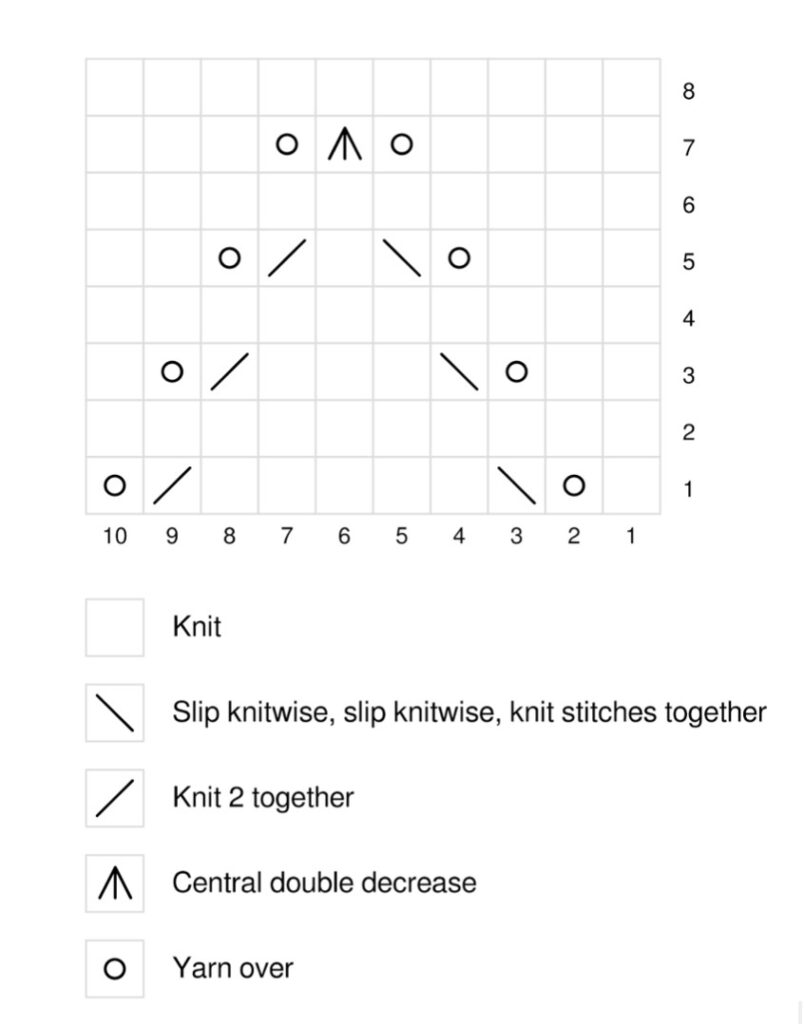
You can work with the following chart to learn how to knit triangle lace. However, the written instructions are below. People learn differently so I like to include both symbol charts and written information whenever possible. And now that you’re not brand new knitters anymore, you can start getting pickier about which way you prefer to learn!

how to knit stranded lace chart

How to Knit Stranded Lace: Written Instructions

Remember that you’re continuing on from the round you left off of previously on your hat.

The stitch multiple repeat for this part of the hat is 10. Therefore, it is necessary for us to decrease from 102 stitches to 100. Do this by working two p2tog’s  at some point around the following first round

Next Round: Purl around.

Next round: Knit around

Round 1: *k, yo, ssk, k5, (k2tog), yo; repeat from * around.   

Round 2:  *k10; repeat from * around.  

Round 3:  *k2, yo, ssk, k3, (k2tog), yo, k; repeat from * around.  

Round 4:  *k10; repeat from * around.  

Round 5:  *k3, yo, ssk, k, (k2tog), yo, k2; repeat from * around.  

Round 6:  *k10; repeat from * around.  

Round 7:  *k4, yo, cdd, yo, k3; repeat from * around.  

Round 8:  *k10; repeat from * around.

That completes the lesson on how to knit triangle lace.

Next round: Purl around

Then you’ll be ready for next week’s lesson as we continue working on our first knit hat in the round.

This Week’s Live Video Instructions

Additional Videos and Patterns to Try

Here are some additional videos and patterns you’re ready to try now:

  • Greyson Waves Knit Lace Scarf – beginner pattern with video tutorial
  • Simple Rib and Lace Knit Scarf / Cowl – one of our great one ball projects
  • Fantastic Ripple Scarf – easy knit pattern with video tutorial
  • How to Knit Going Coastal Lace Vest — knitting lace stitches – video tutorial

Frequently Asked Questions

I’m new to lace knitting, is triangle lace super tricky?

Honestly, lace knitting can seem a little intimidating at first, but the triangle lace pattern here is designed to be manageable! The key is remembering that you need to combine increases and decreases to keep your stitch count the same each round. It’s like balancing things out… you got this!

What’s the difference between the chart and the written instructions for the triangle lace?

So here’s the thing… some people learn best by seeing the symbols in a chart, while others prefer reading the step-by-step instructions. This post gives you both! So pick the method that makes the most sense to you, or even use both to double-check your work. Whatever helps you learn best!

I’m a crocheter trying to learn to knit, how does this lace pattern relate to crochet?

Yes! As a crocheter, you already have a secret weapon for understanding lace… you know about combining increases and decreases! Think about how you might chain a stitch to replace one you’re skipping, or how chevron patterns work. It’s the same idea here, just with knitting stitches.

I’m a bit fuzzy on my stitch counts… do I need to do anything special before starting the triangle lace?

Great question! You’ll want to make sure you have the correct stitch count before you begin. The pattern says it’s necessary to decrease from 102 stitches down to 100 by working two p2tog’s somewhere around the first round. Just a little tweak to get you ready!

Can you give me a quick rundown of the pattern repeat for the triangle lace?

Sure thing! The stitch multiple repeat for this triangle lace section is 10 stitches. So, when you’re working the pattern rounds, you’ll be repeating those 10 stitches over and over again around your project. It makes it pretty straightforward once you get the hang of it!

Filed Under: BiCrafty Bootcamp Learn to Knit, Knitting, Tips, Tricks, Techniques for Knitting and Crochet

Team Marly Bird: Meet Kathryn

June 23, 2021 By Marly Bird Leave a Comment

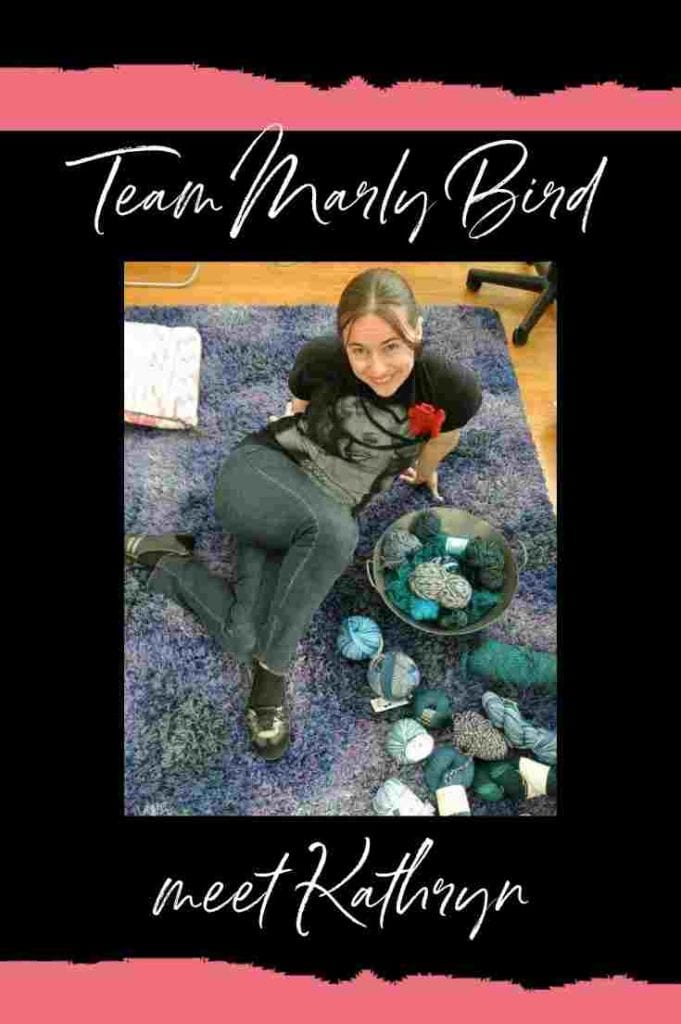
There are several different people here on Team Marly Bird. If you’ve been joining on the BiCrafty Boot Camp live videos then you’ve probably had a chance to meet Cryssi and/or Kathryn. We introduced you to Cryssi in more depth recently. Today, let’s learn more about Kathryn.

Disclosure: This post contains affiliate links. I get a percentage of sales from those links. Your price doesn’t change. I appreciate all of your support.

Kathryn sits on a colorful rug surrounded by various yarns in shades of green and blue, with knitting accessories nearby.

When Kathryn Learned to Crochet

Kathryn is a crocheter who is learning how to knit alongside the BiCrafty Boot Campers. Kathryn first learned to crochet as a young child. However, she only learned the chain stitch. She made a really long yellow yarn chain that she wound round and round a rolling pin. Then she didn’t crochet again for years. She enjoyed lots of other crafts – making friendship bracelets, creating mail art.

In her mid-twenties, Kathryn suffered from serious depression. She had struggled with it for years and hit a really low point. She tried desperately to keep herself motivated, although it was hard. Somewhere along the way, she read that it’s worth trying to do something you loved as a child. She thought of crochet. So she picked up a couple hooks and some yarn and a children’s “learn to crochet” book and gave it a go.

Like so many other people, she was instantly hooked. And she quickly came to realize that crochet offered a lot of mental health benefits.

Psychology and Crafting

This member of team Marly Bird had always had an interest in psychology. She used crochet (along with therapy, etc.) to help herself heal from depression symptoms. She began writing about this experience on a new blog that she launched in 2011. As she shared her story, more and more people began to share that they, too, had healed through knitting and crochet. In 2012, Kathryn wrote a book called Crochet Saved My Life, sharing her story.

Since then, she has gone on to intensively study the mental and physical health benefits of crafting. She got a Masters in Psychological Studies. During her studies, she took any opportunity that she could to research the health benefits of crafting. She created studies, she interviewed hundreds of people, and she learned as much as possible.

Kathryn’s Crochet Books

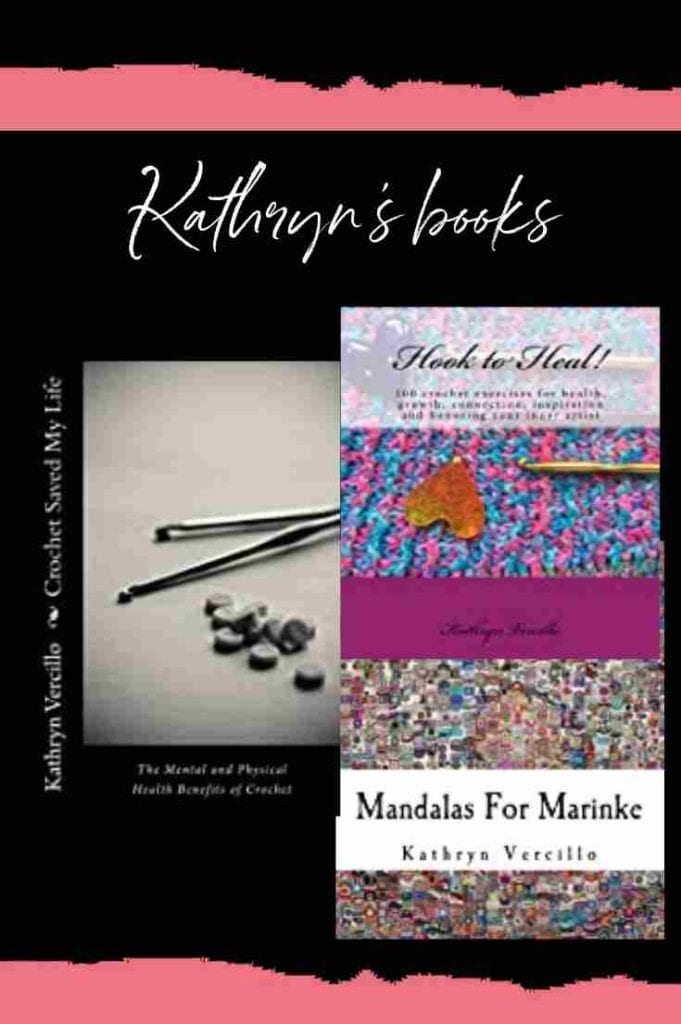
Kathryn Vercillo crochet books

As aforementioned, Kathryn authored Crochet Saved My Life. Then she went on to author Hook to Heal, which is a set of written crochet and journal exercises to help improve different areas of your life through crafting. You’ve seen some of those exercises here on this blog.

Kathryn also launched a collaborative crochet project called Mandalas for Marinke to raise awareness about depression and suicide. Hundreds of people contributed mandalas along with stories about crafting to heal. She held two art shows and turned that project into a coffee-style book.

What Happened to Kathryn’s Crochet Blog?

Kathryn launched Crochet Concupiscence in 2011. She grew it over the years, accruing over 100,000 Pinterest followers and a steady following on Facebook and Instagram. However, over time, she got overwhelmed by the ins and outs of running a blog full-time by herself while also doing other writing for a living. So when someone offered to buy the blog, this team Marly Bird member decided to sell. She sold the blog a few years ago along with all of its associated media. The blog still exists online although sadly the new buyer never kept it up.

Joining Team Marly Bird

Kathryn has never stopped enjoying writing about crochet. She’s written the Crochet Heals monthly column for Happily Hooked digital magazine for over six years and also contributes feature articles and book reviews to that publication. She’s also written for Interweave Crochet, Crochet Today, Crochet!, Knit Edge, and By Hand magazines. For a few years she was the crochet blogger over at The Spruce Crafts (formerly About.com Crochet). She’s also contributed posts to a range of different crochet and craft sites including Red Heart, Lion Brand, Plymouth Yarns, and Craftsy.

She has worked off and on over the years with Salena Baca of American Crochet Association. When Salena saw that I was seeking assistance for team Marly Bird, she put the two of us in touch. It was a wonderful match. So, in October 2020, Kathryn joined team Marly Bird. She’s the blog content director, providing a lot of the blog content, overseeing the editorial calendar, and sprucing up the SEO-type of stuff the blog requires. She loves doing the blogging as part of a team rather than when she did it all solo.

Kathryn’s Craft Goals

Kathryn Vercillo, knit and crochet blogger for Marly Bird team

Kathryn’s learned the very basics of knitting from BiCrafty Bootcamp. She’s behind the team but knows it’s not a race. So she’s excited to keep working on advancing her knitting skills.

She knows a little bit of Tunisian crochet. However, she hasn’t worked on it in a long time, so she would like to brush up on that in the near future as well. She has similar experience and goals with broomstick lace, macrame, and frame loom weaving.

One of her personal goals is to turn her Hook to Heal book into a book series filled with projects. Right now they’re written exercises, but she wants to create patterns that show how to put those exercises to use. But for now, she’s really just enjoying being a part of team Marly Bird. She loves putting together crafty information for you. Reach out if you have any questions about the blog!

You Might Also Like:

  • Meet The Pets of the Marly Bird Team
  • Kathryn’s personal posts on Marly Bird
  • ChiaoGoo Knitting Needles Review

Frequently Asked Questions

So, who is Kathryn from Team Marly Bird?

Honestly… Kathryn is the blog content director for Team Marly Bird! She helps create a lot of the content you see here, keeps our editorial calendar in order, and makes sure everything is super findable online. She also happens to be a fantastic crocheter and has learned to knit with us!

I heard Kathryn wrote a book called Crochet Saved My Life… what’s that about?

Yes! So here’s the thing… Kathryn wrote that book because she found so much healing from depression through crochet. It’s her personal story and how crafting helped her journey… and it inspired so many others!

Does Kathryn do other crafts besides crochet and knitting?

Oh, absolutely! She’s dabbled in Tunisian crochet, broomstick lace, macrame, and frame loom weaving. She’s always looking to try new things and expand her crafty horizons!

What happened to Kathryn’s old crochet blog, Crochet Concupiscence?

Well, she poured so much energy into that blog for years, and it was amazing! But running it solo became a bit overwhelming… so she eventually sold it a few years back. Now she’s much happier being part of a team here!

Does Kathryn have any crafty goals for the future?

You bet! She’s working on improving her knitting skills, wants to brush up on her Tunisian crochet, and her big dream is to turn her Hook to Heal book into a whole series of pattern books. How fun would that be?

Filed Under: BiCrafty Bootcamp Learn to Knit, Dibble Dabble Inspiration

  • « Previous Page
  • 1
  • …
  • 70
  • 71
  • 72
  • 73
  • 74
  • …
  • 97
  • Next Page »

Let's Be Social

Join the Marly's Minions Facebook group to share, ask questions, or chat about all of your yarn related crafts!

Join the group
Cartoon of a smiling woman with brown hair in a bun, glasses, black jacket and green shirt, waving next to large "hi" text.

Quick Links

The Pattern Shop

Our Free Patterns

Blog

Marly Bird House

Learn to Knit & Crochet

About

Giveaway Terms and Privacy Notice

Find Us Everywhere

Join the Newsletter

YouTube Channel

Marly's Minions FB Group

Etsy Store

Ravelry Store


AN ELITE CAFEMEDIA HOME/DIY PUBLISHER

Information from your device can be used to personalize your ad experience. Do not sell or share my personal information.

Privacy Policy   Terms   Marly Bird Legal Documents Copyright © 2026