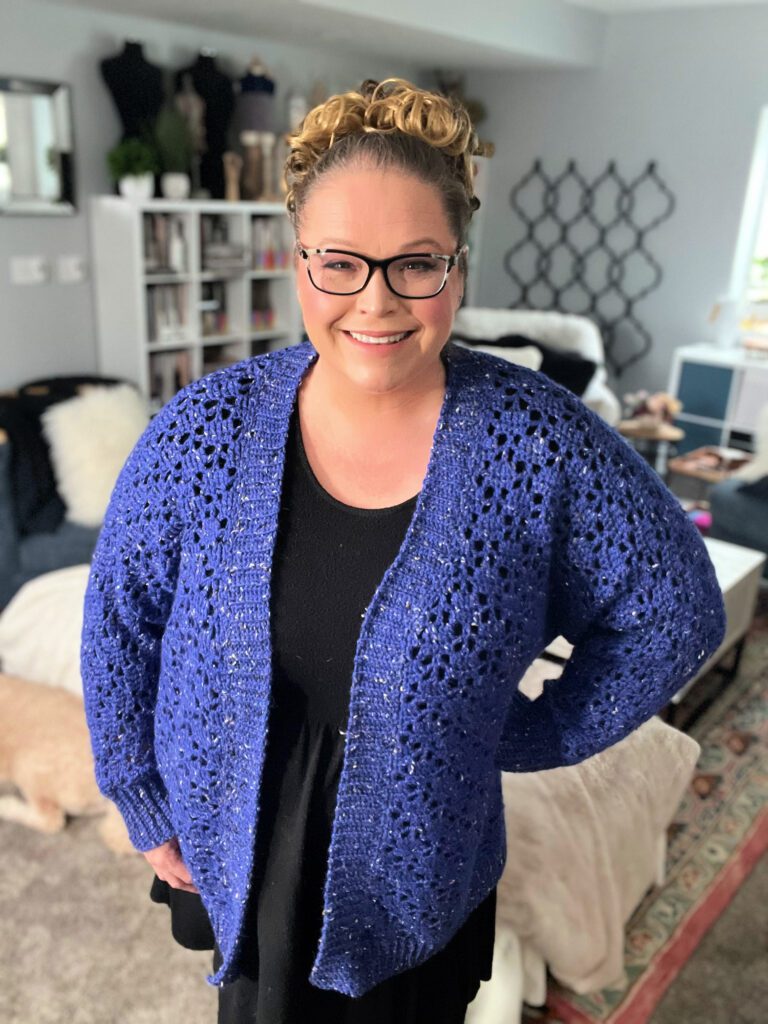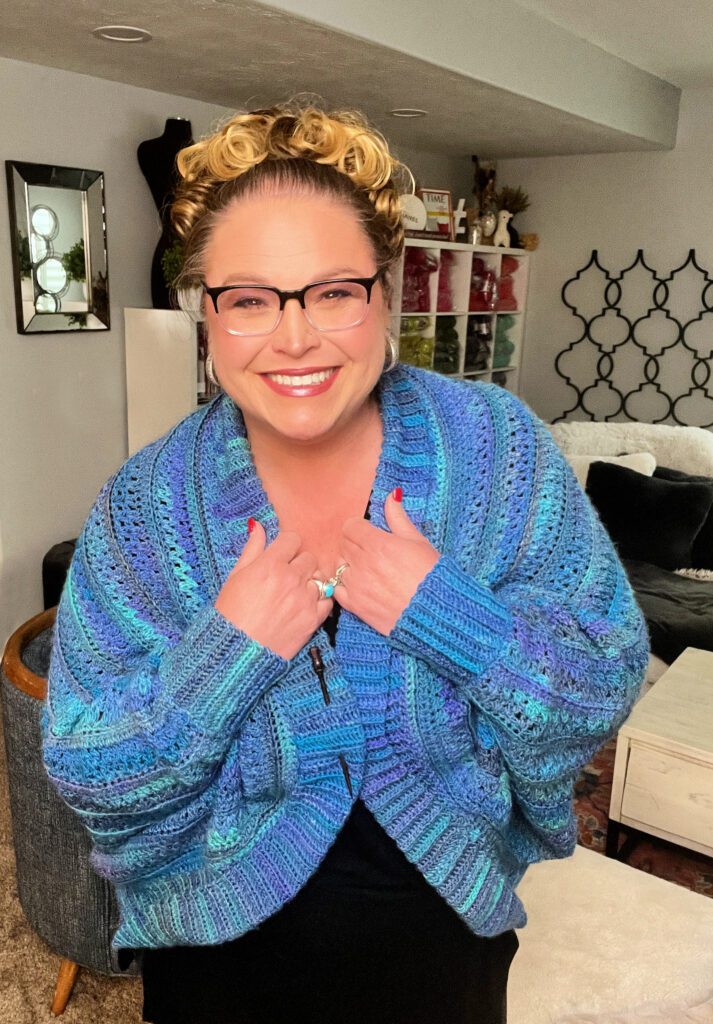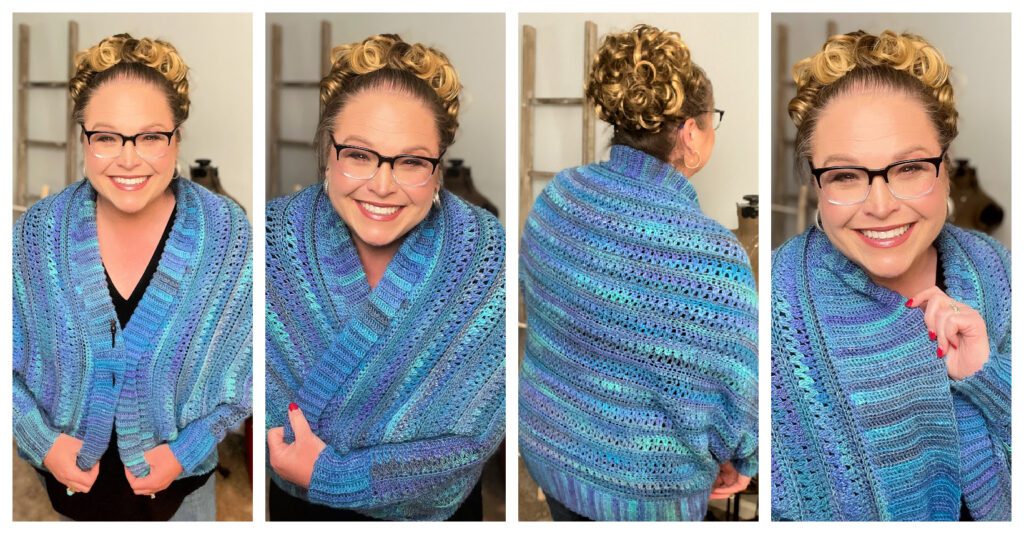
Some knit garments are cozy. Some are stylish. And every once in a while, one manages to be both — without trying too hard. The Elegantly Edgy Knit Jacket is one of those pieces. With its asymmetrical zipper, dramatic oversized collar, and relaxed modern fit, this jacket feels effortlessly cool while still being comfortable enough for everyday wear.
If you love garments that look polished but feel approachable, this newly free knit jacket pattern might be exactly what your wardrobe (and your needles) have been waiting for.
Quick Pattern Overview
The Elegantly Edgy Knit Jacket is a free, zip-front knit jacket pattern worked flat and seamed, featuring sculpted shaping and thoughtful design details.
In this post you’ll learn:
What makes an asymmetrical knit jacket flattering and wearable
Who this pattern is best suited for skill-wise
How fit, ease, and drape are built into the design
Why this is a great confidence-building garment project
How to style and layer the finished jacket year-round
What Does “Asymmetrical” Mean in Knit Garments?
Asymmetry in knitting is all about visual interest without sacrificing comfort. In this jacket, the asymmetry shows up through the angled zipper front and oversized collar, which naturally drapes across the body when worn.
Rather than feeling unbalanced, this design:
Draws the eye vertically
Softens the neckline
Creates a relaxed, intentional silhouette
It’s modern without being trendy — which makes it easy to wear year after year.
What You Will Love About This Pattern
Free knit jacket pattern available on MarlyBird.com
Asymmetrical zipper front for modern styling
Dramatic oversized collar that replaces the need for a scarf
Thumb hole cuffs for cozy, functional details
Structured seams that elevate the finished garment
Optional ad-free PDF available for purchase
✨ Designer Tip: This jacket is designed with 2–4 inches of positive ease, giving it a relaxed fit without feeling oversized or sloppy.
“This jacket feels like something you’d find in a boutique — but you made it yourself.”
Affiliate Disclosure:This post contains affiliate links. To learn more please visit my privacy policy here💖
Design, Fit, and Construction Details
The Elegantly Edgy Knit Jacket is worked flat in pieces and seamed, which provides structure and longevity. This construction choice helps the jacket keep its shape while still allowing the fabric to drape beautifully.
Design highlights include:
Stockinette stitch body for clean lines
Shaped shoulders using short rows for better fit
Set-in sleeves for a polished look
Reverse stockinette oversized collar for texture
A zippered front that allows multiple styling options
The result is a garment that feels more like a wardrobe staple than a casual sweater.
Yarn Choice & Substitutions
The original sample was knit in a DK-weight merino blend, chosen for its softness, drape, and stitch definition. This weight gives the jacket warmth without bulk and allows the collar to fall naturally.
When choosing a substitute, look for yarn that is:
DK weight
Smooth enough to highlight clean lines
Drapey rather than stiff
Comfortable for all-day wear
Merino blends, superwash wool, or soft acrylic blends can all work well depending on climate and fiber preference.
Great Substitute Yarns for Dolce Merino
If you’re substituting Dolce Merino, you want yarns that offer softness, drape, and stitch definition — especially for a garment like the Elegantly Edgy Jacket. Here are some excellent alternatives depending on the look and feel you want:
Best for: Luxurious drape and subtle sheen This blend of merino, silk, and cashmere gives a silky hand with rich stitch definition, making it ideal if you want the jacket to feel elevated and refined. It’s a great choice if you’re dressing this piece up or want something special for gifting.
🧵 Rico Design Luxury Merino Supercash DK
Best for: Classic luxury knitwear feel Another upscale choice, this yarn feels soft and substantial while still maintaining great stitch clarity. Use this if you want a timeless, high-end look that still feels cozy and wearable.
🧵 Universal Yarn Bella Tweed
Best for: Rustic, textured aesthetic If you love a bit of character in your fabric, Bella Tweed adds flecks and visual interest without sacrificing drape. It produces a look that’s a little more earthy and artisanal, perfect for casual autumn and winter wear.
🧵 Universal Yarn Fawning
Best for: Softness + warmth without bulk Fawning is incredibly soft and cozy. It’s ideal if comfort and warmth are your top priorities. The fabric will feel gentle against the skin — perfect for layers you’ll wear all day.
Best for: Colorful, blended effects This option brings vibrant melange color transitions and the softness of alpaca. It’s a great choice if you want a statement fabric with visual depth, and the alpaca adds a cozy halo that’s perfect for layering pieces.
When substituting yarn, consider these key points:
Gauge matters: Always swatch to match the recommended gauge in the pattern so your fit stays accurate.
Fiber content affects drape: Wool and merino blends tend to be springy, while alpaca and silk blends can add drape or halo.
Texture impacts stitch definition: Tweeds and melanges add visual texture, which can change how design elements like collars and seams read visually.
✨ Designer Tip: If you love luxury and drape, lean toward silk- or cashmere-blended DKs. If you want everyday wearability and cozy warmth, merino-rich or alpaca-blends are your go-tos.
Special Features That Make This Jacket Stand Out
Asymmetrical zipper closure
Oversized collar that adds drama and warmth
Thumb hole cuffs for practical coziness
Structured seams that enhance fit and durability
These thoughtful details turn a simple knit jacket into a standout piece.
Elegantly Edgy Knit Jacket Pattern Details
SKILL LEVEL
Intermediate
MEASUREMENTS
Finished Measurements Chest: 34¼ (38, 42, 46, 50, 54, 58, 61¾)”; [87 (96.5, 106.5, 117, 127, 137, 147.5, 157) cm] To be worn with positive ease approx. 2 inches
BO – Bind Off CO – Cast On CONT – Continue DEC(’D) – Decrease(d) EOR – Every Other Row INC(’D) – Increase(d) K – Knit K2TOG – Knit 2 Sts Together LH – Left Hand MEAS – Measure(s) P – Purl P2TOG – Purl 2 Sts Together PWISE – Purlwise REP – Repeat RH – Right Hand RS – Right Side ST(S) – Stitch(es) TOG – Together WS – Wrong Side WYB – With Yarn in Back WYF – With Yarn in Front
STITCH PATTERNS
⭐️ BACKWARD LOOP CAST‑ON *Wrap yarn around left thumb from front to back and secure in palm; insert rhn upward through strand on thumb, slip loop to needle, tighten. Rep from * for desired sts.
⭐️ MAKE ONE (M1) Insert LH needle under horizontal strand between st just worked and next st, from the front to the back, knit through the back loop (1 st increased)
⭐️ SLIP SLIP KNIT (SSK) Slip 2 stitches, one at a time, as if to knit. Insert left hand needle into the front of these two stitches and knit them together from this position (1 stitch decreased)
⭐️ SLIP SLIP PUK (SSP) Slip 2 stitches, one at a time, as if to knit, then slip them back onto the left needle without changing their orientation. Purl these 2 stitches together through the back loop – 1 stitch decreased.
SPECIAL TECHNIQUES
WRAP AND TURN (W&T) Knit row—Wyb, slip next st purlwise onto RH needle, bring yarn to front of work, return slipped st to LH needle, bring yarn to back of work, then turn work. Purl row—Wyf slip next st purlwise onto RH needle, bring yarn to back of work, return slipped st to LH needle, bring yarn to front of work, then turn work.
HIDE WRAPS Knit row—Pick up the wrap from the front with the RH needle and knit together with the st it wraps. Purl row—pick up the wrap through back of loop with RH needle and purl together with the st it wraps.
3-NEEDLE BIND OFF Hold both pieces to be joined in your left hand, needles parallel to each other, one in front of the other. Hold a 3rd, empty needle in your right hand. Insert right needle knitwise into the 1st st on both front and back needles, and knit them together. Work the next pair of sts the same way, then pass 1st st on right needle over 2nd st. Continue in this manner until all sts have been bound off.
MATTRESS STITCH With RS of both pieces facing you, pass yarn needle from bottom to top under horizontal strand between first and second sts, pull yarn through. Insert needle into corresponding horizontal strand on the other pc. Cont these steps alternating from one piece to the other.
ZIPPER With RS facing and zipper closed, pin zipper to Fronts with upper edge of zipper aligned with right front neck shaping and so that front edges are touching the outer edges of the zipper teeth, leaving zipper teeth exposed between the fronts. With contrasting sewing thread and RS facing, baste zipper to fronts close to zipper teeth. Turn the work inside out. With matching sewing thread, use a whipstitch to sew the outer edges of the zipper to the WS of the sweater fronts. Turn the work back so the RS is facing, and with matching sewing thread, use small backstitches to secure the knitted fabric close to the zipper teeth. Remove basting thread.
STITCH PATTERNS
STOCKINETTE STITCH (St St) Knit on RS, purl on WS.
REVERSE STOCKINETTE STITCH (Rev St St) Purl on RS, knit on WS.
2 X 2 RIBBING (multiple of 4 sts + 2) Row 1 (RS): Sl 1 pwise wyb, k1, *p2, k2; rep from * to end. Row 2 (WS): Sl 1 pwise wyf, p1, *k2, p2; rep from * to end. Rep Rows 1–2 for 2 x 2 Ribbing.
Read ahead before shaping sections. Front edge shaping overlaps with armhole and neck shaping in this pattern. Reading the full Front instructions before beginning will help you understand how these sections interact.
Pay close attention to RS and WS instructions. This pattern frequently switches between RS and WS shaping, especially during short rows and collar construction. Marking the RS of your fabric is highly recommended.
Short rows are essential to the fit and drape. Take care when working wrap-and-turns and when hiding wraps. Neatly worked wraps will make the collar and shoulders look polished.
Block pieces before assembly. Blocking individual pieces before seaming and zipper installation will improve fit accuracy and make finishing much easier.
Zipper installation is easiest when basted first. Temporarily basting the zipper in place before final sewing helps prevent puckering and ensures proper alignment.
Use stitch markers liberally. Stitch markers can be helpful for tracking armhole decreases, shoulder shaping, and front edge shaping.
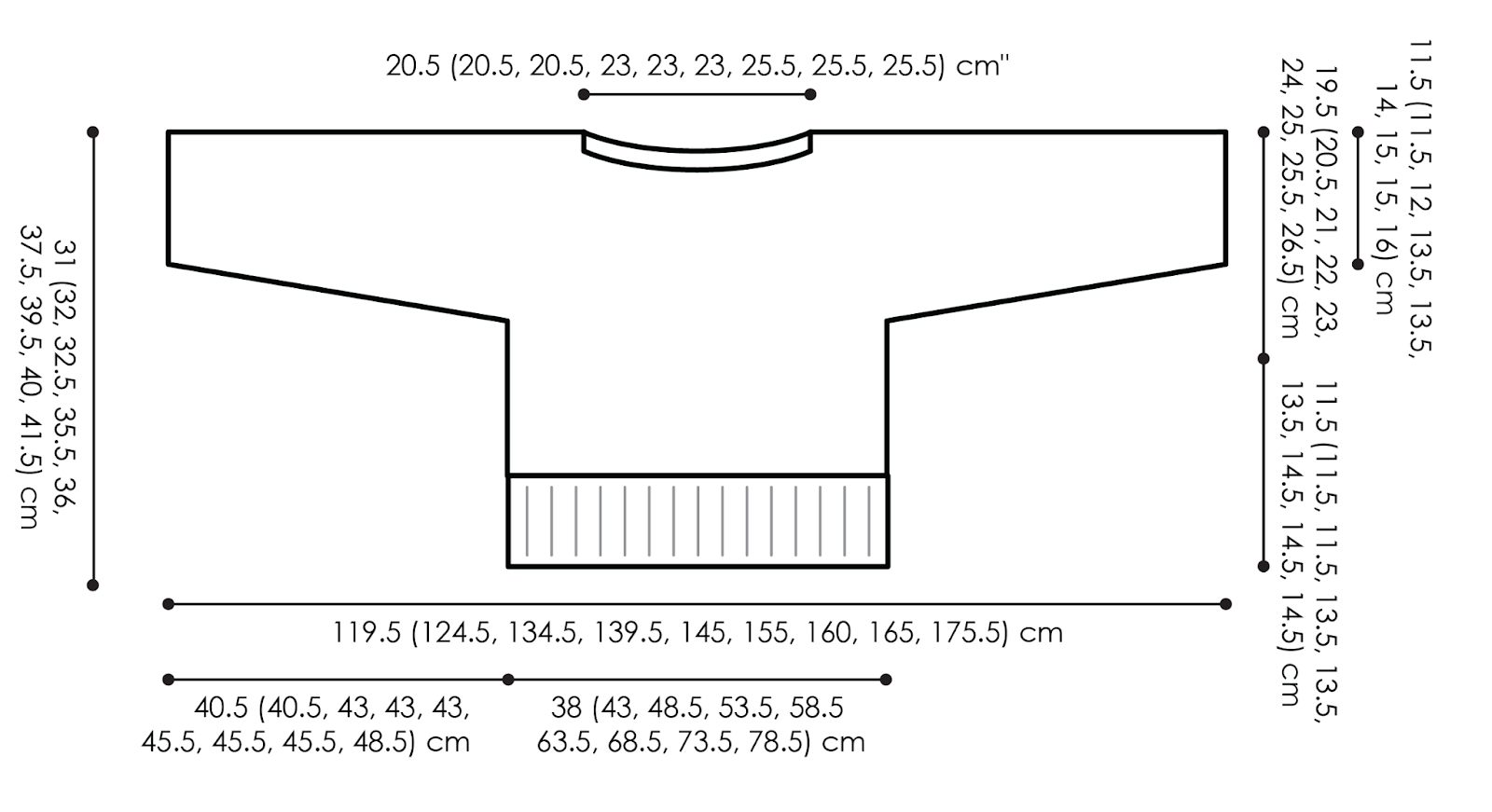
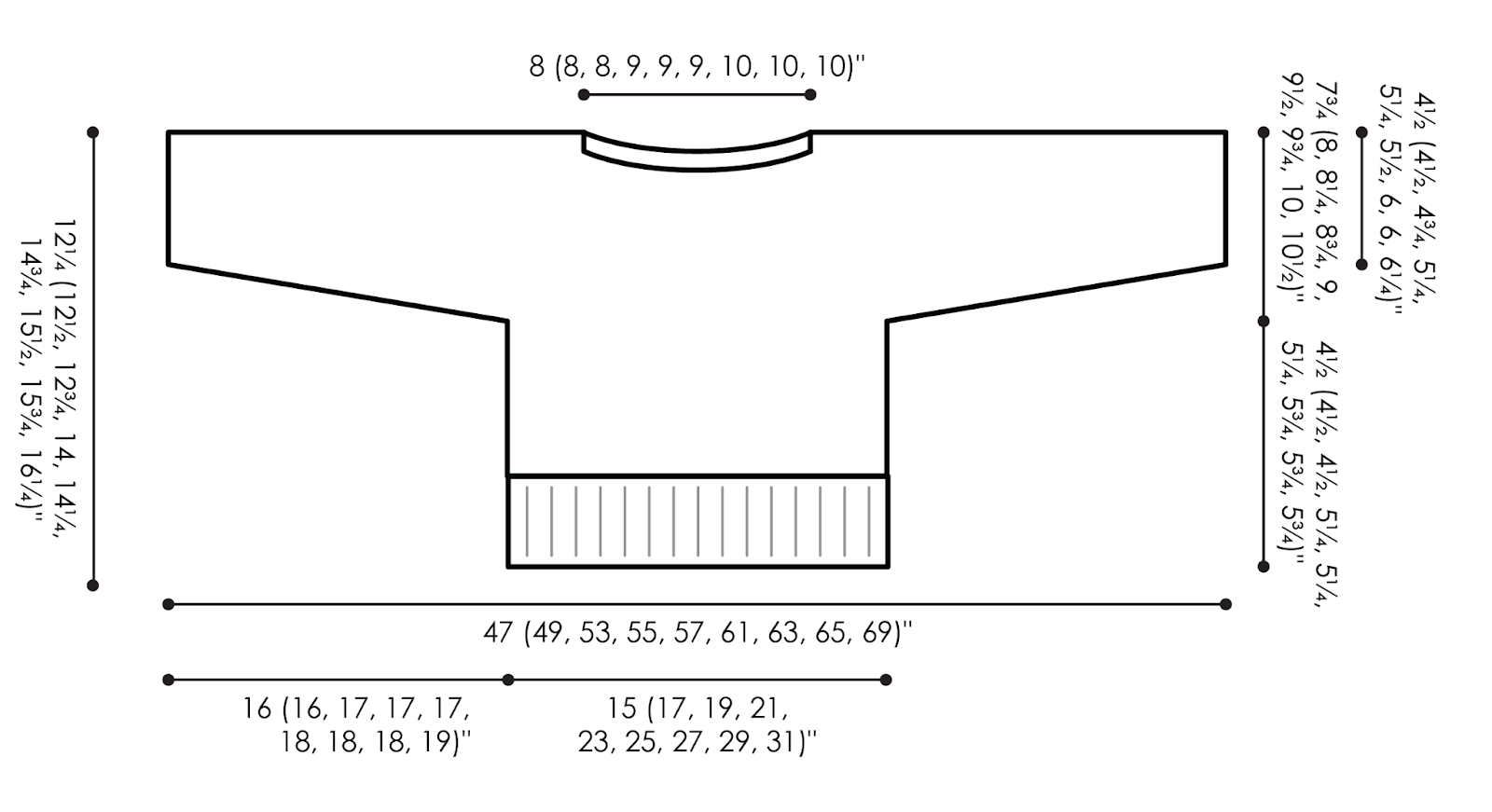
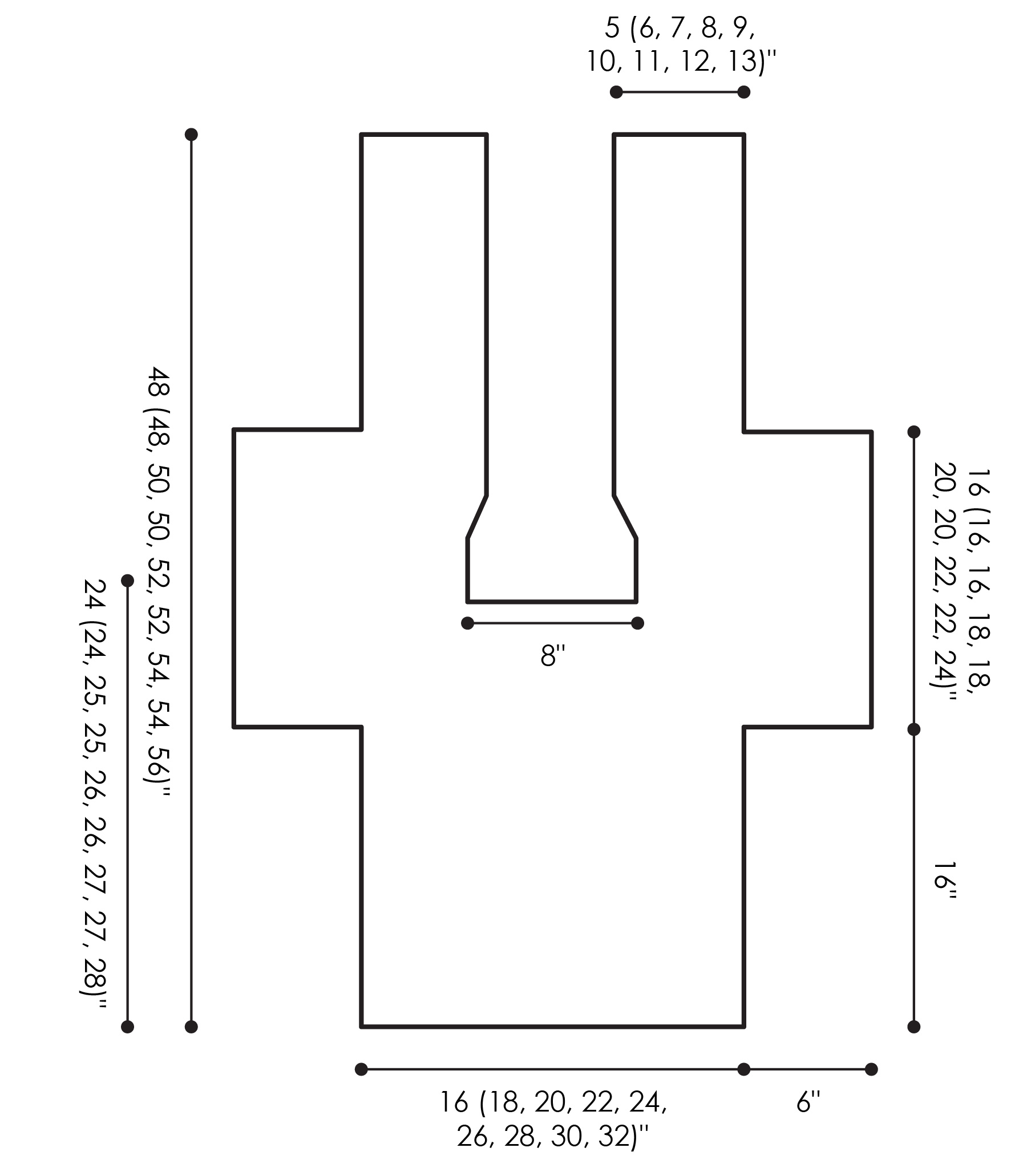
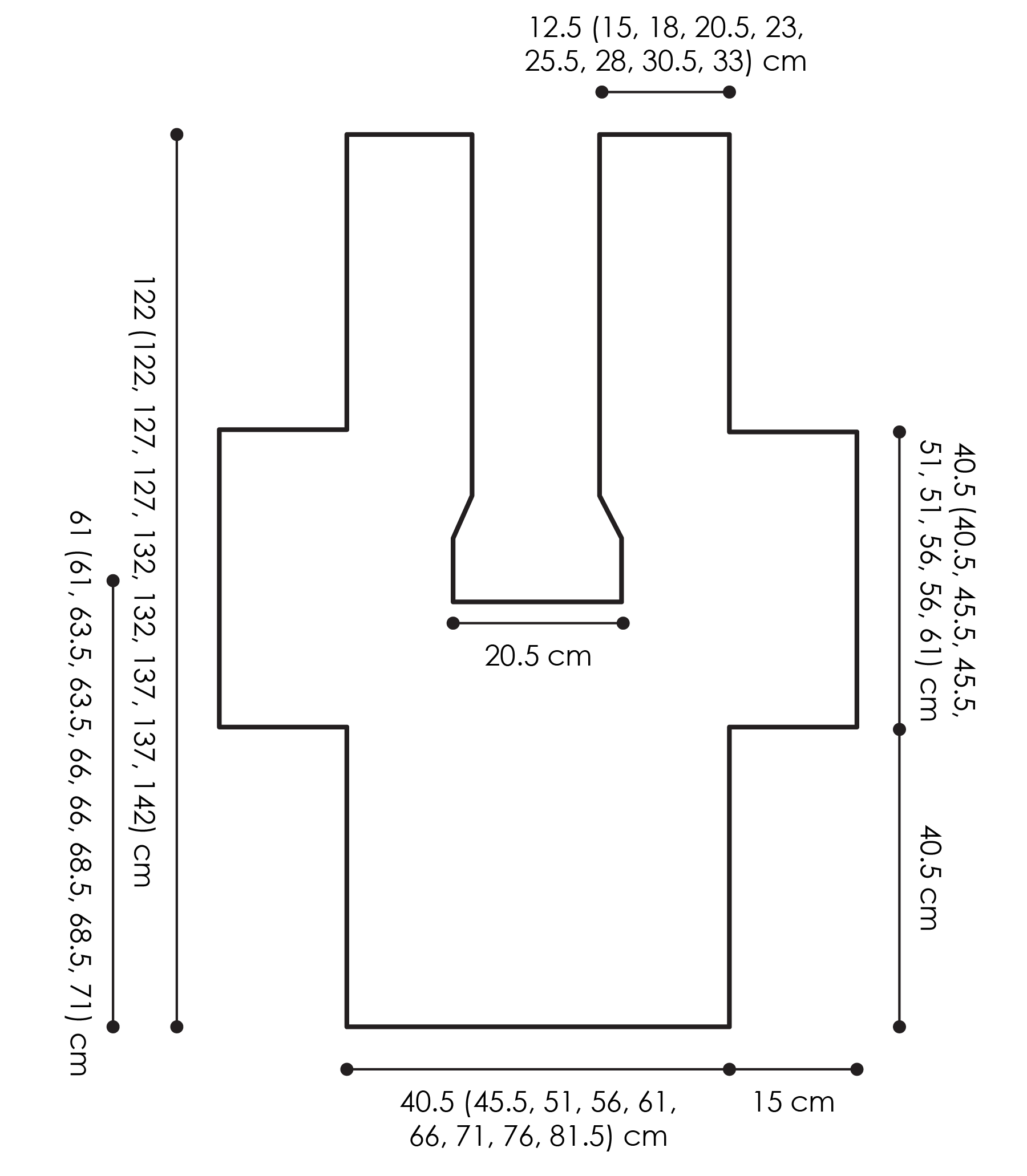
SCHEMATIC
GROW
To Unlock Exclusive Subscriber Content click the Box below and join for free by simply adding your email and creating a password! If you are having troubles, clear your cache or reset your password or login to the Grow Publisher Portal.
I’m thrilled to share this amazing pattern with you, many patterns on my blog are absolutely free! I kindly request that you don’t copy and paste or distribute this pattern. Prefer an ad-free experience? Buy a digital PDF pattern for a small fee from one of my online stores for a seamless crafting journey.
I appreciate your support and readership. You are the reason I can keep doing what I love and sharing it with others. So, thank you from the bottom of my yarn-loving heart! Disclosure: This post contains affiliate links, meaning I get a commission if you decide to make a purchase through my links at no cost to you.
ELEGANTLY EDGY KNIT JACKET PATTERN
BACK
With straight needle, CO 88 (98, 108, 118, 128, 138, 148, 158) sts. Work in Stockinette stitch for 7 rows.
Joining Row Fold so WSs are facing each other, *with left-hand needle, pick up corresponding CO stitch, knit this stitch together with next stitch on needle; repeat from * to end.
Continue in Stockinette stitch until piece measures 15″ from fold, ending with a WS row.
ARMHOLE
Row 1 (RS): Bind off 6 (6, 6, 7, 7, 8, 8, 9) stitches at the beginning of the next 2 rows (one at each edge), then bind off 2 stitches at the beginning of the next 2 rows — 72 (82, 92, 100, 110, 118, 128, 136) stitches remain.
Decrease Row (RS): K2, k2tog, knit to last 4 stitches, ssk, k2 — 2 stitches decreased.
Repeat armhole decrease row every other row 3 (3, 3, 5, 8, 11, 15, 17) more times — 64 (74, 84, 88, 92, 94, 96, 100) stitches remain.
Work in Stockinette stitch until armhole measures 8 (8½, 9, 9¼, 9½, 9¾, 10, 10¼)”, ending with a WS row.
SHOULDERS AND NECK
Row 1 (RS): Work 22 (26, 30, 32, 33, 34, 35, 37) stitches, bind off 22 (22, 24, 24, 26, 26, 26, 26) stitches for neck, knit to end.
LEFT SHOULDER
Row 1 (WS): Purl to end.
Short Row 1 (RS): Bind off 5 stitches at neck edge, k13 (17, 20, 21, 22, 23, 24, 25) stitches, wrap and turn; (WS) purl to end.
Short Row 2 (RS): K10 (13, 15, 15, 16, 17, 18, 18) stitches, wrap and turn; (WS) purl to end.
Short Row 3 (RS): K7 (9, 10, 9, 10, 11, 12, 11) stitches, wrap and turn; (WS) purl to end.
Short Row 4 (RS): K3 (4, 5, 5, 5, 6, 6, 6) stitches, wrap and turn; (WS) purl to end.
Next Row (RS): Knit to end, hiding wraps as they appear. Slip left shoulder stitches onto stitch holder or waste yarn. Break yarn.
RIGHT SHOULDER
Rejoin yarn at neck edge.
Short Row 1 (WS): Bind off 5 stitches at neck edge, p13 (17, 20, 21, 22, 23, 24, 25) stitches, wrap and turn; (RS) knit to end.
Short Row 2 (WS): P10 (13, 15, 15, 16, 17, 18, 18) stitches, wrap and turn; (RS) knit to end.
Short Row 3 (WS): P7 (9, 10, 9, 10, 11, 12, 11) stitches, wrap and turn; (RS) knit to end.
Short Row 4 (WS): P3 (4, 5, 5, 5, 6, 6, 6) stitches, wrap and turn; (RS) knit to end.
Next Row (WS): Purl to end, hiding wraps as they appear. Slip right shoulder stitches onto stitch holder or waste yarn. Break yarn.
LEFT FRONT
With straight needle, CO 44 (49, 54, 59, 64, 69, 74, 79) stitches. Work in Stockinette stitch for 7 rows.
Joining Row Fold so WSs are facing each other, *pick up corresponding CO stitch and knit together with next stitch; repeat from * to end.
Work in Stockinette stitch for 4″ [10 cm], ending with a WS row.
FRONT EDGE
✨ Designer Note: Read the following instructions before beginning. Front edge shaping overlaps armhole shaping. Continue working armhole shaping while completing the remaining front edge decreases.
Decrease Row (RS): Knit to last 4 stitches, ssk, k2 — 1 stitch decreased.
Repeat neck decrease row every 8th row 15 (15, 16, 16, 17, 17, 17, 17) more times.
At the same time, when piece measures 15″ from fold, end with a WS row.
ARMHOLE
Row 1 (RS): Bind off 6 (6, 6, 7, 7, 8, 8, 9) stitches, knit to end. Row 2 (WS): Purl to end. Row 3 (RS): Bind off 2 stitches, knit to end. Row 4 (WS): Purl to end.
Decrease Row (RS): K2, k2tog, knit to end — 1 stitch decreased.
Repeat armhole decrease row every other row 3 (3, 3, 5, 8, 11, 15, 17) more times.
Continue working as established until last front edge decrease row is complete — 16 (21, 25, 27, 28, 29, 30, 32) stitches remain.
Work in Stockinette stitch until armhole measures 8 (8½, 9, 9¼, 9½, 9¾, 10, 10¼)”, ending with a RS row.
NECK
Note: The Left Front neckline is shaped entirely by the front edge decreases worked earlier. No additional neck bind-offs are required.
SHOULDER (LEFT FRONT)
Short Row 1 (WS): P13 (17, 20, 21, 22, 23, 24, 25) stitches, wrap and turn; (RS) knit to end.
Short Row 2 (WS): P10 (13, 15, 15, 16, 17, 18, 18) stitches, wrap and turn; (RS) knit to end.
Short Row 3 (WS): P7 (9, 10, 9, 10, 11, 12, 11) stitches, wrap and turn; (RS) knit to end.
Short Row 4 (WS): P3 (4, 5, 5, 5, 6, 6, 6) stitches, wrap and turn; (RS) knit to end.
Next Row (WS): Purl to end, hiding wraps as they appear. Slip left shoulder stitches onto stitch holder or waste yarn. Break yarn.
RIGHT FRONT
With straight needle, CO 44 (49, 54, 59, 64, 69, 74, 79) stitches. Work in Stockinette stitch for 7 rows.
Joining Row Fold so WSs are facing each other, *with left-hand needle, pick up corresponding CO stitch, knit this stitch together with next stitch on needle; repeat from * to end.
Work in Stockinette stitch for 4″ [10 cm], ending with a WS row.
FRONT EDGE
Note: Read the following instructions before beginning. Front edge shaping overlaps armhole shaping.
Increase Row (RS): K2, m1, knit to end — 1 stitch increased.
Repeat neck increase row every 8th row 12 (12, 13, 13, 14, 14, 14, 14) more times.
At the same time, when piece measures 15″ from fold, end with a RS row.
ARMHOLE
Note: Armhole shaping begins on a WS row to mirror Left Front shaping.
Row 1 (WS): Bind off 6 (6, 6, 7, 7, 8, 8, 9) stitches, purl to end.
Row 2 (RS): Knit to end.
Row 3 (WS): Bind off 2 stitches, purl to end.
Decrease Row (RS): Knit to last 4 stitches, ssk, k2 — 1 stitch decreased.
Repeat armhole decrease row every other row 3 (3, 3, 5, 8, 11, 15, 17) more times.
Continue working as established until last front edge increase row is complete — 45 (50, 56, 58, 61, 62, 63, 65) stitches remain after all shaping.
Continue in Stockinette stitch until armhole measures 8 (8½, 9, 9¼, 9½, 9¾, 10, 10¼)” [20.5 (21.5, 23, 23.5, 24, 25, 25.5, 26) cm], ending with a WS row.
SHOULDER (RIGHT FRONT)
Short Row 1 (RS): K13 (17, 20, 21, 22, 23, 24, 25) stitches, wrap and turn; (WS) purl to end.
Short Row 2 (RS): K10 (13, 15, 15, 16, 17, 18, 18) stitches, wrap and turn; (WS) purl to end.
Short Row 3 (RS): K7 (9, 10, 9, 10, 11, 12, 11) stitches, wrap and turn; (WS) purl to end.
Short Row 4 (RS): K3 (4, 5, 5, 5, 6, 6, 6) stitches, wrap and turn; (WS) purl to end.
Next Row (RS): Knit to end, hiding wraps as they appear. Slip right shoulder stitches onto stitch holder or waste yarn. Break yarn.
SLEEVE
Make 2
With straight needle, CO 42 (42, 46, 46, 46, 50, 50, 50) stitches. Work in 2×2 ribbing for 5″, ending with a WS row.
Work in Stockinette stitch for 1″ [2.54 cm], ending with a WS row. Begin increase shaping on the next RS row. Stitch markers may be helpful to track increase rows.
Increase Section
Increase Row (RS): K2, m1, knit to last 2 stitches, m1, k2 — 2 stitches increased.
Repeat the increase row as follows:
Every 8 (8, 6, 6, 6, 6, 6, 4) rows 6 (3, 14, 10, 6, 6, 2, 20) times more; then every 6 (6, 0, 4, 4, 4, 4, 2) rows 6 (10, 0, 6, 12, 12, 18, 2) times — 68 (70, 76, 80, 84, 88, 92, 96) stitches.
Work in Stockinette stitch until sleeve measures 19½” [49.5 cm] from beginning, ending with a WS row.
SHAPE SLEEVE CAP
Read through this entire section before beginning to anticipate bind-offs and decreases.
Row 1 (RS): Bind off 6 (6, 6, 7, 7, 8, 8, 9) stitches at the beginning of the next 2 rows (one at each edge), then bind off 2 stitches at the beginning of the next 2 rows — 52 (54, 60, 62, 66, 68, 72, 74) stitches remain.
Decrease Row (RS): K2, k2tog, knit to last 4 stitches, ssk, k2 — 2 stitches decreased.
Repeat cap decrease row: Every other row 3 (3, 3, 5, 8, 10, 13, 16) more times, then every 4th row 6 (6, 5, 4, 4, 3, 2, 1) times, then every other row 3 (4, 7, 7, 5, 5, 4, 3) times — 26 (26, 28, 28, 30, 30, 32, 32) stitches remain.
Bind off 4 stitches at beginning of next 2 rows, then bind off 3 stitches at beginning of next 2 rows — 12 (12, 14, 14, 16, 16, 18, 18) stitches remain.
Using Mattress Stitch, seam side seams and set in sleeves.
COLLAR
Pick Up & Setup
Place marker into fabric on left front, 3 (3½, 3, 3¼, 2¼, 2½, 2¾, 3)” down neck edge from shoulder seam.
With 24″ circular needle and WS facing, beginning at marker on left front neck edge, pick up and knit:
16 (19, 15, 17, 12, 13, 14, 16) sts to shoulder
34 (34, 36, 36, 38, 38, 38, 38) sts along back neck
17 (19, 16, 17, 12, 13, 15, 16) sts along right front edge to BO sts
31 (31, 33, 33, 35, 35, 35, 35) sts along right front BO sts
— 98 (103, 100, 103, 97, 99, 102, 105) sts.
Facing
Next Row (RS): Use the backwards loop method to CO 8 sts for facing, purl to end — 106 (111, 108, 111, 105, 107, 110, 113) sts.
Next Row (WS): Use the backwards loop method to CO 8 sts for facing, knit to end — 114 (119, 116, 119, 113, 115, 118, 121) sts.
Collar Body
Continue to work back and forth in Reverse Stockinette stitch until collar measures 9″ from pick-up row, ending with a RS row.
Shaping
Decrease Row 1 (WS): K1, ssk, knit to last 3 sts, k2tog, k1 — 2 sts dec’d.
Decrease Row 2 (RS): P1, p2tog, purl to last 3 sts, ssp, p1 — 2 sts dec’d.
Repeat the last 2 rows 7 more times — 82 (87, 84, 87, 81, 83, 86, 89) sts rem.
Bind off all sts.
Assembly & Finishing
Fold piece at center of decreases and neatly sew BO edge to RS.
Fold facing edges to the RS and neatly sew in place.
Using needle and sewing thread, sew on zipper.
Styling & Wearability
This jacket is incredibly versatile and works well across seasons.
Wear it:
Zipped high for a dramatic neckline
Partially zipped for casual layering
Open for a relaxed, effortless look
It pairs beautifully with jeans, leggings, or layered over dresses — making it an easy grab-and-go piece for everyday life.
Why This Jacket Is a Great “First Statement Garment”
If you’ve knit sweaters before and are ready to try something a little more design-forward, this jacket is a fantastic next step. The techniques used — short rows, set-in sleeves, and zipper installation — are introduced in a manageable, well-supported way.
It’s a confidence-building project that feels genuinely special when finished.
This pattern is ideal for knitters who want to expand their garment skills. It includes shaping, seaming, and finishing techniques that translate beautifully to future projects.
FAQ
What skill level is this knit jacket pattern? This pattern is best suited for intermediate knitters who are comfortable with stockinette stitch, shaping, and basic garment construction.
How should this knit jacket fit? The jacket is designed to be worn with approximately 2–4 inches of positive ease for a relaxed, modern fit. The asymmetrical front and oversized collar are meant to drape naturally rather than sit snugly.
Is adding a zipper to a knit jacket difficult? Adding a zipper can feel intimidating, but this pattern includes clear instructions and video support. Basting the zipper first and taking your time helps ensure a polished result.
Is this jacket suitable for layering? Yes. This jacket works well layered over lightweight tops in fall and spring and as an indoor layering piece during colder months.
Can I substitute a different yarn weight? This pattern was designed for DK-weight yarn. Using a different weight will affect fit and drape and may require significant gauge adjustments.
Is there a printable version of the pattern? Yes. An optional ad-free PDF is available for purchase if you prefer a clean, printable format.
Final Thoughts
The Elegantly Edgy Knit Jacket is the kind of project that feels empowering to finish — stylish, wearable, and undeniably handmade. If you’ve been searching for a free knit jacket pattern that feels modern and intentional, this one delivers.
Save this for later, share it with your BiCrafty Bestie, and if you make one, tag #mmmdi and #marlybird so I can admire your work 💖🧶
Looking for a free knit tunic pattern that’s flattering, comfortable, and actually wearable? The Sweetheart A-Line Knit Tunic is a free pattern designed to skim the body beautifully while giving knitters a relaxing, confidence-building project they’ll reach for again and again.
Affiliate Disclosure:This post contains affiliate links. To learn more please visit my privacy policy here💖
Some patterns never go out of style—and the Sweetheart A-Line Tunic is one of them. 💕 This was my very first knit sweater design, and years later, knitters still come back to it again and again. There’s just something special about a project that combines beautiful lace, a flattering A-line silhouette, and a design that feels just as good to wear as it does to knit.
The Sweetheart Free Knit Tunic Pattern features a lace-patterned lower body that flows effortlessly into smooth stockinette at the top, creating a piece that’s elegant without feeling fussy. It’s the kind of sweater that sparks compliments—and conversations—every time you wear it.
What You Will Love About This Pattern
💕 A flattering A-line shape designed to celebrate real bodies
🧶 Lace detail that feels engaging to knit and stunning to wear
📊 Charted lace patterns for visual knitters
👚 Sleeveless tunic style perfect for layering
✨ A tried-and-true design that has stood the test of time
The Sweetheart A-Line Tunic is a wonderful choice for knitters who enjoy thoughtful construction and classic style.
This pattern is perfect for you if:
You’re an intermediate knitter comfortable with knit, purl, and basic lace techniques
You enjoy working from charts as well as written instructions
You want a garment that’s forgiving, flattering, and wearable
You love timeless designs that don’t chase trends
You want to knit a sweater that feels special without being overly complicated
Design Features & Construction
This tunic is worked in pieces and seamed after blocking, allowing the lace to open beautifully and the garment to drape just right.
Lace at the hem adds movement and visual interest
Stockinette upper body keeps the focus on fit and comfort
Sweetheart-inspired lace motifs give the design its name
A-line shaping provides ease through the body without clinging
✨ Designer Tip: Blocking is essential for this pattern—especially for the lace. Take the time to block thoroughly and you’ll be rewarded with gorgeous stitch definition.
Understanding A-Line Shaping in Knit Garments
One of the reasons the Sweetheart A-Line Tunic remains such a fan favorite is its thoughtful shaping. A-line shaping gently widens the garment from the hem upward, creating a silhouette that skims the body instead of clinging to it.
In knitting, this effect is created through strategic increases placed along the sides of the garment. As you work upward, those increases add width gradually, allowing the tunic to flow comfortably over the hips and midsection while still fitting nicely across the bust and shoulders.
This style of shaping is especially forgiving and flattering, making it a great choice for many body types. It also gives the finished tunic beautiful movement when worn — one of those details you might not fully appreciate until you see it on.
The Sweetheart A-Line Tunic is designed with positive ease through the body, creating a relaxed and flattering fit.
Sizes: XS (S, M, L, XL, 2X, 3X, 4X)
Fit: A-line silhouette with comfortable ease
Gauge: Achieved in both lace and stockinette (be sure to check gauge for each)
This tunic looks best when the lace has room to open up, so choosing the right yarn and achieving gauge are key.
Lace Gauge & Blocking: What to Expect as You Knit
If this is your first time knitting a lace garment, it’s important to know this upfront: lace almost never looks its best while it’s still on the needles.
As you work through the Sweetheart lace section, the fabric may appear dense, uneven, or even slightly smaller than expected. That’s completely normal. Lace patterns rely on blocking to open up the stitches and reveal the full beauty of the design.
This is why checking gauge — and checking it after blocking — is so important for this tunic. Taking the time to knit, wash, and block a proper swatch will give you a much clearer picture of how the finished garment will look and fit.
Trust the process. Once blocked, the lace transforms, and the stitch pattern truly comes to life.
The original sample was knit using Bijou Basin Ranch Lhasa Wilderness Yak, a luxurious blend that adds incredible softness and drape. While that yarn is now discontinued, there are many excellent alternatives that work beautifully for this design.
Great Yarn Substitutions
When choosing a substitute, look for a sport-weight yarn with good drape and stitch definition.
✨ Designer Tip: Swatch generously and block your swatch the same way you’ll block the finished tunic. Lace behaves very differently before and after blocking.
50+ Knit Lace Patterns
Needles, Tools & Techniques You’ll Use
Circular needles (used to hold stitches while working flat)
Stitch markers and tapestry needle
Blocking mats and pins (highly recommended!)
You’ll practice:
Reading lace charts
Working lace increases and decreases
Seaming sweater pieces
Blocking lace for maximum impact
Styling & Layering Ideas
One of the reasons this tunic remains a favorite is how easy it is to style:
Layer it over a long-sleeve tee or blouse for everyday wear
Pair it with jeans, leggings, or slim trousers
Dress it up with boots and accessories for a polished look
Seaming is one of those steps that can feel intimidating, but with a clear plan, it becomes much more manageable.
For the Sweetheart A-Line Tunic, it’s generally easiest to:
Seam the shoulders first, ensuring the neckline aligns correctly
Seam the side seams from hem to underarm
Working in this order helps maintain the garment’s shape and makes it easier to match lace sections neatly. Blocking all pieces before seaming is especially helpful here, as it allows the fabric to relax and makes alignment more precise.
Taking your time during finishing is well worth it — careful seaming is what turns beautifully knit pieces into a polished, wearable garment.
Frequently Asked Questions
Is the Sweetheart A-Line Tunic a free pattern? Yes! The pattern instructions are available for free on the blog. An ad-free PDF is also available for knitters who prefer a printable format.
Does this pattern include charts? Yes, the lace patterns are fully charted, making this an excellent choice for visual knitters.
Is this sweater knit in the round? No. The tunic is worked flat in pieces and seamed after blocking.
Are there video tutorials for this pattern? This pattern does not include dedicated videos, but it’s written clearly and supported by standard knitting techniques many knitters are already familiar with.
Gauge 34 sts and 28 rows = 4″ (10 cm) in Sweetheart Lace over needles listed, after blocking 34 sts and 28 rows = 4″ (10 cm) in Stockinette stitch using smaller needles, after blocking
BEG – Beginning CONT – Continue EST – Establish(ed) K – Knit K2TOG – Knit 2 Together P – Purl P2TOG – Purl 2 Together REP – Repeat RS – Right Side SL – Slip SSK – Slip, Slip, Knit ST(S) – Stitch(es) WS – Wrong Side YO – Yarn Over
Row 32: P2, k1, * p2, k2, p1, k3, p3, k1, p3, k3, p1, k2, p2, k1; rep from * to last 2 sts, p2.
Rep rows 1-32 for Sweetheart Lace.
Charts
Sweetheart Knit A-Line Tunic Schematic
Notes
⭐️ Regarding Yarn and Gauge: The Sweetheart Tunic is a light piece with open lacework along the bottom and Stockinette stitch at the top. It is important to choose a yarn that will hold the lace open while looking good in the Stockinette.
⭐️The instructions are written for smallest size. If changes are necessary for larger sizes the instructions will be written thus ( ). When only one number is given, it applies to all sizes.
⭐️ Tunic is made in pieces and seamed together after blocking!
⭐️ For the shaping, here are some simple instructions:
Work lace dec rows as follows (RS): P1, p2tog, work as est to last 3 sts, p2tog, p1.
Work back armhole dec sts as follows (RS): K1, ssk, work as est to last 2 sts, k2tog, k1.
Work front armhole dec rows as follows: Left Front (RS): K1, ssk, work as est to end. Right Front (RS): Work as est to last 3 sts, k2tog, k1.
Work front neck dec row as follows: Left Front (RS): Work as est to last 3 sts, k2tog, k1. Right Front (RS): K1, ssk, work as est to end.
GROW
To Unlock Exclusive Subscriber Content click the Box below and join for free by simply adding your email and creating a password! If you are having troubles, clear your cache or reset your password or login to the Grow Publisher Portal.
I’m thrilled to share this amazing pattern with you, many patterns on my blog are absolutely free! I kindly request that you don’t copy and paste or distribute this pattern. Prefer an ad-free experience? Buy a digital PDF pattern for a small fee from one of my online stores for a seamless crafting journey.
I appreciate your support and readership. You are the reason I can keep doing what I love and sharing it with others. So, thank you from the bottom of my yarn-loving heart! Disclosure: This post contains affiliate links, meaning I get a commission if you decide to make a purchase through my links at no cost to you.
Sweetheart Knit A-Line Tunic Pattern
Back
Sweetheart Lace Bottom: With larger needles, CO 113 (125, 141, 153, 171, 191, 207, 221) sts.
Row 1 (RS): P1 (7, 3, 9, 6, 4, 12, 7), pm, work in Sweetheart Lace Setup to last 1 (7, 3, 9, 6, 4, 12, 7) sts, pm, p to end.
Row 2: K to marker, work in Sweetheart Lace Setup to next marker, k to end. Cont as est, keeping edge sts in Rev St Stand center sts in Sweetheart Lace Setup, until all 18 rows of chart have been worked.
Remove markers.
Next 2 rows:
Row 1 (RS): P6 (12, 8, 14, 11, 9, 17, 12), pm, work in Sweetheart Lace to last 6 (12, 8, 14, 11, 9, 17, 12) sts, pm, p to end.
Row 2: K to marker, work in Sweetheart Lace to next marker, k to end.
Cont as est, keeping edge sts in Rev St St and center sts in Sweetheart Lace, for a total of 80 (80, 96, 96, 96, 96, 112, 112) rows, or 2.5 (2.5, 3, 3, 3, 3, 3.5, 3.5) Sweetheart Lace reps (not including setup). AT THE SAME TIME, dec 1 st at each edge on 11th row of Sweetheart lace, then every 22 (22, 20, 20, 16, 14, 14, 12) rows 3 (3, 4, 4, 5, 6, 7, 8) more times – 105 (117, 131, 143, 159, 177, 191, 203) sts rem. See notes on first page on how to decrease.
Stockinette St Top:
Change to smaller needles, and work in flat Stockinette St for 2 (21⁄4, 23⁄4, 31⁄4, 33⁄4, 41⁄4, 43⁄4, 51⁄2)”, ending with a WS row.
Shape Armholes
BO 5 (6, 7, 8, 9, 10, 11, 12) sts at beg of next 2 rows, then 5 sts at beg of next 0 (0, 0, 0, 0, 0, 2, 2) rows, then 4 sts at beg of next 0 (0, 0, 0, 0, 2, 2, 2) rows, then 3 sts at beg of next 0 (0, 0, 2, 4, 4, 2, 2) rows, then 2 sts at beg of next 2 (2, 4, 2, 2, 2, 2, 4) rows.
Dec 1 st at each edge EOR 2 (3, 3, 4, 4, 4, 5, 6) times, then every 4 rows 1 (2, 3, 3, 4, 5, 5, 5) times – 85 (91, 97, 103, 109, 115, 121, 125) sts rem.
Cont evenly until piece measures 231⁄2 (241⁄4, 271⁄2, 281⁄2, 293⁄4, 31, 343⁄4, 36)” from beg, ending with a RS row.
Shape Shoulders and Neck
Next row (WS): P33 (36, 39, 40, 43, 46, 48, 48), BO19 (19, 19, 23, 23, 23, 25, 29), p to end.
Right Shoulder
Row 1 (RS): BO 5 (6, 7, 7, 8, 9, 9, 9), k to end.
Row 2: BO 3 sts, p to end.
Row 3: BO 6 (6, 7, 7, 8, 9, 9, 9), k to end.
Row 4: BO 3 sts, p to end.
Row 5: BO 6 (7, 7, 8, 8, 9, 10, 10), k to end.
Row 6: BO 2 sts, p to end.
Row 7: BO 6 (7, 8, 8, 9, 9, 10, 10), k to end. BO rem 2 sts.
Left Shoulder
With RS facing, reattach yarn
to 33 (36, 39, 40, 43, 46, 48, 48) sts still on the needle.
Row 1(RS): BO 3 sts, k to end.
Row 2: BO 5 (6, 7, 7, 8, 9, 9, 9), p to end. Row 3: BO 3 sts, k to end.
Row 4: BO 6 (6, 7, 7, 8, 9, 9, 9), p to end. Row 5: BO 2 sts, k to end.
Row 6: BO 6 (7, 7, 8, 8, 9, 10, 10), p to end. Row 7: BO 2 sts, k to end.
BO rem 6 (7, 8, 8, 9, 9, 10, 10) sts.
Front
Work same as Back to armhole.
Shape Armhole and Neck
Shape armhole same as back. AT THE SAME TIME, when piece measures 16 1⁄2 (16 3⁄4, 19 3⁄4, 20 1⁄4, 20 3⁄4, 21 1⁄2, 24 1⁄2, 25 1⁄2)”, end with a RS row and shape neck as follows:
Next row (WS): P41 (44, 47, 50, 53, 56, 59, 61), BO 3 sts, P to end.
Work each side separately in St St, dec 1 st at neck edge EOR 12 (11, 10, 12, 11, 11, 10, 10) times, every 4 rows 6 (7, 7, 7, 8, 8, 10, 12) times, and every 6 rows 0 (0, 1, 1, 1, 1, 1, 1) times.
When piece measures 231⁄2 (241⁄4, 271⁄2, 281⁄2, 293⁄4, 31, 343⁄4, 36)” from beg, shape shoulder same as back.
DESIGNER NOTE: Shape shoulders on the front same as the back – only the shoulder shaping and not the neck shaping.
When the back instructions read to do shaping on the neck edge ignore it, maintain Stockinette st pattern.
Be sure to follow instructions for left shoulder back for right shoulder front and vice versa.
My tech editor and I thought this was clear but we have had some questions about it. So I hope this helps 🙂
Finishing
Block all pieces to measurements.
Sew shoulder and side seams.
Edging
With RS facing, work 1 round in single crochet around neck edge and each armhole edge.
Be sure to favorite the Sweetheart A-Line Tunic on Ravelry, add it to your queue, and share your finished tunic with the knitting community.
Final Thoughts
The Sweetheart A-Line Tunic will always hold a special place in my heart. As my very first sweater design, it represents everything I love about knitwear—thoughtful construction, timeless style, and the joy of creating something you truly love to wear.
If you’re looking for a knit tunic pattern that feels classic, flattering, and deeply satisfying to make, this one might just become a favorite in your wardrobe too.
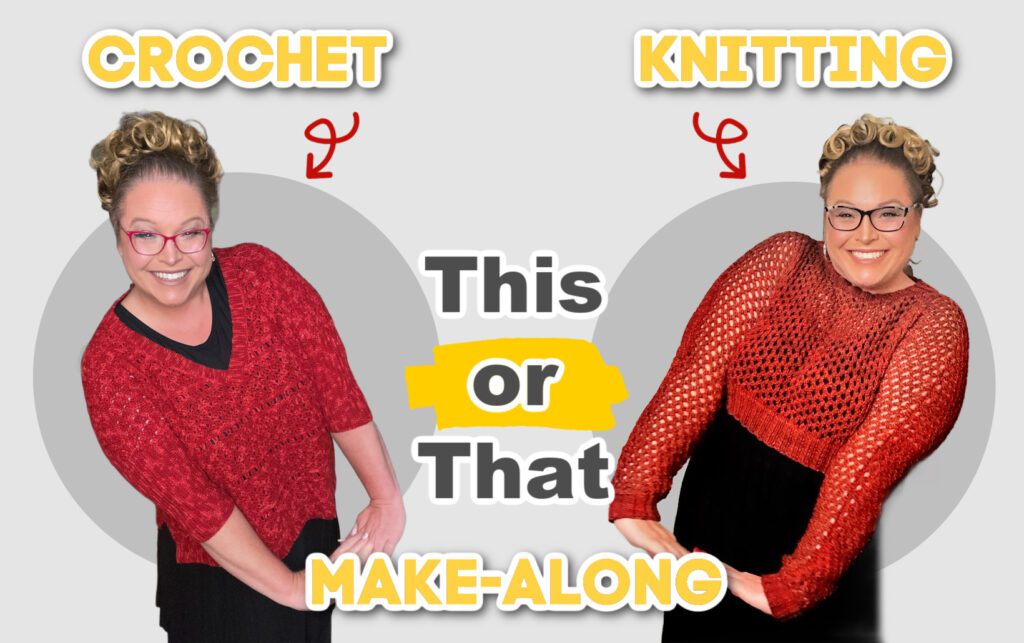
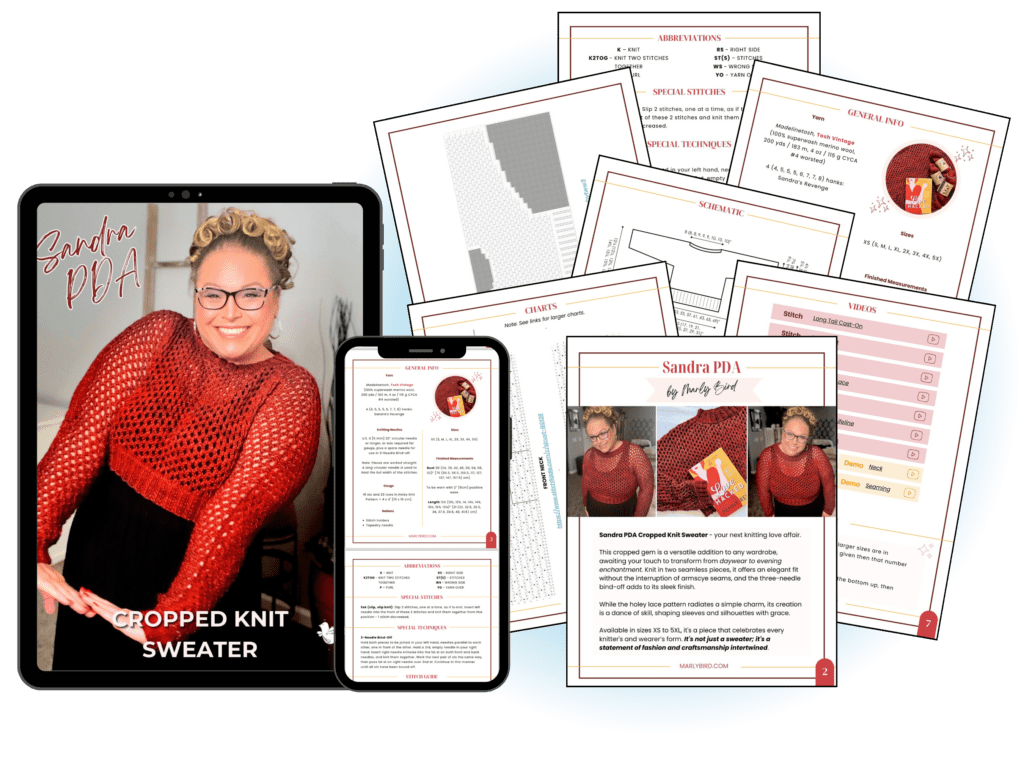
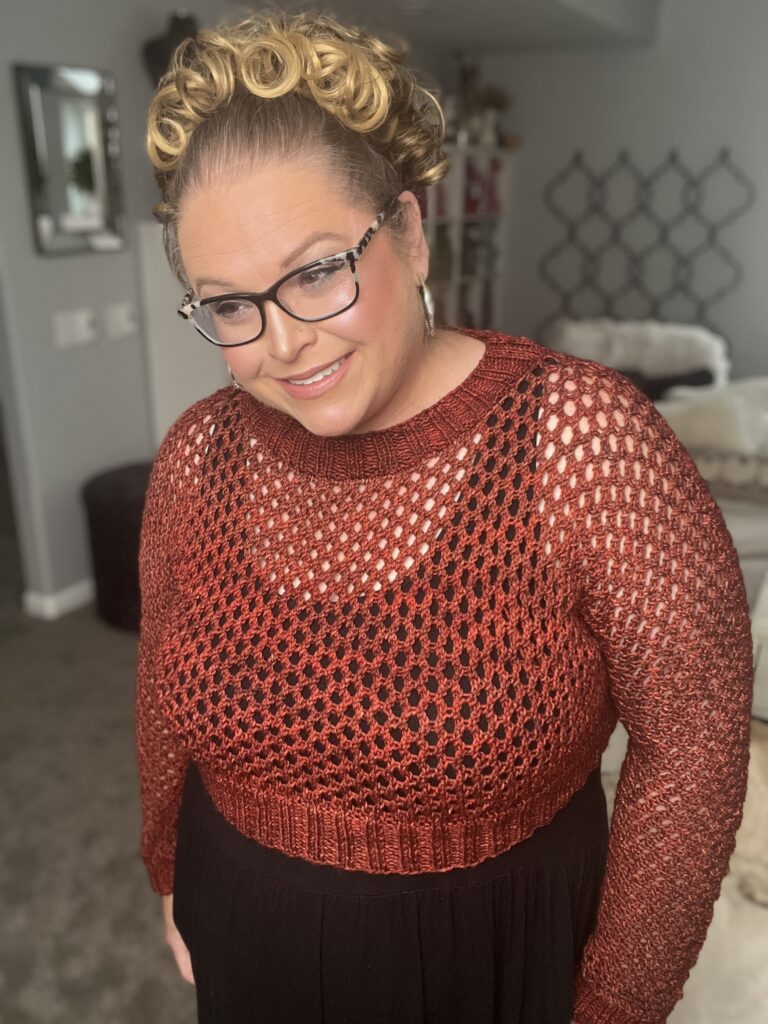
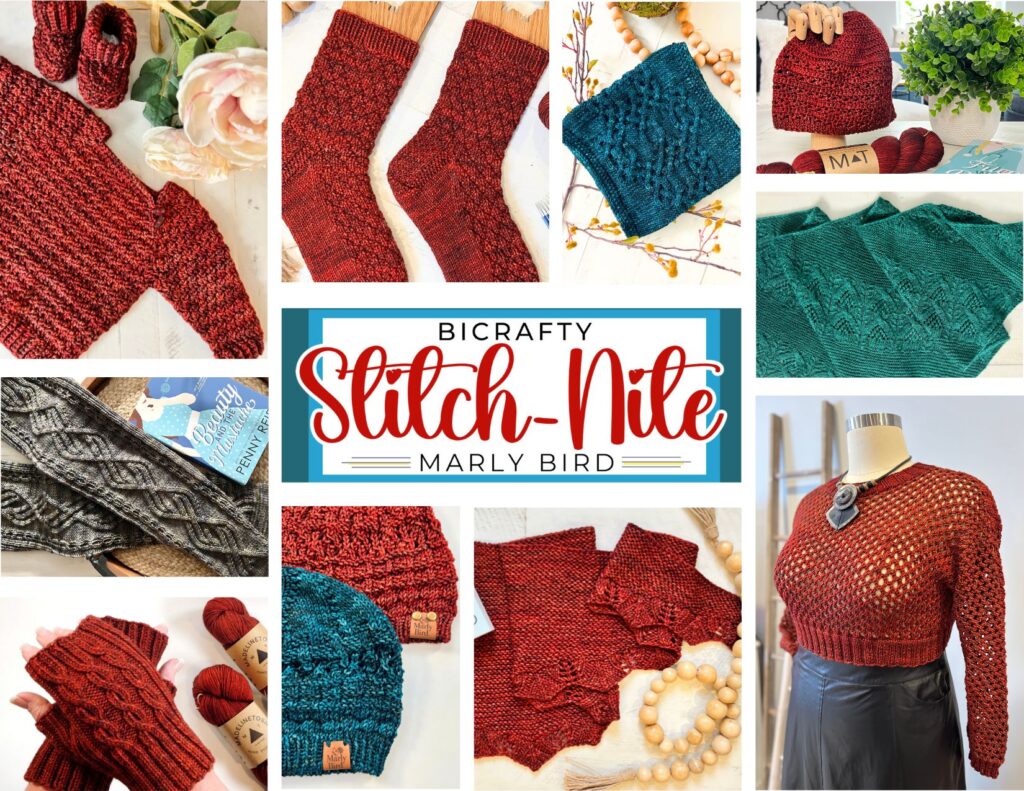
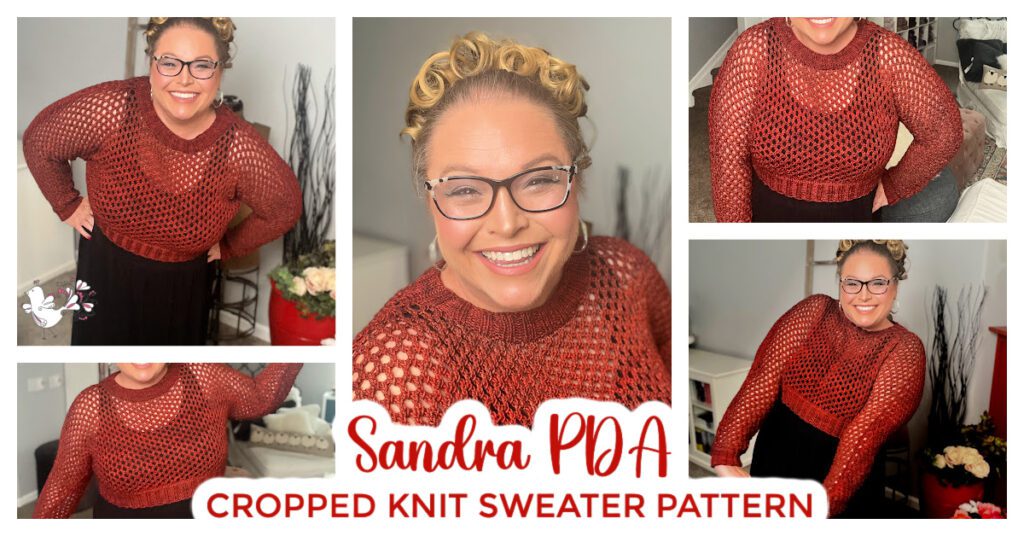
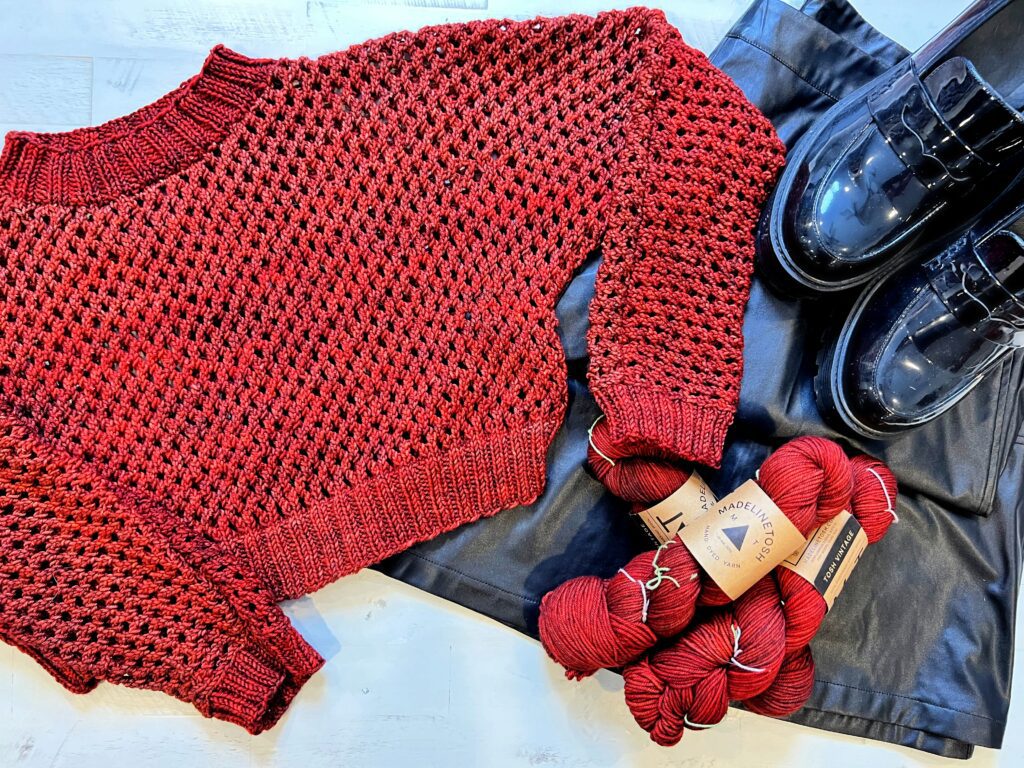
Hey there, knitting friends! Get ready to start a super fun project with our Sandra PDA Cropped Knit Sweater pattern. It’s part of the BiCrafty Stitch-Nite Collection, and trust me, you’re going to love it! (You already love the Appalachian Cozy Up Thigh High Socks) Whether you’re new to knitting or already a pro, this sweater is perfect for adding some pizzazz to your wardrobe.
Affiliate Disclosure:This post contains affiliate links. To learn more please visit my privacy policy here💖
Why You’ll Love This Cropped Knit Sweater
It Fits Everyone!Size Inclusivity: Available in sizes from Extra Small to 5XL, this pattern ensures a flattering fit for every body type.
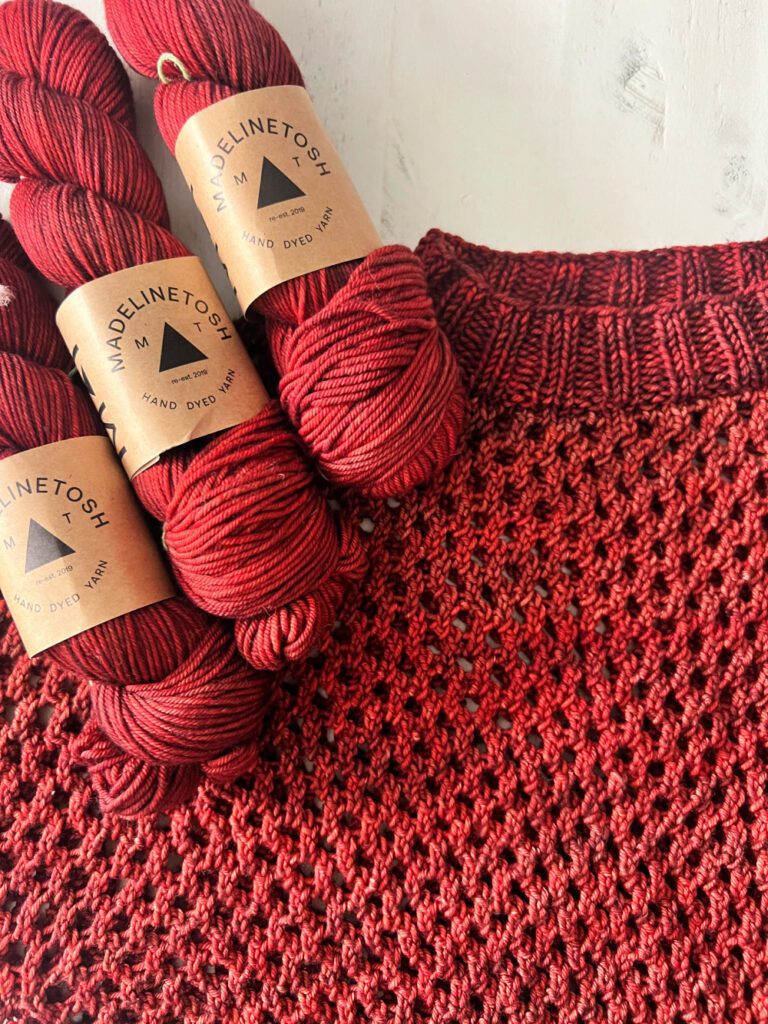
Yarn That Feels Good: We recommend using worsted weight yarn because it’s light but still keeps you warm. It’s perfect for this kind of sweater! Yarn used for the sample is Madelinetosh Vintage but it would look wonderful in Twill or even Capra.
Step-by-Step Guide: Don’t worry if you’re not sure how to start; this pattern has everything you need. There are clear instructions, full pattern charts to help you see what you need to do next, and video tutorials to guide you along the way.
Cool Features of the Sandra PDA Cropped Knit Sweater
Stylish Cropped Knit Look: This sweater has a trendy cropped style that goes perfectly with high-waisted jeans or skirts. It’s really in style right now!
Lacy Details: The sweater has a simple lacy pattern that makes it extra special. It adds a touch of charm and fancy to your outfit.
Neat Edges: We finish the sweater with ribbed cuffs and a collar that make everything look neat and tidy.
Only Two Pieces: The cropped knit sweater is made in two pieces making the shaping easy as you transition from the body to the sleeves.
📌 Get the Sandra PDA ad-free PDF! (Access inside the Marly Bird House with unlimited viewing and bonus material)
The Sandra PDA Cropped Knit Sweater is a great fit for knitters who are ready to stretch their skills while still enjoying a supportive, well-structured pattern.
This pattern is perfect for you if:
🧶 You’re an intermediate knitter (or a confident advanced beginner) comfortable with knit, purl, and following stitch patterns
📊 You enjoy working from written instructions and charts
✨ You want to try a lace-style sweater without overly complicated shaping
👕 You love the look of modern cropped sweaters paired with high-waisted bottoms
🎥 You appreciate having video tutorials and guided support available
🤝 You enjoy knitting as part of a community experience, like the BiCrafty Stitch-Nite Collection
If you’ve knit accessories or simpler garments and are ready for a sweater that feels exciting—but still achievable—this pattern is a fantastic next step.
Why This Pattern Is Extra Special
This sweater is not just a pattern; it’s a part of the BiCrafty Stitch-Nite collection housed exclusively in the Marly Bird House. This collection features 11 carefully designed patterns that aim to enhance your knitting experience and foster a sense of community among crafters. By choosing this pattern, you’re not just buying a set of instructions; you’re gaining entry into a platform where knowledge, tips, and encouragement flow freely.
Let’s Knit Together!
If you like knitting with friends, this pattern is perfect. You can join others and work on this project together at a knit-along. It’s a blast to see everyone’s sweaters come to life! Or enjoy knitting this cropped sweater on your own. Either way you will love it!
Video Tutorials To Teach
I approached every video tutorial in the BiCrafty Stitch-Nite collection as if I were your personal online teacher. Each video provides a detailed, step-by-step guide to ensure you complete the project with a piece you’ll absolutely adore.
Get Started Today
Ready to cast on? Your purchase includes an instant download of the Sandra PDA Cropped Knit Sweater pattern PDF, complete with ✨32 pages✨ of detailed instructions and high-quality images.
📌 Get the Sandra PDA ad-free PDF! (Access inside the Marly Bird House with unlimited viewing and bonus material)
Don’t forget to favorite and queue up the cropped sweater on Ravelry!
🧶 How to Style a Cropped Knit Sweater Year-Round
One of the best things about the Sandra PDA Cropped Knit Sweater is how easy it is to wear in every season. Cropped sweaters aren’t just trendy — they’re versatile staples that layer beautifully.
Pair it with high-waisted jeans or trousers for a casual everyday look
Layer it over a tank or dress during transitional weather
Wear it with skirts or wide-leg pants for a modern, polished outfit
Because the lace pattern keeps the fabric light and breathable, this sweater works just as well in spring and fall as it does during cooler summer evenings.
John and Marly at Dinner with friends on a cruise. Marly is wearing the Sandra PDA over a jumper.
✨ What Makes This Cropped Knit Sweater Beginner-Friendly (Even If It Looks Fancy)
At first glance, lace sweaters can feel intimidating — but the Sandra PDA Cropped Knit Sweater is designed to help knitters succeed.
Here’s why this pattern is more approachable than it looks:
The lace is predictable and rhythmic, not overly complex
The sweater is worked in just two main pieces, simplifying construction
Ribbed edges provide structure and clean finishing
Charts and row-by-row guidance are included in the ad-free PDF (this is the most amazing aspect of this particular pattern!)
If you’re ready to move beyond basic stockinette but don’t want to feel overwhelmed, this is a fantastic next-step sweater project.
🧵 Yarn Substitution Tips for the Sandra PDA Cropped Knit Sweater
Has good stitch definition to highlight the lace, this means a tight twisted yarn is preferred
Isn’t overly stiff or overly drapey
Feels comfortable against the skin
Yarns with smooth plies and moderate elasticity tend to show off the Holey Knit stitch pattern especially well.
I loved using the Madelinetosh Vintage yarn and I highly recommend it if you can splurge on yourself a bit. If you want to go with a more moderate price range yarn, here are some we like:
Knit Picks Twill Yarn: this yarn is divine. It is a little thicker than the sample yarn but it would make a lovely sweater!
Ssk (slip, slip knit): Slip 2 stitches, one at a time, as if to knit. Insert left needle into the front of these 2 stitches and knit them together from this position – 1 stitch decreased.
SPECIAL TECHNIQUES
⭐️ 3-Needle Bind-Off
Hold both pieces to be joined in your left hand, needles parallel to each other, one in front of the other. Hold a 3rd, empty needle in your right hand. Insert right needle knitwise into the 1st st on both front and back needles, and knit them together. Work the next pair of sts the same way, then pass 1st st on right needle over 2nd st. Continue in this manner until all sts have been bound off.
⭐️ HOLEY KNIT STITCH PATTERN
Row 1 (RS): Knit.
Row 2: Purl.
Row 3: K3, * ssk, yo twice, k2tog; repeat from * to last 3 sts, k3.
Row 4: P4, * k1, p3; repeat from * to last 6 sts, k1, p5.
Row 5: K1, * ssk, yo twice, k2tog; repeat from * to last st, k1.
Row 6: P2, * k1, p3; repeat from * to end.
Repeat Rows 3-6 only for Holey Knit Pattern.
CHARTS and ROW BY ROW CHECKLIST
FULL CHARTS FOR EVERY SIZE ARE EXCLUSIVE IN THE AD-FREE PDF! As well as Row-by-Row Checklists! These make this project so much easier!
📌 Get the Sandra PDA ad-free PDF! (Access inside the Marly Bird House with unlimited viewing and bonus material)
To Unlock Exclusive Subscriber Content click the Box below and join for free by simply adding your email and creating a password! If you are having troubles, clear your cache or reset your password or login to the Grow Publisher Portal.
I’m thrilled to share this amazing pattern with you, many patterns on my blog are absolutely free! I kindly request that you don’t copy and paste or distribute this pattern. Prefer an ad-free experience? Buy a digital PDF pattern for a small fee from one of my online stores for a seamless crafting journey.
I appreciate your support and readership. You are the reason I can keep doing what I love and sharing it with others. So, thank you from the bottom of my yarn-loving heart! Disclosure: This post contains affiliate links, meaning I get a commission if you decide to make a purchase through my links at no cost to you.
❓ Frequently Asked Questions About the Sandra PDA Cropped Knit Sweater
Is the Sandra PDA Cropped Knit Sweater a free pattern?
Yes! The pattern instructions are available for free on the blog. An ad-free PDF with charts, checklists, and bonus materials is available through Etsy, Shopify, Ravelry, and inside the Marly Bird House.
What skill level is this cropped knit sweater?
This pattern is best suited for intermediate knitters, or confident advanced beginners who are comfortable with knit, purl, yarn overs, and following a lace pattern.
Can I make this sweater longer?
Absolutely. While the cropped length is part of the design, you can add length to the body before beginning sleeve shaping if you prefer a longer fit. Just be mindful that additional length may require extra yarn.
Is this sweater knit in the round?
No. The sweater is worked in two flat pieces, then seamed. A long circular needle is used to comfortably hold the stitches.
Does this pattern include charts?
Yes. Full charts for every size, along with row-by-row checklists, are included in the ad-free PDF.
💛 Why Knitters Love the BiCrafty Stitch-Nite Collection
The Sandra PDA Cropped Knit Sweater is part of the BiCrafty Stitch-Nite Collection, a curated set of patterns designed to help knitters build skills while feeling supported and inspired.
Inside the Marly Bird House, you’ll find:
Guided projects
Community encouragement
Video instruction
Unlimited access to learning materials
It’s not just about finishing a sweater — it’s about enjoying the process and knitting with confidence.
🧶 Final Thoughts
The Sandra PDA Cropped Knit Sweater is one of those projects that looks impressive, feels satisfying to knit, and becomes a go-to piece in your handmade wardrobe. Whether you’re stretching your skills with lace, exploring cropped sweater styles, or knitting alongside the BiCrafty community, this pattern delivers on both style and substance.
Take your time, enjoy the rhythm of the stitches, and don’t forget — knitting is meant to be fun 💕
Hey there! Welcome to the fascinating crochet world, where the endless possibilities and rewards are abundant. I’m so excited to share with you this free beginner crochet sweater pattern for the Stoney Creek Sleeveless Crochet Tee!
It’s a simple design that beginners and seasoned crochet enthusiasts will LOVE! As you work on this project, you’ll find it provides a relaxing, therapeutic experience and a wonderful sense of accomplishment.
Whether you’re just starting or have been crocheting for years, this crochet top pattern is for you. It boasts easy-to-read instructions, simple construction, and an easily memorized stitch pattern. You’ll love making this beginner crochet sweater pattern (without sleeves!)
So grab your crochet hooks, find a cozy spot, and get ready to crochet a sweater pattern in a few days! The secrets to creating something wonderful await you, and I’m thrilled to be by your side throughout this exciting adventure. Let’s get started and let your creative juices flow!
Affiliate Disclosure:This post contains affiliate links. To learn more please visit my privacy policy here💖
Beginner Crocheters Can Make a Sweater?
The short answer is YES; as a beginner, you can absolutely make a crochet sweater, crochet pullover, or crochet vest. Success comes with understanding how the shaping works and a good pattern by a reputable crochet designer.
Let’s get excited about crocheting your first garment project with our beginner-friendly Stoney Creek design. Delight in the simplicity of using a single half double crochet stitch through the front loop to create this stylish, versatile tee. Marvel as the Caron Cotton Cakes yarn adds a touch of elegance to your design. No need to worry about color transitions – the yarn does it for you.
How Long to Crochet a Tee?
Crocheting a tee can vary in time depending on a few factors. It mainly depends on your experience level and how quickly you crochet. Many of my crochet testers have found they can finish the Stoney Creek Sleeveless Crochet Tee completely within a week. However, if you’re planning some dedicated crochet time, a weekend offers a good chunk of time to make significant progress, if not complete it. It’s all about pacing and enjoying the process! Working on this beginner crochet sweater pattern is an easy weekend project. It’s perfect for crochet enthusiasts seeking to add staple pieces to their wardrobe.
Choosing the Best Crochet Yarn for Stoney Creek
Once you have a beginner crochet sweater pattern you love (get the ad-free pdf here), the next adventure is choosing the perfect yarn. We found the Caron Cotton Cakes, a fabulous cotton and acrylic blend. It really suits this design. This yarn type contributes to the garment’s structural integrity and enhances its tactile pleasure while crocheting.
When it comes to choosing your yarn for the Stoney Creek Tee, consider its ease of use during crocheting. Think about its maintaining qualities post-wash and its comfort when worn. The Caron Cotton Cakes checks all these boxes. It provides an optimal crocheting experience while ensuring the crafted garment is beautiful and delightful to wear. It is also a great yarn for beginners to use.
The beauty of the Caron Cotton Cakes yarn lies in its color flexibility. It’s an excellent choice for this versatile crochet tank top. Unlike traditional yarns that require careful color transition calculation, this yarn allows you to let the cake work up as it wants while still achieving a stunning design. This spontaneity aligns perfectly with my vision for a simple yet captivating beginner crochet sweater pattern.
An Alternative Yarn Choice…
Interestingly, other crocheters have found a new love in the Macchiato Cakes yarn, an 80% acrylic/20% wool blend from Caron Cakes. The eagerness of these crocheters to share their creations with us keeps the excitement growing around the Stoney Creek Sleeveless Tee project. This proves the right yarn choice can elevate the overall crochet experience.
Creating this beginner crochet sweater pattern involves mastering a fundamental crochet stitch. This stitch, the half double crochet through the back loop, offers the perfect blend of simplicity for beginners and appeal for the experienced. It’s the main part of this beginner-level crochet pattern that’s both straightforward and interesting.
Learn more about crochet stitches, techniques, and all the crochet stitch diagram symbols in this comprehensive guide!
Crocheting the Stoney Creek Tee revolves around the beauty of repeating this stitch. The harmony of this stitch pattern results in a unique fabric canvas to bring the design of this tee to life. It is easy, simple, ideal for a first-time garment project, and enticing enough for experienced crocheters.
But it’s not all about mastering a single stitch.
There’s also an introduction to basic shaping. This offers practical lessons for beginners interested in garment construction. This beginner crochet sweater pattern is an excellent hands-on way to learn these core crochet principles. Importantly, ensure you fully understand the half double crochet stitch, both in its own right and when incorporated into the pattern. Familiarity with the stitch will help you craft a tee matching the given pattern size. Think of it as blending creativity and precision into a rewarding craft project.
How to Add Personal Touches to Your Beginner Crochet Sleeveless Sweater
Adding personal touches to your Stoney Creek Sleeveless Crochet Tee makes it uniquely yours. The first option could be to play around with the color scheme. Using the Caron Cotton Cakes yarn allows for an array of beautiful color choices; you don’t have to stick to the original. Go bold, soft, neutral, or multi-colored – the choice is yours.
Another way to personalize your tee is by adapting the pattern size. The crafting instructions give a size-inclusive range from XS to 5X. However, adjusting your pattern beyond these sizes might be as simple as a few additional calculations for those educated in crochet. So, every crocheter can have a sleeveless tee that truly fits.
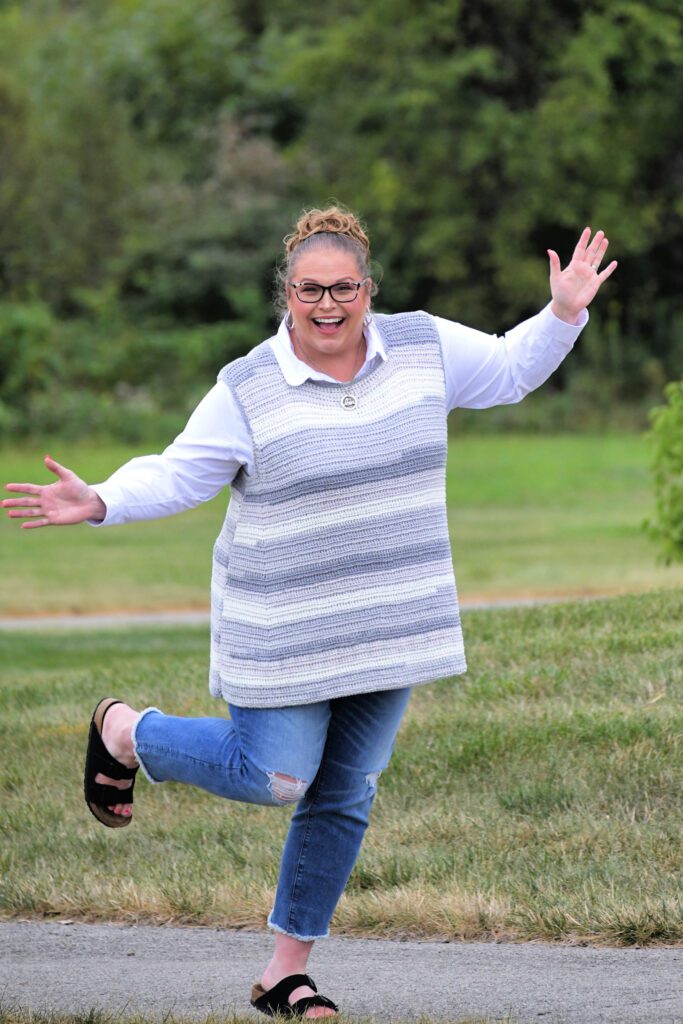
While the design is a snug fit around the bust and flared at the hips, feel free to adjust these proportions. After all, this is your creation; it should be as comfortable and flattering as you want. I am modeling the 3xl size over a size 20 button-down white shirt to give you a size perspective.
Perfect For Layering!

Finally, toy with what to pair with your sleeveless tee. Layer it over a turtleneck for a fall-ready look, or wear it solo during the warmer months. Transform this simple tee into a chic wardrobe staple with a belt, a scarf, or a statement jewelry piece. Mix and match these effects until you have a garment that screams “YOU.”
Ultimately, the Stoney Creek Tee is a canvas awaiting your custom personal touch.
Lifelong Care For Your Handmade Stoney Creek Top
This blend of cotton and acrylic, the recommended Caron Cotton Cakes yarn, is easy to maintain. It’s resilient and can withstand the washing process while preserving your sleeveless tee’s original look and integrity. Wash the top on a gentle cycle with mild detergent and cool water. It’s the best choice to prevent the yarn colors from fading. Avoid bleaching and wringing out the top; you’ll maintain the garment’s shape and color vibrancy.
After washing, allow the top to dry flat where it isn’t exposed to direct sunlight to maintain its shape and color. When storing, folding the top neatly, away from direct sunlight, will protect the color and the shape. Using mothballs or cedar blocks can drive away pests that might damage the yarn. Ironing the top on a low heat setting can help maintain its crisp look if mild wrinkles appear.
Last but not least, treat snags or loose ends promptly to avoid more significant damage to the crochet work. Minor repairs may arise over time, but with gentle handling and care, the Stoney Creek Top retains its beauty, ready to accompany you through many seasons, year in and year out. Display it proudly, knowing it is a testament to your crochet craftsmanship.
Big Take-Aways for this Beginner Crochet Sweater Pattern
Firstly, it’s a free pattern here on the Marly Bird website. But you can also purchase an ad-free PDF for easy printing and to take with you as you work on your crochet sweater. Make it easy to take notes on the pattern, and maybe use tick marks to count how many rows you have done on each side.
Also, this sleeveless tee adapts from summer to fall with minimal fuss. Working with a cotton and acrylic blend promises a smooth crocheting experience, comfortable wear, and an effortless washing experience.
But this is my favorite part of the pattern…the Stoney provides a flattering fit for all body types, thanks to its classic square neckline and A-line hem design. The tee is meant to offer a snug fit at the bust, transforming into a breezy flare around the hips. Wearing it brings a sense of joy and accomplishment. Don’t you see my smile?
Remember, the Stoney Creek is size-inclusive, catering to sizes from XS to 5X. Whether you wear it alone or paired with a shirt, the tee exudes charm on any figure. This pattern is free on the MarlyBird.com website, or the ad-free pdf version is offered at a friendly price as a cherry on top.
Don’t forget to Favorite this Pattern and Queue it up on Ravelry!
Stoney Creek Sleeveless Crochet Tee Pattern Details
Designed by Marly Bird
SKILL LEVEL
Adventurous Beginner
MEASUREMENTS
To Fit Sizes
XS (S, M, L, XL, 2X, 3X, 4X, 5X), The top should be close-fitting with no ease at the chest, but positive ease around the hips. Top shown is 3X.
⭐️ Single Crochet Three Together (sc3tog): *Insert hook into indicated stitch, yarn over and pull up a loop; repeat from * in next 2 stitches indicated, yarn over and draw through all 4 loops on hook.
This tank is worked from shoulders down in two pieces, then seamed together and accented with an edging.
Directions are for size XS; changes for sizes S, M, L, XL, 2X, 3X, 4X, and 5X are in parentheses. When only one number is given then that number applies to all sizes.
GROW
To Unlock Exclusive Subscriber Content click the Box below and join for free by simply adding your email and creating a password! If you are having troubles, clear your cache or reset your password or login to the Grow Publisher Portal.
I’m thrilled to share this amazing pattern with you, many patterns on my blog are absolutely free! I kindly request that you don’t copy and paste or distribute this pattern. Prefer an ad-free experience? Buy a digital PDF pattern for a small fee from one of my online stores for a seamless crafting journey.
I appreciate your support and readership. You are the reason I can keep doing what I love and sharing it with others. So, thank you from the bottom of my yarn-loving heart! Disclosure: This post contains affiliate links, meaning I get a commission if you decide to make a purchase through my links at no cost to you.
Row 1 (RS): Hdc in 3rd ch from hook and in each ch to end – 12 (12, 14, 14, 16, 16, 18, 18, 20) hdc.
Row 2: Ch 2, hdc tfl in each hdc to end.
Fasten off.
Work other shoulder the same, but do not fasten off.
Join Shoulders
Row 1 (RS): Ch 2, hdc tfl in each hdc to end, ch 30 (32, 32, 36, 36, 38, 38, 38, 38), hdc tfl in each hdc of first shoulder – 54 (56, 60, 64, 68, 70, 74, 74, 78) sts including ch sts.
Row 2: Ch 2, hdc tfl in each of first 12 (12, 14, 14, 16, 16, 18, 18, 20) hdc, hdc in each of next 30 (32, 32, 36, 36, 38, 38, 38, 38) ch, hdc in each of last 12 (12, 14, 14, 16, 16, 18, 18, 20) hdc – 54 (56, 60, 64, 68, 70, 74, 74, 78) hdc.
Work 12 (14, 14, 16, 15, 13, 11, 10, 8) more rows evenly in hdc tfl.
Increase for Underarm
For Last 5 Sizes Only:
Next row (increase row): Ch 2, hdc tfl in each of first 2 hdc, 2 hdc tfl in next hdc, hdc tfl in each hdc to last 3 hdc, 2 hdc tfl in next hdc, hdc in each of last 2 hdc – x (x, x, x, 70, 72, 76, 76, 80) hdc.
Repeat this increase row x (x, x, x, 0, 2, 4, 7, 9) more times – x (x, x, x, 70, 76, 84, 90, 98) hdc.
For All Sizes:
Fasten off.
Add Width for Bust
Row 1 (RS): Using larger hook, ch 2 (5, 7, 9, 10, 11, 11, 12, 12), hdc tfl in each hdc across Back, ch 4 (7, 9, 11, 12, 13, 13, 14, 14).
Row 2: Skip 2 ch, hdc in 3rd ch from hook and in each of next 1 (4, 6, 8, 9, 10, 10, 11, 11) ch, hdc tfl in each hdc to last ch 2 (5, 7, 9, 10, 11, 11, 12, 12), hdc in each of last ch 2 (5, 7, 9, 10, 11, 11, 12, 12) ch – 58 (66, 74, 82, 90, 98, 106, 114, 122) hdc.
Work 4 (4, 4, 2, 2, 2, 0, 0, 0) more rows evenly in hdc tfl.
Shape A-Line to Hip
Place marker in 10th hdc from each end.
Row 1 (increase row, RS): Ch 2, hdc tfl in each hdc to 1 hdc before marker, 2 hdc tfl in next hdc, hdc tfl in marked hdc, move marker up to hdc just made, hdc tfl in each hdc to marker, hdc tfl in marked hdc, move marker up to hdc just made, 2 hdc tfl in next hdc, hdc tfl in each hdc to end – 60 (68, 76, 84, 92, 100, 108, 116, 124) hdc.
Row 2: Ch 2, hdc tfl in each hdc to end, moving markers up as you go whenever working into a marked st.
Repeat the last 2 rows 14 more times – 88 (96, 104, 112, 120, 128, 136, 144, 152) hdc
Work 4 (4, 6, 8, 10, 10, 12, 12, 14) more rows evenly in hdc tfl.
Using smaller hook, and with RS facing, join yarn anywhere along back neck.
Round 1 (RS): Ch 1, sc evenly around neck edge, working a sc3tog at each inner corner, join with sl st in first sc, do not turn.
Round 2: Ch 1, * sc in each sc to 1 st before corner decrease, sc3tog over next 3 sts; repeat from * 3 more times, sc in each sc to end, join with sl st in first sc.
Fasten off.
Armhole Edging
Using smaller hook, and with RS facing, join yarn to armhole at shoulder seam.
Round 1 (RS): Ch 1, sc evenly around armhole edge, working a sc3tog at each inner corner, join with sl st in first sc, do not turn.
Round 2: Ch 1, * sc in each sc to 1 st before corner decrease, sc3tog over next 3 sts; repeat from * once more, sc in each sc to end, join with sl st in first sc.
Fasten off.
Weave in all loose ends.
Don’t forget to share with us on Social Media! Use #MMMDI and #MarlyBird on Instagram so I can smash your like button, and we can all jump for joy!
Frequently Asked Questions
Is the Stoney Creek Sleeveless Tee really beginner friendly?
Yes! This is genuinely one of the most beginner-friendly garment patterns out there. The main stitch is half double crochet through the front loop… just one stitch repeated consistently throughout the body. The shaping is minimal and clearly explained. The construction is straightforward… no set-in sleeves, no complicated neck shaping, no intricate pattern repeats. If you can half double crochet and follow basic row-by-row instructions, you can make this tee. Many crafters make their first ever garment with this pattern!
What is the half double crochet through the front loop and why is it used?
Regular half double crochet goes under both top loops of the stitch. Working through the front loop only pushes the unused back loop to the outside of the fabric, creating a beautiful horizontal ridge texture. This gives the Stoney Creek Tee its distinctive knit-like ribbed appearance that looks much more complex than the simple technique used to create it. It also creates fabric with a lovely drape and subtle texture that’s much more interesting than plain single crochet but no harder to execute.
What sizes does the Stoney Creek Tee come in?
XS through 5X! That’s one of the reasons this pattern is so beloved… it’s genuinely size inclusive across a wide range of measurements. The pattern notes even include tips on how Marly (who wears the 3X) styles the tee over a button-down shirt as a layering piece. Check the finished measurements and choose the size that gives you your preferred fit… the pattern is designed with some ease built in for a comfortable, wearable finish.
What yarn works best for this tee?
The original sample uses Caron Cotton Cakes, a cotton-acrylic blend that provides easy care, beautiful drape, and natural color changes from the self-striping yarn. The cotton content makes it breathable and comfortable to wear. You can substitute any smooth worsted weight cotton or cotton blend… just make sure you get gauge before starting. The slightly variegated or self-striping quality of the original yarn adds visual interest to the simple stitch pattern, but a solid color works beautifully too if you prefer a cleaner, more uniform look.
Can I layer the Stoney Creek Tee over other items?
Yes and it’s so versatile! Marly specifically shows it layered over a white button-down shirt in the pattern photos. It also looks great over a turtleneck for fall, a tank top for summer, or a fitted long-sleeve for winter. The open, breathable stitch pattern means it doesn’t add too much bulk when layered. The A-line silhouette (snug at the bust, flaring at the hips) is flattering over a variety of outfits. This is genuinely a year-round piece… the layering options change with the season.
Looking for a festive, feel-good knit sweater pattern with a wink of winter charm? You’ve just found it, bestie. 💖
The Penguin Shuffle Sweater is a free stranded colorwork yoke sweater pattern that puts a crew of adorable penguins right where they belong—dancing around your shoulders! This is a top-down, seamless sweater knit in the round using worsted weight yarn and finished with clean ribbing and cozy sleeves. Whether you wear it for holiday photos or just want to rock a penguin parade at your next knitting group meetup, this project is built to waddle into your wardrobe year after year.
Affiliate Disclosure:This post contains affiliate links. To learn more please visit my privacy policy here💖
What You Will Love About This Sweater
Seamless top-down construction = no piecing or seaming
Stranded colorwork yoke with penguin motifs that bring instant joy
Includes 9 sizes from XS-S through 5X+
Optional German short row shaping for a better neckline fit
Designed to be gender-inclusive and wearable beyond the holidays
Paired with detailed tutorials, chart links, and bonus knitting tips
Relax & Knit Upgrade to the Printable PDF
Beautifully formatted to print and relax while knitting. The paid pattern includes:
Skill Level: Intermediate But don’t let that scare you off! If you’re a confident beginner who’s comfortable knitting in the round and working stockinette, you can make this. Most of the body and sleeves are simple stockinette. The stranded yoke is the trickiest bit, but with a little patience and good float management, it’s absolutely doable.
🖍️ Need help picking colors that pop? Check out this guide on How to Choose Colors for a Colorwork Project. It includes swatching tips and planning advice—even if you’re raiding your stash!
📊 Reading the Charts (and Why They’re Upside Down)
This sweater uses Stitch Fiddle charts for both the yoke and sleeves.
Because the sweater is knit top-down, the charts are intentionally designed to appear upside-down when knitting—this ensures the final penguins are upright when worn. Trust the process! If you’re new to chart reading, here are a few posts to guide you:
Pro Tip: Use Stitch Fiddle’s row tracking and custom color tools to visualize your palette before you cast on!
❄️ Tips for Stranded Colorwork Success
Stranded colorwork is beautiful—but it can be fussy if you don’t handle it well. Here’s what makes this pattern easier to manage:
No more than 5 stitches between color changes
Clear chart repeats that help keep your place
Optional videos and tutorials for floats, tinking, and duplicate stitch
Need more help with colorwork tension and planning? 🎓 This is the perfect pattern to pair with my Camp Colorwork Course – where I walk you through everything from carrying floats to customizing charts. 🧶 You’ll become a colorwork champ in no time.
🧤 Construction Overview
✅ Neckline & Yoke
You’ll begin with a few rounds of 1×1 rib, followed by German short rows to shape the back of the neck. The stranded yoke begins shortly after and is the visual star of the sweater. Charts are broken out by size and repeat count.
✅ Separating for Sleeves
Once the yoke is complete, you’ll separate body and sleeves at the underarm and continue knitting in the round for each.
✅ Body
Worked in simple stockinette stitch with the main color. You can adjust the length to your liking before finishing with a ribbed hem.
✅ Sleeves
Sleeves are shaped with strategic decreases and can be shortened or lengthened as needed. The ribbed cuff mirrors the neckline and hem.
✅ Finishing & Blocking
Don’t skip the finishing! This is what turns a “meh” sweater into a masterpiece:
Support the garment evenly and avoid overstretching, especially with superwash yarns
🎄 Not Your Average Ugly Christmas Sweater
Ugly Christmas sweaters? Love the idea—hate the execution. Here at Marly Bird, we don’t do ugly. We do Not So Ugly Sweaters—fun, colorful, festive, and actually wearable long after the tree comes down.
The Penguin Shuffle Sweater fits right in with that vision, offering a whimsical winter vibe with stranded penguins that make people smile without screaming novelty party outfit. It shares the same shaping and construction as the beloved Yule Be Stylin’ Sweater and uses its own unique penguin charts for a fresh take.
Both cowl patterns are free on the blog, and if you’re looking for more charts, tutorials, and goodies, the Pattern Upgrade VIPoption is still available!
🧶 More Colorwork Patterns You’ll Love
If you enjoyed this one, try another Marly Bird colorwork classic:
If you’re confident knitting in the round and want to try colorwork for the first time, this is a great next step. The yoke uses stranded colorwork, but the rest is mostly stockinette. Take your time, keep floats loose, and you’ve got this.
Why does the chart look upside down?
Because the sweater is knit from the top down! To make the penguins upright when worn, you’ll knit them upside-down during construction.
Can I substitute yarn?
Yes! Use any worsted-weight yarn with good stitch definition. Choose solids or heathers for best results—avoid high variegation in the colorwork.
Is this sweater just for women?
Nope! The silhouette and styling make this great for all genders.
🧶 Ready to Knit?
The Penguin Shuffle Sweater is available free to read right here on MarlyBird.com. You’ll find the full pattern instructions, all the Stitch Fiddle charts by size, and helpful video tutorials linked throughout.
🧵 Prefer an ad-free PDF version? The PDF will be available soon in the Marly Bird House, Ravelry, and Etsy. (Links will be added once live.)
Relax & Knit Upgrade to the Printable PDF
Beautifully formatted to print and relax while knitting. The paid pattern includes:
⭐️ M1 (Make 1): With tip of left needle, pick up the horizontal strand between stitches from front to back. Knit this strand through the back leg, twisting it into a loop in the process – 1 stitch increased.
⭐️ Kfb (Knit Front & Back): Knit through front and back of next stitch – 1 stitch increased.
⭐️ Ssk (Slip, Slip, Knit): Slip 2 stitches, one at a time, as if to knit. Insert left hand needle into the front of these two stitches and knit them together from this position (1 stitch decreased)
SPECIAL TECHNIQUES
German Short Rows: Doubling the Stitch
When working German short rows, you’ll often hear the phrase “double the stitch.” This simply means we’re manipulating the working yarn in such a way that the stitch appears to have two strands wrapped over the needle instead of one. This visual cue helps mark your turning point and keeps your short rows looking clean and seamless.
Here’s how to work the turns step-by-step:
💡Turning on the Right Side:
Knit to the stitch indicated in your pattern.
Turn your work—now the wrong side is facing.
With yarn in front, slip 1 stitch purlwise from the left needle to the right needle.
Pull the yarn over the top of the right needle to the back. This creates the “double stitch” by distorting the slipped stitch.
Bring the yarn to the front between the needles, ready to work the next purl stitch.
Work across the row as directed in the pattern, keeping a firm tension for the next few stitches.
💡 Turning on the Wrong Side:
Purl to the stitch indicated in your pattern.
Turn your work—now the right side is facing.
Bring the yarn to the front between the needles.
With yarn in front, slip 1 stitch purlwise from the left needle to the right needle.
Pull the yarn over the top of the right needle to the back. Again, this distorts the stitch and creates the doubled look.
Work across the row as directed in the pattern, keeping a firm tension for the next few stitches.
Repeat these steps wherever the pattern indicates a German short row turn. When you come back to those doubled stitches later, you’ll work them as one stitch—treat both loops together as a single stitch to avoid holes.
Directions are for the smallest size; changes for larger sizes are in parentheses. When only one number is given then that number applies to all sizes.
When working in Fair Isle colorwork technique, carry yarn not in use loosely across WS of work but never over more than 5 sts. When it must pass over more than 5 sts, weave it over and under color in use on next st or at center point of the sts it passes over. The colors are never twisted around one another.
As more stitches are added to needles, switch to longer needles to accommodate them.
To Unlock Exclusive Subscriber Content click the Box below and join for free by simply adding your email and creating a password! If you are having troubles, clear your cache or reset your password or login to the Grow Publisher Portal.
I’m thrilled to share this amazing pattern with you, many patterns on my blog are absolutely free! I kindly request that you don’t copy and paste or distribute this pattern. Prefer an ad-free experience? Buy a digital PDF pattern for a small fee from one of my online stores for a seamless crafting journey.
I appreciate your support and readership. You are the reason I can keep doing what I love and sharing it with others. So, thank you from the bottom of my yarn-loving heart! Disclosure: This post contains affiliate links, meaning I get a commission if you decide to make a purchase through my links at no cost to you.
YULE BE STYLN’ KNIT SWEATER PATTERN
With shorter circular needle, cast on 100 (102, 104, 106, 108) sts.
Join round, being careful to not twist cast-on edge, and mark first st,
Round 1: * K1, p1; repeat from * around.
Repeat this round 5 more times.
Shape Neck
Work back in forth in Stockinette st and German Short Rows as follows:
Row 3: GSR double st, k to marker, slm, k to doubled st, k doubled st, k4, turn work.
Row 4: GSR double st, p to marker, slm, p to doubled st, p doubled st, p4, turn work.
Repeat Rows 3 and 4 four more times.
Count: 10 (12, 12, 14, 14) sts remain unworked at center Front neck, opposite the beginning-of-round marker.
Next Row: Knit to marker.
Begin working in rounds again as follows:
Round 1: K each st around, working each GSR doubled st as 1 st.
Place 10 (8, 6, 4, 2) more markers evenly around needle, being sure to distinguish them from beginning-of-round marker.
Yoke
Round 1 (increase round): K to marker * M1, k to marker; repeat from * to beginning-of-round marker. Do not increase at beginning of round.
Count: 110 sts.
Remove all increase markers.
Round 2: Knit.
Place 5 (10, 25, 25, 25) more markers evenly around needle, being sure to distinguish them from beginning-of-round marker.
Round 3 (increase round): K to marker * M1, k to marker; repeat from * to beginning-of-round marker. Do not increase at beginning of round.
Count: 115 (120, 135, 135, 135) sts.
Round 4: Knit.
Round 5 (increase round): K to marker * M1, k to marker; repeat from * to beginning-of-round marker. Do not increase at beginning of round.
Count: 120 (130, 160, 160, 160) sts.
Round 6: Knit.
For Size XS-S only:
Remove all increase markers.
For Size M-L only:
Next 2 rounds:
Round 1 (increase round): K to marker * M1, k to marker; repeat from * to beginning-of-round marker. Do not increase at beginning of round.
Count: 140 sts.
Round 2: Knit.
Remove all increase markers.
For Last 3 Sizes Only:
Remove all increase markers.
Place 20 more markers evenly around needle, being sure to distinguish them from beginning-of-round marker.
Next 2 rounds:
Round 1 (increase round): K to marker * M1, k to marker; repeat from * to beginning-of-round marker. Do not increase at beginning of round.
Count: x (x, 180, 180, 180) sts.
Round 2: Knit.
Repeat the last 2 rounds x (x, 0, 1, 2) more times.
Count: x (x, 180, 200, 220) sts.
Remove all increase markers.
For All Sizes:
Count: 120 (140, 180, 200, 220) sts.
K 5 sts, then move beginning-of-round marker to current place on needle. This is the new beginning of round.
Begin Yoke Colorwork
Work 46 (48, 52, 56, 58) rounds in colorwork according to the Yoke Wedge chart given for your size, working 12 (14, 18, 20, 22) total repeats (wedges) around, and increasing as shown on chart.
Next Round: With A, k26 (34, 44, 52, 60), cast on 8 (12, 12, 16, 20) sts for underarm, place next 48 (52, 72, 76, 80) sts on a holder or spare circular needle for Right Sleeve, k72 (88, 108, 124, 140), cast on 8 (12, 12, 16, 20) sts for underarm, place next 48 (52, 72, 76, 80) sts on a holder or spare circular needle for Left Sleeve, k46 (54, 64, 72, 80).
Count: 160 (200, 240, 280, 320) Body sts.
Relax & Knit Upgrade to the Printable PDF
Beautifully formatted to print and relax while knitting. The paid pattern includes:
Continue evenly in Stockinette st with color A only until Body measures 14 (14½, 15, 15½, 16)” [35.5 (37, 38, 39.5, 40.5) cm] from underarm cast-on sts.
Next 6 rounds: * K1, p1; repeat from * around.
Bind off all sts loosely in rib pattern.
SLEEVES
Round 1: With A and RS facing and beginning at center underarm, pick up and k4 (6, 6, 8, 10) sts, k across 48 (52, 72, 76, 80) from Sleeve holder, pick up and k4 (6, 6, 8, 10) sts.
Count: 56 (64, 84, 92, 100) Sleeve sts.
Work 71 shaping rounds according to the Sleeve chart for your size.
Stitch Fiddle Charts
There are the charts for sleeves without any design on them
Continue working in Stockinette st with color A only, decreasing 2 sts every 10 (7, 4, 3, 3) rounds as established, until 40 (42, 42, 44, 44) sts remain.
Work 6 more rounds evenly in Stockinette st.
Next 6 rounds: * K1, p1; repeat from * around.
Bind off all sts loosely in rib pattern.
Work other Sleeve the same way
FINISHING
Weave in all loose ends.
Wash and Block Detailed Instructions
Note: Before blocking the sweater, please watch both the steam blocking and the Wash and Block videos. For more information about superwash yarn and blocking click here.
Wet blocking is like sending your yarn on a spa retreat. It’s the process where your yarn unwinds, enjoys a soothing cleanse, and settles gracefully into its final form, allowing its true beauty to flourish.
Here’s how to pamper your knitted creation with a thorough wet block:
Begin by submerging your piece in a basin or sink filled with water. This is a great moment to add a touch of gentle soap or specialized wool wash—enhanced with lanolin and fiber conditioners—to not only clean but also condition the yarn. (Just remember to rinse well, especially if you aren’t using a no-rinse wash.)
Remove as much water as you can without stretching or distorting the fibers.
Some helpful techniques include:
Pressing the piece against the sink to shed excess water.
Gently squeezing between your hands—just avoid any twisting or wringing.
💡 Always support the entire garment when lifting to prevent any part from stretching out of shape.
Carefully lay the piece on a large towel without stretching it. Fold the towels ends over your knitting and roll it up like a burrito to wick away more moisture. Aim for a balance—your piece should be damp, not sopping, and certainly not dry, to avoid any creases.
Place your piece on the blocking board with care.
Align with the grid if your board has one, centering your work for symmetry.
Gently expand your piece to the desired measurements, using your pattern’s schematic and the grid for precision, especially from the neckline width, bottom to the armhole and up to the shoulder.
🚨 USE EXTRA CARE TO AVOID OVERSTRETCHING! As the garment is damp, some yarns like to overstretch or grow and you must be vigilant to avoid this! Trust me, the sample could have been stretched to be larger than a 5xl but I did not allow it to do so.
Secure with pins if necessary, using them sparingly to keep the fabric flat. Smooth the piece with your hands to ensure an even spread.
Now, shape it while it’s damp.
Leave your masterpiece to dry and take this chance to cast on a new project. Drying could take a full day, but if you’re pressed for time, setting up a fan can speed up the process significantly. Do not place the project in direct sunlight as it can discolor the yarn!
Remember, wet blocking is more than a finishing step—it’s an act of transformation, turning your knitted work into an heirloom-quality piece. Now, step back, let the magic happen, and watch as your stitches settle into their new, polished configuration.
Relax & Knit Upgrade to the Printable PDF
Beautifully formatted to print and relax while knitting. The paid pattern includes:
The Penguin Shuffle Sweater might be playful, but let’s be honest—it’s also a serious showstopper. From the moment those penguins start waddling around your yoke, you’re guaranteed to get compliments (and maybe even some jealous stares from store-bought sweaters at the holiday party).
Whether you’re knitting it for yourself, a fellow penguin lover, or just because your needles were feeling bored, this pattern is meant to bring joy.
So take your time, block it with care, keep those floats smooth, and don’t forget—there’s no such thing as “too many” penguin sweaters. 🐧💖
I’d love to see your finished project, so be sure to tag me on Instagram @themarlybird and use hashtags #mmmdi and #marlybird when you share. You just might inspire someone else to shuffle into colorwork for the first time!
Now go cast on—those penguins aren’t going to knit themselves. 😉
Looking for an easy, oversized crochet cardigan pattern that feels like a hug? Meet the “You Are Valued” Crochet Cocoon Cardigan, now FREE on MarlyBird.com
This free crochet cocoon cardigan pattern is designed to be simple enough for an adventurous beginner, relaxing enough for a TV project, and stylish enough that you’ll actually wear it out of the house. Paired with a full step-by-step video tutorial, it’s a cozy, confidence‑building make for any crocheter.
Affiliate Disclosure:This post contains affiliate links. To learn more please visit my privacy policy here💖
In a world where it’s way too easy to feel overlooked or invisible, this cardigan is a soft, yarny reminder that you are seen, you are appreciated, and you are valued. 💖 I designed this piece as a wearable affirmation—for those days when you need to wrap yourself in something that quietly says, “I matter.”
Just like my Know Your Worth cardigan, this isn’t just a layer you throw on. It’s a wearable hug, a little bit of love in fiber form from the people (and community!) who lift you up when you need it most. 🤗
Other Easy Crochet Cardigan Patterns You Might Love
If you enjoy beginner-friendly crochet cardigan and ruana patterns, make sure to bookmark these too:
These all pair beautifully with the You Are Valued cocoon as part of your handmade wardrobe.
What You’ll Love About This Crochet Cocoon Cardigan Pattern
Beginner‑Friendly Construction The body is just a big rectangle. If you can work basic stitches and count rows, you can make this cardigan.
Minimal Seaming Only two short seams are needed to form the arm openings. After that, the cuffs and collar are added using an easy join‑as‑you‑go ribbing technique.
Oversized, Cozy Fit This is the ultimate snuggle‑up cardigan—perfect over leggings, jeans, or pajamas for that cozy-chic vibe.
Size‑Inclusive Design The pattern is written for XS–M, L–2X, and 3X–5X, with a drapey, relaxed fit that works on a wide range of bodies.
Video Support There’s a full how‑to crochet a cardigan video tutorial so you can follow along at your own pace.
Is This an Easy Beginner Crochet Cardigan?
Yes—this is an adventurous beginner crochet sweater pattern.
The body is made from a rectangular panel that you fold and seam to create that cocoon shape. If you’re comfortable with:
Ch (chain)
Sc (single crochet)
Hdc (half double crochet)
Dc (double crochet)
Working in the back loop only (BLO)
A small amount of ribbing and join‑as‑you‑go
…then you’re ready for this project.
You’ll also learn or practice a few “level‑up” techniques:
Foundation Single Crochet (fsc) – gives you a stretchy, comfortable starting edge
Stacked Double Crochet – my favorite way to start a row of double crochet without floppy turning chains
If you want extra help with any of these stitches, you’ll find individual how‑to videos in the Crochet Definitions section on my site, plus a dedicated video tutorial just for this pattern.
Crochet Stitches Used in the You Are Valued Cardigan
Here’s a quick summary of the main skills used in this cocoon cardigan:
Back Loop Only (BLO) – work under the back loop of the stitch to create texture and stretch.
Chain (ch) – the foundation of almost every crochet project.
Single Crochet (sc) – short, dense stitches used for structure and ribbing.
Half Double Crochet (hdc) – a bit taller than sc, perfect for a cozy fabric that isn’t too stiff.
Double Crochet (dc) – adds height and drape; used in the textured stitch pattern.
Foundation Single Crochet (fsc) – combines chaining and single crochet into one step for a stretchy foundation row.
Slip Stitch (sl st) – used to join, move across stitches, and create neat edges.
Stacked Double Crochet (stacked dc) – replaces the usual turning chain and gives a clean, tidy edge.
For full step‑by‑step instructions and stitch diagrams, you can:
Or upgrade to the ad‑free PDF, which includes full‑color crochet stitch diagrams for each pattern size
Oversized Crochet Cocoon Cardigan – A Must‑Have for Every Closet
The You Are Valued Crochet Cocoon Cardigan is the definition of comfort‑meets‑style. It’s oversized in the best way—more like wrapping yourself in a cozy blanket that just happens to look amazing.
The rectangle construction creates an effortless cocoon shape once folded.
The size‑inclusive design means it drapes beautifully across all body types.
The minimal seaming keeps things simple and helps the fabric flow.
This is the kind of piece you reach for on chilly mornings, couch‑and‑Netflix afternoons, or casual days out where you still want to look put together. One cardigan, tons of cozy outfits.
Dramatic Fold‑Over Ribbed Collar
One of the standout features of this cocoon cardigan is the fold‑over ribbed collar.
In the video, I walk you through how to work the collar using a join‑as‑you‑go ribbing method:
You crochet the ribbing perpendicular to the cardigan edge.
Each ribbing row is joined directly to the body as you go—no long strip to sew on later.
The result is a smooth, stretchy collar that frames the face and adds drama.
You can also easily customize the collar (and cuffs):
Want a bigger, cozier collar? Start with a longer chain.
Prefer shorter cuffs? Start with a shorter chain and adjust to taste.
This is a great pattern to experiment and make it truly your own.
The Star of the Show: Jewelspun Long Color Changing Yarn
The show-stopping Sirdar Jewelspun Yarn, which brings a kaleidoscope of color to your crochet work. The self-striping Aran acrylic yarn elevates the crochet cardigan, ensuring each piece is as unique as the crafter behind it.
Mind the fact that although the label reads Aran, I would classify this closer to a worsted weight yarn.
For this project, we estimate you will need 4 or 5 balls of yarn for the cocoon cardigan. That is a generous amount and allows you to have enough for a gauge swatch or two.
Our friends over at Jimmy Beans Wool has put together a kit just for this project! You can select how much yarn you want for the size you plan to make and remember, there is more than enough there for you!
In the video tutorial I do showcase various hues, inspiring viewers to imagine their personal cardigan in the colorway of their dreams. Here is a snap shot of the beautiful yarn (available at Jimmy Beans Wool)
Best Crochet Hook Size for This Cocoon Cardigan (Gauge Matters!)
The right hook size is the one that gives you pattern gauge, not necessarily the one printed on the yarn label.
For this cardigan:
I used a J (6.0 mm) hook
Gauge is 13 sc x 8 rows in the body stitch pattern = 4.5″ x 3.5″ [11.5 x 9 cm]
Why swatch?
It’s much easier to adjust after a small swatch than after 10″ of fabric.
If you’re getting too many stitches in 4 inches, your stitches are too tight — go up a hook size.
If you’re getting too few stitches, your stitches are too loose — go down a hook size.
For this oversized cardigan, it’s better to go a little big than too small. A cocoon that’s slightly wider still looks intentional and cozy; one that’s too narrow can feel skimpy and awkward.
And don’t rip out your gauge swatches! You have enough yardage to keep them and use them as practice for the ribbing and to test collar/cuff sizing.
Get the full Ad-Free PDF with links to full-color and stitch diagrams! Click one of the buttons below to purchase the pattern from your favorite location.
⭐ Back Loop Only: This is the furthest loop to you of the top 2 loops of the stitch indicated, regardless if you are on the RS or WS.
⭐️ Chain (Ch): With slip knot or free loop on hook, yarn over hook and pull through loop on hook.
⭐️ Half Double Crochet (Hdc): Yarn over hook, insert hook into indicated stitch, yarn over and pull up a loop, yarn over and draw through 3 loops on hook.
⭐️ Double Crochet (Dc): Yarn over hook, Insert hook into indicated stitch, yarn over and pull up a loop, * yarn over and draw through 2 loops on hook; repeat from * once more..
⭐️ Foundation Single Crochet (fsc):
First fsc: Ch 2, insert hook into 2nd ch from hook, yarn over and pull up a loop, yarn over and draw through 1 loop on hook (forming a chain), yarn over and draw through 2 loops on hook (forming the single crochet)
Next fsc: Insert hook into base of previous stitch (in the “chain” space), yarn over and pull up a loop, yarn over and draw through 1 loop on hook (forming a chain), yarn over and draw through 2 loops on hook (forming the next single crochet). Repeat directions for desired amount of sts.
⭐️ Single Crochet (Sc): Insert hook into indicated stitch, yarn over and pull up a loop, yarn over and draw through 2 loops on hook.
⭐️ Slip Stitch (Sl st): Insert hook into indicated stitch, yarn over and pull up a loop and draw through loop on hook.
⭐️ Stacked Double Crochet (Stacked Dc): (Do not ch 1 prior to making the first sc) Sc in first stitch, insert hook in between two legs of the base, yarn over and pull up a loop, yarn over and draw through 2 loops on hook.
SCHEMATIC
CROCHET STITCH DIAGRAM
The crochet stitch diagram is only available in the ad-free pdf.
NOTES
Directions are for size XS-M; changes for sizes (L-2XL, 3XL-5XL) are in parentheses. When only one number is given then that number applies to all sizes.
Chain 1 does not count as a stitch.
Place a stitch marker at the top of the first stitch of each row to easily identify the last stitch of each row.
The main body of the Cocoon is worked first in a rectangle shape. The short edges are then folded and sewn together to form the sleeve holes. The ribbed Cuffs and Collar are picked up from the main body and worked in join as you go technique.
You Are Valued Crochet Cocoon Cardigan Free Pattern
BODY
Foundation single crochet 152 (168, 184), ch 1, turn.
Row 1 (WS): Hdc in each sc across, ch 1, turn — 152 (168, 184) hdc stitches..
Row 2 (RS): Sc in the back loop only of each hdc across, turn — 152 (168, 184) sc stitches.
Row 3 (WS): Stacked Dc in first sc, *skip 1 sc, 2 dc (group) in next sc; repeat from * to last sc of row, dc in last stitch, turn — 75 (83, 91) dc groups + 2 dc stitches.
Row 4 (RS): Stacked dc in first dc, * 2dc in space between 2dc group; repeat from * to last dc of row, dc in last stitch, ch 1, turn — 75 (83, 91) dc groups + 2 dc stitches.
Row 5 (WS): Hdc in each dc across, ch 1, turn — 152 (168, 184) hdc stitches.
Repeat from rows 2-5 until piece measures 21 (25, 29)” [53.5 (63.5, 73.5) cm] ending after a row 2.
Last Row (WS): Sc in each sc across.
Fasten off.
FINISHING
Block body to schematic measurements. Fold the piece widthwise (similar to a hotdog) so that the beginning edge aligns with the finished edge. Begin whip stitching from the edge towards the fold to close the short edge side of the body approximately 6 (8, 10)” [15 (20.5, 25.5) cm], leaving the remaining edge to the fold unseamed for attaching the cuff. (see schematic)
CUFF RIBBING
Round 1 (RS): Join yarn to RS edge of sleeve with sl st, ch 1, sc around edge of sleeve in a multiple of 2 sts, sl st to first sc to join, do not turn. Begin working perpendicular to the sleeve edge in rows.
Row 2: Ch 19, sc in 2nd ch from hook and each ch across, [sl st to next sc on round 1] twice (once to join ribbing to sleeve and once for a turning ch), turn — 18 sc stitches.
Row 3: Skip both sl st, sc in back loop of each sc across, turn — 18 sc stitches.
Row 4: Ch 1, sc in back loop of each sc across, sl st twice to round 1, turn — 18 sc stitches.
Repeat Rows 3-4 around sleeve opening. Fasten off with a long tail. Whip stitch foundation chain to the last row in the back loop of each stitch.
Work other cuff the same.
COLLAR RIBBING
Working around the body opening of the cocoon, with RS facing and beginning at one side seam, join yarn with a slip stitch.
Row 1 (RS): Ch 27, sc in 2nd ch from hook and each ch across, sl st twice to body (once to join ribbing to body and once for a turning ch), turn. – 26 sc stitches.
Row 2 (WS): Skip both sl st, sc in back loop of each sc across, turn — 26 sc stitches.
Row 3 (RS): Ch 1, sc in back loop of each sc across, sl st twice to body, turn — 26 sc stitches.
Repeat Rows 2-3 around body opening. Fasten off with a long tail. Whip stitch row 1 to the last row in the back loop of each stitch.
Weave in ends.
💬 Final Thoughts: You Are Valued (On and Off the Hook)
At the end of the day, this cardigan is about so much more than stitches and rows.
Every time you pick up your hook and work on the You Are Valued Crochet Cocoon Cardigan, I hope it feels like a little love letter to yourself—a reminder that you deserve warmth, comfort, beauty, and time set aside just for you. The world is loud, life gets busy, and it’s easy to forget how much we matter. Sometimes we need something cozy wrapped around our shoulders to help us remember.
So as you crochet this piece:
Take your time.
Give yourself grace.
Let every row whisper, “You are important. You are creative. You are valued.”
When you’re finished, I would love to see your cardigan—your colors, your style, your story.
📸 Share your project and tag me @themarlybird Use hashtags #youarevaluedcardigan, #marlybird, and #mmmdi so the whole community can cheer you on.
And if the pattern made you feel even a little more seen or supported, that means the world to me. 💖
Now go grab your yarn, hit play on the video tutorial, and let’s make something beautiful together—because you are absolutely, undeniably valued.
❤️ Your BiCrafty Bestie, Marly Bird
Frequently Asked Questions
What is a cocoon cardigan?
Think of it as the coziest hug you can wear. A cocoon cardigan has an oversized, drapey silhouette that wraps around you like a blanket. It’s open in the front (no buttons or zipper), has wide, flowing sleeves, and the body has a rounded, cocoon-like shape. It’s the kind of piece you throw on over anything… jeans and a tee, a dress, pajamas… and instantly feel put together and comfortable. Cocoon cardigans are incredibly flattering because they drape rather than cling.
What skill level do I need for this pattern?
This one is great for adventurous beginners and intermediate crocheters. The construction is simpler than you’d expect for something that looks this good. You’ll need to be comfortable with basic crochet stitches and some light seaming. The pattern includes guidance to walk you through the trickier bits. If you’ve made scarves and blankets and you’re ready to try a wearable garment… this cocoon cardigan is a really satisfying next step.
What sizes does the You Are Valued Cocoon Cardigan come in?
Check the pattern for the full size range, but this design is known for being size inclusive and flattering across a wide range of body types. The cocoon shape is naturally forgiving… the oversized drape means it doesn’t need to fit precisely. Many makers find they can go with a size that gives them their preferred amount of ease without stressing about exact measurements. The beauty of a cocoon is that “slightly too big” just means “extra cozy.”
What yarn works best for a cocoon cardigan?
You want something with good drape… this is key! A stiff yarn will make your cocoon stand away from your body instead of wrapping around you. Worsted weight in a soft acrylic, wool blend, or cotton blend is perfect. Look for yarn that flows when you hold a strand up and let it hang. Marly’s pattern specifies the recommended yarn, but if you’re substituting, prioritize drape and softness over everything else. Your cocoon should feel like being wrapped in a cloud.
Can I wear a cocoon cardigan in warmer weather?
Yes! Choose a lightweight yarn like cotton or a cotton blend and go with a slightly looser gauge. A summer cocoon cardigan in a breathable fiber is perfect for air-conditioned offices, cool evenings, and beach cover-ups. The open front and loose fit allow airflow, so you won’t overheat. It’s honestly one of the most versatile garment shapes you can crochet… just change the yarn and it transforms from cozy winter wrap to breezy summer layer.