Crochet or Knit Lace? Answers…and Blocking!
Do you marvel at the look of crochet or knit lace? Or does it send you into a tailspin of stress with thoughts of…
Can I really do that? Is it hard to crochet or knit lace? Does it take more or less yarn? Is it stretchy? Do I have to block it?
Well, let’s answer a few of these questions for you to put your mind at rest. Then, you might just find yourself wanting to try knitting or crocheting lace.
But, first of all, I'm going to take the bull by the horns and dive right into blocking!
The Magic of Blocking
Do you REALLY HAVE TO block lace?
If you want it to look fabulous, the answer is a humongous YES!!!
Yes – it’s all in the blocking where the magic happens.
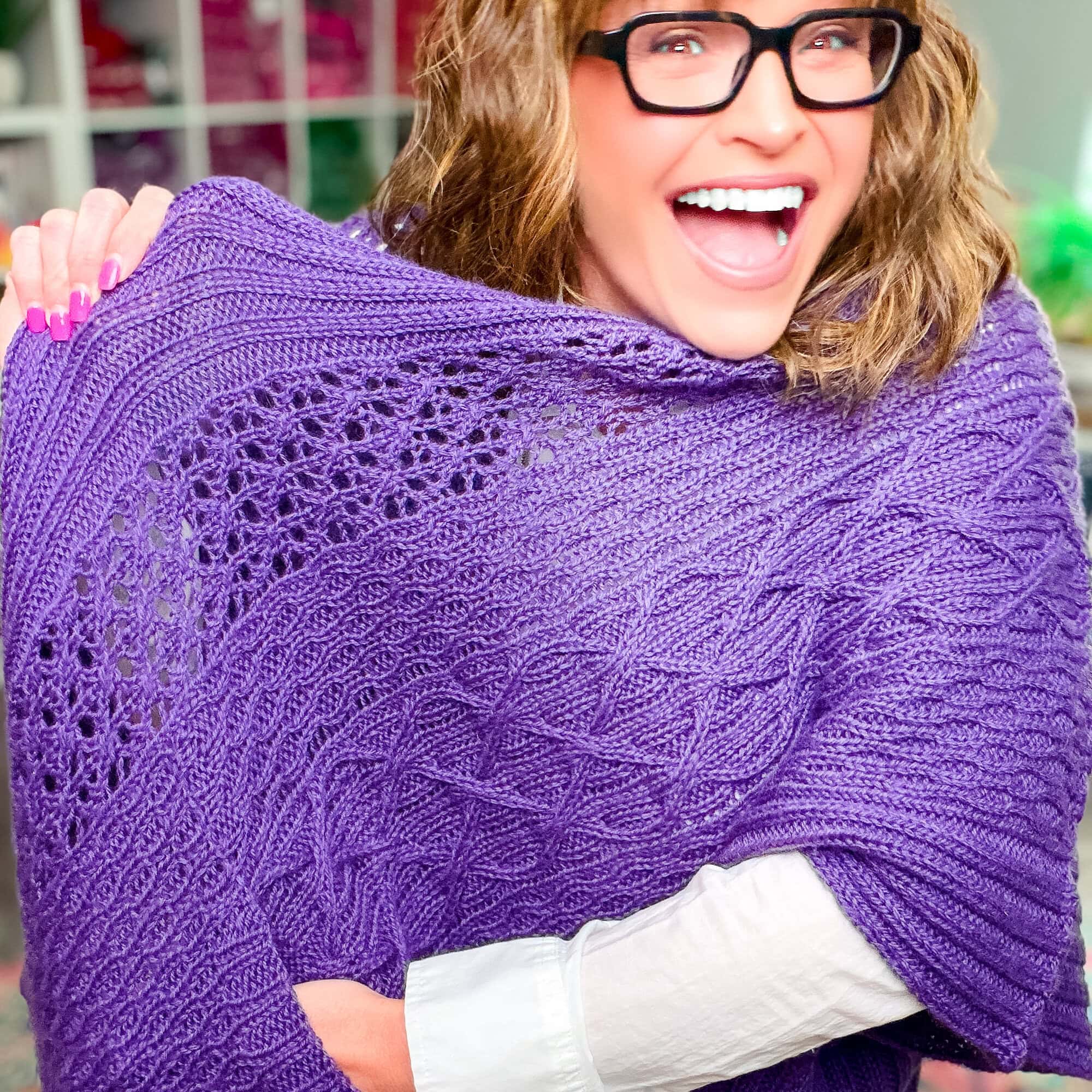
Straight off the hook or needles, your crochet or knit lace may look like a pile of scrunch. It looks nothing like you expect since the yarn is acting like it’s still in the skein or ball. It’s pulling the stitches together, and the holes must be opened to show off your beautiful work. This is where blocking comes in.
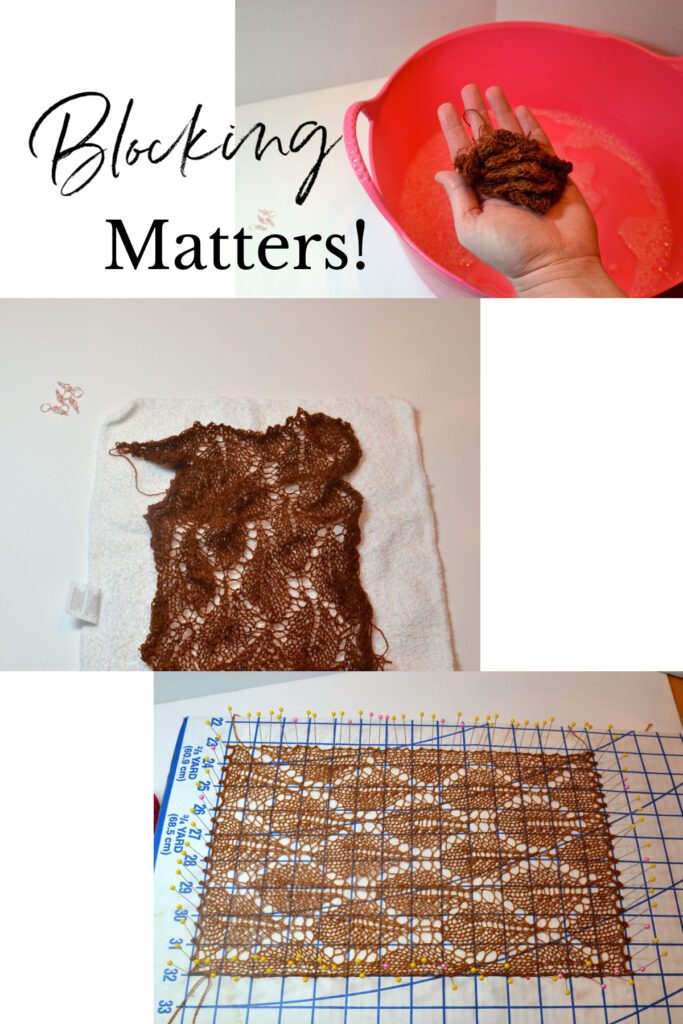
You can find out all about blocking in this YouTube video.
Holes matter! You’ve placed the holes where you want them and have a gorgeous stitch pattern to show off your amazing work. You MUST BLOCK your work to show off your work and open up your project to the correct size.
Blocking Tools for Crochet and Knitting
A job is always easier with the right tools. When it comes to blocking lace, this is definitely true.
You’re going to need:
Blocking mat(s) – so you don’t need to use your bed
Blocking wires – so you can get straight edges, points, or curves and don’t need so many pins
Pins for Blocking – to hold the wires in place while your project dries to size and shape
Use the links above to purchase your blocking tools.
Seriously – blocking makes crochet or knit lace come alive. Once you open up those strategically placed holes – POW! Everything falls into place!
So, What is Lace?
Well, basically, it’s a fabric made of strategically placed holes that form pretty patterns. Lace fabric is usually made with a needle and thread or bobbins wound with thread woven together. It’s quite complex and completely different from knitting and crocheting.
Do You Knit or Crochet Lace?
That’s an easy one. You can do either one, depending on the tools and techniques you prefer.
Here’s a few points to consider.
Knit lace involves decreasing and increasing, usually within the same row, to make single stitch holes in specific places. Knit lace tends to flow visually, and the holes tend to progress gradually across the fabric. Lace knitting usually uses small round holes.
Crochet lace is normally made using longer stitches and therefore forms larger holes. Stitch placement in crochet can also create differently shaped holes, which can make crocheted lace look very different from knit lace.
Does Lace Knitting Use Less Yarn?
Yes! Lace knitting (or crochet) uses less yarn. If you think about it, you’re creating holes instead of stitches, so the more holes you make, the less yarn you use.
Is Knitted Lace Stretchy?
Another YES! Both knit and crochet lace are very stretchy. The more holy the lace, the more stretchy the fabric.
What Yarn to Crochet or Knit Lace?
When you think of lace fabric, you automatically think of ‘tiny thread,’ but the reality of knit and crochet lace is that you can pretty much use any weight of yarn you like. It all depends on what you want from your finished product.
If you want an oversized sweater as a statement piece that’s quick to produce – use bulky yarn. Yes, I said bulky!
But, if you want a lightweight drapey shawl that takes some time to complete as an heirloom project, then, by all means, choose lace weight. We often use larger needles with lace-weight yarn to make a more open, airy, drapey fabric.
As always – SWATCH to make sure you get the fabric and qualities you want from your work.
But it’s not just swatching that matters when it comes to crochet and knit lace.
Looking for some more ideas?
Check out the links below for more yarny lace fun…
Try some Crochet Placemat Patterns for practicing lace.
Eyelets are one of the simplest lace patterns.
This is a really cute knit shawl pattern.
Frequently Asked Questions
Is crochet lace or knit lace harder to make?
They're different challenges rather than one being objectively harder! Knit lace uses yarn overs and decreases worked in both knit and purl that can be tricky to tink (unknit) if you make a mistake… and mistakes in lace are easy to make. Crochet lace uses chains and various stitch heights and is generally more forgiving if you need to rip back and redo a section. Many crafters find crochet lace easier to learn initially, but knit lace often creates more refined, delicate fabric especially in fine yarn. Try both and see which you prefer!
Which looks more delicate… crochet or knit lace?
In fine yarn, both can be extraordinarily delicate and beautiful. The structure is slightly different… knit lace tends to have a flowing, drapey quality with a regular repeating structure. Crochet lace often has more openwork and can create more dramatic geometric or floral motifs. The fabric construction means knit lace has more drape and crochet lace has more body. For the most delicate look in either craft, use fine fingering or lace weight yarn and block your finished piece… blocking is what truly makes lace come alive.
Why is blocking so important for lace?
Lace looks completely different before and after blocking. Before blocking, the yarn overs are tight and scrunched and the pattern is barely visible. After blocking… the holes open up, the stitches spread into their final shape, and the full pattern emerges. For a lace shawl, blocking can increase the wingspan by 20 to 30 percent. It genuinely looks like a completely different item. Blocking is not optional for lace… it's the final step that reveals all your hard work. Wet blocking or steam blocking both work depending on your fiber.
What's the best yarn for lace?
Smooth yarn in natural fibers is ideal! Wool and wool blends block beautifully… the fibers relax and set into their final shape. Silk and silk blends add a gorgeous drape and sheen. Plant fibers like cotton and linen work well for lace with a crisper feel. Avoid fuzzy yarns (like mohair or angora) for fine lace… the fibers obscure the stitch detail. For your first lace project, fingering weight in a smooth wool or wool blend is the most forgiving and traditional choice.
Can beginners make lace?
Yes! Start with simple lace… worsted weight yarn makes bigger stitches that are easier to see and count, which helps enormously when learning. A small project like a dishcloth in a simple lace pattern (just yarn overs and k2tog) is a fantastic introduction. The key skills are: reading a simple chart or written instructions carefully, counting your stitches at the end of every row, using lifelines before complicated rows, and not panicking when you make a mistake (because you will, and it's fixable). Lace is learnable… it just takes patience and attention.