
Mastering the Stacked Double Crochet Stitch!
With its intricate patterns and endless possibilities, crocheting continues to captivate crafters worldwide. With a huge choice of crochet stitches, the stacked double crochet stitch stands out as versatile and visually appealing. So not only is it useful, but it's prettier too. Here, we'll delve into this new stitch on the block, exploring its anatomy and purpose. And we'll let you know why it's become a favorite edge stitch among crocheters.
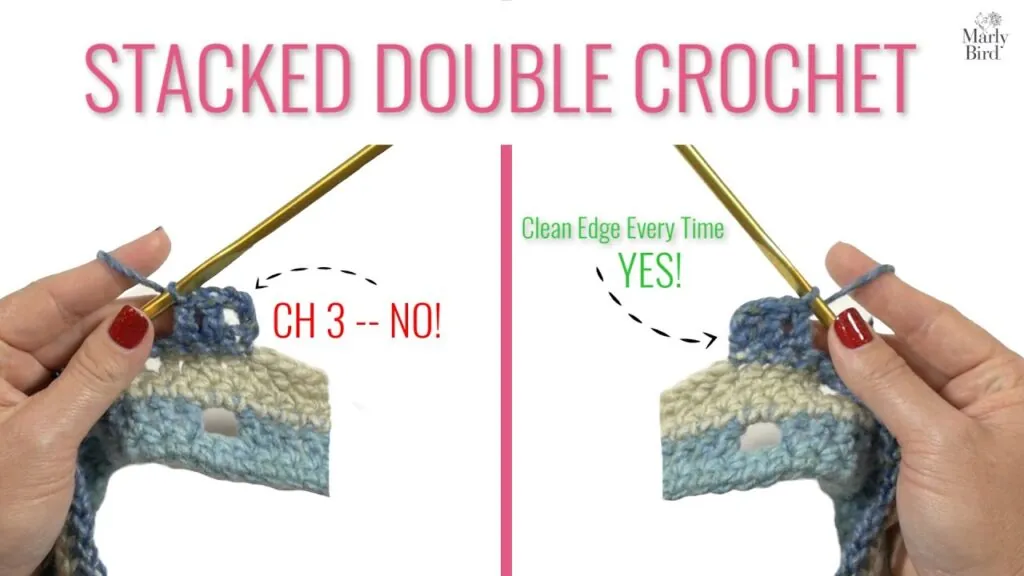
Understanding the Stacked Double Crochet
The stacked double crochet is a variation of the usual chain two or chain three, giving a double crochet row its height. It involves working two single crochet stitches stacked on top of each other. You may hear of it referred to as “stacked single crochets,” but you won’t ever hear that from me. I always refer to a stitch by the end product. In this case, though you're stacking two single crochets, the result is a double crochet stitch. In my opinion, this stacking creates a cleaner, neater line along the side of your project. It also has more give and stretch than chain two or chain three.
Anatomy of the Stacked Double Crochet
To work a stacked double crochet stitch, follow these steps:
- Foundation Row: Create a foundation chain of the desired length and work your first row normally.
- Turning Chain: Rather than making a turning chain to give you the height of your next row, insert your hook into the top of the last stitch made, yarn over, pull up a loop, yarn over and pull through both loops on your hook, making a single crochet. Then, insert your hook back into the single crochet stitch you just created and yarn over, pull up a loop, yarn over and pull through both loops on the hook, creating a second single crochet.
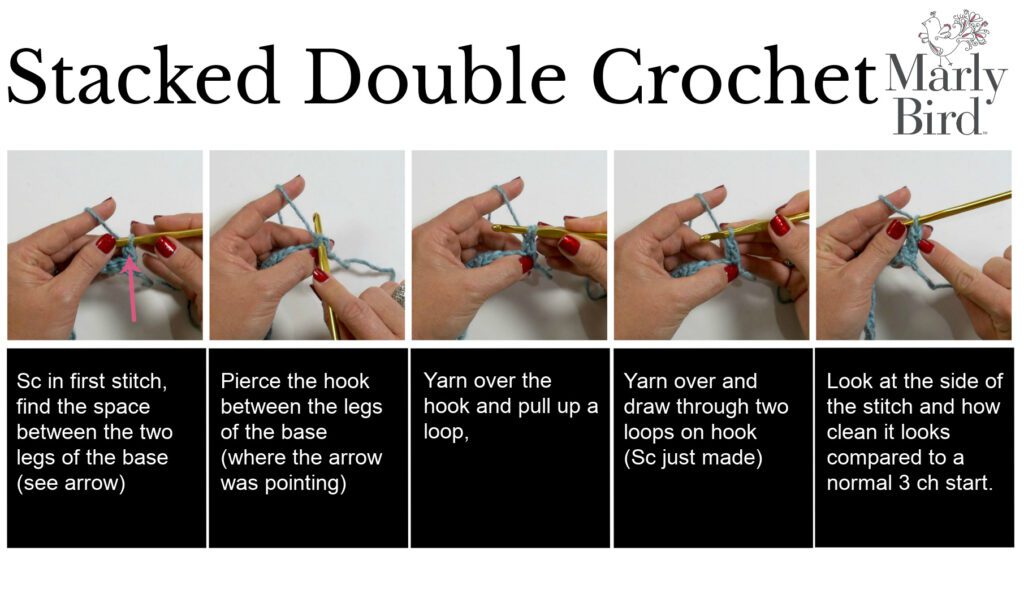
Congratulations, you’ve made your first stacked double crochet!
Purpose and Benefits
The stacked double crochet stitch offers several advantages.
- Enhanced Texture: The stacked nature of this stitch creates a cleaner line with more stretch.
- Stability: The additional stitches worked on top of each other make for a sturdier edge than the traditional chain stitch.
- Visual Appeal: The layered effect of stacked double crochet adds visual interest and makes projects stand out with added dimension.
What Stacked Double Crochet Replaces
While the traditional chain stitch is a staple in crochet patterns, the stacked double crochet offers a compelling alternative. It's particularly useful in projects where flexibility and visual appeal are key. It's ideal for crochet projects where edges are clearly visible, such as scarves and shawls. It replaces the need for the inflexible crochet chain stitches, which, if worked too loosely, can appear loopy.
The stacked double crochet is valuable to any crocheter's repertoire, offering versatility, texture, and visual appeal. Whether you're a seasoned crocheter looking to expand your crochet skills or a beginner eager to try something new, mastering this crochet stitch opens up a world of creative possibilities.
So grab your crochet hook and yarn, and embark on a journey of crocheting excellence with the stacked double crochet!
Or, to learn more crochet techniques, try:
Best Crochet Stitches For a Baby Blanket
9 Easy Interesting Crochet Stitches
And, for the most fantastic colorwork and courses, visit the MarlyBirdHouse!
Frequently Asked Questions
What problem does the stacked double crochet solve?
The classic chain-3 turning chain that starts a double crochet row almost always leaves an ugly hole or gap at the edge of your work. It also creates confusion about whether to count the chain as a stitch. The stacked double crochet replaces that turning chain with an actual stitch-like construction that creates clean, straight edges without gaps. Once you start using it, your double crochet edges look so much more polished and professional that you'll wonder how you lived without it.
How is the stacked double crochet different from a regular double crochet?
A regular double crochet is yarn over, insert hook, pull up loop, yarn over, draw through two loops, yarn over, draw through two loops. The stacked double crochet uses a slip stitch and a modified double crochet at the start of the row to build up the height of a double crochet without starting with a chain. The visual result is nearly identical to a real double crochet but without the gap that chains create. It counts as your first stitch of the row.
Is the stacked double crochet hard to learn?
Not hard at all… just slightly different from what you're used to. The main learning curve is remembering to do it at the start of every row instead of automatically reaching for your chain. Once it becomes muscle memory, it's faster than chaining and the results are so much cleaner. Marly has a video tutorial that shows you the exact movements in real time. Watch it once, practice on a swatch, and you'll have it down.
Can I use the stacked double crochet in any double crochet pattern?
Yes! Any flat pattern worked in rows of double crochet can use this technique. It works for blankets, scarves, garments, dishcloths, shawls… anything where you turn your work at the end of a double crochet row. The one thing to check is whether the pattern instructs you to “skip the turning chain” at the beginning of rows… if so, the stacked dc is essentially doing the same thing. It's a universal upgrade to your double crochet skills.
Does the stacked double crochet work for other tall stitches too?
Great question! Yes… the same concept extends to other tall stitches like treble crochet (triple crochet). Instead of chaining 4, you can build a stacked treble using a similar method. And for half double crochet, a stacked version replaces the chain-2 turning chain. The more you understand the principle (building height with stitches instead of chains), the more you can apply it across your whole crochet practice. It's a mindset shift as much as a technique!
Categories: Crochet, Tips, Tricks, Techniques for Knitting and Crochet



I just paid $47 for something I cannot find. I guess I need a refund. Thank you.
Hi there, are you talking about Camp Colorwork? Did you get the confirmation email? Please reach out to the customer support team for help: contact@marlybird.com