Elevate Your Crochet Skills! Monet Crochet Blanket…

Are you ready to embark on a creative journey that will take your crochet skills to new heights? Look no further than the Monet Crochet Blanket Masterclass, an immersive experience designed to help unleash your inner artist and create a stunning heirloom-quality masterpiece. This blog post explores what makes this masterclass a game-changer for crochet enthusiasts and how you can join this exciting adventure.

Updated Nov. 4, 2025

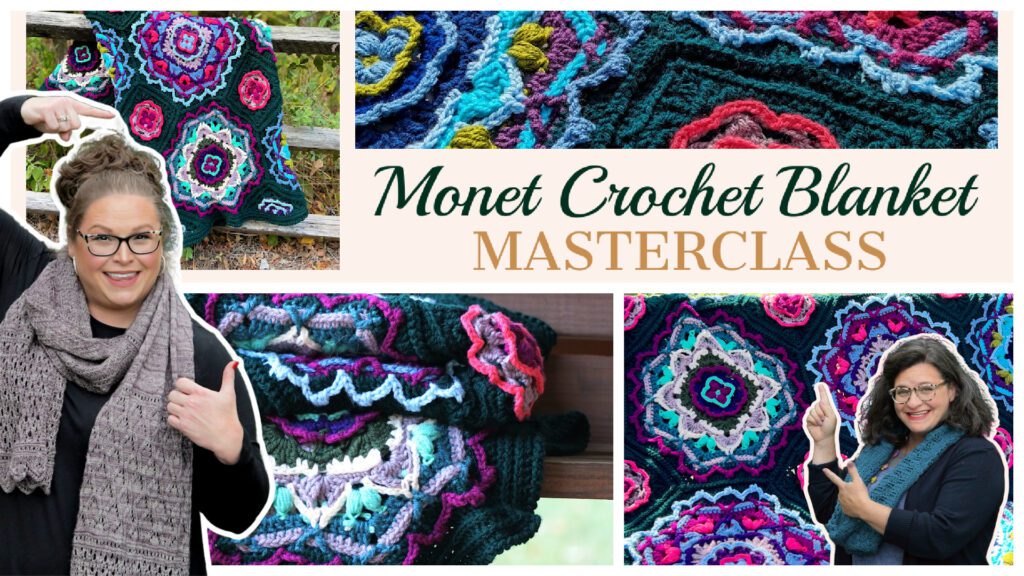
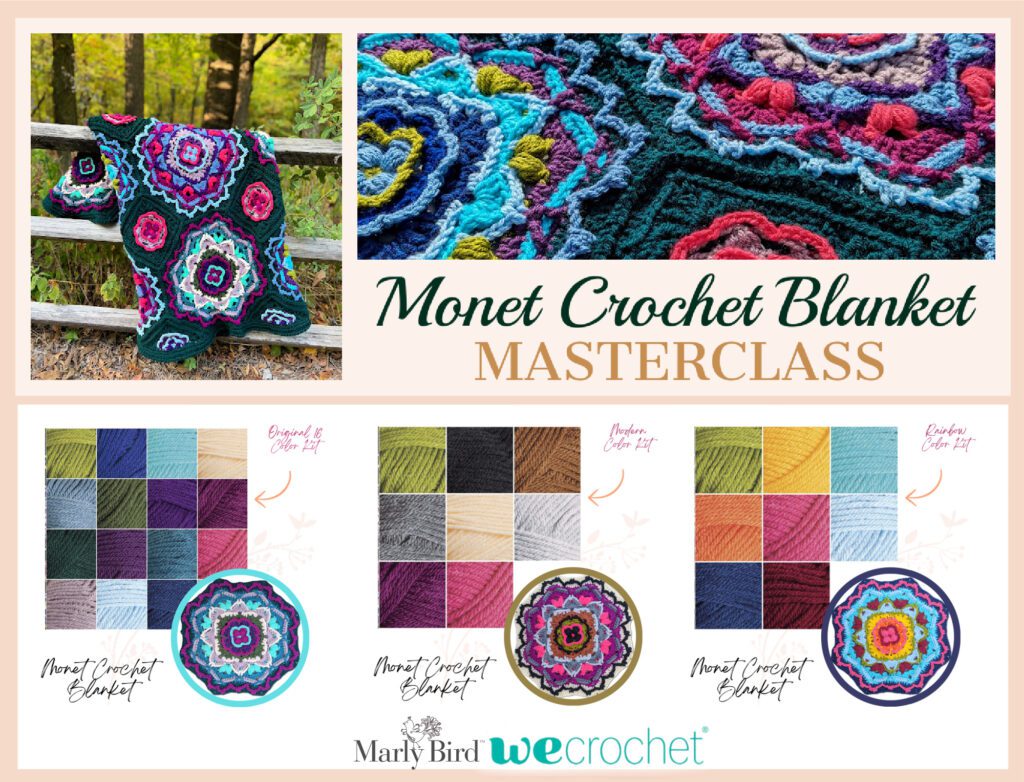
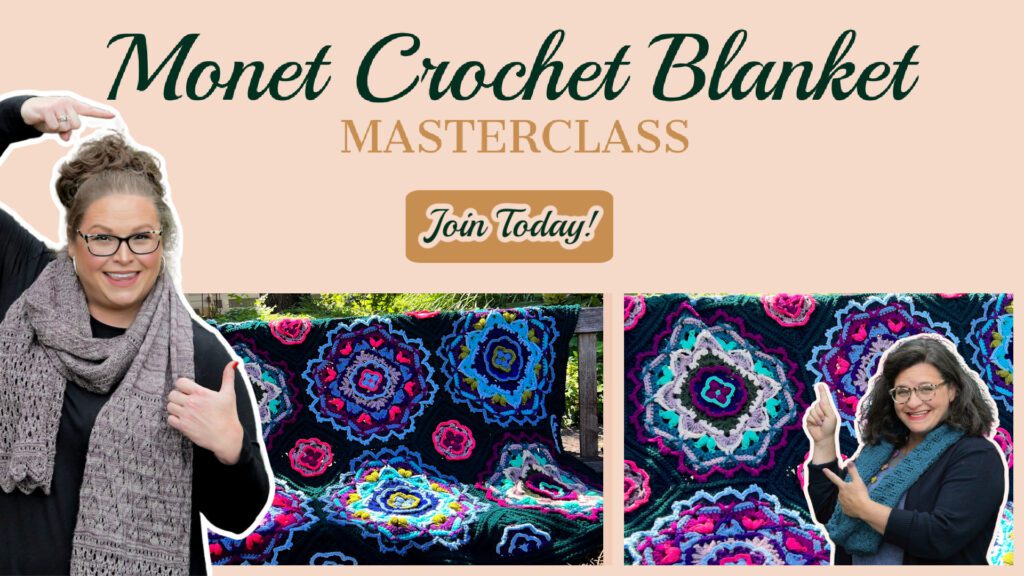
Collage of 4 images of the Monet Crochet Blanket, including Marly Bird and Robyn Chachula. Crochet blanket made from large crochet motifs in bright colors on dark blue/green background yarn. Monet Crochet Blanket Masterclass - Marly Bird

Affiliate Disclosure: This post contains affiliate links. To learn more please visit my privacy policy here๐Ÿ’–

Discover the Artistry of Crochet

Crochet is more than just a craft; it's a form of artistry that allows you to transform yarn into beautiful creations. The Monet Crochet Blanket Masterclass, led by renowned crochet expert Robyn Chachula, invites you to explore the world of vibrant motifs and intricate patterns. Whether you're an advanced crocheter or just starting your journey, this masterclass is designed to meet you at your skill level.

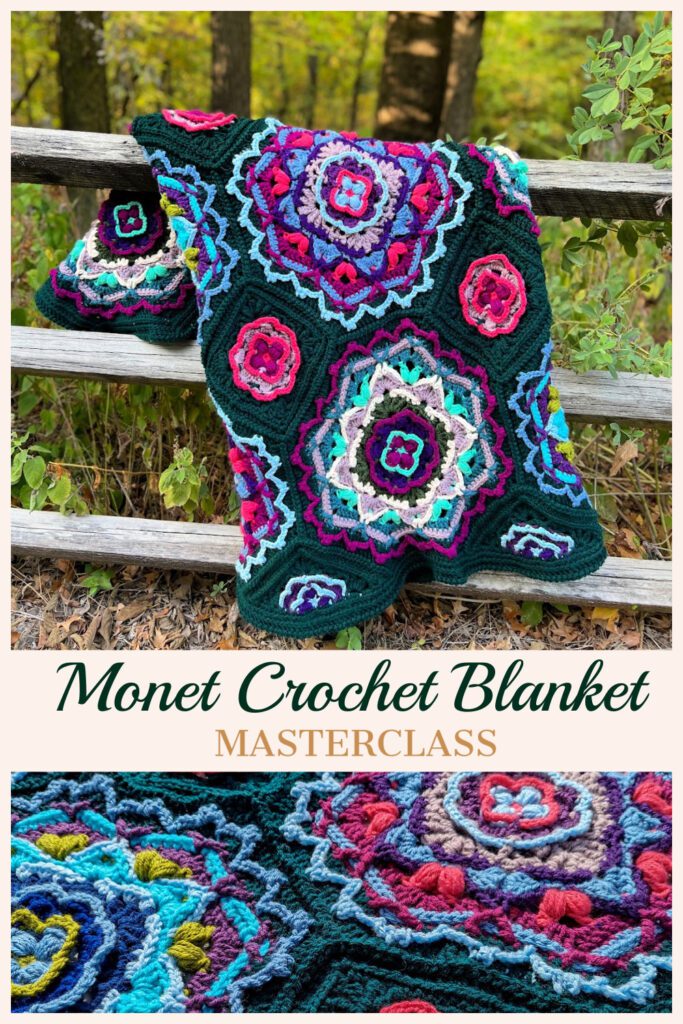
Monet Crochet Blanket in original 16 colors, folded and draped over a 3 post wooden fence with a woods backdrop, text reads Monet Crochet Blanket Masterclass - Marly Bird. With close up of larger motif.

What to Expect:

1. Monet Crochet Blanket Pattern – Mandala Crochet Motifs

At the heart of this masterclass is the Monet Crochet Blanket Pattern. This exquisite design draws inspiration from the renowned artist Claude Monet, known for his stunning garden paintings. With step-by-step video instructions, stitch diagrams, and Robyn's expert guidance, you'll be equipped to create your work of art. Plus, you'll receive the ad-free PDF pattern as part of the course.

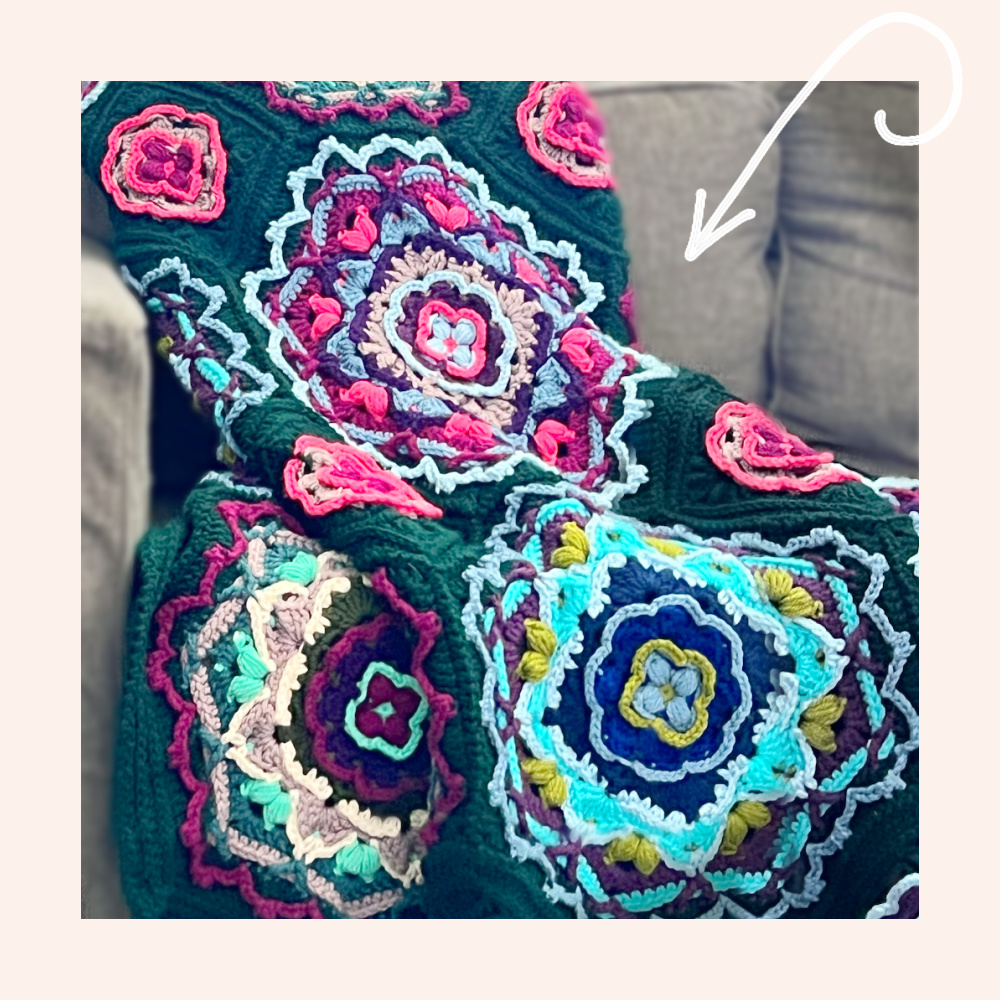
Close up of the Monet Crochet Blanket draped over grey chair - Marly Bird

2. Exclusive WeCrochet Kits

To make your creative journey even more enjoyable, we've partnered with WeCrochet (same company as KnitPicks) to offer exclusive kits featuring the yarn you'll need to bring your vision to life. These kits are curated to match the beauty and elegance of the Monet Crochet Blanket, ensuring you have everything you need at your fingertips.

Monet Crochet Blanket Masterclass - 3 different kit colorways shown below the class image. Original 16 colors, Modern 8 colors, Rainbow 8 colors - Marly Bird and WeCrochet Kit

MATERIALS NEEDED

Larger Blanket Yarn 

WeCrochet, Brava Bulky Weight (100% acrylic, 136 yds / 124 m, 3.5 oz/ 100 g, CYCA# 5 bulky) 

Smaller Blanket Yarn 

WeCrochet, Brava (100% acrylic, 238 yds / 218 m, 3.5 oz/ 100 g, CYCA# 4 worsted) 

Colors and Amounts 

Color A: Hunter, 10 balls

Color B: Tranquil, 1 ball

Color C: Fairy Tale, 2 balls

Color D: Eggplant, 2 balls

Color E: Dublin, 1 ball

Color F: Cream, 1 ball

Color G: Seraphim, 2 balls

Color H: Peacock, 1 ball

Color !: Avocado, 1 ball

Color J: Celestial, 1 ball

Color K: Cornflower, 1 ball

Color L: Solstice Heather, 1 ball

Color M: Denim, 2 balls

Color N: Sky, 2 balls

Color O: Mulberry, 2 balls

Color P: Rouge, 1 ball

Hook

Size H/8 (5 mm) or K/10.5 [6.5 mm] or size needed for gauge.

Join the Creative Community

One of the most rewarding aspects of this masterclass is the sense of community it fosters. Connect with fellow crafters, share your progress, and seek guidance when needed. You're not alone on this journey; we're here to support you every step of the way. Exclusive Facebook Group just for Monet Crochet Blanket students.

Favorite This Pattern on Ravelry - Marly Bird

Don't Miss Out on The Monet Crochet Blanket Masterclass!

This Masterclass is your ticket to crochet artistry!

Whether you dream of creating a stunning heirloom or want to expand your crochet skills, this masterclass has something to offer. Join us on this creative adventure and turn your crochet dreams into reality.

Ready to embark on your crochet masterpiece journey? Enroll in the Monet Crochet Blanket Masterclass now. Your creative adventure awaits!

Monet Crochet Blanket Masterclass - Join Today Button - Marly Bird

Remember, the world of crochet artistry is at your fingertips, and the Monet Crochet Blanket Masterclass is your key to unlocking it. Don't miss this exciting opportunity to elevate your crochet skills and create something truly extraordinary. Join us today!


Thank you for joining us in exploring the Monet Crochet Blanket Masterclass. We can't wait to see the beautiful creations you'll bring to life. If you have any questions or want to learn more about the masterclass, contact us anytime. Happy crocheting!

Psst: Marly and Robyn did a YouTube live to talk about this amazing masterclass. Check it out

Frequently Asked Questions

What is the Monet Crochet Blanket Masterclass all about?

So here's the thing… it's a super fun way to dive into crochet artistry! You'll learn to create a stunning, heirloom-quality blanket inspired by the beautiful art of Claude Monet… all while elevating your crochet skills!

Who teaches the Monet Crochet Blanket Masterclass?

Honestly… it's taught by the amazing Robyn Chachula, who is a total pro when it comes to crochet! She guides you through creating these gorgeous mandala motifs, and you even get the ad-free PDF pattern as part of the deal.

Can I get a kit for the Monet Crochet Blanket Masterclass?

Yes! We've teamed up with WeCrochet to offer exclusive kits with all the yarn you'll need… they're curated to match the blanket's beauty, so you'll have everything right at your fingertips!

What kind of yarn and hook do I need for this blanket?

For the larger blanket parts, you'll use WeCrochet Brava Bulky Weight yarn, and for the smaller parts, it's WeCrochet Brava in worsted weight. The page lists out all the specific colors and amounts needed… and a 5 mm or 6.5 mm hook should do the trick!

Is there a community for people taking this masterclass?

You bet! One of the coolest parts is joining a whole community of fellow crafters. You can share your progress, ask questions, and just connect with others… there's even an exclusive Facebook Group just for students!

Beginner-Friendly Knit and Crochet Hat Patterns with Video Support (And Perfect for Stash Busting!)

November is here, and holiday crafting is officially ON. But before you run out and buy more yarn (again ๐Ÿ˜…), letโ€™s take a peek at what you already have. Because chances are, youโ€™ve got the perfect yarn for a quick project right in your stash.

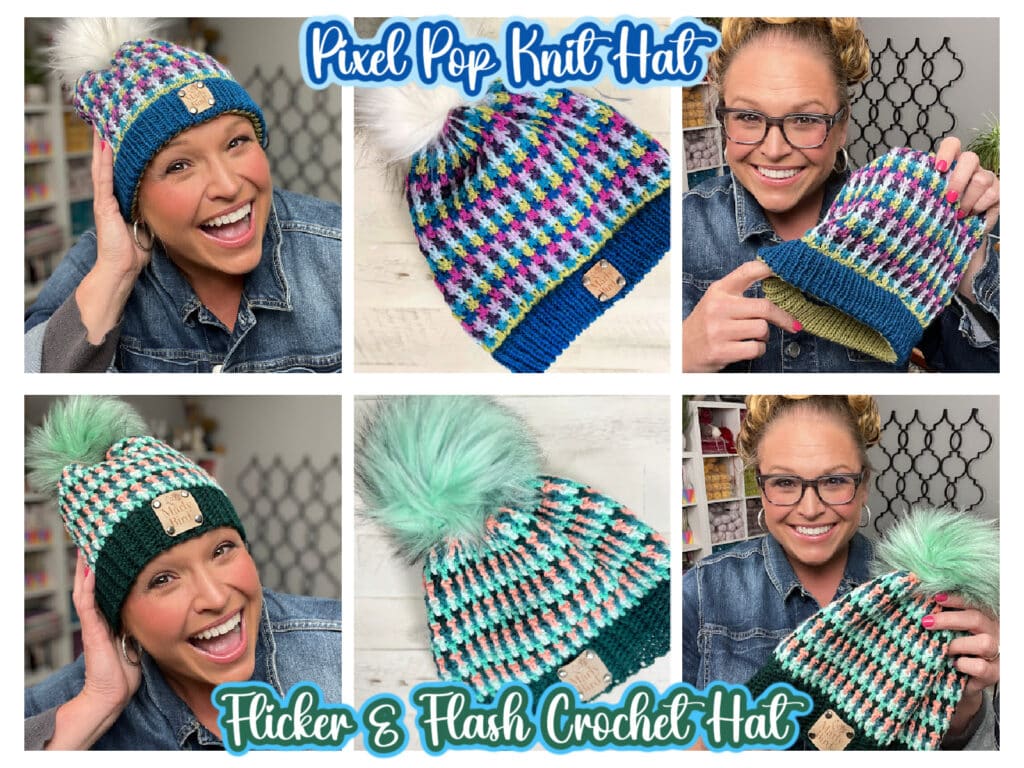
A smiling woman showcases holiday hats in a vibrant collage, wearing and holding colorful knit and crochet hats with pom-poms. Text reads โ€œPixel Pop Knit Hatโ€ and โ€œFlicker & Flash Crochet Hatโ€โ€”perfect for fans of playful knit patterns. -Marly Bird

โœจ Enter two crowd-favorite hat patterns from the Marly Bird collection: Skip the stress (and the yarn store) and grab one of these crowd-favorite patterns that use yarn scraps you probably already have on hand:
โœจ the Flicker and Flash Crochet Hat or ๐ŸŽ‰ the Pixel Pop Knit Hat.

Both are:

  • Perfect for adventurous beginners
  • Written in 9 sizes (baby through adult)
  • Backed by full video tutorials
  • And yes โ€” absolutely stash-friendly

Whether you knit, crochet, or want to learn both (๐Ÿ‘€ BiCrafty Bootcamp shoutout below!), these patterns will help you clear out that yarn bin and make something beautiful while you do it.

Affiliate Disclosure: This post contains affiliate links. To learn more please visit my privacy policy here๐Ÿ’–


๐Ÿงถ Why These Patterns Work for Beginner Makers

These arenโ€™t your average โ€œeasyโ€ patterns. Theyโ€™re crafted to teach, support, and empower beginners who are ready to try something newโ€”like colorwork, sizing, or working in the roundโ€”with all the support you need built in.

Hereโ€™s what youโ€™ll love:

๐Ÿงต Clear written instructions: Plus helpful diagrams or charts for each version

๐ŸŽ“ Skill-building focus: Color changes, shaping, charts, and diagrams

๐Ÿ“บ Step-by-step video tutorials: Walk-throughs available for free

๐Ÿ“ Sized for everyone: From newborn to adult large

๐Ÿงถ Stash-busting friendly: Use 2 or more colors of sport or worsted weight yarn

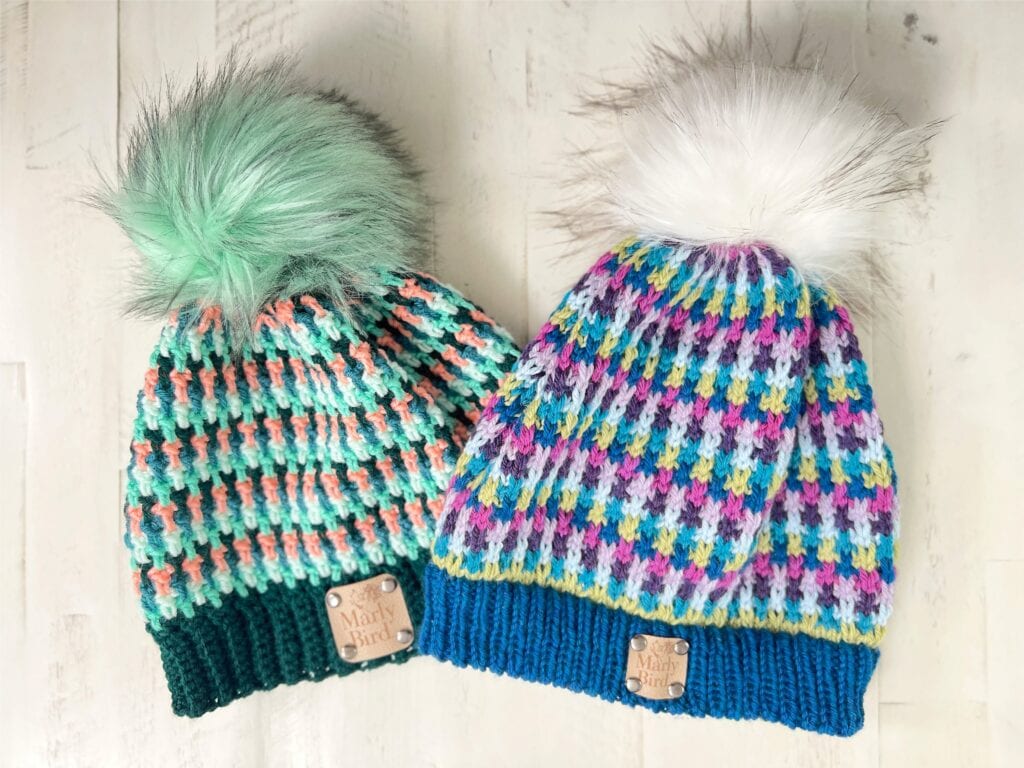
Two colorful knit beanies with large faux fur pom-poms on top. Inspired by the Flicker and Flash crochet hat, each features ribbed brims, leather tags, and vibrant huesโ€”perfect for those seeking a fun accessory or a free crochet pattern idea. -Marly Bird

โœจ Why These Hats Are Gift Worthy and Holiday-Make Approved

You know that cozy feeling when you finally find the perfect pattern to use up all those little leftover skeins and mini balls from past projects? These hats are that.

  • ๐Ÿงถ Stash-friendly: Use 2+ colors of worsted (knit) or sport weight yarn (crochet)
  • ๐ŸŽ Gift-worthy: Easy to finish over a weekendโ€”and people will actually wear them
  • ๐Ÿ‘ฉโ€๐Ÿ‘งโ€๐Ÿ‘ฆ Sized for the whole fam: 0โ€“3 months through Adult L
  • ๐Ÿงต Style + texture: Gorgeous colorwork that looks harder than it is
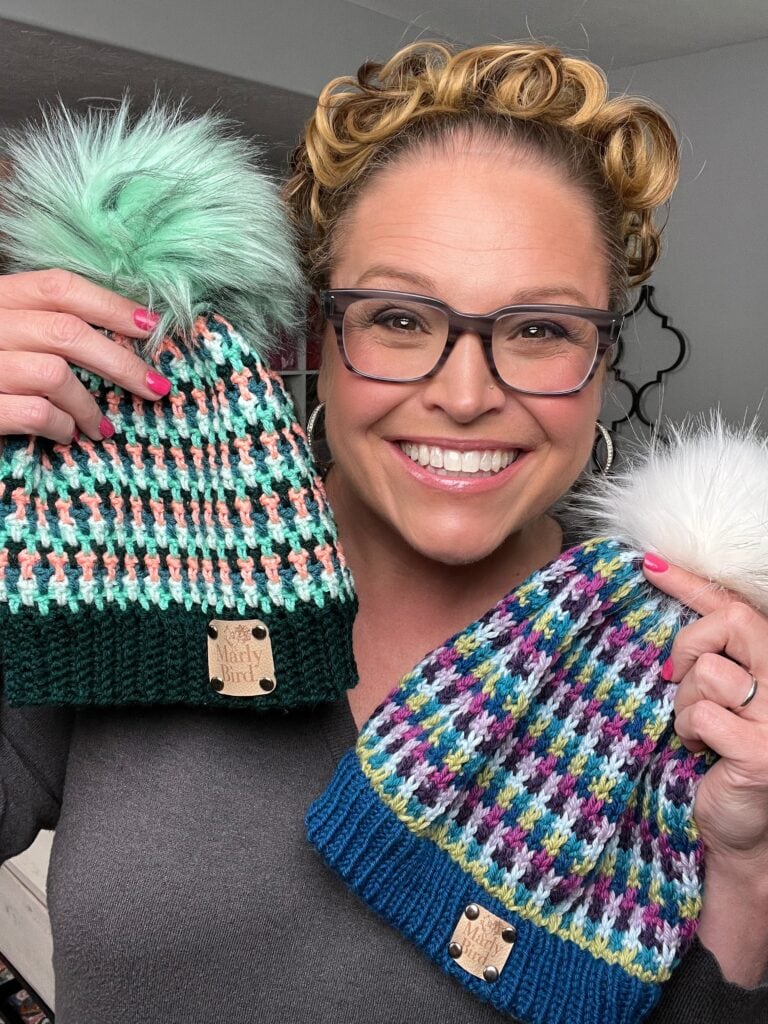
A smiling person with glasses and curly hair holds up two colorful stash-busting knit hats with pom-poms, one green and pastel, the other blue and multicolored, each showcasing a "Marly Bird" tag. -Marly Bird

๐ŸŽ‰ The Pixel Pop Knit Hat

This colorful knit hat is perfect for confident beginners who want to dip their needles into stranded colorwork. The Pixel Pop Hat is designed to look bold and modern without overwhelming your brain or your yarn stash.

Quick to knit, easy to customize, and available in 9 sizes, it's a go-to gift pattern or weekend project with lots of personality.

๐Ÿ‘‰ Free pattern: www.marlybird.com/blog/pixel-pop-knit-hat-free-pattern
๐Ÿ‘‰ Add to Ravelry: www.ravelry.com/patterns/library/pixel-pop-knit-hat
๐Ÿ‘‰ Ad-Free PDF Pattern available:

๐Ÿ“Œ Get the Pixel Pop Knit Hat Ad Free PDF
(Access inside the Marly Bird House with unlimited viewing and bonus material)

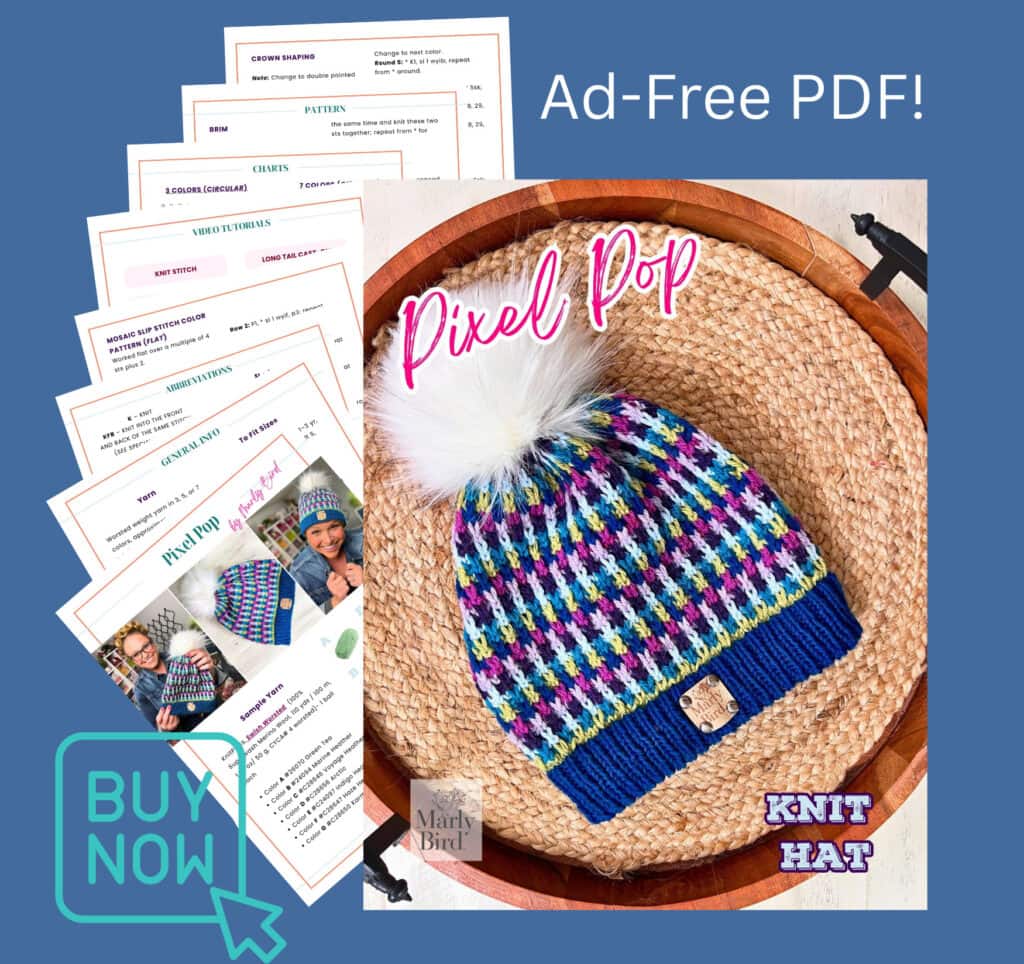
A colorful pixel pop knit hat with a pom-pom is displayed on a woven mat. The image advertises an ad-free PDF pattern called โ€œPixel Pop,โ€ alongside printed pattern pages and a "Buy Now" button on a blue background. -Marly Bird

This vibrant colorwork hat is perfect for adventurous beginners and knitters who love bold graphic designs. Itโ€™s worked in the round from the brim up and uses simple stitch repeats to create a punchy pop of color.

Pixel Pop Details:

  • Skill Level: Advanced beginner
  • Yarn: Worsted weight yarn (sport weight version included in paid PDF only in the Marly Bird House)
  • Construction: Seamless, knit in the round
  • Sizes: 0โ€“3 mo, 3โ€“6 mo, 6โ€“12 mo, 1โ€“3 yr, 3โ€“5 yr, 6โ€“10 yr, Teen, Adult M, Adult L
  • Includes: Written instructions + colorwork charts
  • Recommended Yarn: Swish Worsted from KnitPicks โ€“ Get it here
A woman holding colorful yarn balls with text "Turn This" and an arrow pointing to another woman wearing a multicolored knit hat, created using a mosaic slip stitch knitting pattern, with text "Into This. -Marly Bird

โœจ The Flicker and Flash Crochet Hat

Ready to play with color without the hassle of juggling yarn strands? The Flicker and Flash Hat uses long double crochet stitches to create stunning color shifts with minimal effort.

Itโ€™s fun, fast, and perfect for adventurous beginners. Plus, with 9 size options and no seaming required, itโ€™s a great stash-buster for makers who want a satisfying project that flies off the hook.

๐Ÿ‘‰ Free pattern: www.marlybird.com/blog/flicker-flash-crochet-hat-free-pattern
๐Ÿ‘‰ Add to Ravelry: www.ravelry.com/patterns/library/flicker-and-flash-crochet-hat
๐Ÿ‘‰ Ad-Free PDF Pattern available:

๐Ÿ“Œ Get the Flicker and Flash Crochet Hat PDF
(Access inside the Marly Bird House with unlimited viewing and bonus material)

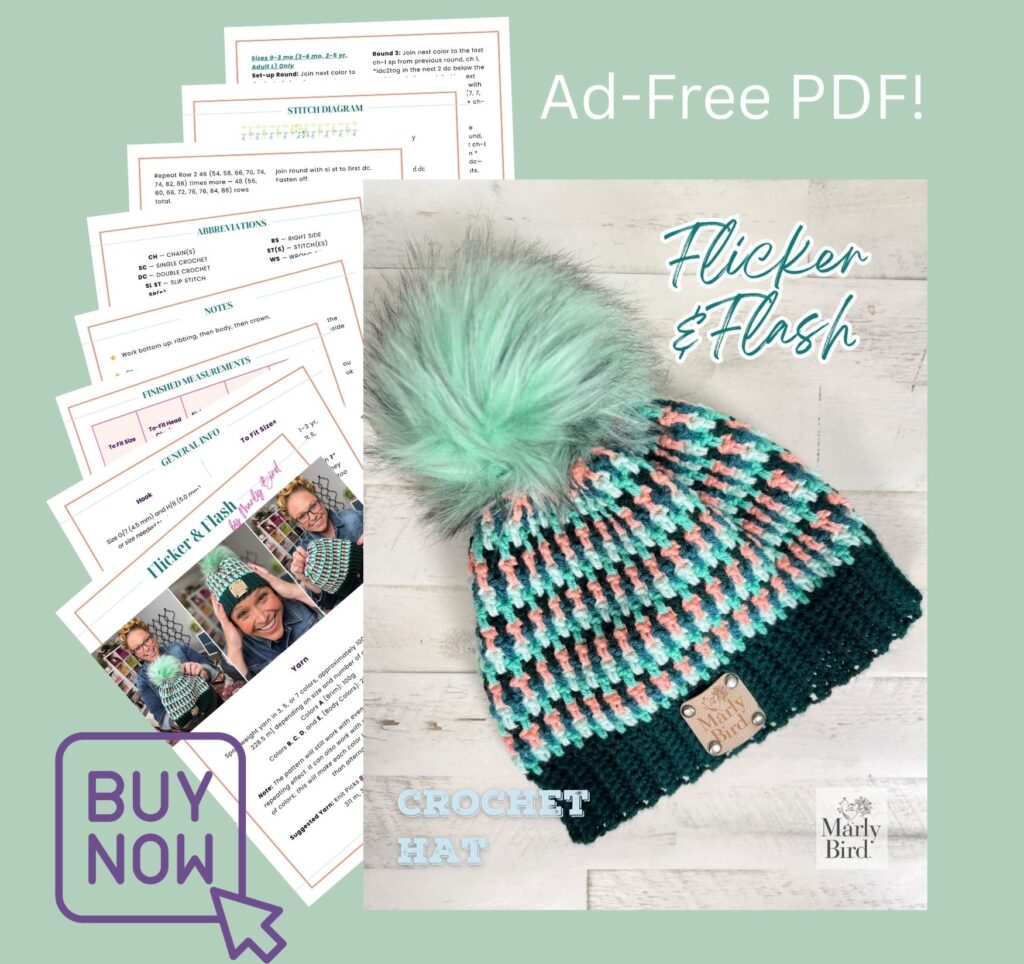
A promotional image for the flicker and flash crochet hat pattern PDF. It features the cozy hat with a pom-pom, sample pattern pages, and a โ€œBuy Nowโ€ button. Text reads โ€œAd-Free PDF!โ€ and โ€œFlicker & Flash Crochet Hat.โ€. -Marly Bird

Crocheters, this one's for you. This modern colorwork hat uses long double crochet for a striking look with minimal fussโ€”no need to carry multiple yarns across rounds.

Flicker & Flash Details:

  • Skill Level: Adventurous beginner / intermediate
  • Yarn: Sport weight yarn (worsted weight version included in paid PDF)
  • Construction: Worked in the round
  • Sizes: Same as Pixel Pop
  • Includes: Written instructions + stitch diagram
  • Recommended Yarn: Brava Sport from KnitPicks โ€“ Get it here
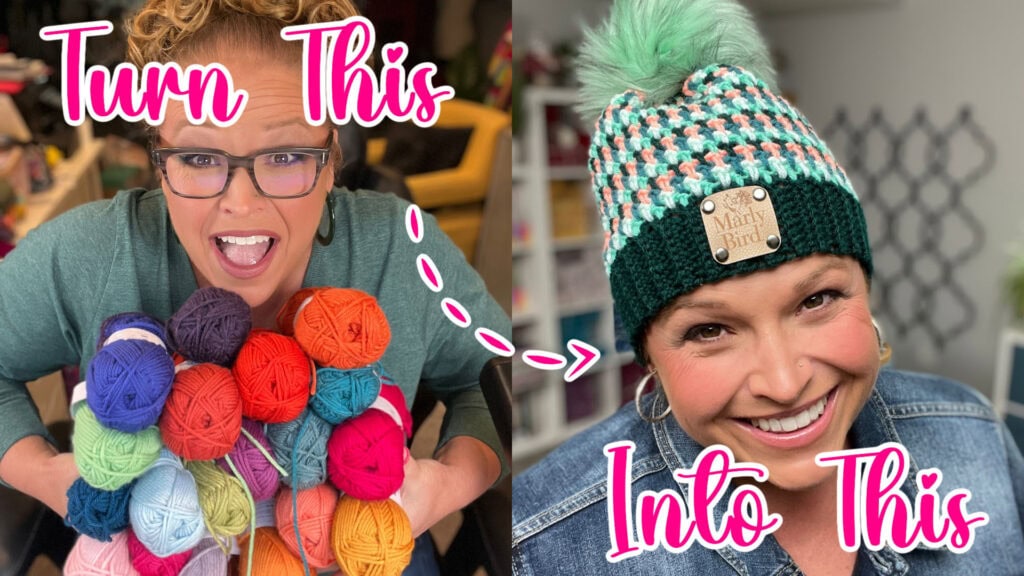
Split image: Left, a woman with glasses excitedly holds colorful yarn balls. Right, she wears a crocheted green, white, and blue "flicker and flash" crochet hat with a pom-pom, smiling. Text reads: โ€œTurn This Into Thisโ€”free crochet pattern.โ€. -Marly Bird

๐Ÿงต Want to Be BiCrafty?

If you crochet and want to learn to knit (or vice versa), these hats are a fantastic crossover pointโ€”and Iโ€™ve got free resources to help you learn!

Check out my BiCrafty Bootcamp series:
๐Ÿงถ For crocheters learning to knit: Learn to Knit here
๐Ÿงต For knitters learning to crochet: Learn to Crochet here

Both series are completely free, video-supported, and designed for real beginners with yarn in hand and questions in mind. Come learn at your own pace!


๐Ÿงบ What Youโ€™ll Need

If youโ€™ve got leftover yarn from past projects (hello, stash bins ๐Ÿ‘‹), youโ€™re already halfway there. These patterns are perfect for using up those extra skeins and partial balls youโ€™ve been saving. But if youโ€™re looking for an excuse to treat yourself to something newโ€”or want to match what I used in the samplesโ€”hereโ€™s exactly what we used for each hat.

A whimsical white rabbit with pink accents and decorative swirls joyfully leaps into a large pile of colorful yarn balls, celebrating the playful spirit of the This or That Make-Along 2025. -Marly Bird
Let's Go Stash Diving

Yarn

  • Pixel Pop (knit): Worsted weight
  • Flicker and Flash (crochet): Sport weight
  • Use 2+ colors from your stashโ€”this is a stash-busting challenge, after all!

๐Ÿงถ Stash yarn suggestions:


Hooks & Needles

  • Knitters: US 8 (5.0 mm) 16″ circulars + DPNs or your fave method
  • Crocheters: US H/8 (5.0 mm) or I/9 (5.5 mm)

Notions


Gauge for both hat patterns

  • Knit: 20 sts x 32 rows = 4″ in mosaic stitch pattern
  • Crochet: 15 sts x 16 rows = 4″ in long double crochet

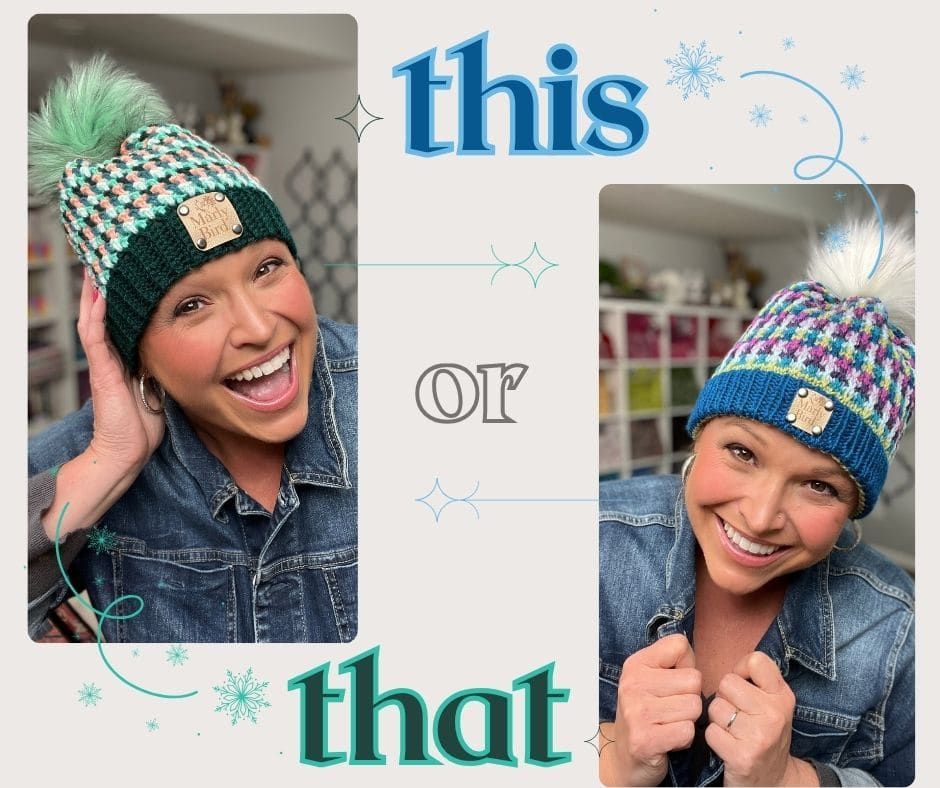
A smiling woman in a denim jacket models two colorful knitted hats with pom-pomsโ€”perfect stash-busting knit hat patterns. One hat is green and white, the other blue and white. Text reads โ€œthis or thatโ€ with decorative blue and green accents. -Marly Bird

๐Ÿ“ฅ Upgrade to the Premium PDF

Want the ad-free version with all the bells and whistles?

Youโ€™ll get:

  • Instructions for both yarn weights
  • Clean, printable layout
  • No ads
  • Exclusive video tutorials (hosted on Vimeo!)
  • Unlimited access inside the Marly Bird House

๐Ÿงฃ Pixel Pop PDF ($7.50): Get it here
๐Ÿงถ Flicker & Flash PDF ($7.50): Get it here


โ„๏ธ Final Thoughts

Itโ€™s a busy time of yearโ€”but that doesnโ€™t mean you have to stop making. The Pixel Pop Knit Hat and Flicker and Flash Crochet Hat are perfect for:

  • Quick handmade gifts
  • Crafting with leftovers
  • Easy weekend wins

So grab your scraps, choose your pattern, and get stitching! ๐Ÿ’—

๐Ÿ“ธ Donโ€™t forget to tag your makes with #MarlyBird and #MMMDI so I can cheer you on!

Frequently Asked Questions

Are these hat patterns really good for beginners?

Oh yes! Honestly, these are perfect for adventurous beginners who want to try something new like colorwork or shaping… theyโ€™re written with tons of support, including video tutorials!

Can I really use up my yarn stash with these patterns?

Absolutely! That's the best part… they're designed to be stash-busting, using 2 or more colors of yarn you probably already have hanging around. Itโ€™s the perfect excuse to finally use up those bits and bobs!

What kind of yarn do I need for the Pixel Pop Knit Hat?

For the Pixel Pop Knit Hat, you'll want worsted weight yarn… if you grab the paid PDF from the Marly Bird House, you'll even get a sport weight version included!

How difficult is the Flicker and Flash Crochet Hat?

It's listed as adventurous beginner to intermediate… but honestly, the long double crochet stitches make the color changes super easy and fuss-free, so it works up faster than you might think!

What if I want to learn both knitting and crochet?

Yes! That's amazing… you can totally do both with these patterns. Plus, I have a totally free BiCrafty Bootcamp series to help you learn the other craft if you're not already a pro at it!

How to Make a Gauge Swatch in Crochet (Free Worksheet +…

Letโ€™s be real, friend โ€” when inspiration strikes, the last thing you want to do is crochet a mini blanket of homework before diving into your new project. But if youโ€™ve ever ended up with a crop top instead of a sweater, or a baby blanket that could double as a California King… youโ€™ve already met the power of gauge.

A gauge swatch is your projectโ€™s reality check. Itโ€™s a small sample that shows how your yarn, hook, and tension work together โ€” before you commit to the full piece. Even with the same yarn and hook, two people can get completely different results based on how tightly or loosely they crochet. I can tell you firsthand: if Iโ€™ve had too much coffee, my gauge changes faster than my yarn color changes in an ombrรฉ skein. โ˜•๐Ÿงถ

So before diving into your next blanket, hat, or cardigan, letโ€™s take five minutes and learn how to make a crochet gauge swatch the easy way โ€” the Marly way.

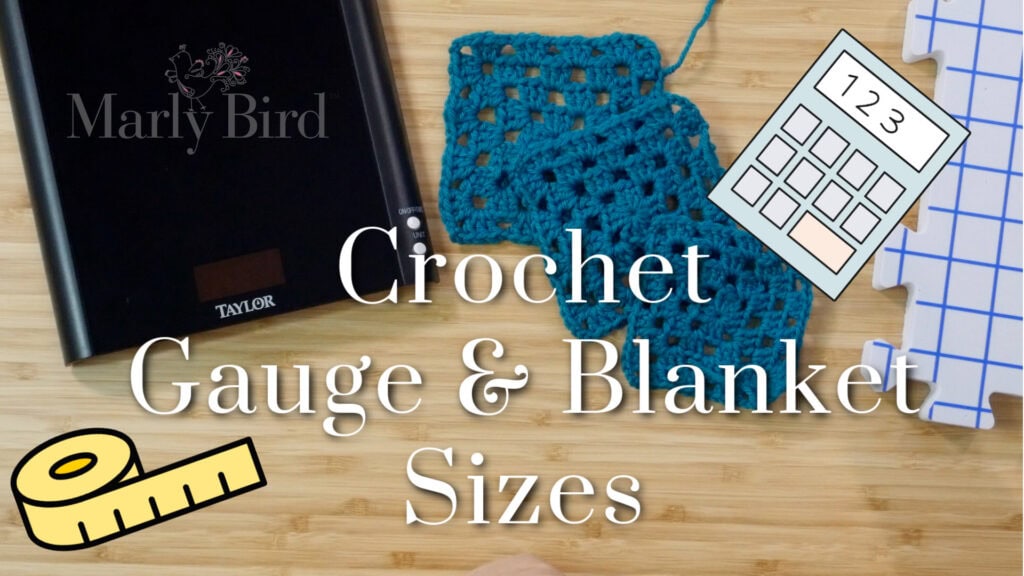
A crochet gauge swatch, calculator, measuring tape, and blocking mat are shown with the text "Crochet Gauge & Blanket Sizes" overlaid. The Marly Bird logo is in the corner, highlighting a helpful crochet step-by-step guide. -Marly Bird

Affiliate Disclosure: This post contains affiliate links. To learn more please visit my privacy policy here๐Ÿ’–


๐Ÿช„ What Youโ€™ll Need


โœจ Step-by-Step: How to Make a Crochet Gauge Swatch

Step 1: Chain and Work a Sample

  1. Chain a few extra stitches beyond what the pattern calls for (if your gauge is 4″, make a 6″ swatch; if itโ€™s 6″, aim for 8″).
  2. Crochet in the same stitch pattern used for the project โ€” for example, single crochet, half double crochet, or the shell stitch pattern.
  3. Work at least two full rows to stabilize the edge, then continue until your swatch is roughly square.

Step 2: Block (or at Least Flatten)

Lay your swatch flat and gently steam or spritz it. This relaxes the stitches and gives you a realistic measurement. ๐Ÿ‘‰ Always measure after blocking, especially for garments and blankets.

Step 3: Measure Your Gauge

Place your ruler across the center of the swatch (avoid the edges โ€” they lie to you!). Count how many stitches fit into 4 inches (10 cm) across and how many rows tall in that same section.

If the pattern says โ€œ14 dc and 10 rows = 4 in,โ€ hereโ€™s how to read it:

  • Stitches per 4โ€: Count horizontally across.
  • Rows per 4โ€: Count vertically up.

๐Ÿงฎ Fill-in-the-Blank Gauge Tracker

My Stitch TypePattern SaysMy Measurement
Stitches per 4โ€__________
Rows per 4โ€__________

If my stitch count is higher than the pattern โ†’ my stitches are smaller โ†’ I crochet tight โ†’ go up a hook size.
If my stitch count is lower than the pattern โ†’ my stitches are bigger โ†’ I crochet loose โ†’ go down a hook size.

โšก Quick Adjustment Cheat Sheet

My Swatch Showsโ€ฆWhat It MeansTry This
More stitches per inchToo tightLarger hook
Fewer stitches per inchToo looseSmaller hook
Same stitches & rowsPerfect match!Youโ€™re ready to start ๐ŸŽ‰

๐Ÿงท Planning Blanket Sizes (Optional)

Once you know your gauge, you can use it to customize the width of your blanket. Use this quick formula from the Shell I Make You a Blanket pattern:

  • My repeat width = ____ inches
  • Target width = ____ inches
  • Repeats needed = target รท repeat = ____ รท ____ = ____
  • Starting chain = (repeats ร— stitch multiple) + turning chains = ____

You can find standard measurements in the Crochet Blanket Size Chart.


๐Ÿ“‹ Worksheet: Crochet Gauge Notes

Yarn: ___________________________
Hook Size: ___________________________
Stitch Type: ___________________________
Stitches per 4″: ___________________________
Rows per 4″: ___________________________
Notes: ___________________________

Download the full printable Gauge & Blanket Size Worksheet here โ†’ Join the Marly Bird Newsletter


๐Ÿ’ก Marlyโ€™s Pro Tips


๐ŸŽ Bonus Resources


๐Ÿ“ฃ Final Thoughts

So yes โ€” crochet gauge swatches might seem like the broccoli of the yarn world ๐Ÿฅฆ โ€” not the most exciting part of your meal, but absolutely essential for a healthy project. Take 10 minutes, make a quick swatch, and save yourself hours of โ€œwhy is this sweater for a toddler now?โ€

Donโ€™t forget to grab your free Gauge & Blanket Size Worksheet โ€” your future self will thank you when your next blanket fits perfectly the first time!

โค๏ธ Your BiCrafty Bestie,
Marly Bird

A cartoon avatar of a person with glasses and a brown bun smiles warmly. Their green shirt and black jacket add a stylish touch, while colorful hearts surround them like loving temperature blankets, stitching together an aura of love and positivity. -Marly Bird

Frequently Asked Questions

Why do I need to make a gauge swatch for crochet?

Gauge is how many stitches and rows fit in a given measurement of your fabric. If your gauge doesn't match the pattern's gauge, your finished project will be a different size than intended. For blankets and scarves, that's usually fine. For garments, hats, and anything where size matters… gauge can be the difference between a hat that fits and one that falls over your eyes. A swatch takes 15-20 minutes and can save hours of ripping out a finished project that doesn't fit.

How do I make a gauge swatch?

Here's the basic process step by step. Choose the hook and yarn the pattern specifies. Chain enough stitches for at least a 6-inch wide swatch. Work in the pattern stitch for at least 6 inches in height. Bind off or fasten off. Block the swatch the same way you'll block your finished project (this matters more than people think!). Lay flat and measure: how many stitches across in 4 inches? How many rows in 4 inches? Compare to the pattern's gauge. Marly includes a free downloadable worksheet with this post to make the whole process systematic and easy to record.

What if my gauge doesn't match the pattern?

Adjust your hook size! Too many stitches per inch (gauge too tight)… go up a hook size. Too few stitches per inch (gauge too loose)… go down a hook size. Make another swatch with the new hook. Repeat until your gauge matches. It can take 2-3 swatches to dial in the right hook size. This is normal and worth the time. For every hook size change, expect roughly a 10% change in your stitch gauge. Don't skip this step for garments… your future self will thank you.

Do I need to block my swatch before measuring?

Yes! Your gauge before and after blocking can be very different, especially in natural fibers. Wet-blocking wool opens up the stitches and the fabric can grow by 10-15%. If you measure before blocking and then block your finished piece, the size change will surprise you. Block your swatch exactly as you plan to block the finished project… wet block if you'll wet block the project, steam if you'll steam. Your post-blocking swatch gauge is your real gauge.

Is gauge different in crochet vs. knitting?

Yes! Crochet gauge is typically measured differently from knitting gauge because the stitches have different shapes and proportions. Crochet stitches tend to be taller relative to their width than knitting stitches. Also, crochet gauge varies more between different stitch patterns than knitting gauge… single crochet fabric and double crochet fabric can have dramatically different gauges with the same yarn and hook. Always measure your gauge in the specific stitch the pattern uses, not just in plain single crochet.

Kaleidoscope Harmony Colorwork Knit Hat Pattern

I couldn't be more excited to introduce you to a truly captivating and versatile knitting project – the Kaleidoscope Harmony Knit Hat. This lovely knit beanie is perfect for those of you who enjoy the art of stranded knitting. This colorwork knit hat pattern will not disappoint. Knit those mini hanks or scrap yarn into this stunning knitted work of art.

(updated Oct. 23, 2025)

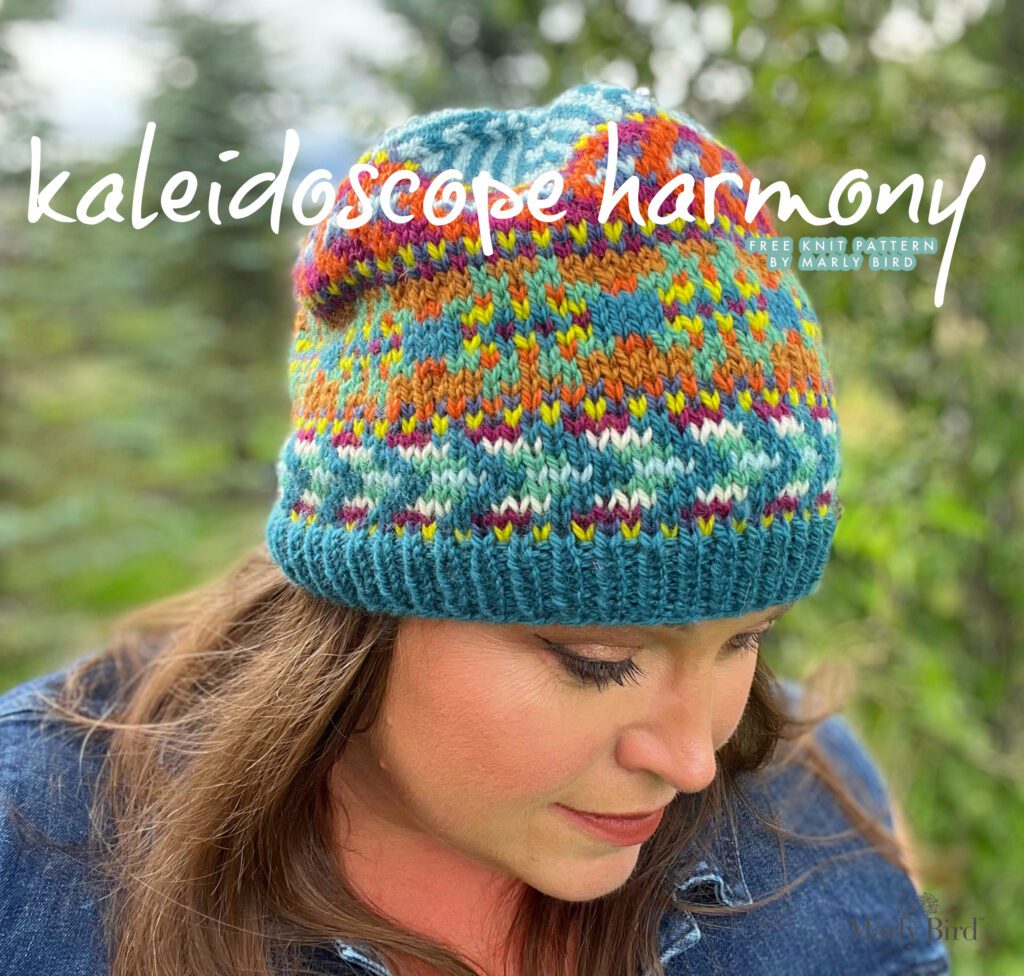
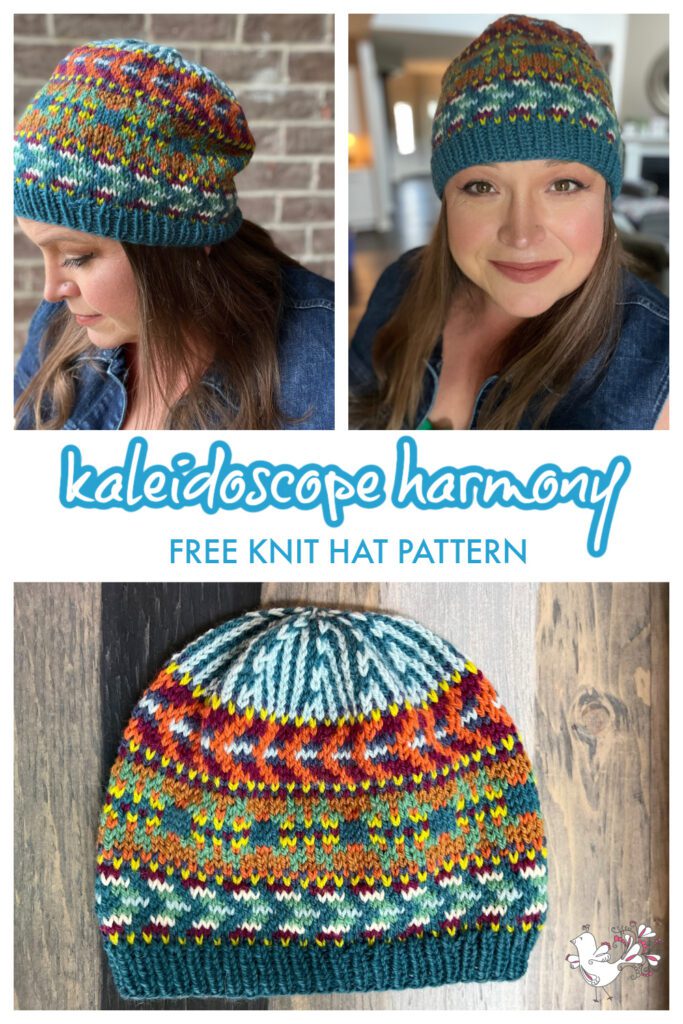
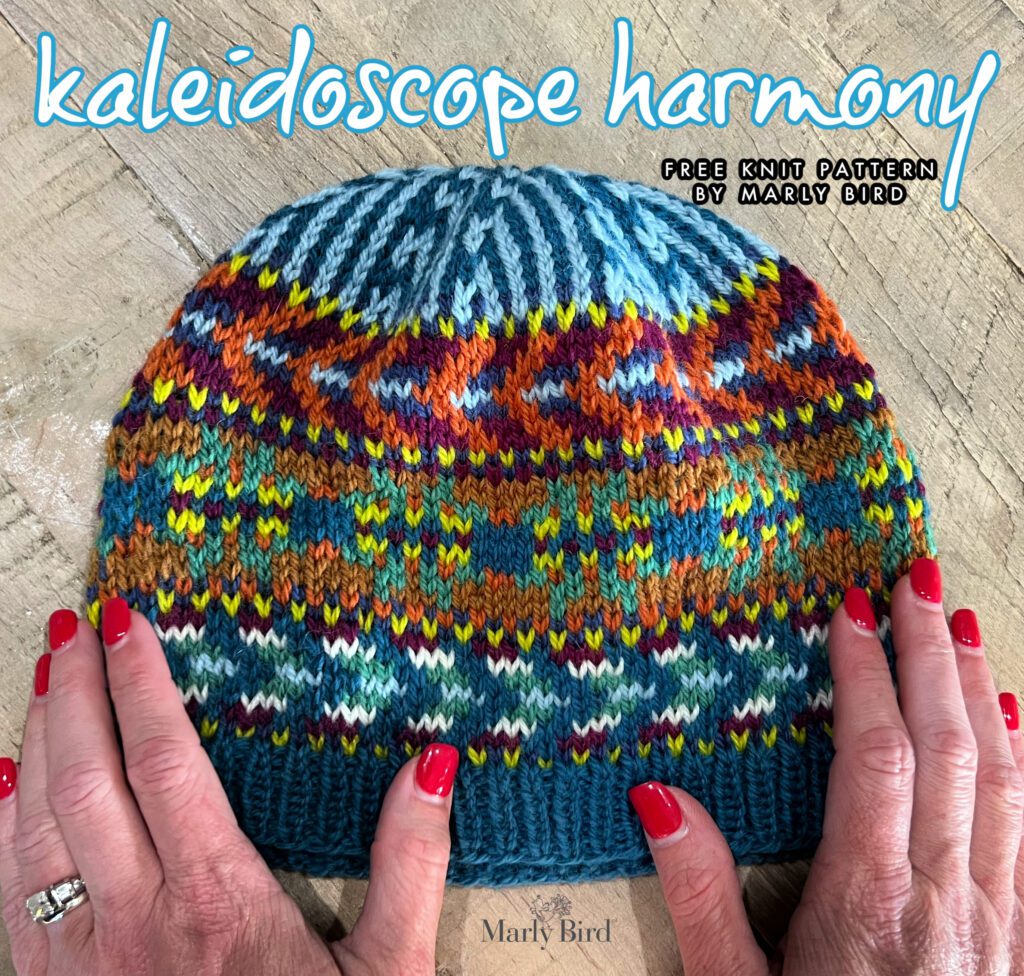
The image shows a person wearing a hand-knit hat with intricate colorwork. The hat, named "Kaleidoscope Harmony," features a vibrant mix of colors creating a striking pattern. The text on the image reads "kaleidoscope harmony free knit pattern by Marly Bird," indicating that this is a design by Marly Bird and that the pattern is available for free. The colorful design of the hat is reminiscent of a kaleidoscope with its symmetrical, repeating patterns and a harmonious blend of colors.

Let me start by saying that this colorwork knit hat pattern is an absolute delight to work on. Combining different colors and simple pattern charts gives the finished product a mesmerizing kaleidoscope effect. It's like wearing a work of art on your head! Whether you're a seasoned knitter or just starting, you'll be completely engaged and entertained every step of the way with this project.

One of the things I love most about the “Kaleidoscope Harmony Hat” is how it allows you to experiment with various color combinations. You can let your creativity run wild and create your unique colorways. I designed this colorwork knit hat pattern in a way that allows you to easily incorporate different shades and hues, making it a truly personalized piece.

So, if you're ready to dive into the world of stranded knitting and colorwork, grab your knitting needles, and let's embark on this colorful journey together. Whether you choose to use this colorwork knit hat pattern for yourself or as a special gift for a loved one, I guarantee that the experience will be both enjoyable and satisfying. Stay tuned for my next post. I share useful tips and tricks to get you started on your “Kaleidoscope Harmony Hat” adventure. Happy knitting!

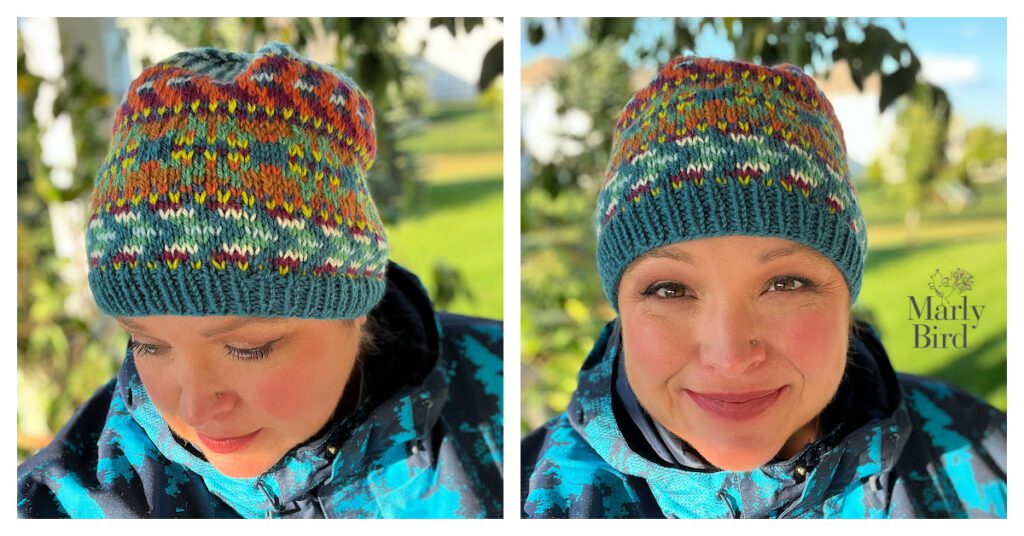
The image features a collage of three photos showcasing a hand-knit hat with a detailed colorwork pattern. At the top, two side-by-side photos depict a person wearing the hat, one showing a profile view and the other a front view, highlighting the hat's fit and design. The bottom photo provides a close-up of the hat laid flat, displaying the intricacy of the colorwork. Above the images, the text "kaleidoscope harmony" is written in a playful, cursive font, followed by "FREE KNIT HAT PATTERN" in capital letters, indicating that the pattern is available at no cost. The design of the hat features a rich array of colors, woven into a complex pattern reminiscent of a kaleidoscope, with a solid color ribbed band at the bottom. The overall presentation suggests that this is promotional material for the free pattern of the "Kaleidoscope Harmony" knit hat by Marly Bird.

What is Fair Isle Knitting?

This isn't just some old knitting technique; it's a vibrant tradition born in the Shetland Islands, where knitters first began knitting tales and traditions into their jumpers with each color they added.

Traditionally, you'd never see more than two colors per round, but the number of colors overall could be unlimited. However, the color palette was typically only that of locally dyed yarn. Projects made from pure Shetland Wool from the Shetland Islands are considered true Fair Isle.

Something to note about knitting with color with the Fair Isle knitting technique: as the knitter transitions from one color to the next, the unused color floats behind the stitches on the needle. Usually, the float does not travel more than 3-5 stitches. Also, the traditional patterning for Fair Isle colorwork is an X and O design.

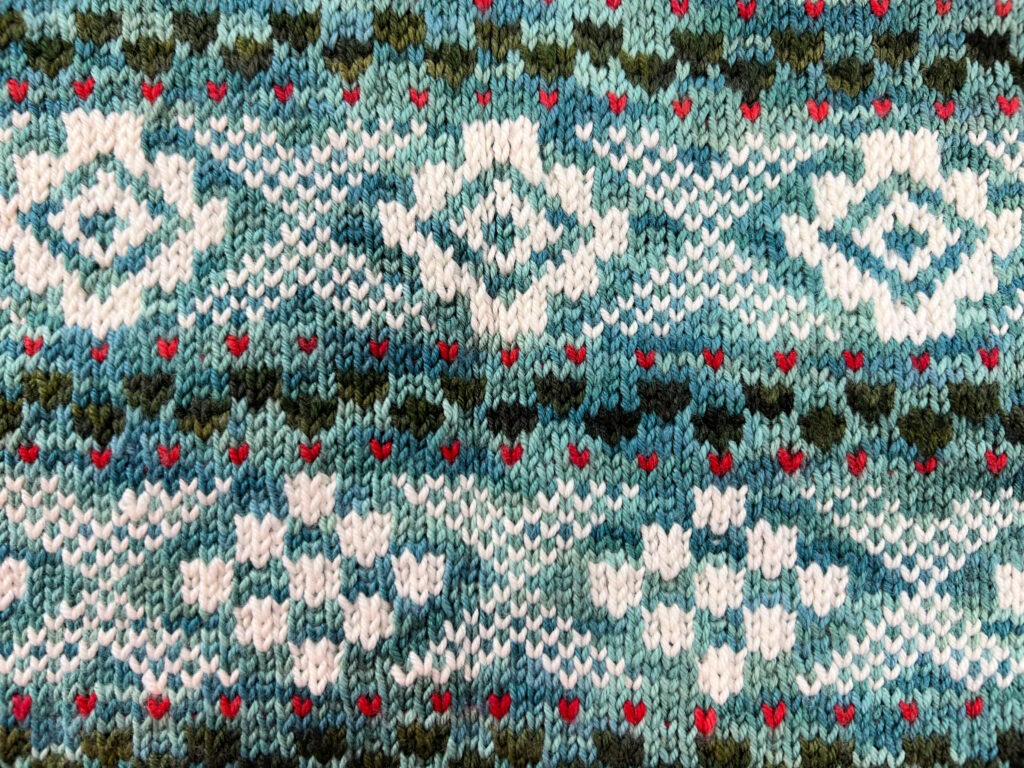
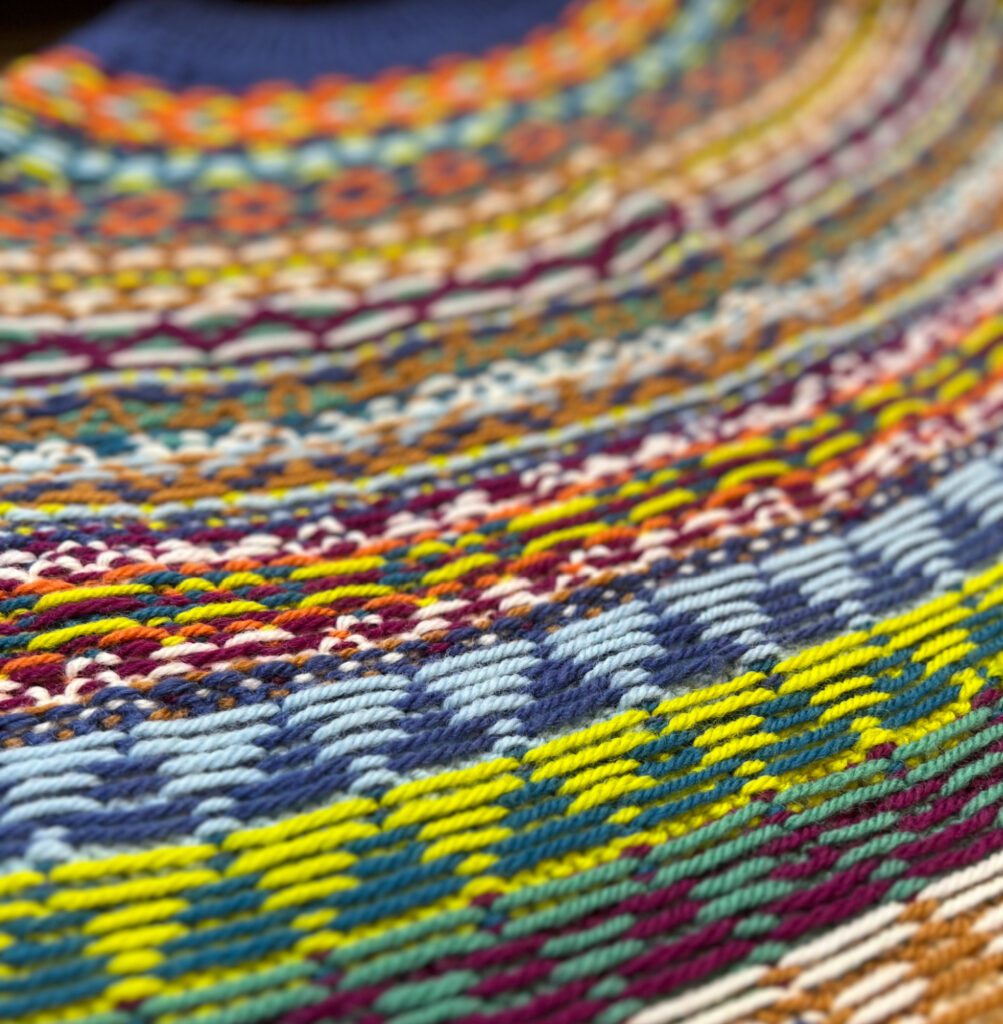
The image displays a detailed view of a knit fabric with stranded colorwork. The pattern features geometric shapes and motifs in a palette of soft whites, blues, greens, and small accents of red, creating a visually rich and textured appearance. This type of work is characteristic of meticulous knitting techniques that involve carrying multiple yarns and alternating between them to create intricate designs. The precision of the stitches and the clarity of the color transitions showcase the skill involved in creating such a piece. The fabric's design is indicative of the complexity and beauty found in stranded colorwork knitting projects like those created by Marly Bird.

Are Stranded Colorwork and Fair Isle Knitting the Same Thing?

So, the long and short answer is that Fair Isle is a specific technique in stranded colorwork. Here's what most people think when they use the term ‘Fair Isle' to describe a colorwork project:

  • Involves working with multiple colors in the same row.
  • Creates beautiful patterns and motifs.
  • Carry two or more colors of yarn across the back of your work while knitting with the active color.

This is NOT FAIR ISLE but Stranded Colorwork.

Why is it not Fair Isle?

Because the project, as described, doesn't fit all three criteria to be called Fair Isle Knitting.

Listen, we can clearly see the term ‘Fair Isle' has become the go-to term for all sorts of stranded colorwork in today's society. The general public has loosened up the rules of calling something Fair Isle. Still, the true traditionalists believe that calling everything Fair Isle when it does not meet all the criteria to be so lessens the history of the Shetland culture and devalues true Fair Isle.

What are the three rules for a project to be considered truly Fair Isle?

  1. The stitch pattern features the traditional X and 0 design.
  2. The project only has two colors working at a time.
  3. Project is made from pure Shetland Wool from the Shetland Islands.

If a project cannot check off all three of the criteria, then its default technique is stranded colorwork knitting.

Where Can You Learn More About Fair Isle?

A long-time friend, Mary Jane Mucklestone, is my go-to resource for learning more about Fair Isle! Her books are a staple in my library, and I encourage all of you to purchase her books for your library.

Mary Jane Mucklestone Books on Amazon

Things You Should Know For Stranded Colorwork

When you start your journey with stranded colorwork, you will immediately come across some different charts and terms that may not be familiar to you. So, to help you along, here is a basic list of things I think you should know before you start any colorwork knit hat pattern, knit sweater, or knit…anything!

How to Read a Colorwork Knitting Chart

Reading a colorwork knitting chart is like following a map that guides you through a landscape of stitches and hues. Most stranded knitting projects typically work in the round (that means no purling or purls in the body of the work!). Youโ€™ll interpret the chart in a specific direction: starting from the bottom row and moving upwards, reading each row from right to leftโ€”just like how you knit in the round.

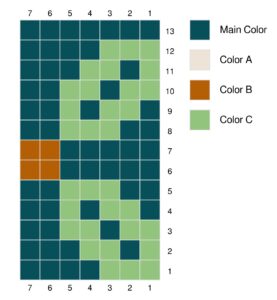
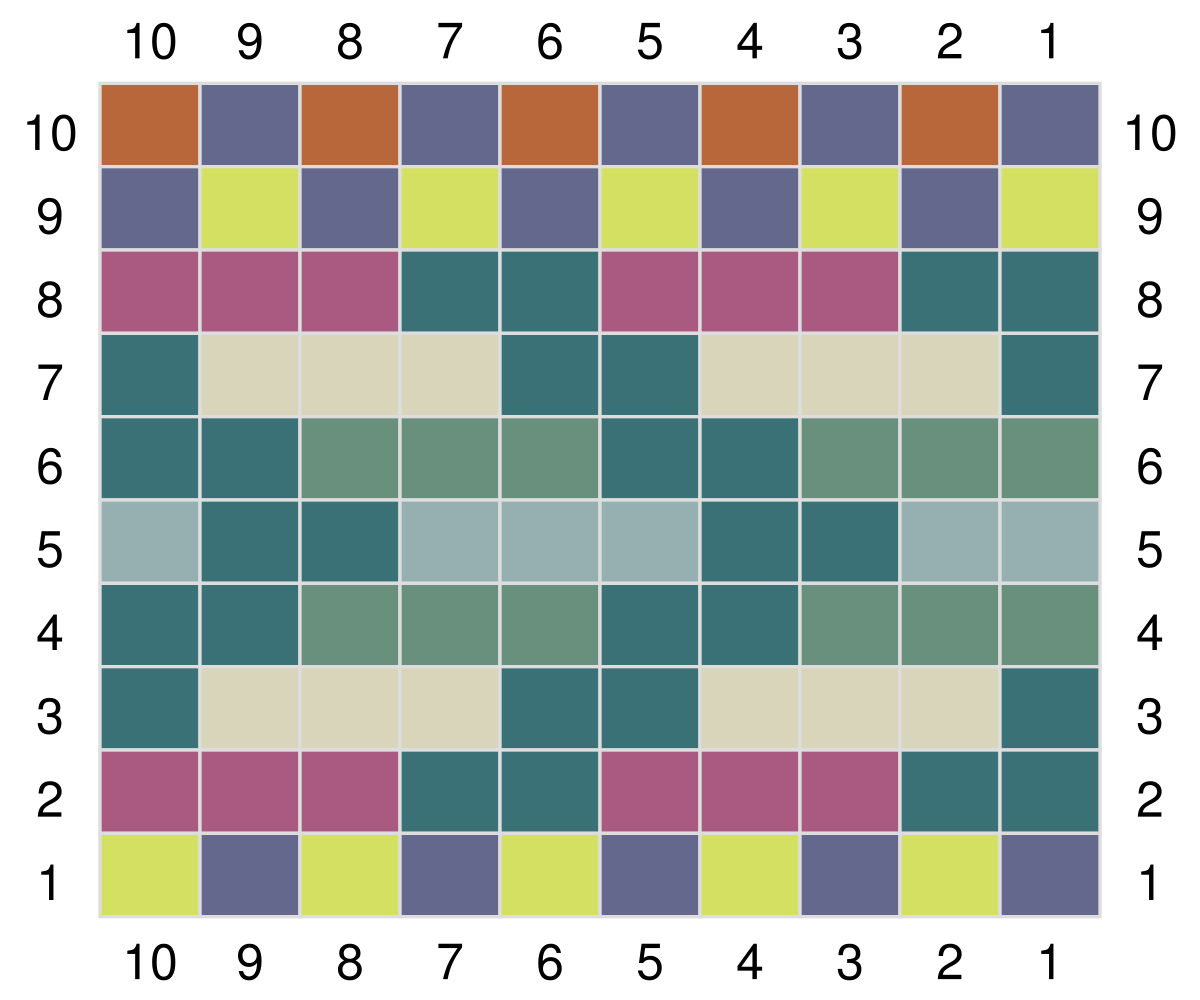
Here's an example of a stitch pattern worked across 7 stitches and 13 rows. Notice the row numbers are on the right of the chart. That indicates you'll read each row from that side of the chart. This chart includes the color key for each stitch as well.

example of a knit colorwork chart that can be read from bottom to top and right to left for in the round. Includes a key for the colors of each square - Marly Bird How to read a colorwork chart

Effectively navigate a colorwork chart

  1. Orientation: Begin at the bottom right of the chart, as this corresponds with the first stitch of the first round. Charts typically have row numbers to the right to guide you, just like the numbered rounds on the Kaleidoscope Harmony Colorwork Knit Hat Pattern.
  2. Chart Representation: The chart is a visual representation of your knitting. Each square on the chart is one stitch, and the color of the square tells you which color yarn to use for that stitch.
  3. Repeats: Many charts show a set of stitches that are repeated around the project. For instance, one horizontal row of squares on the chart may repeat several times to complete one round of your hat. This is why charts often reflect a stitch pattern or colorwork motif repeat rather than the entire round.
  4. Markers: Place stitch markers on your needles after each pattern repeat to keep your place and make spotting errors easier. This breaks your knitting into manageable sections and allows you to track your progress more accurately.
  5. Working the Rounds: When you reach the end of a chart row, you circle back to the first square of that same row and begin again, repeating the pattern as many times as necessary to use up all the stitches in the round of your hat.
  6. Right Side Representation: Remember that the chart shows the right side (RS) of your work. This is what your knitting looks like from the side seen when worn.

Reading a colorwork chart requires a bit of practice, but once you get the hang of it, itโ€™s a skill that will serve you well in all your colorwork projects. With each round of the Kaleidoscope Harmony colorwork knit hat pattern, youโ€™ll see the design unfold, stitch by vibrant stitch. Follow the chart and watch your knitting come to life.

What is Color Dominance?

Color dominance in stranded colorwork knitting is a subtle but impactful aspect of knitting with two or more colors. Itโ€™s all about which color stands out more on the right side of the finished fabric. When you're knitting with multiple colors, one of those colors will naturally appear more prominent, or “dominant,” on the right side of the work, while the other color will seem to fall into the background. This isn't randomโ€”it directly results from the placement of the yarn as it's carried along the work's wrong side (WS).

Hereโ€™s the technical part: the dominant color is typically the one sitting underneath the other color on the WS. Because the yarn carried underneath travels slightly farther to reach the next stitch, giving that stitch a bit more yarn and thus making it slightly larger and more pronounced on the right side. The other color, receding into the background, is the one that is stranded over the top on the WS.

Dominance in Colorwork Charts

When youโ€™re following a colorwork chart, thereโ€™s often a key to indicate which color should be the dominant one and which should fade into the background. This is crucial for the overall look of the design, as it helps the motifs to pop and be more visually striking.

For many knitters, managing color dominance involves holding the dominant color in one hand (often the left) and the background color in the other (often the right), ensuring the way they cross on the WS remains consistent. Always carry the dominant color below the background color to maintain its prominence throughout the piece.

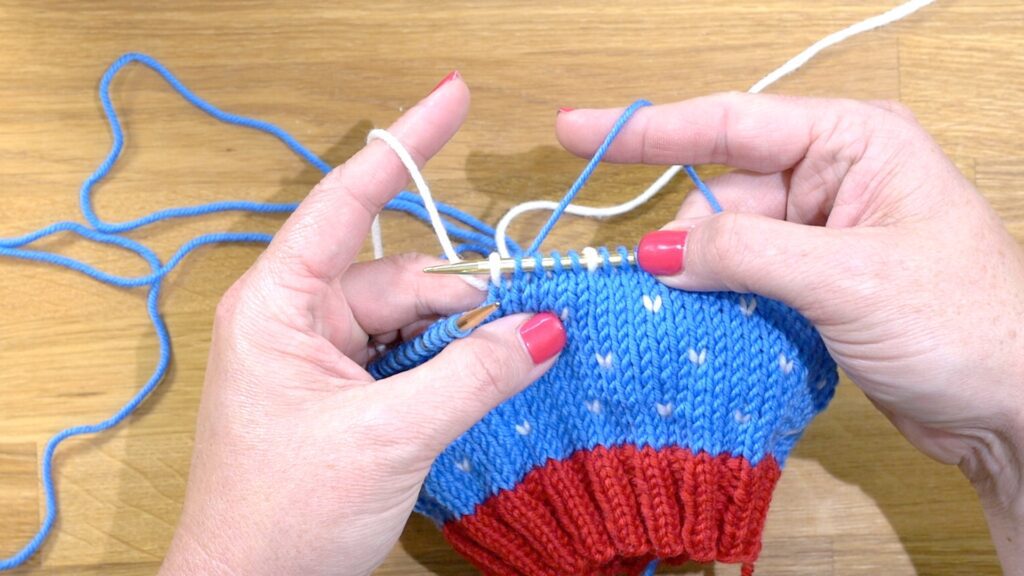
The image depicts a close-up of a person's hands performing the tucking in or catching  floats technique in stranded knitting. The hands are shown holding knitting needles and yarn, with the left needle displaying a work in progress that features two colors: blue and white. The person's right hand is using a knitting needle to manipulate the blue yarn, while the left hand is controlling the tension of the white yarn, which is being carried or 'floated' across the back of the work along the bottom. This technique is used to manage the long strands of yarn on the back side of colorwork knitting, ensuring that the floats are secured and the tension remains even. The image clearly shows the intricate process of managing yarns during colorwork knitting, a skill necessary for creating neat and even fabric in multi-color patterns. This is also a depiction of holding the color dominant yarn in the left hand and the non-dominant yarn  color in the right had as a knitter does stranded knitting - Marly Bird

Consistency is key. If you swap the positioning of your yarns halfway through, you'll notice a shift in your fabric where the motif doesn't stand out as intended. It's one of those magical knitting techniques that can transform a flat piece of colorwork into something with depth and vibrancy.

If you want to test out what colors you want to be more dominant…swatch, swatch, swatch!

In the context of the Kaleidoscope Harmony colorwork knit hat pattern, paying attention to color dominance means that the chosen dominant color will really shine, making the intricate patterns and shapes of your hat stand out beautifully, achieving that kaleidoscopic effect that makes the design so captivating.

How and When to Weave, or Tucking or Catching the Float

In stranded colorwork knitting you'll hear about “weaving,” “tucking,” or “catching” a float. This refers to the technique used to manage the long strands or “floats” of yarn that run across the back of the work when using multiple colors. These floats occur when you carry a color of yarn across the back while knitting with another color. If these floats are too long, they can catch on fingers or buttons or cause the fabric to bunch up.

What it means to weave, tuck, or catch a float

  • Weaving or Catching a Float: As you knit with one color, you periodically “catch” the float of the other color by bringing the unused yarn over or under the yarn that's currently being worked. This traps it against the fabric. Do this every few stitches to keep the float short and secure. I recommend you catch floats every 3-5 stitches to prevent them from becoming too long.
  • Tucking: This is another term for the same process. Gently wrap the yarn not used around the working yarn, securing it in place until it is needed again.

This technique helps to:

  1. Maintain the fabric's elasticity, as long floats can restrict the stretch of the fabric.
  2. Keep the inside of the work neat, which is especially important for items like hats or gloves where the inside can be visible or touch the skin.
  3. Prevent tangling and snagging of long floats on the wrong side of the work.

When knitting the Kaleidoscope Harmony colorwork knit hat pattern or any other project with stranded colorwork, mastering how to weave in your floats is key to creating a beautifully finished piece that's as pleasant to look at on the inside as it is on the outside. I have a video to help you weave or catch your floats on the Marly Bird YouTube Channel.

The image presents a close-up view of the inside-out aspect of a stranded knit pattern, known colloquially among knitters as "float porn." The term celebrates the often unseen side of colorwork knitting, where the carried yarns, or "floats," create their own intricate pattern on the reverse side of the fabric. This view showcases a tapestry of intertwined yarns in a kaleidoscope of colors, highlighting the complex craftsmanship and attention to detail that goes into such knitting work. The vibrant strands crisscross in harmony, revealing the structural beauty and skill that Marly Bird's patterns are known for.

What is Float Porn?

Here's the wonderful aspect of this stranded knitting technique. The ‘wrong' side is not just the backstage to the color show happening on the front; it's a world of its own. Around here, we lovingly call it “floatporn.” Why? Because of those floats of yarn on the back! It's simply stunning when worked in balance and harmony. They're the unsung heroes, the intricate network that holds our colorwork canvas together.

The term celebrates the often unseen side of colorwork knitting, where the carried yarns, or “floats,” create their own intricate pattern on the reverse side of the fabric.

Have floats twisted around each other, too tight or too loose, and the entire knitted fabric can be a mess. Yet when floats balance perfectly, the ‘wrong' side is a work of art.

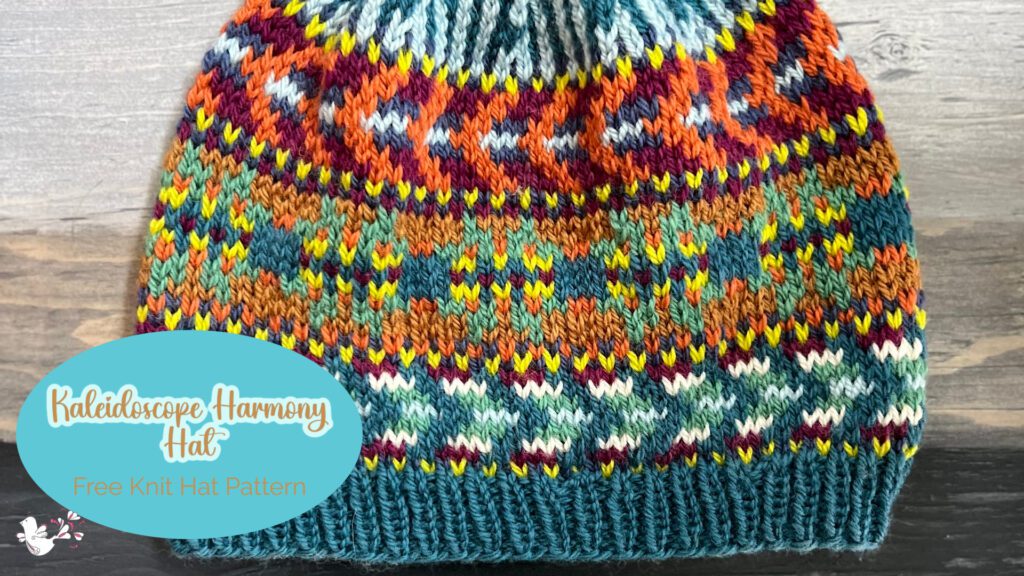
The image showcases a beautifully knitted hat laid flat on a wooden surface, providing a clear view of the intricate colorwork pattern. The pattern features an array of vibrant colors forming a complex, kaleidoscopic design. The lower part of the hat has a ribbed band in a teal color, which provides a nice contrast to the multicolored body of the hat. Overlaying the image is a stylized text that reads "Kaleidoscope Harmony Hat," followed by "Free Knit Hat Pattern," indicating that the pattern for this hat is available for free. The design elements and color scheme of the hat are typical of Marly Bird's distinctive and colorful style in knitwear.

Stranded Knitting Patterns by Marly Bird

Call me a traditionalist, but I try hard to call any of my stranded colorwork, well, stranded colorwork instead of Fair Isle. Because I've never made anything with Shetland Wool, I immediately don't meet all 3 of the criteria. But I do LOVE working with colors and the stranded colorwork technique.

Using this amazing knitting style, I have designed sweaters, ponchos, mittens, hats, and bags. It's one of the best ways to use color in my work; you know I love it!

Here are some of my most popular patterns using knit colorwork

But don't worry, you don't have to be a knitting expert to try your hand at stranded colorwork. I taught the students in the BiCrafty Bootcamp for knitters how to knit with two colors (one color in each hand) for their first hat, and they succeeded. You can too! Do you want that pattern? Get started with it here.

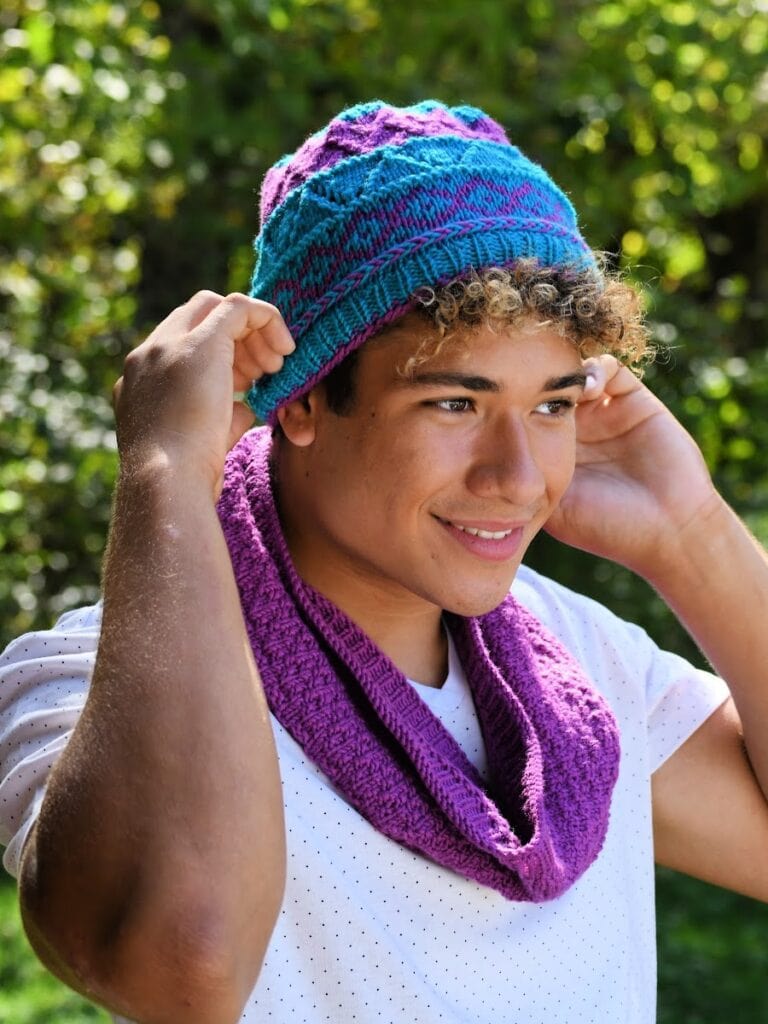
The image features a smiling individual outdoors adjusting a vibrantly colored knitted hat. The hat displays a dynamic colorwork pattern in shades of blue and pink, with a ribbed edge providing a snug fit. The person is also wearing a cowl around their neck in a complementary shade of purple, suggesting the items could be part of a matching set. The natural lighting and greenery in the background accentuate the vivid colors of the knitwear, highlighting the craftsmanship and style of the accessories. The overall image conveys a sense of casual fashion and the joy of wearing personally crafted items. - pattern is BiCrafty Bootcamp My First Knit Hat and Complimentary Cowl by Marly Bird

Trust me, there are plenty of beginner-friendly Fair Isle (or, I should say, stranded colorwork) patterns and tutorials out there to help you get started. And remember, when you knit, it's just sticks and string. You can do anything! Just tell yourself you can! ๐Ÿ˜‰

So grab your knitting needles, pick out some colorful yarns, and dive into the wonderful world of Fair Isle…ahem…stranded colorwork. You'll be amazed at the stunning designs you'll create with just a little patience and practice!

Stash Diving: What Yarn is Best for Stranded Knitting?

Choosing the best yarn for stranded colorwork is quite an adventure, given the sheer abundance of options. You've got a world of fibers, textures, colors, and weights at your fingertips, but when it comes to colorwork, a few considerations can help guide your choice.

The golden rule for selecting yarn for colorwork is to go with something blockable, with wool or wool blends being top of the list. Wool is lauded for its ‘memory,' meaning it can return to its original shape after stretching. This helps your stitches settle neatly into place and maintain the shape of your garment over time.

Close Encounters of the Yarn Kind

When you're out there feeling your way through the yarns at your local yarn shop (LYS), you'll encounter everything from hearty, woolly textures to the sleekness of plied superwash Merinos. Rustic wools, like Shetland yarn, are particularly forgiving for colorwork. Their fuzzy, furry nature works wonders for smoothing over tension variations, making your colorwork look even and well-defined.

In contrast, smoother and rounder yarns, like single-ply superwash yarns, can be trickier as they tend to slip past each other easily, potentially highlighting imperfections in tension. Plus, superwash yarns are known to ‘grow' when blocked and with wear due to their stretchy nature. So, if you opt for superwash, do block your swatch and keep in mind that it may affect sizing over time.

Color, Color, and More Color!

And let's not forget the joy of color! Colorwork begs for a palette that's as expansive as your imagination. Opting for a yarn line with a wide range of colors allows you to play and experiment, creating a stash that's a treasure trove of possibilities for any spur-of-the-moment colorwork project.

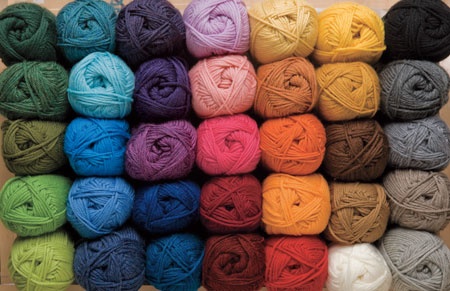
Image of all the shades of yarn available in the Swish Worsted yarn line from KnitPicks and WeCrochet - Marly Bird

If you're feeling adventurous, you can even mix and match yarns from different brands, types, and weights. Imagine combining aran with worsted, or DK with sport weight in the same projectโ€”this can elevate your work's textural and visual complexity. Even holding a sock weight yarn double can allow it to play nicely alongside heavier yarns in your colorwork.

So, as you embark on this journey, let your swatching be your guide. Whether you're crafting a cozy poncho or the Kaleidoscope Harmony Colorwork Knit Hat Pattern, finding the right yarn is the first step to a successful and satisfying colorwork experience.

The Beauty of Creating Something Unique with Mini Hanks, Yarn Scraps, and Leftover Yarn

Oh, the irresistible allure of mini skeins! They beckon to us, don't they? Their riot of colors is like candy for the crafty soul, gleaming from the store shelves or glowing from our computer screens. It's no wonder we find ourselves with bins brimming with these little bundles of joy. Yet, often, we're left pondering the perfect project to showcase their full potential.

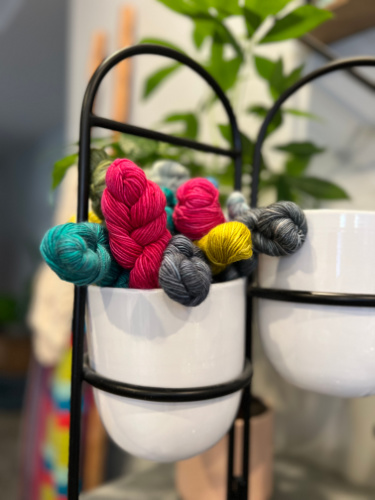
The image shows a collection of mini hanks of yarn artfully arranged in a bowl. The yarns come in a variety of rich colors including teal, pink, grey, yellow, and charcoal, adding a pop of color to the muted backdrop of white bowls. The setting has a creative and cozy atmosphere, indicative of a crafting environment where these yarns might soon be turned into a vibrant knitting project. The image is well composed, with a soft focus that draws attention to the yarns themselves, suggesting they are the main subject, possibly for a crafting or knitting-related theme. -Marly Bird

Enter the stage: the Kaleidoscope Harmony Colorwork Knit Hat Pattern. It's as if I dreamt up this hat just for these pint-sized pretties. With its spectrum of shades, each round becomes a canvas for the vibrant rainbow that mini skeins can create. The hat's design calls for just a dash of each color, making those mini skeins the ideal candidates.

Got Yarny Leftovers?

But what about those leftover yarns? Those precious remnants from projects past that aren't quite enough for a solo act but are too beloved to be forgotten. This hat embraces them all, weaving together the odds and ends into a mosaic of memories. That is actually how I came to design this hat. I had remaining yarn from my Color Kaleidoscope Poncho Pattern and wanted to use it up. So, I designed this hat and the Harmony Hues Hat with that scrap yarn. And I still have more yarn I can use to make even more hats!

This is more than just a hat; it celebrates every scrap, a declaration that nothing is too small to shine. As you knit, you're not just reducing your stashโ€”you're giving new life to every last yard of your favorite fibers. And when you've bound off the last stitch, you have a stunning, one-of-a-kind creation and the perfect excuse to replenish your collection without an ounce of guilt. After all, who can resist the call of new skeins, especially when they promise another adventure in colorwork?

Kaleidoscope Harmony Colorwork Knit Hat Pattern

My friends, we've yarned about Fair Isle, chatted up those stranded colorwork skills, and geeked out on the primo yarns (and scraps) that'll make our stitches sing. And now? It's time to scoop up that free pattern for the oh-so-gorgeous Kaleidoscope Harmony Hat!

Whoa there, hold onto those circulars for just a smidge longer! Before you start casting on and getting lost in the rhythm of those stitches, take a quick trip over to Ravelry. Let's give this pattern a little love by adding it to your queue and smashing that ‘Favorite' button. It's like giving your future self a high-five because you're gonna want to come back to this one.

Favorite This Pattern on Ravelry - Marly Bird

Got it queued? Favorited? Perfect. Now, grab those scrumptious mini skeins and those precious leftover yarns that have given you the eye. It's our time to shine and stitch up a storm with the Kaleidoscope Harmony Colorwork Knit Hat Pattern.

The image captures a hand-knit hat with an intricate colorwork pattern, being held by a pair of hands with red nail polish. The hat is richly colored with a variety of hues, forming a pattern that resembles a kaleidoscope. The ribbed brim of the hat is in a solid teal color, which transitions into the vibrant colorwork. Overlaying the image at the top is the text "kaleidoscope harmony," followed by "free knit pattern by Marly Bird," suggesting that this is a promotional image for a free knitting pattern offered by Marly Bird. The style of the hat and the choice of colors reflect Marly Bird's signature aesthetic, known for its bold and colorful designs. - Marly Bird

The Kaleidoscope Harmony Hat Deatails

Skill Level: Intermediate

Measurement(s)/Size(s)

To Fit Size

Average Adult

Finished Measurements

The finished hat size is 22″ [55.88 cm] circumference; 8.7″ [22 cm] tall

Gauge

20 sts and 24 rounds = 4โ€ [10 cm] in Fair Isle knitting stocking st and larger needle.

Materials

The materials for this hat include no more than 20 grams of 9 different colors of worsted weight yarn (often less than that). Wool yarn (or lambswool) is preferred for this project, but acrylic will work if you're allergic to wool.

Yarn

Patonsยฎ Classic Woolโ„ข(3.5 oz/100 g; 194 yds/177 m; cyc #4 worsted weight yarn) less than 20 g of each of the following colors:

Contrast A Indigo (77772) 1 ball

Contrast B Rich Raspberry (77783) 1 ball

Contrast C Pumpkin (77605) 1 ball

Contrast D Sprout (77759) 1 ball

Contrast E Rich Grass (77764) 1 ball

Contrast F Seafoam (77219) 1 ball

Contrast G Rich Teal (77768) 1 ball

Contrast H Aran (00202) 1 ball

Contrast I Brown Mustard (77757) 1 ball

Knitting Needles

Knitting needle size U.S. 8 [5 mm] 16โ€ [40.5 cm], also size 9 [5.5 mm] circular knitting needles 16โ€ [40.5 cm] and set of 4 double pointed needles or size needed to obtain gauge.

Notions

Stitch marker, tapestry or yarn needle, optional pom pom

Common Knitting Abbreviations

Approx – Approximately

Beg – Beginning

Inc – Increase(ing)

K – Knit Stitch

Kfb – Increase 1 stitch by knitting into front and back of next stitch

K2tog – Knit two together

P – Purl Stitch

PM – Place marker

Rep – Repeat

Rnd(s) – Round(s)

RS – Right side

SM – slip marker

Tog – Together

Special Knitting Stitches and Video Support

Knit Front and Back (Kfb): Knit through front and back of next stitch – 1 stitch increased. https://youtu.be/k9rWymMDxgM

Knit Two Together (k2tog): Knit 2 stitches together – 1 stitch decreased.

How to Knit in the Round: https://youtu.be/JVEi7YPmXnc

How to Knit Fair Isle Technique: https://youtu.be/PQJoqlwL1OQ

How to Weave or Catch Floats: https://youtu.be/TNVVI0iGqvs

How to Add a Life Line: https://youtu.be/l4YD0A8MNCc

How to Bury Your Ends: https://youtu.be/8_NBGUKjO-E

๐Ÿ•๏ธ Get the BEST colorwork class on the internet for 50% off with code: KALEIDOSCOPE

Notes

  • The hat's brim is worked in a 1×1 ribbing with smaller knitting needles, but the body of the hat is worked in stockinette stitch with the Fair Isle technique and larger knitting needles.
  • When working in the Fair Isle technique, carry yarn not used loosely across WS of work but never over more than 5 sts. When it must pass over more than 5 sts, weave it over and under color in use on next st or at center point of sts it passes over. The colors are never twisted around one another.
  • When a color is finished being used in a section, cut it and carry on. Do not carry colors up the inside of work.
  • Maintain the colorwork chart knitting instructions for the crown of the hat.

GROW

To Unlockย Exclusive Subscriber Contentย click the Box below and join for free by simply adding your email and creating a password! If you are having troubles, clear your cache or reset your password or login to the Grow Publisher Portal.

>> Learn More About Grow Here <<

I'm thrilled to share this amazing pattern with you, many patterns on my blog are absolutely free! I kindly request that you don't copy and paste or distribute this pattern. Prefer an ad-free experience? Buy a digital PDF pattern for a small fee from one of my online stores for a seamless crafting journey. 

I appreciate your support and readership. You are the reason I can keep doing what I love and sharing it with others. So, thank you from the bottom of my yarn-loving heart! Disclosure: This post contains affiliate links, meaning I get a commission if you decide to make a purchase through my links at no cost to you.
The image is a side-by-side collage of two photos featuring a person wearing a hand-knit hat, known as the "Kaleidoscope Harmony Hat." The hat showcases a vibrant, multicolored pattern with intricate designs reminiscent of a kaleidoscope, set against a teal ribbed brim. The person is dressed in a matching blue jacket with a patterned design, complementing the hat's colors. In the right photo, the individual is looking towards the camera with a pleasant smile, while the left photo captures a more contemplative expression, gazing downward. The backdrop is outdoors, with blurred greenery that highlights the hat's vivid colors. The Marly Bird logo in the corner indicates that this is a promotional image for a free knitting pattern available from Marly Bird. The hat's colorful and detailed pattern, along with the wearer's content expression, exudes warmth and the cheerful spirit of handmade fashion.

Kaleidoscope Harmony Colorwork Knit Hat Pattern – Designed by Marly Bird

Brim

With color G and smaller circular needle, cast on 100 sts. Join in rnd and place marker on first st.

Round 1 (RS): *K1, p1; repeat from * around.

Rep this rnd of (K1, p1) ribbing for 1 ยผ ” [4 cm].

Next Round: *Kfb, K9; rep from * around — 110 stitches on the knitting needle.

Change to larger circular needle and proceed as follows:

Body

Recommend adding a stitch marker between each repeat of the chart. Make sure the beginning of the round marker is a different color or style than the ones separating the repeats around the body.

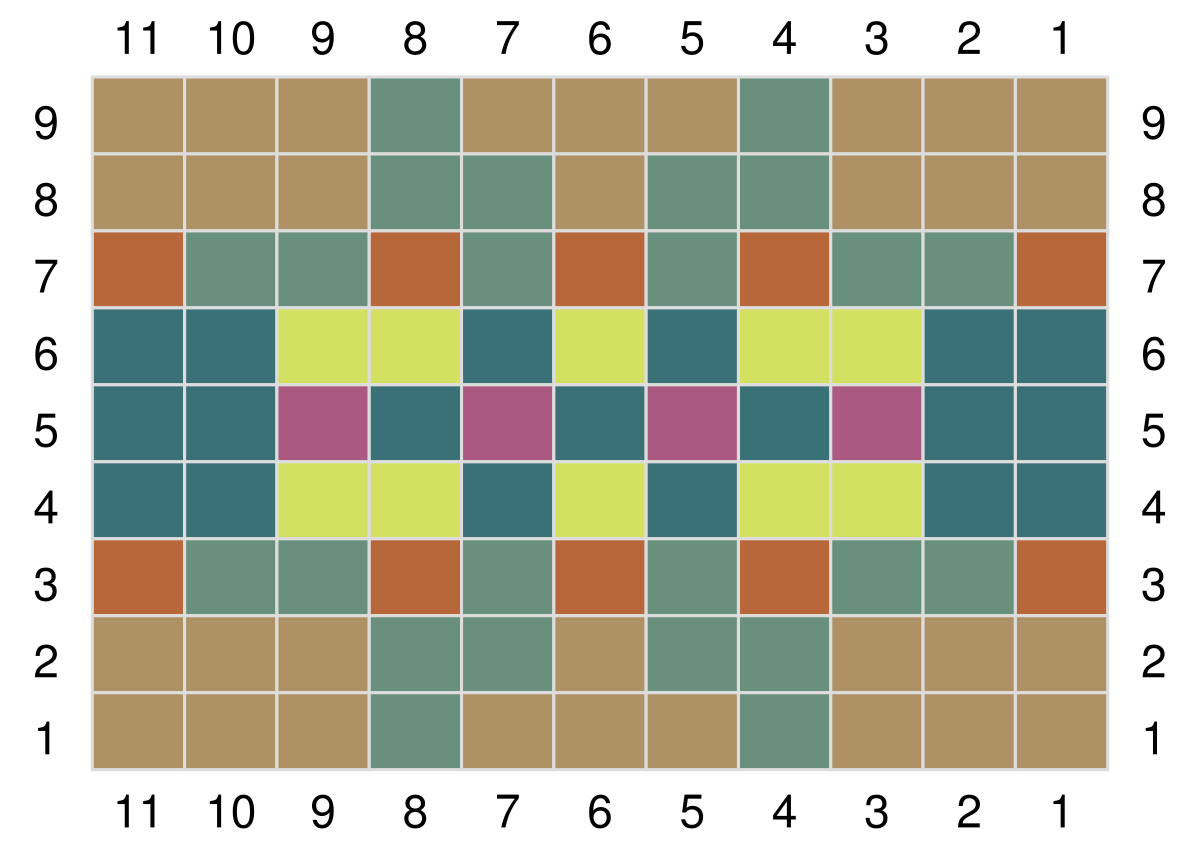
1st – 10th rnds: Knit Chart I, reading rnds from right to left, noting 10-st rep will be worked 11 times.

color chart for the first section of the Kaleidoscope Harmony Knit Hat Pattern by Marly Bird

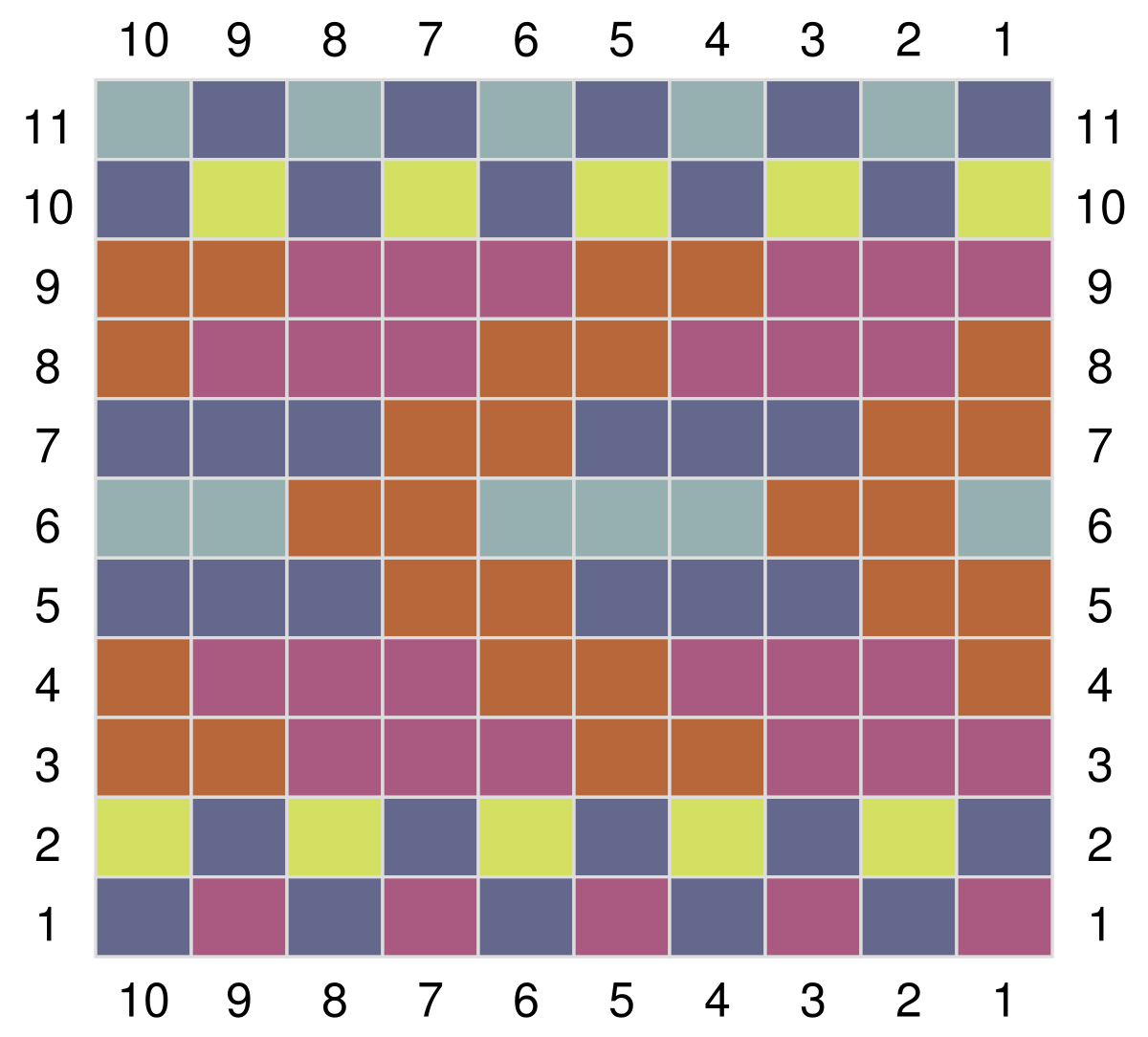
The stitch multiple of this chart changes, remove the markers from the previous chart, and place markers to the new location and continue.

11th – 19th rnds: Knit Chart II, reading rnds from right to left, noting 11-st rep will be worked 10 times.

color chart for the second section of the Kaleidoscope Harmony Knit Hat Pattern by Marly Bird

The stitch multiple of this chart changes, remove the markers from the previous chart, and place markers to the new location and continue.

20th – 30th rnds: Knit Chart III, reading rnds from right to left, noting 10-st rep will be worked 11 times.

color chart for the third section of the Kaleidoscope Harmony Knit Hat Pattern by Marly Bird

Remove all the stitch markers BUT the one at the beginning of the round. Continue to the crown shaping.

Crown

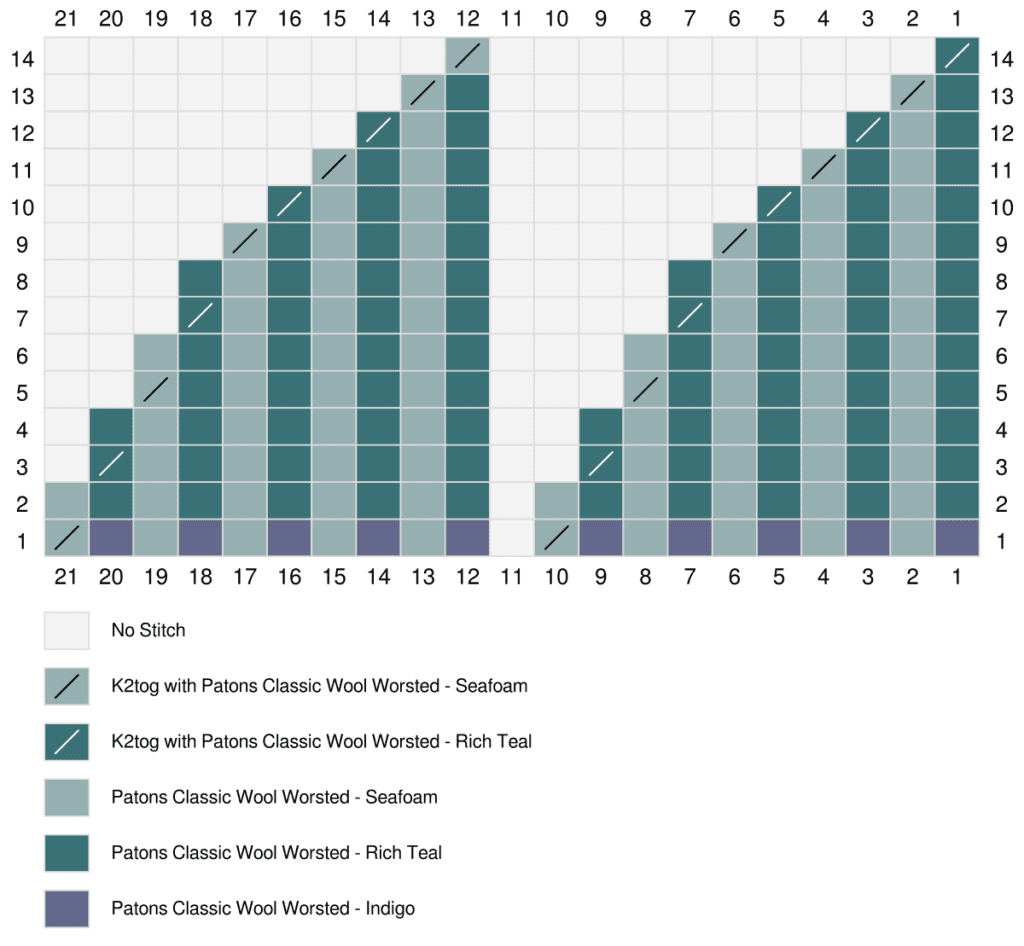
Knit Chart IV, reading rnds from right to left, noting decreases will will be worked 11 times.

color chart for the crown shaping section of the Kaleidoscope Harmony Knit Hat Pattern by Marly Bird

FINISHING

Weave in ends. Hand wash the hat, then lay flat to dry. When completely dry, add a removable pom pom (optional)

Get the pattern PDF free from Yarnspirations. Click Here

Share With Marly #MMMDI

Alright, my lovely knitters, you've got the pattern, you've got the know-how, and youโ€™ve got an array of yarn scrap colors at your beck and call. Now's the moment to take that Kaleidoscope Harmony Colorwork Knit Hat Pattern and make it sing your tune!

Remember, a pattern is just the beginning. It's the springboard for your creativity. From bright, vibrant colors to the most laid-back, cool-tone hat, your unique touch will turn this pattern into a treasured piece.

So go on, cast on with confidence, and let every row be a celebration of your yarn journey. We can't wait to see the wonders you're about to create. Share your finished hats with us, tag them, flaunt them, and most of all, enjoy every moment of your crafting adventure. Knit on with joy because you, my friend, are about to create something spectacular!

โค๏ธ Your BiCrafty Bestie,
Marly Bird

A cartoon avatar of a person with glasses and a brown bun smiles warmly. Their green shirt and black jacket add a stylish touch, while colorful hearts surround them like loving temperature blankets, stitching together an aura of love and positivity. -Marly Bird

Frequently Asked Questions

What is the Kaleidoscope Harmony Knit Hat?

The Kaleidoscope Harmony is a free stranded colorwork knit hat pattern by Marly Bird featuring beautiful geometric colorwork inspired by kaleidoscope patterns. It uses multiple colors to create a striking, intricate-looking design that's actually very achievable for adventurous beginners comfortable with basic colorwork. The finished hat has that “wow, you made that?” effect that makes colorwork knitting so satisfying.

What skill level is this hat pattern?

It's designed for adventurous beginners to intermediate knitters who are comfortable with the basics of stranded colorwork. If you've knit a simple two-color hat before or worked through a small colorwork project… you're ready for this one. The key is being comfortable managing two strands of yarn at once and reading a colorwork chart. Marly has video tutorials linked in the pattern to help with any techniques you're unsure about.

How many colors does this hat use?

Check the pattern for the specific colorway, but Kaleidoscope-style colorwork typically uses 3 or more colors to create that rich, jewel-like effect. Stranded colorwork in the hat section uses 2 colors per row (the standard for stranded/Fair Isle knitting), but you may switch which colors are “active” in different sections of the hat. The color combinations give you enormous creative freedom… you can recreate the original colorway or design your own.

What yarn should I use for this colorwork hat?

Worsted weight yarn with good stitch definition is ideal for colorwork… you want your geometric pattern to read crisply. Wool or wool blends are the classic choice because they have natural elasticity that keeps colorwork even and they block beautifully. Smooth, plied yarns show colorwork better than textured or fuzzy ones. If you want to substitute colors, choose yarns with good contrast against each other… the pattern only reads clearly when the colors stand out from one another.

Can I make this hat in my own color choices?

Absolutely! That's part of the fun. The geometric nature of kaleidoscope-inspired colorwork means it looks stunning in almost any combination of colors with good contrast. Try complementary colors (across from each other on the color wheel) for a bold effect, or analogous colors (next to each other) for something more harmonious. Even neutrals with one pop color can be gorgeous. Just make sure at least one of your colors is darker and one is lighter so the pattern reads clearly.

Your New Favorite Free Crochet Hat With A Bill Pattern

Are you looking for your new favorite FREE Crochet Hat With A Bill Pattern? Today, I'm excited to share one of the best crochet hats Marly Bird designed. This free pattern uses her signature slip stitch bill technique. This makes the newsboy hat style absolutely beautifully designed and suitable for beginners and experienced crocheters.

lf you like this style of hat then you will love the Blossom Hat or the Ribbed for Him and Her Hat.

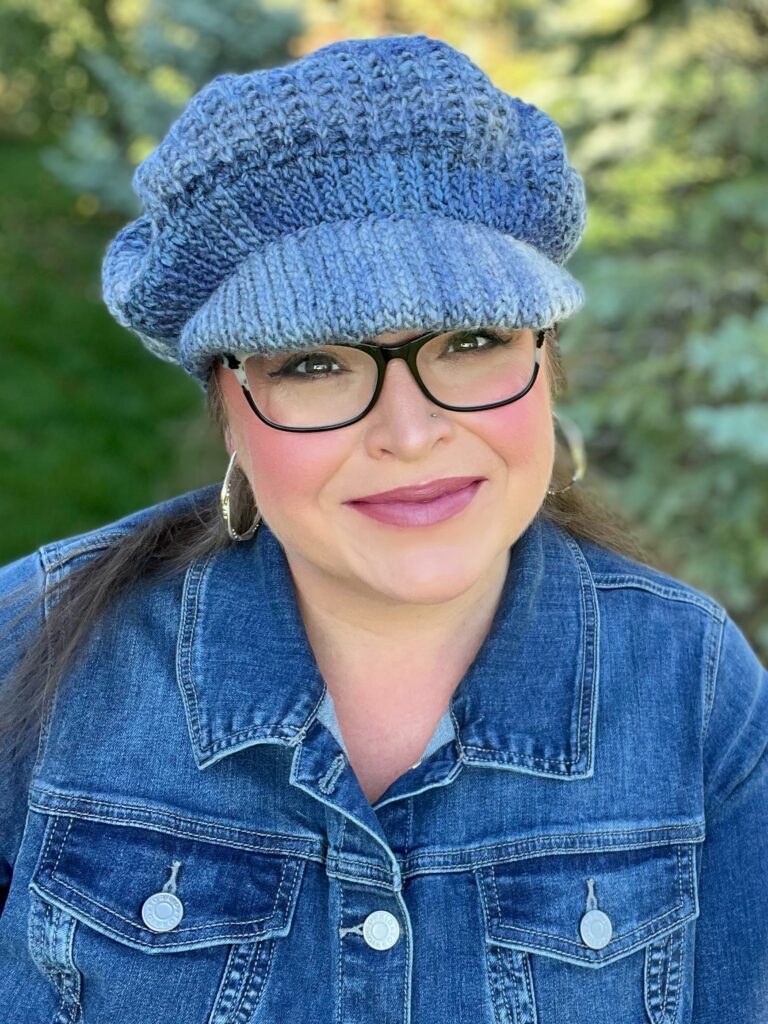
Smiling woman wearing a blue crochet newsboy hat and denim jacket, with a greenery background- free crochet newsboy hat pattern Marly Bird

Disclosure: This post contains affiliate links, meaning I get a commission if you decide to make a purchase through my links, at no cost to you.

[Read more…]