
How to Read Crochet Chart Symbols – Tips, Video, and…
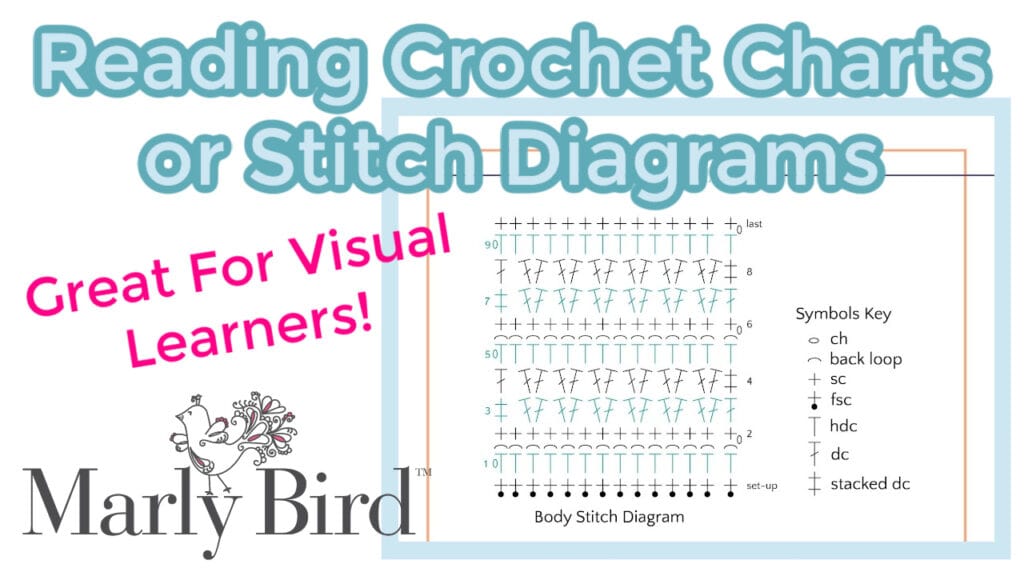
Reading crochet charts or stitch diagrams can be a total game-changer—especially for those of us who are visual learners. If you’ve ever wondered how to read crochet charts, this guide will show you everything you need to know.
Instead of getting bogged down in written instructions, you can see what stitch goes where and how the whole design comes together. If you've ever felt frustrated trying to decipher long rows of text, it's time to give crochet chart symbols a try!
In this post, I’ll walk you through the basics of crochet charts, show you how to interpret common symbols, and share some of my favorite tips for making charts work for you. I’ve also included two helpful video tutorials and a downloadable hand-drawn chart to follow along.
Affiliate Disclosure: This post contains affiliate links. To learn more please visit my privacy policy here💖
🧵 Beginner Crochet Basics: What Are Crochet Charts?
Crochet charts are visual representations of crochet patterns using standardized symbols to indicate stitches. Instead of reading line after line of written text, you follow a diagram that shows you exactly where to place your stitches.
Why Use Crochet Charts?
- Easier to follow complex stitch patterns
- Great for multilingual crafters (symbols are universal!)
- Helps visualize how the pattern will look
Whether you’re working on a lace shawl, motif square, or garment edging, charts are an incredibly helpful tool to have in your crochet toolkit.
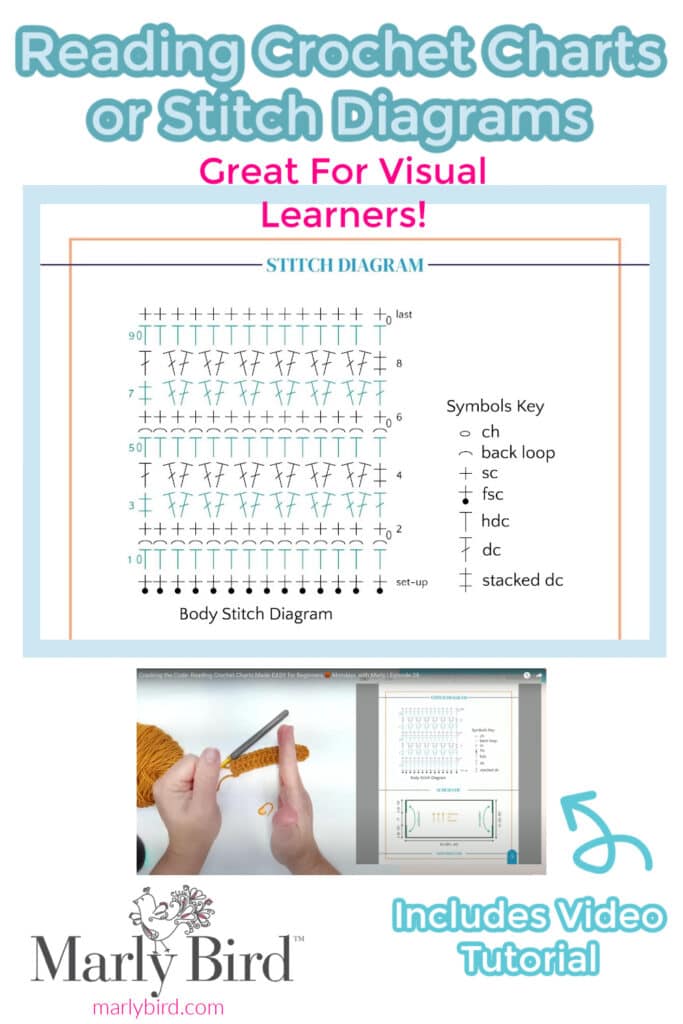
🔍 How to Read Crochet Charts: Beginner Symbol Guide
🧭 Start from the Bottom and Work Your Way Up
Most crochet charts are read from the bottom up, because that’s how we build our fabric! For flat crochet, you’ll go right to left on odd-numbered rows and left to right on even-numbered rows. If your project is worked in the round, you’ll usually follow the chart in a spiral, starting in the center and moving outward. Just remember to double-check the pattern notes—they’ll tell you if there’s anything unusual going on.
🗝️ The Chart Key Is Your New Best Friend
Every chart should include a legend or key showing what each symbol means. While most designers stick to the standard set, you might see small differences depending on where the pattern comes from (Japan, Europe, or even from designer to designer).
🧶 How to Stay on Track While Reading Charts
Even once you get how to read a chart, it’s easy to lose your place—especially with detailed patterns. Here are a few tried-and-true tricks I teach my students:
- Use highlighters or washi tape to mark the row you’re working on
- Print the chart and laminate it so you can use dry erase markers
- Place stitch markers at repeat sections so your hook knows exactly where it’s headed
- Practice on a swatch before committing to your full project
“Using crochet charts has enabled me to take my crocheting from simple stitches to more complex stitches and construction because I am able to actually see how a stitch or pattern is supposed to look, whereas with words I struggle to visualize it.” – Marly Bird
🧩 Common Crochet Chart Symbols
Here are some of the most frequently used crochet chart symbols: psst–you will want to print this out!
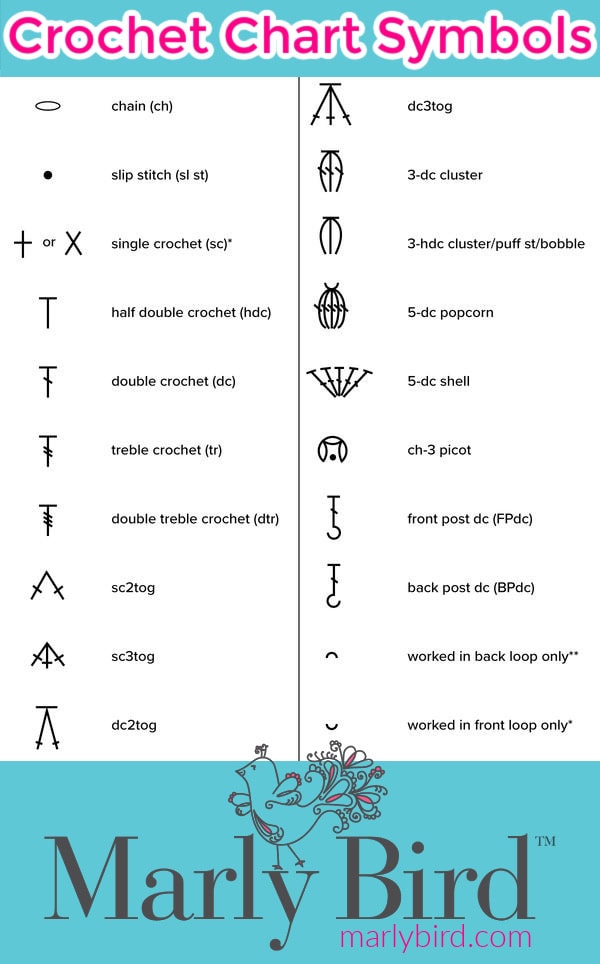
👉 Need a full stitch guide? Check out my stitch library
🌍 Regional Differences in Crochet Symbols
Did you know that chart symbols can vary depending on where the pattern was created?
- Japanese crochet charts are incredibly detailed and standardized
- Some of my favorite Japanese Stitch Dictionaries
- 1000 Japanese Knitting and Crochet Stitches (Love this so much I own 3 copies)
- かぎ針編みパターンブック モチーフ・エジング300 (I absolutely LOVE THIS ONE!)
- かぎ針編みパターンブック300 (I use this one ALL THE TIME!)
- 150 Favorite Crochet Motifs
- Tunisian Crochet – The Japanese Way: Combine the Best of Knitting and Crochet in Your Projects Using Clear Japanese-style Charts & Symbols (Available on Kindle too)
- Japanese Knitting Stitch Bible: 260 Exquisite Patterns
- 250 Japanese Knitting Stitches: The Original Pattern Bible
- European patterns may use slight variations in symbol design
- Always double-check the key or legend provided with your pattern
Join our Newsletter
Get Free Crochet & Knitting
Pattern Links & Coupons!
- Some of my favorite Japanese Stitch Dictionaries
🎬 Video Tutorials for How to Read Crochet Charts and Symbols
Let’s break it down with some of my favorite tips and teaching moments from the live video, starting around the 22-minute mark:
🔄 Understanding Repeats
If your crochet chart includes brackets, stars, or arrows—those are visual indicators of repeats. The chart shows you how many times to do a certain group of stitches before moving to the next section. This helps you see the rhythm of the pattern.
🧠 Visual Learning in Action
Seeing the stitch layout ahead of time allows you to plan color changes, recognize shaping elements, and even troubleshoot mistakes more easily. Charts give you the “big picture” that written patterns can sometimes obscure.
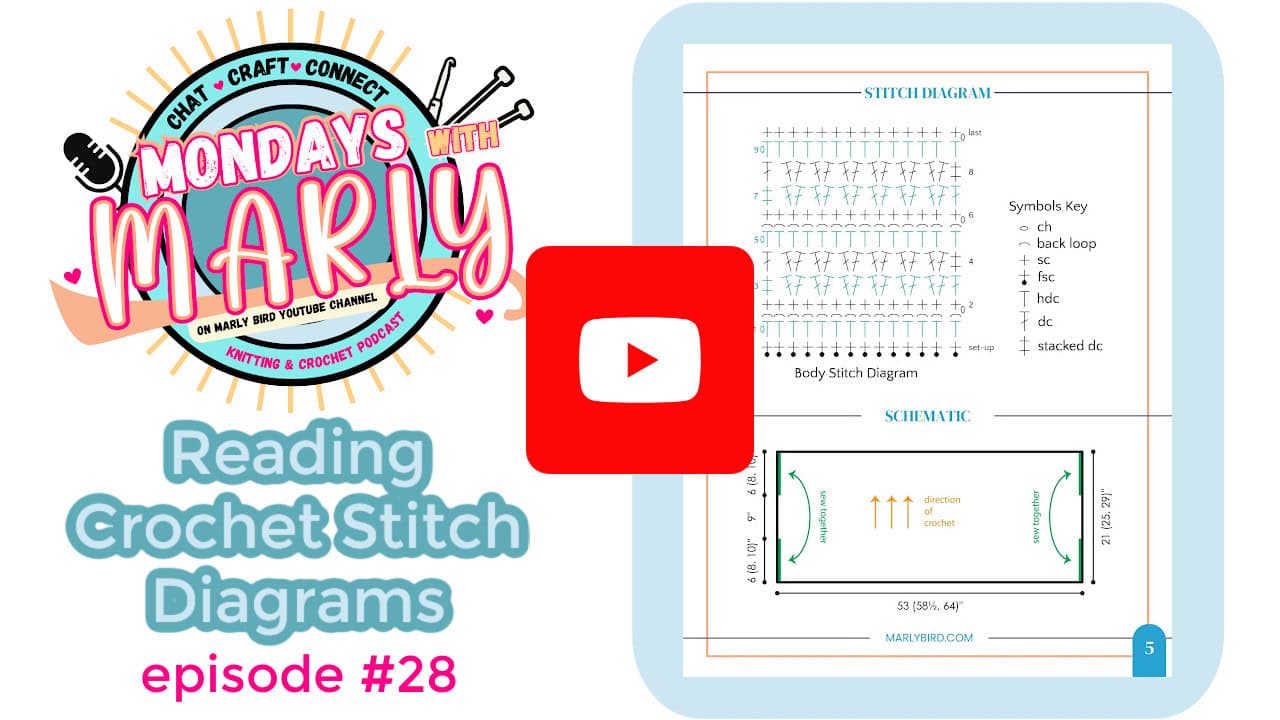
➡️ New! Watch the Full Live Chat Replay on Crochet Charts:
Watch on YouTube
📚 Get Robyn's Books!
• Crochet Stitches Visual Encyclopedia: 300 Stitch Patterns, Edgings, and More
• Blueprint Crochet: Modern Designs for the Visual Crocheter (this is the book Marly learned how to use Crochet Stitch Diagrams)
➡️ Quick Start Video: Crochet Chart Symbols
Watch this beginner-friendly tutorial
📥 Downloadable Practice Charts + Pattern Link
Use these downloads to follow along with the video tutorials:
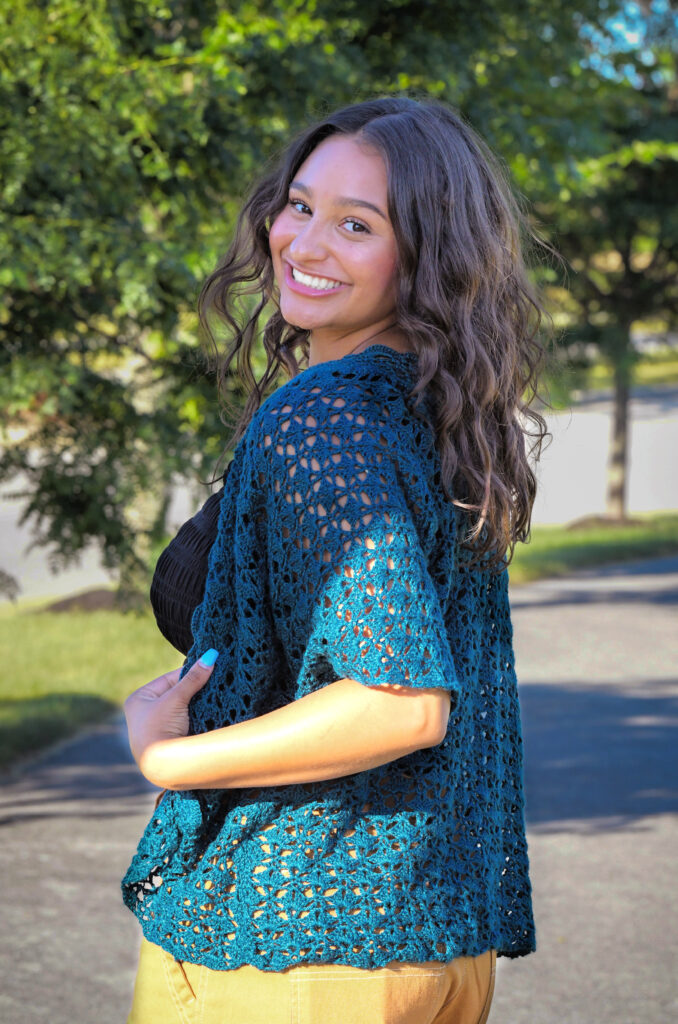
🧶 Garden Party Sweater Pattern – a great example of charted edging in action!
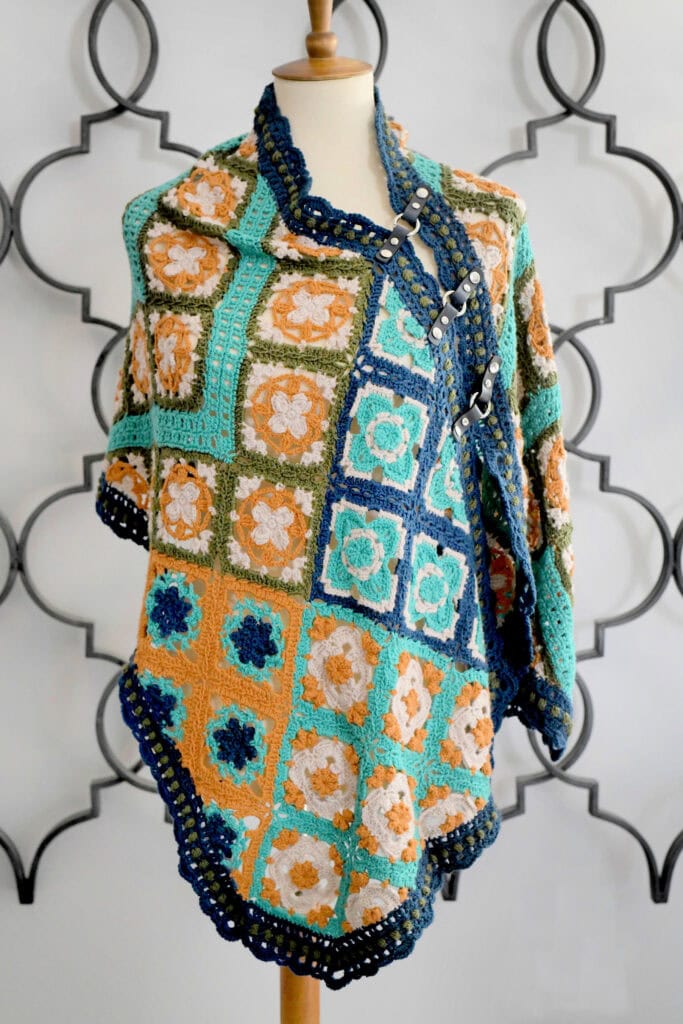
🧶 Cryssi Crochet Motif Shawl – great pattern full of charts and video tutorials!
📚 Want to Learn More?
📖 How to Read Knitting Charts
🧶 Crochet for Beginners
🎁 Free Crochet Patterns
Still unsure about charts? Let me know your questions in the comments below or over in the BiCrafty Community Facebook Group! You’ve got this 💪
❤️ Your BiCrafty Bestie,
Marly Bird

Frequently Asked Questions
What are crochet chart symbols and why should I learn them?
Crochet chart symbols are a visual language for crochet patterns… each symbol represents a specific stitch or technique. Instead of reading pages of abbreviations and written instructions, you follow a diagram that shows you exactly where each stitch goes. Once you know the basics, charts can actually be easier to follow than written instructions, especially for complex stitch patterns. And since symbols are largely universal, you can follow patterns from Japanese, European, and international designers even if you don't speak their language!
Where do I start when reading a crochet chart?
For flat crochet worked in rows, start at the bottom right and read right to left on odd rows, then left to right on even rows… following how your work actually progresses. For crochet worked in the round, you typically start at the center and spiral outward. The pattern notes should always tell you where to begin if there's anything unusual. When you first look at a chart, find that starting point before you try to make sense of anything else!
Do I need to memorize all the crochet symbols?
Not before you start! Every well-made chart includes a legend or key that explains what each symbol means. Keep the key nearby as you work and check it whenever you see an unfamiliar symbol. Over time, the most common ones (chain, slip stitch, single crochet, double crochet) become second nature. The more charts you read, the more familiar the symbols get… it's like learning to read music. Takes a little practice but opens up a whole new world of patterns.
Why do different designers use different symbols for the same stitch?
Great observation… and yes, it's a little frustrating! While most symbols are standardized, there are regional variations (especially between US/UK and Japanese charting conventions) and individual designers sometimes use slightly different symbols too. This is exactly why you ALWAYS check the chart's key before you start. Never assume a symbol means the same thing it did in the last pattern you worked from. The key is your source of truth.
What tools help with reading crochet charts?
A few game changers: highlighter tape or sticky notes to mark your current row. A row counter to track where you are. Printing the chart larger if you're squinting at it. And stitch markers in your work to correspond with key points on the chart. Some crafters laminate their charts and use dry-erase markers to track progress. Marly includes downloadable chart files and video tutorials with this guide… take advantage of those visuals when you're getting started!



Thanks Marly! That was very helpful!
Rose❤️
Marley, Please write a book with all the time honored classic crochet patterns translated into large “Easy To See Crochet Charts/Diagrams/Illustrations” Being new to crochet, two years now I consider myself at the intermediate level of experience. I’m just now discovering Charts and Diagrams! Now I am looking for a large Crochet book with large pages- a compendium type book of Crochet Charts and can’t find anything good!!! Marley, you could make a lot of money and go down in history. And I could have a big book of lovely charts Or, could you share /direct us to such a book – if you know of a good one you could recommend? Thanks,
Thank you so much this really helped I just need to get a copy of the symbols to save to look back at on what they all mean will you please email them to me thanks deb
hi there, Thank you for this great video, but the link to download your handwritten chart is broken. I’ve written them out myself, someone might have a look at the link as it would be most useful. Best regards