
How to Make a Gauge Swatch in Crochet (Free Worksheet +…
Let’s be real, friend — when inspiration strikes, the last thing you want to do is crochet a mini blanket of homework before diving into your new project. But if you’ve ever ended up with a crop top instead of a sweater, or a baby blanket that could double as a California King… you’ve already met the power of gauge.
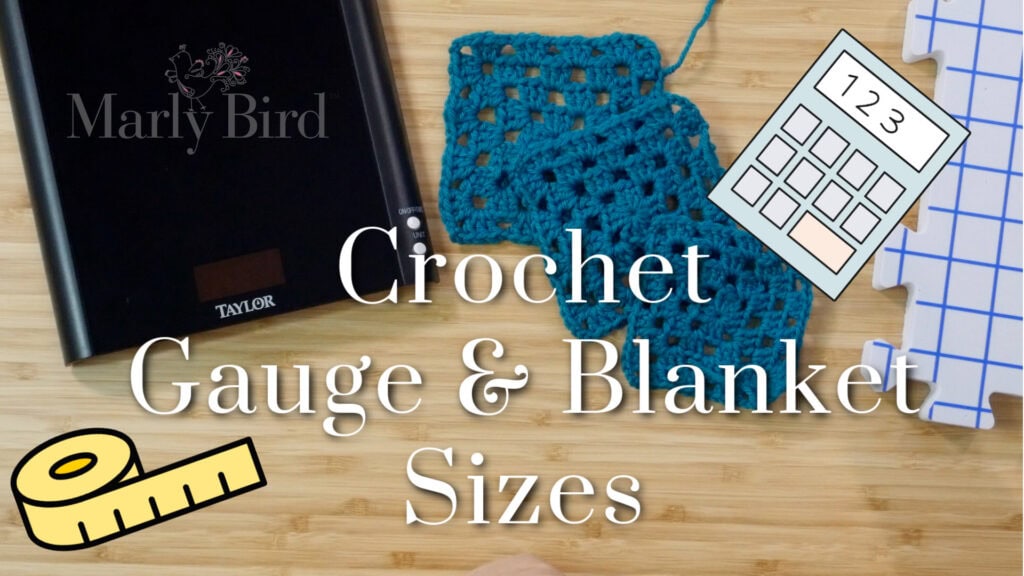
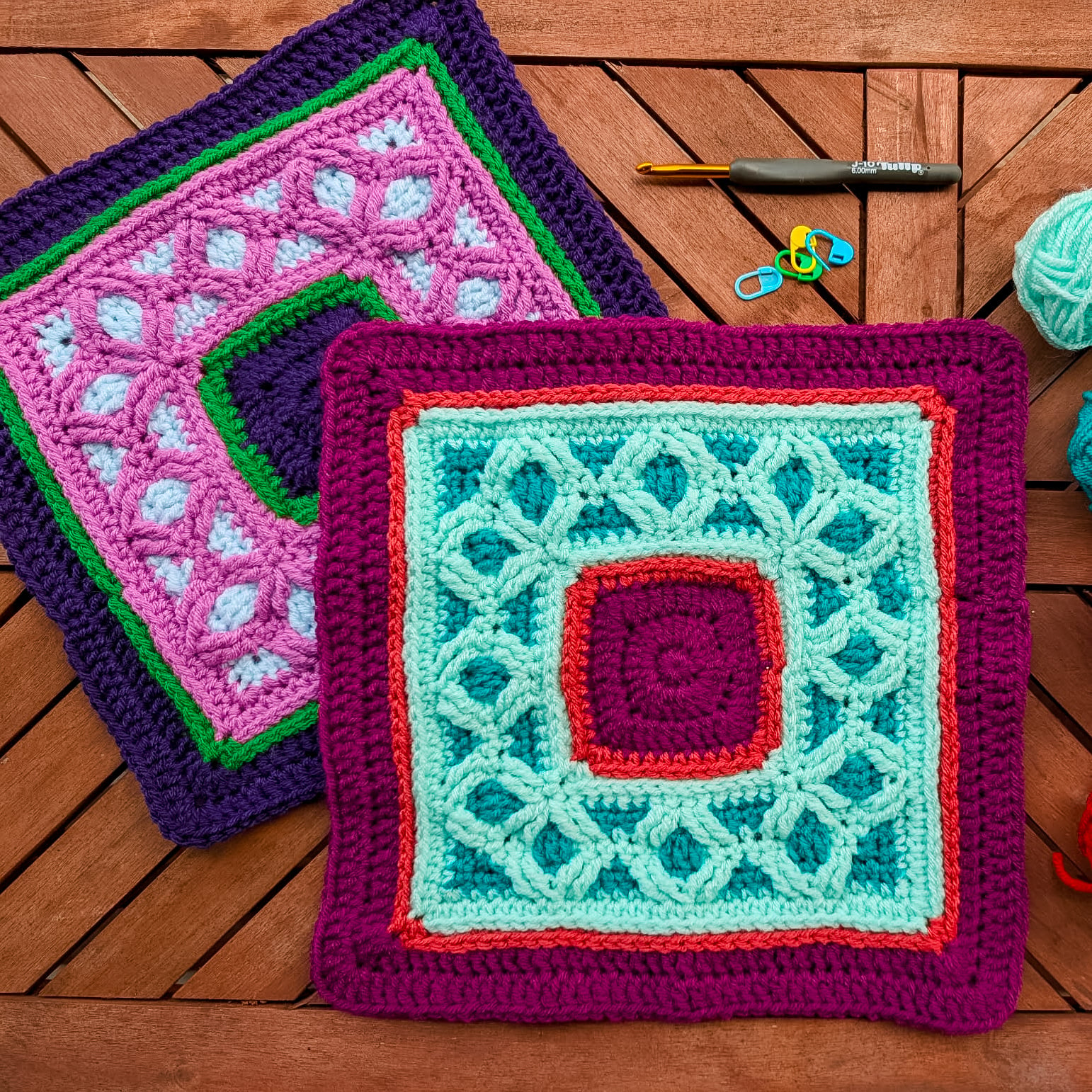
A gauge swatch is your project’s reality check. It’s a small sample that shows how your yarn, hook, and tension work together — before you commit to the full piece. Even with the same yarn and hook, two people can get completely different results based on how tightly or loosely they crochet. I can tell you firsthand: if I’ve had too much coffee, my gauge changes faster than my yarn color changes in an ombré skein. ☕🧶
So before diving into your next blanket, hat, or cardigan, let’s take five minutes and learn how to make a crochet gauge swatch the easy way — the Marly way.
Affiliate Disclosure: This post contains affiliate links. To learn more please visit my privacy policy here💖
🪄 What You’ll Need
- The same yarn you’ll use for your project
- The hook size listed in your pattern (and one size up and down for testing)
- A ruler or gauge checker tool
- Stitch markers for Crocheting (optional, but helpful)
- A little patience and your BiCrafty Bestie cheering you on 💕
✨ Step-by-Step: How to Make a Crochet Gauge Swatch
Step 1: Chain and Work a Sample
- Chain a few extra stitches beyond what the pattern calls for (if your gauge is 4″, make a 6″ swatch; if it’s 6″, aim for 8″).
- Crochet in the same stitch pattern used for the project — for example, single crochet, half double crochet, or the shell stitch pattern.
- Work at least two full rows to stabilize the edge, then continue until your swatch is roughly square.
Step 2: Block (or at Least Flatten)
Lay your swatch flat and gently steam or spritz it. This relaxes the stitches and gives you a realistic measurement. 👉 Always measure after blocking, especially for garments and blankets.
Step 3: Measure Your Gauge
Place your ruler across the center of the swatch (avoid the edges — they lie to you!). Count how many stitches fit into 4 inches (10 cm) across and how many rows tall in that same section.
If the pattern says “14 dc and 10 rows = 4 in,” here’s how to read it:
- Stitches per 4”: Count horizontally across.
- Rows per 4”: Count vertically up.
🧮 Fill-in-the-Blank Gauge Tracker
| My Stitch Type | Pattern Says | My Measurement |
|---|---|---|
| Stitches per 4” | _____ | _____ |
| Rows per 4” | _____ | _____ |
If my stitch count is higher than the pattern → my stitches are smaller → I crochet tight → go up a hook size.
If my stitch count is lower than the pattern → my stitches are bigger → I crochet loose → go down a hook size.
⚡ Quick Adjustment Cheat Sheet
| My Swatch Shows… | What It Means | Try This |
|---|---|---|
| More stitches per inch | Too tight | Larger hook |
| Fewer stitches per inch | Too loose | Smaller hook |
| Same stitches & rows | Perfect match! | You’re ready to start 🎉 |
🧷 Planning Blanket Sizes (Optional)
Once you know your gauge, you can use it to customize the width of your blanket. Use this quick formula from the Shell I Make You a Blanket pattern:
- My repeat width = ____ inches
- Target width = ____ inches
- Repeats needed = target ÷ repeat = ____ ÷ ____ = ____
- Starting chain = (repeats × stitch multiple) + turning chains = ____
You can find standard measurements in the Crochet Blanket Size Chart.
📋 Worksheet: Crochet Gauge Notes
Yarn: ___________________________
Hook Size: ___________________________
Stitch Type: ___________________________
Stitches per 4″: ___________________________
Rows per 4″: ___________________________
Notes: ___________________________
Download the full printable Gauge & Blanket Size Worksheet here → Join the Marly Bird Newsletter
💡 Marly’s Pro Tips
- Always measure from the middle of your swatch — edges stretch.
- If you’re working in the round, make your swatch in the round for accuracy.
- Wash and dry your swatch the same way you’ll treat the finished item.
- Keep your swatches! They make great reference samples (or future patchwork blankets).
🎁 Bonus Resources
- Crochet Hook Size Guide
- Shell I Make You a Blanket Pattern
- Crochet Blanket Size Chart
- Free Crochet Blanket Patterns
📣 Final Thoughts
So yes — crochet gauge swatches might seem like the broccoli of the yarn world 🥦 — not the most exciting part of your meal, but absolutely essential for a healthy project. Take 10 minutes, make a quick swatch, and save yourself hours of “why is this sweater for a toddler now?”
Don’t forget to grab your free Gauge & Blanket Size Worksheet — your future self will thank you when your next blanket fits perfectly the first time!
❤️ Your BiCrafty Bestie,
Marly Bird

Frequently Asked Questions
Why do I need to make a gauge swatch for crochet?
Gauge is how many stitches and rows fit in a given measurement of your fabric. If your gauge doesn't match the pattern's gauge, your finished project will be a different size than intended. For blankets and scarves, that's usually fine. For garments, hats, and anything where size matters… gauge can be the difference between a hat that fits and one that falls over your eyes. A swatch takes 15-20 minutes and can save hours of ripping out a finished project that doesn't fit.
How do I make a gauge swatch?
Here's the basic process step by step. Choose the hook and yarn the pattern specifies. Chain enough stitches for at least a 6-inch wide swatch. Work in the pattern stitch for at least 6 inches in height. Bind off or fasten off. Block the swatch the same way you'll block your finished project (this matters more than people think!). Lay flat and measure: how many stitches across in 4 inches? How many rows in 4 inches? Compare to the pattern's gauge. Marly includes a free downloadable worksheet with this post to make the whole process systematic and easy to record.
What if my gauge doesn't match the pattern?
Adjust your hook size! Too many stitches per inch (gauge too tight)… go up a hook size. Too few stitches per inch (gauge too loose)… go down a hook size. Make another swatch with the new hook. Repeat until your gauge matches. It can take 2-3 swatches to dial in the right hook size. This is normal and worth the time. For every hook size change, expect roughly a 10% change in your stitch gauge. Don't skip this step for garments… your future self will thank you.
Do I need to block my swatch before measuring?
Yes! Your gauge before and after blocking can be very different, especially in natural fibers. Wet-blocking wool opens up the stitches and the fabric can grow by 10-15%. If you measure before blocking and then block your finished piece, the size change will surprise you. Block your swatch exactly as you plan to block the finished project… wet block if you'll wet block the project, steam if you'll steam. Your post-blocking swatch gauge is your real gauge.
Is gauge different in crochet vs. knitting?
Yes! Crochet gauge is typically measured differently from knitting gauge because the stitches have different shapes and proportions. Crochet stitches tend to be taller relative to their width than knitting stitches. Also, crochet gauge varies more between different stitch patterns than knitting gauge… single crochet fabric and double crochet fabric can have dramatically different gauges with the same yarn and hook. Always measure your gauge in the specific stitch the pattern uses, not just in plain single crochet.
Categories: Uncategorized



Thank you Marley for taking the time to put all of this information into a simple to follow guide/worksheet. This is the clearest explanation I’ve seen for creating a crochet tension swatch.