Search
Close
  • The Pattern Shop
  • Our Free Patterns
    • Browse All Our Free Patterns
    • Our Free Knitting Patterns
    • Our Free Crochet Patterns
  • Blog
    • All Blog Posts
    • All Free Patterns
    • Dibble Dabble Inspiration
    • Giveaways
    • Make-Alongs
    • Product Reviews
    • Roundups
    • Tips, Tricks, Techniques for Knitting and Crochet
Stylized bird with pink and gray swirling tail above elegant “Marly” text, logo for crochet accessories and home decor.
  • Marly Bird House
  • Learn to Knit & Crochet
    • Newbie? Start Here
    • Video Tutorials
    • Knitting Definitions
    • Crochet Definitions
    • Common Techniques
    • Size Charts for Knitting and Crochet Projects
  • About
×
  • The Pattern Shop
  • Free Patterns
  • Blog
  • Marly Bird House
  • Learn to Knit & Crochet
    • Newbie? Start Here
    • Video Tutorials
    • Knitting Definitions
    • Crochet Definitions
    • Common Techniques
    • Size Charts for Knitting and Crochet Projects
  • About
Stylized bird with pink and gray swirling tail above elegant “Marly” text, logo for crochet accessories and home decor.
Search
Close

New Patterns NOW Available in Ad-Free PDF! Check out The Pattern Shop

12 Free Apple Projects to Knit and Crochet

September 25, 2021 By Marly Bird Leave a Comment

Celebrate apple season and back to school at once with these free apple projects from Yarnspirations!

12 Free Apple Projects to Knit and Crochet
  • Apple Placecard Holder
  • Apple Wreath
  • Sliced Apple Scrubby
  • How ‘Bout Them Apples? Crochet Blanket
  • Pompom Apple Garland
  • Apple Dishcloth
  • Apple a Day Dishcloth
  • Crochet Apple a Day Pouf
  • Cheeky Apple Ornament
  • Fruit Cozies
  • Five a Day Cardigan
  • Apple Blossom Placemat

Also on the Blog

  • How to Crochet Sliced Apple Scrubby
  • Candy Apple Cardigan
  • 9 Strawberry Patterns to Knit and Crochet

Frequently Asked Questions

What kind of apple projects can I make from this list?

So here's the thing… you can make a whole bunch of super cute apple-themed things! There are dishcloths, a wreath, a garland, even a cozy for your fruit… and more!

Are all these apple projects free?

Yes! Honestly… the page says they are all free apple projects from Yarnspirations. How awesome is that for celebrating apple season?!

Can I knit or crochet these apple projects?

You bet! This list has a great mix of both knitting and crochet projects. There's definitely something for everyone, whether you love to knit or crochet.

What skill level are these apple projects?

Well, it varies a bit… but the page mentions things like ‘Advanced Beginner' and also links to some other patterns that might be a bit more advanced. There's a good range for different crafty friends!

Besides apple projects, what else is on the blog?

Oh, you know… just a whole lot of other fun stuff! There are links to specific patterns like the Sliced Apple Scrubby, a Candy Apple Cardigan, and even some strawberry patterns. Plenty to keep you busy!

Filed Under: Free Patterns

11 Free Candy Corn Crochet and Knit Projects

September 23, 2021 By Marly Bird Leave a Comment

For such a small, happy-looking, sugary, honey-sweet snack, candy corn can be quite divisive. Some people love it and some hate it, but it always appears in stores this time of year (with those cute sugary pumpkins). Here's a trick for you. Try mixing it in a bowl with peanuts or other salted nuts. It takes the edge off the sweetness and gives you some protein, too. Taking both together tastes just like a certain candy bar. Win-win! But, even if you don't enjoy eating it, you'll love these colorful candy corn crochet and knit patterns for your home!

Check out the patterns below. Maybe pick one to gift to a new neighbor. Or, if you're not into yellow and orange as a colorway, choose colors you do like and make these candy corn crochet and knit projects your own.

Collage of 5 of 11 Free Candy Corn Crochet and Knit Projects: Blanket, cone shaped bag, baby sleep sac, child's hat, placemats. All worked in white, orange and yellow. Marly Bird

Candy Corn Crochet and Knit Pattern Links!

  • Candy Corn Throw: Stay sweet and cozy and add some color to your couch.
  • Candy Corn Dog Sweater: The perfect costume for your sweet pooch!
  • Candy Corn Slouchy Hat: Great in this colorway, or choose your own colors to suit.
  • Candy Corn Banner: Seasonal decor to make you smile!
  • Candy Corn Earrings: A great way to add a fall smile to your wardrobe.
  • Candy Corn Wrapped Cones: A super easy, colorful fall craft project.
  • Candy Corn Bag: Use this to hold your Halloween candy, whether you're giving it away or collecting it!
  • Candy Corn Cocoon & Cap: A cozy way to have your wee one join in trick or treat!
  • Candy Corn Trick or Treat Bag: This one speaks for itself – get candy!
  • Candy Corn Scrubby: Makes washing the dishes fun!
  • Candy Corn Dishcloth: Another dishwashing tool to make you smile!

Also on the Blog

  • Boho Crochet Cape Free Pattern – Perfect for Late Summer and Early Fall Accessorizing
  • 10 FREE Turkey Crochet Patterns for Thanksgiving and Fall Celebrations
  • 25 Fall and Thanksgiving Projects

Frequently Asked Questions

Are all these projects crochet?

Honestly… no! While many of them are crochet, there are also some knit patterns mixed in there. You can find a candy corn dog sweater and a candy corn throw that are knit, and some others can be done in either crochet or knit. So grab your favorite needles or hooks!

I'm not a fan of candy corn… can I still use these patterns?

So here's the thing… if you don't love candy corn, you can totally change up the colors! The patterns are written to look like candy corn, but you can use any colors you like to make them your own. Think about your favorite fall colors or even colors that match your home decor!

What kind of projects are included in this list?

Yes! You'll find all sorts of fun things here. There are patterns for home decor like a blanket and placemats, wearable items like a hat and earrings, and even some practical things like a scrubby and dishcloth. There's even a cute little dog sweater!

Are these patterns difficult?

Well, most of these are listed as Advanced Beginner, which is great! That means they're perfect if you've got a little crochet or knitting experience and want to try something fun and seasonal. There are also a couple that are just listed as Free Patterns, so you can dive right in!

Can I make these as gifts?

Oh, absolutely! These would make the sweetest gifts for friends, family, or even a new neighbor. Imagine gifting a cozy candy corn blanket or a cute little candy corn bag filled with… well, candy! They're sure to bring a smile to anyone's face.

Filed Under: Free Patterns

Where to Find the Best Crochet Stuffed Animals Patterns

September 23, 2021 By Marly Bird Leave a Comment

A lot of people have been asking about crochet stuffed animals lately. As you know, I don't typically do a lot of amigurumi or stuffies. Everyone has their lane and that hasn't traditionally been mine. But I do have some things to share from here on the site. And, more importantly, I want to tell you where I think you can go to find some of the best crochet stuffed animals patterns, tutorials, and tips.

Disclosure: There are affiliate links in this post.

amigurumi crochet unicorns

Crochet Stuffed Animals vs. Amigurumi

Many people use the terms amigurumi and crochet stuffies interchangeably. Technically, they're different. Amigurumi, at its heart, is a Japanese-inspired niche of crochet. It primarily uses single crochet stitched in the round to create cute little creatures (often, but not always, animals.) So, technically, these are crochet stuffed animals.

However, not all crochet stuffies are amigurumi. You can use a variety of different crochet stitches to make animals in various sizes. A life-sized crochet teddy bear isn't amigurumi. But it is a stuffed crochet animal. In this post, I'll share both amigurumi and crochet stuffed animals. Why? Because most people who are asking about these patterns are actually interested in both.

Red Heart Sparkle and Shimmer Crochet Unicorn

I did a video tutorial, both left and right handed, for the Red Heart Sparkle and Shimmer Crochet Unicorn free pattern. This uses Red Heart Amigurumi Yarn which is a great choice for people just getting started with amigurumi. Find more information here. Watch the right-handed video below; if you go to the video on YouTube it'll give you the link the the left-handed version as well.

Even though I'm not much of an amigurumi person, these are really fun to make. They're truly joyful. And they make terrific gifts for anyone in your life who needs a little whimsy, magic, and beauty.

Crochet Holiday Armadillo

Holiday crochet armadillo stuffed animal

There's a whole fun story behind this pattern. It's also available in a knit version. It's so cute for the holidays, how can you resist?

Fun Animal Pillows Book

fun animal pillows crochet book

One idea that I love is to take a traditional stuffed animal and turn it into a pillow. After all, kids are always hugging and squeezing their stuffies. So making crochet stuffed animals into pillows is both cute and functional. That's why I was happy to review Kristi Simpson's book of these types of patterns awhile back. There are nine patterns in the book. They're all adorable. And again, these make perfect gifts for the people in your life.

Cute Amigurumi Monsters

cute amigurumi monsters crochet book

Here's another book I reviewed in the past. It's great because it makes monsters feel fun and safe. With Halloween coming up, this is a good one to work with right now!

3 More Crochet Stuffed Animals Leisure Arts Books

It's really fun when you find unique patterns for crochet stuffed animals. That's why I like the pillow idea above. And here are three more Leisure Arts books that fall into this category:

Cuddle Buddies Crochet Stuffed Animals Books

Cuddle Buddies is classic crochet stuffed animals. But the detail on them, with the color changes, the little toes on the feet, etc. makes them a bit special. Plus look at that kangaroo kid in the pouch. Adorable.

car seat cuties crochet stuffed animals book

Car Seat Cuties takes the idea of classic crochet stuffed animals and adapts it for kids in car seats. This is a great way to keep your kids entertained in the car. Plus it keeps their hands busy so they aren't fiddling with those car seat buckles. And, of course, the patterns are cute.

animal backpacks crochet book

And finally this fun twist: Animal Backpacks. You take the concept of a stuffed animal but turn it into a functional, cute backpack. Kids love these. It's a stuffed animal that they can take with them to school.

Top Amigurumi Patterns and Tips: All From Jade

Back when I did my recent roundup of the Top 100 Instagrammers to follow for knit and crochet, I was absolutely remiss not to include @allfromjade. She's been doing an awesome series of reels over there this week with quick, effective, unique, and interesting amigurumi tips. Definitely check her out. Moreover, she has an Etsy store rich with brilliant and adorable amigurumi patterns.

Note that I did include several other amigurumi designers on the Top 100 list so be sure to check that out to follow more people if this is a niche of crochet you love!

More Crochet Stuffed Animals Patterns

Etsy is one really good source for high quality crochet stuffed animal patterns. Start here.

Additional Posts Featuring Amigurumi and Crochet Stuffie Patterns:

You'll find lots more suggestions for amigurumi and crochet stuffed animals in these posts:

  • 51 Free Teddy Bear Crochet and Knit Projects
  • 13 Free Dinosaur Projects to Crochet and Knit
  • 8 Free Shark Crochet Patterns
  • 44 Free Ocean Animal Projects to Crochet and Knit
  • 13 Free Chicks and Ducks Knit and Crochet Patterns

Frequently Asked Questions

What's the difference between amigurumi and other crochet stuffed animals?

So here's the thing… Amigurumi is a Japanese-inspired crochet niche that usually uses single crochet stitches in the round to make little creatures. But, not all crochet stuffed animals are amigurumi… you can use all sorts of stitches and make them any size!

Do you have any amigurumi patterns you recommend?

Honestly… while I don't usually do a lot of amigurumi myself, I did make a video tutorial for the Red Heart Sparkle and Shimmer Crochet Unicorn. It's a great pattern for beginners using Red Heart Amigurumi Yarn. You can find more info on it in the post!

Are there any books with fun stuffed animal patterns?

Yes! There are several books mentioned that have super cute ideas. There's one with fun animal pillows, one with cute amigurumi monsters, and a few Leisure Arts books like Cuddle Buddies, Car Seat Cuties, and Animal Backpacks!

Where can I find more crochet stuffed animal patterns?

Etsy is a really great place to look for high-quality patterns… I even put a link in the post to get you started! There are also a few other blog posts linked with more suggestions, like teddy bears, dinosaurs, and ocean animals.

Do you have any tips for making amigurumi?

Well, I'm not a huge amigurumi person, but I did want to mention that [@allfromjade](https://www.instagram.com/allfromjade/) on Instagram has been doing an awesome series of reels with quick, effective, unique, and interesting amigurumi tips!

Filed Under: Crochet, Free Patterns

Unforgettable Entrelac Knit Cowl Free Pattern

September 22, 2021 By Marly Bird Leave a Comment

I wanted to bring back an oldie-but-goodie. This is an entrelac knit cowl free pattern. I filmed a video tutorial for it (see below) that shows you exactly how to work it. I'm bringing it back today because even though the pattern says to turn your work, this is a terrific pattern for you to practice knitting backward, which I recently shared in another post. It's also just a really perfect autumn knitting project.

Worked in Red Heart Boutique Unforgettable Yarn

Colorways of Red Heart Boutique Unforgettable yarn

As you might know, if you follow me on Instagram, two of my team members (Cryssi and Kathryn) recently visited me. I sent them home with huge bags of yarn and projects to work on. It takes a village y'all. Kathryn immediately drifted to the Red Heart Boutique Unforgettable Yarn. Although she loves working with luxury yarns, she doesn't discriminate, and this is one of her favorite affordable yarn options ever. So I sent her home with a bunch of it to turn into new things for the blog soon. And that is the yarn used to make this entrelac knit cowl free pattern.

Red Heart Boutique Unforgettable Yarn is a 100% acrylic worsted weight roving yarn. It has a unique softness to it that people often tend to love. You can machine wash and dry it, which is always nice. But what's really great about it is the colorways. Each one is just such a rich combination of beautiful colors. The original entrelac knit cowl free pattern calls for two balls of the Stained Glass colorway. Definitely beautiful. It's a good color choice for fall accessories, too. But there are also more than twenty different colorways to choose from. We like Polo and Echo as other choices for autumn accessorizing. But make your cowl in the colors that are perfect for you!

Entrelac knit cowl free pattern - link to pattern

Knit Backwards With This Entrelac Knit Cowl Free Pattern

As aforementioned, I just shared a post with you about how to knit backwards. There are a few times when it makes a lot of sense to use this technique. The biggest reason is when you're working short rows. If you knit backwards, then you don't have to turn and turn and turn the work after every short row. Therefore, knitting backwards is perfect for entrelac knitting. Practice knitting backwards with some swatches, then if you feel comfortable, see if this technique works for you on this cowl pattern. Of course, if it doesn't feel right, then follow the pattern turns as they're designed.

Triangles and Rectangles, Oh My

To create the interesting design of this pattern, you're going to knit some bold geometric shapes. You'll work knit triangles as well as knit rectangles. Moreover, you'll knit both left-leaning and right-leaning triangles and rectangles. The stitches themselves are simple. Just pay attention to the way you're turning the work. Notice where each of the layers shifts. This is what makes the design an intermediate-level pattern. And it's what makes it really stand out as a beautiful fall accessory.

Get The Entrelac Knit Cowl Free Pattern

You can get the free pattern right here. Or click on the image below.

Entrelac knit cowl free pattern with link to pattern

Entrelac Knit Cowl Video Tutorial

Watch the video for help making this beautiful autumn cowl:

You Might Also Like:

  • Chevron Entrelac Knit Blanket Free Pattern
  • Bernat Chevron and Entrelac Knit Pillow Video
  • Caron Cakes Entrelac Knit Cowl Free Pattern

Frequently Asked Questions

What is entrelac knitting?

Entrelac is a knitting technique that creates a basket-weave or woven fabric effect from small squares or rectangles knitted at perpendicular angles to each other. Instead of knitting in straight horizontal rows, you build a grid of interlocking squares where each new square picks up stitches along the edge of the previous one. The result looks exactly like woven fabric or a lattice… incredibly beautiful and completely made from knitting. The word comes from the French for “interlaced” and that's exactly what it looks like!

Is entrelac hard to learn?

It has a learning curve but isn't as hard as it looks! The main techniques used are picking up stitches along an edge, working short row squares, and understanding which direction each square is oriented. The challenging part is spatial… understanding how the squares connect and flow. The knitting itself uses basic stitches. Most knitters who've tried entrelac say the first few squares are confusing, then it suddenly clicks and feels very logical. A video tutorial is really helpful for entrelac because the three-dimensional construction is difficult to understand from written instructions alone.

Why is a cowl a great first entrelac project?

Because the round structure means you work in the round without managing flat edges and turning… which simplifies the entrelac geometry significantly. A cowl also lets you practice the technique in a smaller, faster-finishing format before committing to a larger project like a blanket or sweater. The finished cowl is beautiful and wearable, so you get a functional reward for your learning investment. And the circular entrelac pattern shows off the basket-weave effect perfectly since you can see the full repeat wrapping around the cowl.

What yarn should I use for an entrelac cowl?

Worsted weight in a smooth yarn with good stitch definition shows the geometric entrelac pattern most clearly. The individual squares need to read as distinct blocks… a fuzzy or textured yarn blurs that geometric quality. A solid or semi-solid color shows the weave-effect most dramatically, though a subtle color change in each square as you work around can be beautiful. Wool and wool blends are traditional for entrelac and give the fabric excellent stitch definition and drape. A good blocking after finishing really settles the fabric and evens out any tension variations between squares.

Can I use entrelac in crochet too?

Yes! Crochet entrelac exists and creates a similar woven effect using interlocking crochet squares. The technique is different from the knitted version but achieves the same gorgeous result. Many of the same principles apply… interlocking squares at perpendicular angles, picking up stitches along edges. Crochet entrelac tutorials are available online and on Ravelry. For BiCrafty crafters, exploring both knit and crochet versions of entrelac is a fascinating exercise in how the same visual concept can be achieved through completely different construction methods.

Tips for Entrelac Success

Okay bestie, let's talk about a few things that'll make this pattern so much smoother for you. First… keep your stitch markers handy. They're your best friend when you're tracking those geometric sections. I like to mark the beginning of each triangle and rectangle so I know exactly where I am in the pattern.

Second, don't rush the yarn overs and decreases. These are what create those clean edges where your entrelac blocks connect, and they're super important for that polished final look. Take your time and make sure you're consistent with your tension.

Yarn Weight Matters

This pattern works beautifully with worsted weight yarn like the Red Heart Boutique Unforgettable, but you could also try it with DK or light worsted if you want a drapier cowl. Just remember you'll need to adjust your needle size and yardage accordingly. A good rule of thumb… go up a needle size for every step down in yarn weight to keep your fabric from becoming too stiff.

Blocking Makes All the Difference

After you've woven in your ends, take ten minutes to wet block this cowl. It'll even out those geometric shapes beautifully and give you that professional finish. Check out our complete blocking guide if you need a refresher!

Filed Under: Free Patterns, Knitting, Tips, Tricks, Techniques for Knitting and Crochet

How to Chevron Crochet (BiCrafty Bootcamp: Beginner…

September 22, 2021 By Marly Bird 2 Comments

Welcome to Week 4 of BiCrafty Bootcamp: Beginner Crochet Lessons for Knitters. You've already learned so much, haven't you? This week we're going to help you continue to use the basic crochet stitches in new ways. You'll learn how to increase and decrease on edges and in rows. You'll keep on building that crochet muscle memory. And you're going to learn how to chevron crochet, making a facecloth to match the sets of items that we've worked on to date.

It's Time To Buy More Yarn!

This is the last week that we're working with WeCrochet Dishie Yarn. We'll use it as your learn how to chevron crochet because we want your facecloth to match the rest of the self-care patterns you created in weeks 1-3. But next it's time to move on to different yarn. This will give you the opportunity to make more things as well as to see how crochet hooks behave when working with different fibers.

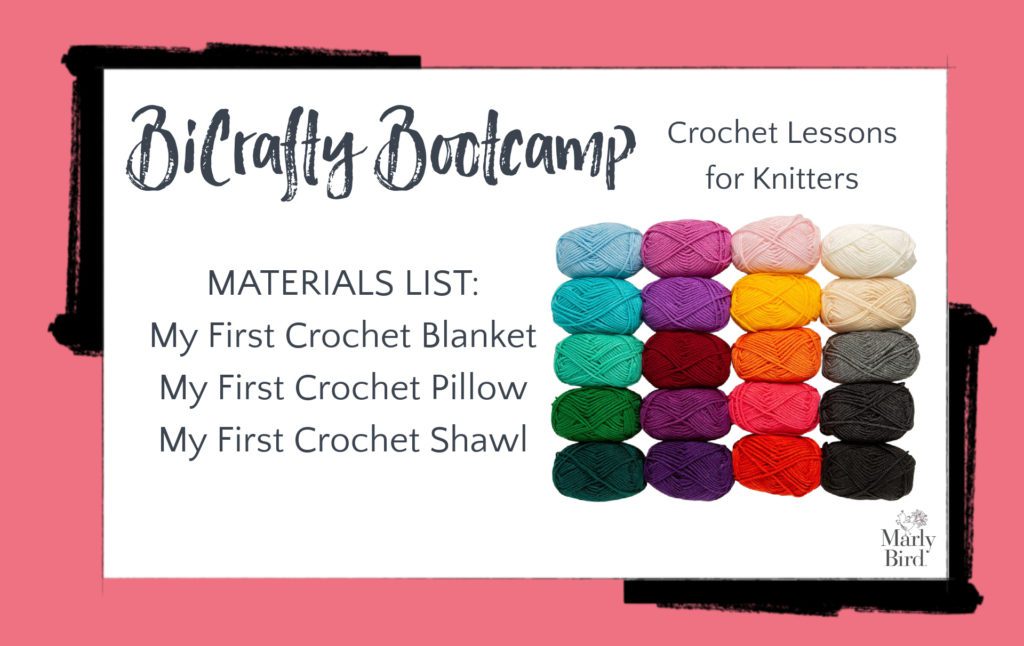
bicrafty bootcamp yarn list

Above you can see what we're going to be making next. And THIS POST tells you exactly what you need to buy in each amount to complete lessons 5-10 of BiCrafty Bootcamp Crochet Edition.

NOTE: This week in the video we also mention the wonderful City Tweed Yarn. Get it here. You could actually use this yarn, follow the chevron crochet pattern below, make it longer and it becomes a cozy autumn scarf.

What We'll Recap This Week As You Learn How to Chevron Crochet

If you've been following along with the first three lessons then please pause and pat yourself on the back. You've already learned how to work “cast on” in crochet, work five different basic crochet stitches, combine stitches across a row, crochet in both stitches and spaces, work multiple stitches into a single space or row, crochet granny sets and crochet shells, create the right height turning chain, change colors in crochet, read crochet charts, start getting used to reading written crochet patterns, and properly weave in / bury ends. WOW!

This week we're mostly going to use those skills again to show you how to chevron crochet. The truly great thing about crochet is that once you've learned how to work those basic stitches, there are seemingly infinite combinations of them to create different textures and patterns. So you can already do a lot more in crochet than you even imagined. This chevron crochet facecloth will help you build your muscle memory and work on increasing and decreasing with the row.

What Is Chevron Crochet?

You're probably already familiar with the chevron pattern. After all, it's popular in everything from fashion to home decor. As a knitter, you might have knit chevron stripes. For example, my one-ball one-color beginner knit hat pattern has subtle chevron striping. The chevron is basically an inverted V shape repeated over and over across a row; think mountain peaks and valleys across the row. It's often done with color changes to create striking striping. It's a very bold, geometric pattern, although you can opt to make it subtler with your color choices.

When you learn how to chevron crochet, the main thing you'll learn is those crochet increases and crochet decreases. You'll use the same stitch across the entire row. For example, you can do hdc chevron crochet or dc chevron crochet. You'll use increases to create the mountain peaks then you'll use decreases to create the mountain valleys. The increases and decreases are strategically placed exactly the same amount apart for a consistent look.

How to Stacked Double Crochet (and crochet straight edges every time)

You'll get to learn a new technique this week: stacked double crochet. You already know how to double crochet. This is just a way to begin a row with a look-alike double crochet stitch that's got some benefits over a turning chain of 3. Learn more about the stacked double crochet in this video:

How to Standing Double Crochet to Start a Row

You'll also see in the video that you can do a standing double crochet instead of a ch 3, which is different from a stacked double crochet. Here's a short lesson on that: Watch a tutorial video here.

How to Increase and Decrease in Crochet to get a Chevron Stitch

The main new thing that you're going to learn in this lesson is how to increase and decrease in crochet. So let's talk a bit more about that.

A smiling woman with short reddish-brown hair and glasses, wearing a colorful crochet-patterned scarf and a beige coat, standing in front of a brick wall. -Marly Bird

How to Increase in Crochet

In chevron crochet, we increase up to a “peak.” After working the designated number of stitches to climb to the top of the “peak” of the chevron stitch you will work multiple stitches in one chain or stitch. These are fully completed double crochets.

When working the crochet increase, you are making 3 (or more in other patterns) chains or stitches into 1 thus increasing 2 stitches.

How to Decrease in Crochet

In chevron crochet, we decrease down to a “valley.” After working the designated number of stitches to walk to the bottom of the peak or what Marly calls the “valley” of the chevron stitch you will work 1 stitch over the multiple of chains or stitches. These are partially completed double crochets that are then completed with the final pull through of all stitches partially completed.

When working the crochet decrease, you are making 1 stitch into 3 (or more in other pattern) chains or stitches thus decreasing 2 stitches.

Is Being a Knitter Making It Easier to Learn Crochet?

Many of you here are, of course, knitters first. Although honestly you're bicrafty now if you're caught up on the lessons. YAY! Is being a knitter making it easier to learn crochet than if you were brand new to yarn? We think so:

  • You understand how different fiber behaves differently on hooks/ needles made of different materials. This is less dramatic in crochet than in knitting, but it's a good thing to understand.
  • Although the motions are different and you're still building up your crochet muscle memory, you do have some familiarity with the way that the tools and yarn move. You have a sense of how to hold them.
  • Moreover, you grasp the concepts of tension and gauge. You know how one impacts the other. Your hands might not quite have the tension right, yet, but you're getting there.
  • You understand about different fibers. Many of you are very excited to move on from cotton to something new next week!
  • Additionally, you have a sense of important concepts that apply to both crafts. For example, counting stitches and rows, changing colors (which is only slightly different in crochet), reading abbreviations and charts.
  • Finally, you also know about increases and decreases. Therefore, you'll have a general sense of what we're doing this week as we learn how to chevron crochet.

Tip: In knitting, you're not supposed to increase or decrease right at the edge. But in crochet it's totally okay!

Colorful chevron pattern on a crochet-themed poster. Text at the top reads "Charming Chevron Crochet Stitches for Everyone." A bird and flower illustration at the bottom invites viewers to learn how to chevron crochet and create unique designs. -Marly Bird

Lesson 4 Crochet Bootcamp Patterns: Materials

When possible, we have provided affiliate links for items. Using these links does not cost you anything more but it does let the company know you came there from us and we get a portion of the sale.

You’ll need:

Yarn: 1 ball of WeCrochet Dishie Yarn, any color or multiple colors if you want to do colorwork

Hook: 1 Size G (4.0mm) crochet hook (WeCrochet Hook, TooShay Crochet Hook)

Notions: Locking stitch markers from WeCrochet, Chenille and tapestry needles for weaving in ends

⭐️ Alternative yarn choice: In the video for lesson 4 Marly uses WeCrochet City Tweed DK and is working up a cowl or scarf.

  • color a: Lemon Curd
  • color b: Blue Blood
  • color c: Habanero
  • color d: Kelp
  • color e: Brocade

⭐️ Hook: 1 Size I (5.5.0mm) crochet hook (WeCrochet Hook, TooShay Crochet Hook)


Chevron Crochet Facecloth Pattern

Double Crochet Chevron Stitch Diagram for BiCrafty Bootcamp Crochet lessons for Knitters Lesson 4. Used to make the Crochet Chevron Stitch Facecloth for spa set
Make the Chevron Crochet Facecloth in one or multi colors with the chart for the double crochet stitch chevron diagram

Stitch multiple = 10 + 14

Ch 34

Row 1: Dc in 4th ch from hook (skipped 3 chains count as a dc now and throughout), * dc in next 3 ch, dc3tog over next 3 ch, dc in next 3 ch**, 3 dc in next ch; repeat from * ending at ** in last ch, 2 dc in last ch, turn. 

Row 2: Ch 3, dc in first dc, * dc in next 3 sts, dc3tog over next 3 sts, dc in next 3 sts**, 3 dc in next st; repeat from * ending at ** in last st, 2 dc in last st, turn.

Repeat row 2 until desired length is achieved.

Fasten off. Weave in ends.

How to Chevron Crochet Video Instruction

Here are our Lesson 4 instructions. The YouTube video plays live at 2:30 ET 9/22/21 but of course the replay is there for you to watch anytime on the Marly Bird YouTube Channel.

Additional Resources / Patterns For This Stage of BiCrafty Bootcamp

  • Ultimate Guide to Chevron Crochet; this guide teaches you about working with different stitches and spacing to alter up your chevrons
  • Chevron Waves Lacy Wrap Free Crochet Pattern
  • Bernat Simple Chevron Baby Blanket Pattern
  • Red Heart Soft Wave Chevron Throw Pattern
  • Red Heart Chic Chevron Throw Pattern
  • Caron Crochet Chevron Blanket Pattern
  • Red Heart Throwback Granny Chevron Pattern; combine the granny stitch you learned with the chevron stripe!
  • Long Double Crochet Chevron Stitch Pattern; note that the placement of the stitch is different than usual with this technique

Frequently Asked Questions

What exactly is chevron crochet?

Honestly… chevron crochet is all about creating that classic V or zigzag shape, you know, like mountain peaks and valleys. The key is strategically placing increases to make the peaks and decreases to make the valleys, all using the same stitch across the row.

As a knitter, will I find crochet easier to learn?

Yes! You've got this. Because you're already a knitter, you already understand how yarn and hooks work together, plus concepts like tension and gauge. You're so ahead of the game!

What yarn and hook do I need for this chevron facecloth?

So here's the thing… for this specific facecloth, you'll want WeCrochet Dishie Yarn and a Size G (4.0mm) crochet hook. But don't worry, if you want to try a cozy scarf instead, WeCrochet City Tweed DK yarn and a Size I (5.5.0mm) hook would be fabulous!

How do I make the chevron pattern work?

You'll be learning how to increase and decrease in crochet! For the peaks, you'll work multiple stitches into one spot, and for the valleys, you'll work a decrease over several stitches. It's all about making those peaks and valleys consistently across the row.

Can I make a chevron scarf with this pattern?

You bet! If you use the City Tweed yarn mentioned and make the piece longer, it totally transforms into a super cozy autumn scarf. How fun is that?

Filed Under: BiCrafty Bootcamp Learn to Crochet, Crochet, Tips, Tricks, Techniques for Knitting and Crochet

How to Knit Backwards (And Why!)

September 22, 2021 By Marly Bird Leave a Comment

Did you know that you can learn how to knit backwards? Actually, it's surprisingly easy to do. But why would you want to do it? There are a few instances in which knitting backwards makes a lot of sense. I'll explain more about that below. Then I'll show you a concise video that teaches you exactly how to knit backwards with ease!

knitting backwards

What Does It Mean To Knit Backwards?

You work with both of your hands in knitting, right? So what does it even mean to learn how to knit backwards? It simply means that you're going to knit across the row in the opposite direction from what you normally do.

For example, right handed knitters generally knit from right to left. Think about it; you're reaching your right hand needle on to your let hand needle and bringing the work over from the right side to the left. So, obviously, knitting backwards means knitting from the left to the right. (The opposite would be the case for left-handed knitters.)

Why Would You Want To Learn How to Knit Backwards?

Learning how to knit backwards offers a few key benefits. The main reason that you benefit from learning it is that it means that you never need to turn your work when you're knitting. Sometimes turning your work is confusing. Sometimes it's inconvenient. Even when it's not, you can probably knit faster if you learn how to knit backwards so that you never have to turn your work.

backwards knitting

So, for example, let's say that you're working stockinette stitch. You would typically work from right to left for your knit row. Then you would turn your work and work right to left for your purl row. INSTEAD, you can work the knit row as normal. Then you can work the purl row from left to right. Note two important things:

  1. You'll work off of the stitches on the right needle, bringing them to the left needle.
  2. You will KNIT NOT PURL this row. Purl stitches are the reverse of knit stitches. Since you're working backwards across the row on the same side of the work, you do not purl. You knit.

Therefore, you can knit backwards to create stockinette fabric without ever having to turn your work. This is great for people who love knit stitch but have a harder time with purl stitch.

Other Times to Use Knitting Backwards

Knitting backwards is also commonly used in entrelac knitting. Again, it's because it's more convenient in this instance to work backwards than to keep turning your work. After all, those rows are short and it's annoying to keep turning it again and again. Similarly, you might do this when working short rows around shoulder seams. So, it's a good skill to learn.

Learning Backwards Knitting Is Good For Your Brain

Moreover, learning new things in knitting is good for your brain. If you're accustomed to knitting a specific way, then you go into autopilot. There's nothing wrong with that. In fact, it can induce a meditative state that's really great for you. However, you should also make it a point to challenge yourself with new things in knitting. This stretches your brain. It helps light up new neural pathways. It keeps you learning and growing. Knitting is a safe space to practice new things. And learning how to knit backwards could be one of those things for you.

Knitting Backwards Made Easy

Here's how to do it:

Did you try it? Tell us about your experience!

You Might Also Like:

  • Entrelac Knit Cowl Free Pattern
  • BiCrafty Bootcamp: Knitting Lessons for Crocheters
  • Striped Stockinette Knit Hat Free Pattern
  • Fisherman's Rib Stitch Three Ways

Frequently Asked Questions

What does “knitting backwards” mean?

Knitting backwards means knitting from left to right instead of the usual right to left… essentially working the return row without turning your work. Instead of turning your knitting and working back across, you knit the stitches from the other end using a mirror-image motion. The result is identical stitches but you never flip the work. This is particularly useful for short row techniques, for certain applied i-cord methods, and for projects where constantly turning is cumbersome.

Why would I want to knit backwards?

Several practical applications! For short row work, knitting backwards on the return rows eliminates the turning motion and keeps everything facing the right direction. For applied i-cord edging, backwards knitting allows continuous cord attachment without turning. For entrelac, backwards knitting on some squares avoids the flip-turn-flip rhythm. And some knitters find that working flat projects without turning actually improves their tension consistency. It's one of those techniques you don't know you need until you try it… then it becomes part of your regular toolkit.

Is knitting backwards hard to learn?

It takes about 10-15 minutes to learn! The motion is basically a mirror image of regular knitting… you're inserting the needle from the opposite direction and wrapping the yarn the other way. It feels very unnatural at first because your hands have established strong “regular knitting” muscle memory. But with practice and video support showing the exact hand position, most knitters get it within one short session. Having it available as a tool expands your knitting capabilities significantly.

What's the difference between knitting backwards and Continental vs. English style?

Continental and English describe where you hold the working yarn (left hand vs. right hand). Knitting backwards is about the direction you're working… right to left instead of left to right, regardless of which yarn-holding style you use. You can knit backwards in Continental style (yarn in left hand) or English style (yarn in right hand). They're completely separate techniques that can be combined in any combination that works for you.

Will knitting backwards create the same fabric as regular knitting?

Yes! When done correctly, backwards knitting creates exactly the same stitches as regular knitting… the fabric is identical. The stitch structure, gauge, and appearance should be the same. If you notice a difference in your backwards knitting vs. regular, it's usually a tension issue (the new motion feels different, so tension changes temporarily) or the yarn is wrapping in the wrong direction (which creates twisted stitches). Video tutorials show the exact yarn direction to ensure your backwards stitches match your regular ones.

Pro Tips for Mastering Backwards Knitting

Okay, so you've watched the video and you're ready to give this a go. Here's what I want you to know before you start… backwards knitting feels weird at first, and that's totally normal! Your hands are used to working in a specific pattern. Give yourself grace as you're learning.

Start with a simple project using worsted weight yarn and a size US 8-10 needle. Thicker yarn and larger needles are way more forgiving than fingering weight while you're building this new muscle memory. I'd recommend practicing on a swatch before jumping into a full project… trust me, it'll boost your confidence!

Pattern Projects Perfect for Backwards Knitting

  • Simple stockinette blankets or afghans (maximum turning-around eliminated!)
  • Our Entrelac Knit Cowl … it's literally designed with backwards knitting in mind
  • Seamless sweaters with short row shaping at the shoulders

Quick Troubleshooting

If your backwards row feels tighter than your forward rows, you're probably tensioning too hard. Relax those hands! It takes practice to find that rhythm. And remember… returning to basics with your knit and purl fundamentals can really help too.

Filed Under: Knitting, Tips, Tricks, Techniques for Knitting and Crochet

  • « Previous Page
  • 1
  • …
  • 59
  • 60
  • 61
  • 62
  • 63
  • …
  • 98
  • Next Page »

Let's Be Social

Join the Marly's Minions Facebook group to share, ask questions, or chat about all of your yarn related crafts!

Join the group
Cartoon of a smiling woman with brown hair in a bun, glasses, black jacket and green shirt, waving next to large "hi" text.

Quick Links

The Pattern Shop

Our Free Patterns

Blog

Marly Bird House

Learn to Knit & Crochet

About

Giveaway Terms and Privacy Notice

Find Us Everywhere

Join the Newsletter

YouTube Channel

Marly's Minions FB Group

Etsy Store

Ravelry Store


AN ELITE CAFEMEDIA HOME/DIY PUBLISHER

Information from your device can be used to personalize your ad experience. Do not sell or share my personal information.

Privacy Policy   Terms   Marly Bird Legal Documents Copyright © 2026