Search
Close
  • The Pattern Shop
  • Our Free Patterns
    • Browse All Our Free Patterns
    • Our Free Knitting Patterns
    • Our Free Crochet Patterns
  • Blog
    • All Blog Posts
    • All Free Patterns
    • Dibble Dabble Inspiration
    • Giveaways
    • Make-Alongs
    • Product Reviews
    • Roundups
    • Tips, Tricks, Techniques for Knitting and Crochet
Stylized bird with pink and gray swirling tail above elegant “Marly” text, logo for crochet accessories and home decor.
  • Marly Bird House
  • Learn to Knit & Crochet
    • Newbie? Start Here
    • Video Tutorials
    • Knitting Definitions
    • Crochet Definitions
    • Common Techniques
    • Size Charts for Knitting and Crochet Projects
  • About
×
  • The Pattern Shop
  • Free Patterns
  • Blog
  • Marly Bird House
  • Learn to Knit & Crochet
    • Newbie? Start Here
    • Video Tutorials
    • Knitting Definitions
    • Crochet Definitions
    • Common Techniques
    • Size Charts for Knitting and Crochet Projects
  • About
Stylized bird with pink and gray swirling tail above elegant “Marly” text, logo for crochet accessories and home decor.
Search
Close

New Patterns NOW Available in Ad-Free PDF! Check out The Pattern Shop

Learn to Crochet Basics (BiCrafty Bootcamp: Beginner…

September 1, 2021 By Marly Bird 5 Comments

We are so excited to kick off our next series in BiCrafty Bootcamp. This one is Beginner Crochet Lessons for Knitters. Any knitters out there who have thought about learning to crochet should join right now. It’s a free set of weekly lessons over the course of the next few months. They’re designed specifically to help knitters use their existing skills to make crocheting easier. With written instructions, video tutorials, and patterns selected specifically for each stage of crochet growth, you can learn to crochet easily. Beginning today, you’ll learn to crochet basics. You’ll be surprised by how much you have already learned by the end of this first lesson.

BiCrafty-Bootcamp-Crochet-landing-copy

Learn to Crochet Basics

Just like with knitting, you’ll start to learn to crochet basics by learning about your materials. Luckily your work as a knitter already has you well primed for this. You know about yarn fibers, weights, etc. So mostly it’s just about learning the difference between knitting needles and crochet hooks.

Obviously, you work with two needles (or more if you’re using DPNs) whereas you only work with one crochet hook. As far as the hook itself, though, there are a lot of similarities. The hook head can be pointier or blunter, depending on your preference. The material of the hook might be aluminum, wood, or plastic. As a knitter, much of this should sound familiar.

However, head to our Ultimate Guide to Crochet Hooks to learn everything you need to know as a beginner crochet.It will teach you tons of stuff including crochet hook sizes. Also, when you watch the YouTube video embedded at the end of the post, Marly starts off by showing you a whole bunch of different hook options.

Colorful crochet hooks displayed on a textured background, showcasing various materials and designs.

How to Hold Your Hook and Yarn

As a knitter, you had to figure out the most comfortable way to hold your hook and yarn. It took some time and felt awkward at first. Therefore, don’t feel bad if it feels a little awkward adjusting to a crochet hook and yarn. It’s a little bit different. But you’ll get there with practice.

Many people find that they hold their crochet hook similarly to the way that they hold their dominant hand knitting needle. Try that and see if it works for you. We’ll also give you some more options in this lesson for ways to hold your hook and yarn.

Most people hold their hooks either similar to how they grip a knife or how they grip a pencil. Marly covers this in the video below as well to help you figure out what’s comfortable.

LEFTIES: Marly is doing her best to show some left-handed crochet in the live videos even though we’re all righties. And then we’re going to try to get some left-handed crochet tutorial videos up on the site soon.

Learn to Crochet Basics: Foundation Chain

You’ll start off your crochet with a slip knot. Yep, that’s exactly the same as it is in knitting.

Then you’re going to work your first chain. This is comparable in knitting to “casting on.” The major difference between knitting and crochet is that in knitting you pull a bunch of live loops up onto the hook at once whereas in crochet you pull up one loop at a time then bind off the loop you pulled up to complete the stitch. So you’ll create a chain that’s not going to sit on your hook; otherwise it’s very similar to the cast on. It’s your starting row.

NOTE: When counting your chains, do not ever count the chain that is on your loop.

Learn to Crochet Basics: Turning Chains

In knitting, you complete your cast-on row. Then you turn the work and you start immediately working the next row, right? Well, it’s a little bit different in crochet.

You see, in knitting, the basic stitches are all the same heights. Whether you knit or purl, you’re adding the same amount of height to the fabric in that row. Crochet is different because you can build stitches in varying heights. As a result, you need to do something a little bit different in crochet than in knitting when you turn your work: you need to start with a turning chain. (Sometimes these are also called beginning chains.)

I like to think of the crochet turning chain or beginning chain as a stair step to the next row or round. *Side Note: this turning chain or beginning chain sometimes counts as a stitch and sometimes doesn’t. We will go over that more later.

This is a chain that you make, exactly like you began your foundation chain. You create it at a height that matches the stitches for that row. If you check out this post then you’ll see that the most common basic crochet stitches are a single crochet, a double crochet, and a treble (or triple) crochet. Each one is taller than the other. So, if you wanted to make a row of single crochet stitches, you would begin with a turning chain of height one. Then you would work single crochet across the row.

We’ll give you more info on how to calculate the turning chain height in future lessons. For now, you’re going to learn single crochet stitch, so you just need to know that the turning chain is a chain one. (And in the video below Marly explains this a little bit further, with drawings as visuals, so you can understanding varied turning chain heights and why we use them.)

How to Single Crochet Stitch

The single crochet stitch gives you the basic foundation of almost everything that you’re going to do in crochet. Each crochet stitch is made with a combination of “yarn over”, “pull through loop(s)”, and insert your hook into the correct next stitch. Different stitch heights and techniques are just variations on this. Therefore, once you master the single crochet, you’re ready to move forward.

In this lesson, you’re also going to learn how to decrease in single crochet! Yep, already! Follow the live video at the bottom of this post (or over on YouTube) and you’ll see when we work the sides of the pattern below, we’re doing the decrease. It’s easier than you think! (And you know the concept from knitting.)

Knitter’s Tip: The single crochet is completed just like a stretchy bind off wherein you knit 2 stitches, then put the left hand needle in the front leg of those two stitches on the right hand needle and knit them together. Don’t believe me? Try it, watch the formation of the bind off…then try to do it with a crochet hook. Notice it is the same stitch 🙂 So, a stretchy bind off is really jut a single crochet bind off.

Find diagram instructions for single crochet here.

Learn to Crochet Basics: Final Lesson One Tips

There are a few more things we want to cover in this first lesson for BiCrafty Bootcamp: Beginner Crochet Lessons for Knitters.

Stitch Markers for Straight Edges

Get yourself a set of locking stitch markers. You’ll use them often in crochet for the same reasons that you use them in knitting. For example, you might use them to count off sets of stitches in a long row. Alternatively, you might use them to mark the beginning of a round.

Right now, though, we’re going to teach you how to use stitch markers to get straight edges when you’re first learning how to crochet. You’ll see in the pattern instructions as well as the video that we put it in the top of the final stitch of a row so we can easily identify the last stitch of a row and keep those edges straight.

Weaving In / Burying Ends

A lot of crocheters simply crochet over their ends as they go. While that’s certainly one method, it’s not the most effective. Ends come loose too easily over time. Therefore, you want to learn to properly weave in or bury your ends in crochet. Luckily, as a knitter, you probably already have a good sense of how to do this. Marly goes over this towards the end of the live video embedded at the bottom of this post. And we’ll give you this info in future lessons as well.

Using an I-Cord Maker

As a knitter, you might know how to knit I-Cords. But did you know that there are handy I-cord makers out there that make the job so much easier? It’s similar to how you can make pom poms by hand or use a pom pom maker instead. We’re going to use an I-Cord maker here in BiCrafty Bootcamp, although it’s optional for you.

BiCrafty Bootcamp: Our First Crochet Pattern!

We want you to see your new crochet skills put to work immediately. Those instant gratification projects are so good for your self-esteem as you learn a new craft. Moreover, you’ll have a lot of items at the end of Bootcamp that you can use or gift! We’ll start today with:

Pattern: Single Crochet Headband/ Head Wrap for Self-Care

That’s right, you’re ready to make your first single crochet project. And why not make it for yourself. If you enjoy the practice, make a bunch of them. After all, these are great gifts for many different people in your life.

Materials:

  • Yarn: WeCrochet Dishie Yarn, 1 ball in color of your choosing. This is a worsted weight cotton yarn.
  • Hook: Size H (5 mm) or I (5.5 mm) crochet hook
  • Notions: Locking stitch markers, Chenille and tapestry needles for weaving in ends.

Gauge:

Yes, just like in knitting, gauge matters in crochet. Learn how to calculate crochet gauge here.

  • 5 rows wide = 1 inch

Finished size:

  • Finished length (without straps) = 16.5 inches

Pattern Instructions

Body

Chain 51

Row 1 (RS): Single crochet in second chain from hook and in each chain to end. Chain one more, turn work — 50 single crochet *REMEMBER: when we say “second chain from hook – DO NOT COUNT THE LOOP ON YOUR HOOK! Start with the next one for your count.*

Row 2 (WS): Single crochet in first single crochet (put a stitch marker in the top of the single crochet just completed, this will help you identify the last stitch of the next row thus keeping your edges straight). Single crochet in each single crochet to end, chain one and turn — 50 single crochet (Don’t forget to count your stitches each row!!)

Row 3: Single crochet in first single crochet (put a stitch marker in the top of the single crochet just completed). Single crochet in each single crochet to end (the last stitch of the row will be the one you put the stitch marker in on the previous row) chain one and turn — 50 single crochet

NOTE: We will keep one marker at either end of the piece to help keep the edges straight. Move these markers up each row into the new single crochet competed.

Row 4: Single crochet in first single crochet (move the stitch marker up to the top of the single crochet just completed). Single crochet in each single crochet to end (the last stitch of the row will be the one you put the stitch marker in on the previous row) chain one and turn — 50 single crochet

Row 5; Single crochet in first single crochet (move the stitch marker up to the top of the single crochet just completed). Single crochet in each single crochet to end (the last stitch of the row will be the one you put the stitch marker in on the previous row) chain one and do not turn, rotate the work 90 degrees to work along short edge– 50 single crochet

1st Side Edge

Working into the short edge,

Row 1 (RS): Single crochet once into the edge of each row. Chain one, turn — 5 single crochet

Row 2 (WS): Single crochet 2 together, single crochet one, single crochet 2 together. Chain one, turn — 3 single crochet

Row 3: Single crochet 3 together — 1 single crochet

1st Finishing ties or no ties (see both options)

Option 1: After the single crochet 3 together, chain 50. Fasten off.

Option 2: Fasten off. Make I-cord 15″ (38 cm) long. Seam to edging.

2nd Side Edging

Turn 180 degrees to other short edge.

Row 1 (RS): Join yarn with slip stitch at right corner. Chain one. Single crochet once into the edge of each row. Chain one, turn — 5 single crochet stitches

Row 2 (WS): Single crochet 2 together, single crochet one, single crochet 2 together. Chain one, turn — 3 single crochet

Row 3: Single crochet 3 together — 1 single crochet

2nd Finishing ties or no ties (see both options)

Choose same option as you did for the 1st side edging.

Option 1: After the single crochet 3 together, chain 50. Fasten off.

Option 2: Fasten off. Make I-cord 15″ (38 cm) long. Seam to edging.

Video Tutorial for Lesson One:

Additional Videos and Patterns You Might Want to Check Out

You’ve already mastered a lot of learn to crochet basics. If you keep practicing with that headband pattern, you’ll be well set for next week’s lesson. However, if you want to branch out, here are some additional videos and patterns you’re ready for at this point.

  • Videos for the first five basic crochet stitches
  • Video for more info on turning chains
  • Lily Sugar’ n Cream Dishcloth – a single crochet pattern; your Dishie yarn will work for this project as well

Frequently Asked Questions

Is this lesson really for knitters who want to learn crochet?

Yes! It’s called BiCrafty Bootcamp and it’s a whole series of free lessons designed specifically for knitters… Marly says she uses your existing knitting skills to make crocheting easier for you.

How do I start crocheting? What’s the first step?

Honestly… you start with a slip knot, just like in knitting! Then you’ll make a foundation chain, which is like casting on. The big difference is you pull up one loop at a time and finish it off, rather than having a bunch of loops on your hook all at once.

I’m struggling with holding the hook and yarn… is that normal?

Oh, absolutely! It’s totally okay if it feels a little awkward at first… just like when you first learned to knit. Lots of people hold their crochet hook like they hold a pencil or a knife, so try that and see what feels comfy for you.

What’s a turning chain and why do I need it?

So here’s the thing… unlike knitting where stitches are all the same height, crochet stitches can vary. The turning chain is like a little stair step you make before starting a new row, and its height depends on the type of stitch you’ll be using… it helps build the fabric correctly!

How can I make sure my crochet edges are straight?

Yes! Marly suggests using locking stitch markers… you can put one in the very last stitch of your row to easily identify it and keep those edges nice and straight. She mentions this was a big help for her when she was first learning too!

Filed Under: BiCrafty Bootcamp Learn to Crochet, Crochet, Tips, Tricks, Techniques for Knitting and Crochet

Ultimate Beginners Guide to Crochet Hooks

August 30, 2021 By Marly Bird 5 Comments

We’re about to kick off BiCrafty Bootcamp: Beginner Crochet Lessons for Knitters. Sign up now (it’s free the sign up makes sure we know where to send you updates.) Lessons begin on September 1st. However, we wanted to get you prepped now by giving you a beginners guide to crochet hooks. That way you’re all set to go with our first set of lessons!

Disclosure: Affiliate links included. Click on them and make a purchase and I get a percentage of sales. Your price stays the same. I appreciate all of the support!
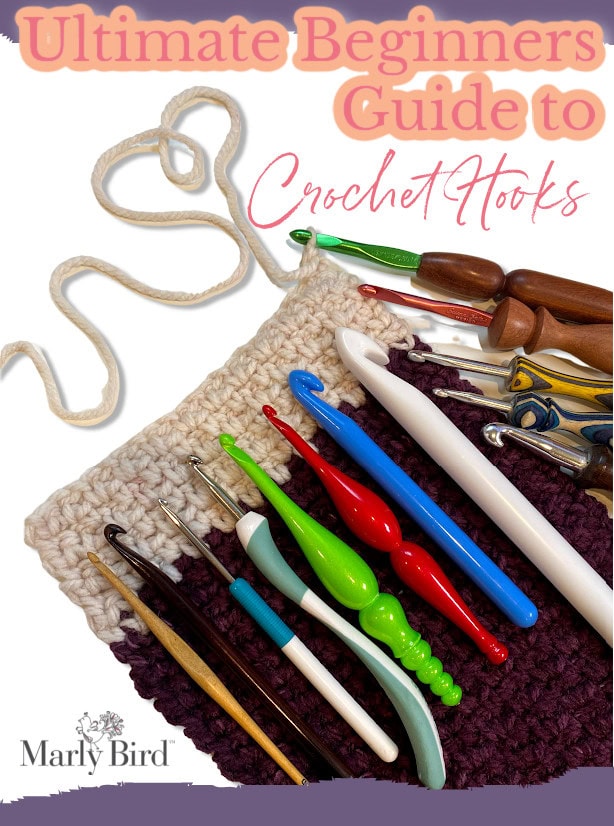
Ultimate Beginners Guide To Crochet Hooks

Your Basic Guide to Crochet Hooks

When you first begin to knit, there’s a lot that you need to learn about knitting needles. Luckily, crochet hooks aren’t quite as complicated. Whereas knitting needles have straights, and circulars, and DPNs, in crochet a hook is pretty much just a hook. There are a few things you’ll want to learn, though, as you begin to learn to crochet basics.

In our First BiCrafty Bootcamp Crochet Edition Video, we show you all different kinds of brands and give you some thoughts on them. You can watch that here.

Crochet Hook Sizes

Like knitting needles, hooks are sized by mm. Bigger mm gives you bigger loops. Typically, with heavier yarn, you’ll use larger size crochet hooks.

Whereas knitting needles have a number + mm (for example, size 8 – 5 mm needles), crochet hooks have a letter + # + mm (for example, size I9 – 5 mm). But the gist is the same. As a knitter, you already know about gauge and tension. For example, you know that if you’re knitting too tight for gauge, then you might need to go up a knitting needle size. It’s the exact same thing in crochet. That’s why it’s good to order a set of crochet hooks rather than just buying one to start.

You can learn all about crochet hook sizes and the recommended yarn weights for them from our handy crochet hook size chart. It’s an excellent supplement to the rest of this guide to crochet hooks.

Crochet Hook Anatomy
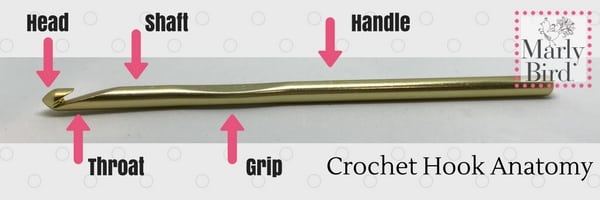
Crochet hook anatomy diagram showing head, throat, shaft, grip, and handle in golden color against a light background.

There are five basic parts to a crochet hook. The top of the hook is called the point. Then you have the “throat”. After that comes the shaft. There’s a thumb rest, followed by the rest of the handle.

There are basically two different types of crochet hooks in terms of anatomy:inline and tapered. Inline hooks are so-named because the hook point is “in line” with the shaft. Therefore the space between the hook and shaft is deeper than with tapered hooks. The point is pointier than with tapered hooks. The name comes from the fact that the hook tapers down to a thinner throat. This creates a shallower gap between hook and throat. The point is rounder.

Many people refer to the two most common brand names of crochet hooks to described the difference between hooks: Susan Bates crochet hooks are inline whereas Boye hooks are tapered. Neither is necessarily better than the other, even for beginners. It’s just a matter of figuring out what you like. For example, you’ve probably knit with some needles that are pointier and others more blunt; it’s a matter of practice to figure out which is right for you.

Crochet Hook Materials
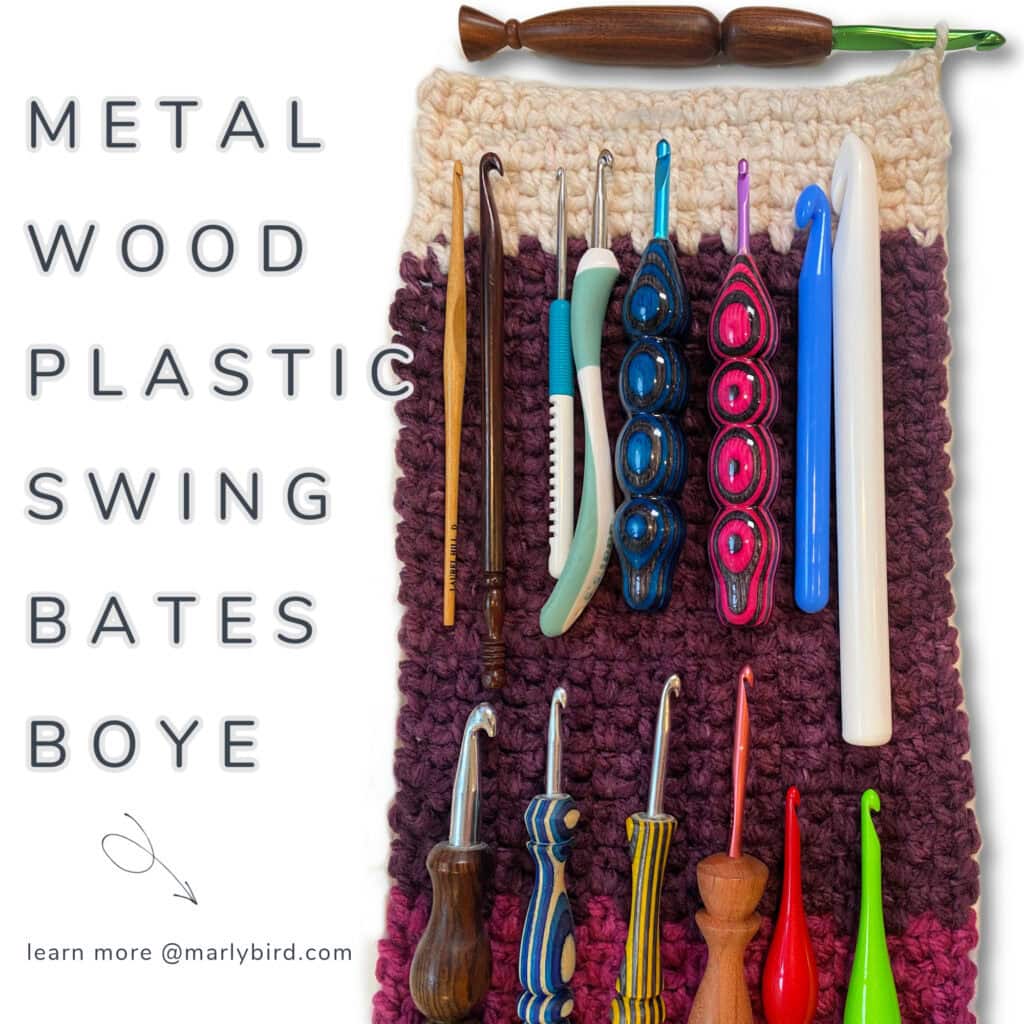
Crochet Hooks-4

Your knitting knowledge will serve you well here as you consider which type of crochet hook material you want to choose. Just like with knitting needles, crochet hooks come in metal (aluminum as well as steel, the latter usually only used for thread crochet), bamboo and other wood, plastic, etc.

Just like with knitting, the material somewhat affects the ease of working with the yarn. Yarn typically moves more smoothly and quickly on metal hooks than wood ones, for example. However, it’s interesting to note that this is much more of an issue with knitting; the effect is subtler in crochet.

We here at the Marly Bird team are working with WeCrochet hooks. These are light aluminum hooks that are encased in a latex-free plastic rubber that makes them easier to grip.

If you want to learn about other brands for each type of crochet hook material; here’s a comprehensive post that provides that detail.

Ergonomic Crochet Hooks

As you get used to crocheting, you’ll figure out which hooks you like. Some people find that crocheting too long is hard on their hands. If this happens to you, or if you already have hand issues, then you might want to consider exploring different ergonomic crochet hooks. These have a wider handle for better grip. We recommended Too Shay Crochet Hooks.

You can learn all about ergonomic crochet hooks here.

Crochet Hook Handles

Other than ergonomic handles, most crochet hook handles are the same. Specifically, handle lengths are usually pretty similar across all brands. There are certainly exceptions. However, as a general rule of thumb, you don’t typically have to worry about hook handle length when choosing crochet hooks. This is important for knitters to know. After all, each different type of knitting needle has different lengths; and you add in cables for circulars and it really gets complicated. In contrast, with crochet you aren’t holding any live stitches on your hook. Therefore, hook handle length doesn’t matter as much … there are different lengths and you might find some that you like more than others but it’s not as critical to the craft as in knitting.

Note that there are some exceptions for advanced crochet techniques. Tunisian crochet uses its own unique type of hooks, which are longer. Likewise, you’ll use a longer tool to hold live loops if you ever explore broomstick crochet. But these are advanced techniques that you may or may not ever worry about. For a basic guide to crochet, you don’t have to worry about crochet hook handle length.

How to Hold a Crochet Hook

We’ll go over this in more depth in BiCrafty Bootcamp Crochet Edition Lesson One. But for now, check out our previous post on “crochet terminology” which goes into additional depth about some of the stuff in this guide. It covers the basic “pencil grip” vs “knife grip” question that new crocheters usually ask about.

You Might Also Like:

  • Get All The Info on BiCrafty Bootcamp Crochet Edition Here
  • Ergonomic Crochet Hooks on the Podcast
  • Wood Crochet Hooks on the Podcast
  • Are Interchangeable Crochet Hooks a Thing?

Frequently Asked Questions

What’s the difference between inline and tapered crochet hooks?

So here’s the thing… inline hooks have the point “in line” with the shaft, making the space between them deeper and the pointier. Tapered hooks, like Boye, have a hook that tapers down to a thinner throat, creating a shallower gap and a rounder point. It’s really just about what feels best in your hands, kind of like knitting needles!

Do the materials of crochet hooks really make a difference?

Honestly… it’s not as big of a deal in crochet as it is in knitting. Yarn does tend to glide a little smoother on metal hooks compared to wood ones. We’re using these super comfy WeCrochet hooks right now that have aluminum but are covered in a grippy rubber… they’re great!

What are ergonomic crochet hooks and why would I use one?

Yes! If your hands ever get tired or achy when you crochet for a while, you might want to check out ergonomic hooks. They have a wider handle which makes them much easier to grip. My friend over at Too Shay Crochet Hooks makes some really nice ones!

Is crochet hook handle length really important?

For most basic crochet, not really… The handle lengths are usually pretty similar across brands, and since you’re not holding live stitches on your hook like with knitting needles, it’s not as critical. Now, if you get into Tunisian or broomstick crochet, you’ll use longer hooks, but for everyday stuff, don’t worry too much about it.

How do I know what size crochet hook to use?

Think of it like knitting needles… bigger mm means bigger loops. Generally, you’ll use a larger hook with heavier yarn. You can find all the details and a handy chart with recommended yarn weights on our crochet hook size chart page!
Filed Under: BiCrafty Bootcamp Learn to Crochet, Crochet, Dibble Dabble Inspiration, Product Reviews

55 Free Outer Space Patterns to Crochet and Knit

August 30, 2021 By Marly Bird Leave a Comment

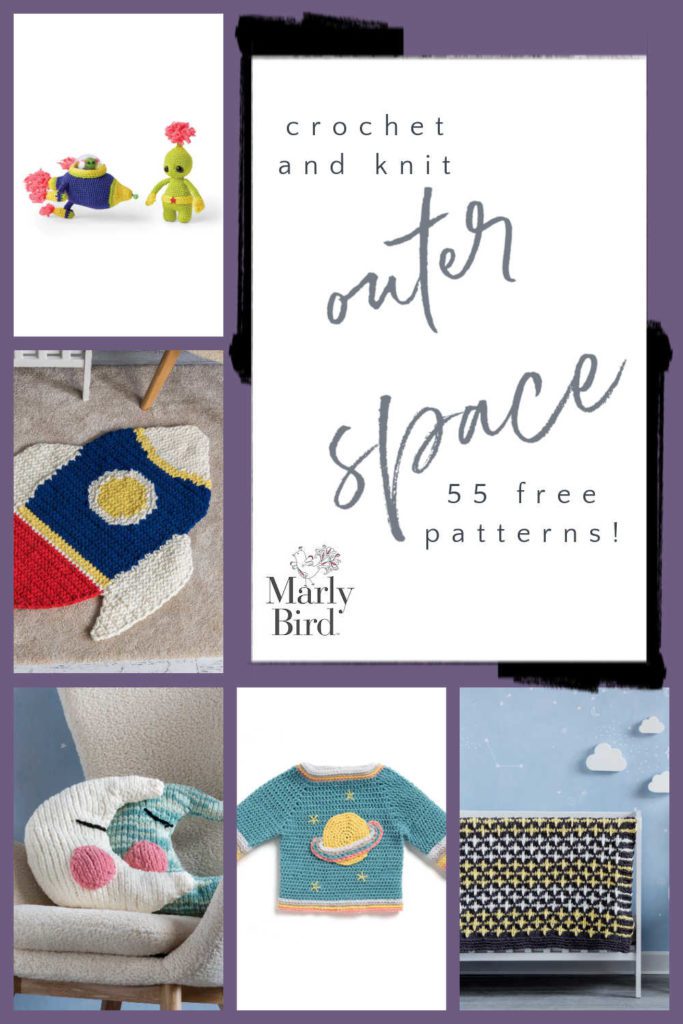
Whether you want sweaters, blankets, home decor, or toys, there are outer space patterns here for you! With UFOs, rocketships, stars, and planets, there are dozens of great Yarnspirations patterns to make!

55 Free Outer Space Patterns to Crochet and Knit

UFOs and Aliens

Aliens are here! Show your flying saucers and planetary visitors off with these projects.

  • UFO Yoke Knit Sweater
  • Adorable Aliens
  • Pompom Aliens
  • Alien Pillows
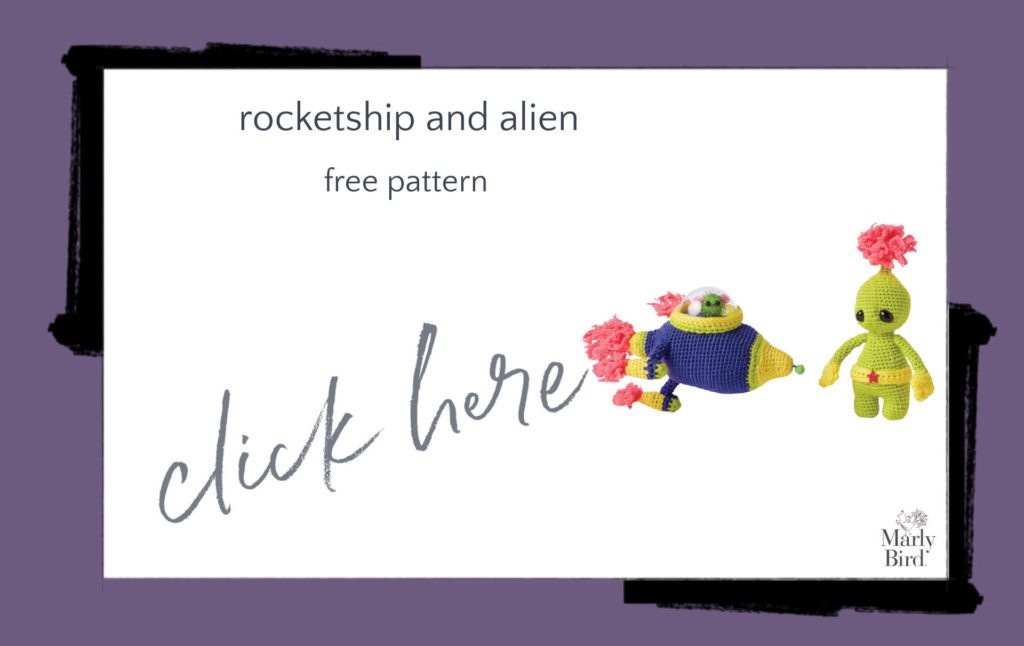
  • Rocketship and Alien
  • Costume Hats (Alien)
  • I Want to Believe Crochet UFO Stuffie
  • Bleep Blorp Toy
  • Knit Mosaic Simply Saucers Blanket
  • Flying Saucer Crochet Snowman
  • Flying Saucer Knit Snowman
Rocketship and Alien Free Crochet Pattern

Outer Space Patterns: Rocketships

Blast off! Shoot for the stars with these rockets.

  • Rocketship Crochet Baby Blanket
  • Crochet Rocket Rug
  • Knit Rocket Ship Pillow
  • Crochet Rocket Sweater
  • Rocket Ship Scrubby
  • Chic Knit Rocket Ship Sweater
  • Blast Off Crochet Snuggle Sack
  • Out of This World Crochet Spaceship
  • Out of this World Knit Spaceship
  • C2C Blast Off Crochet Baby Blanket
  • Crochet Baby Rocketship Hat
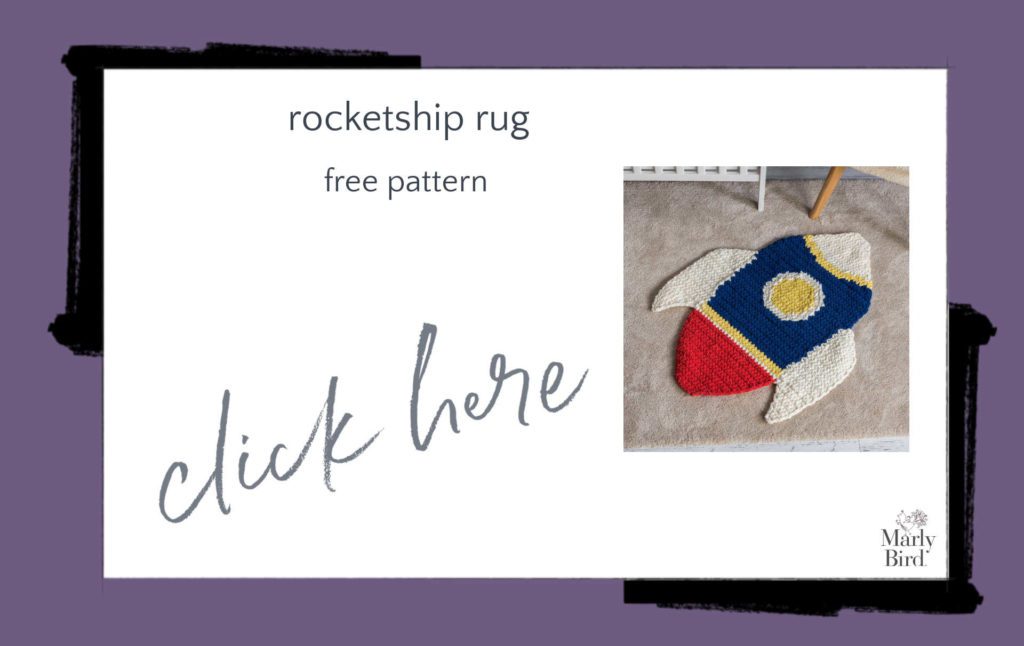
Crochet Rocket Rug Free Crochet Pattern

Sun, Moon and Stars

Our sun and moon and the stars in the sky are beautiful!

  • Knit Moon Baby Pillow
  • It’s a Phase Crochet Lumbar Pillow
  • Crochet Star Baby Earflap Hat
  • Moon and Star Shapes
  • Star of the Show Crochet Blanket
  • Star Blanket
  • Sunshine Crochet Pillow
  • Set of Suns Scrubby
  • Crochet Twinkle Star Pillows
  • Crochet Nursery Storage Basket Set
  • Starlight Crochet Blanket
  • Twinkle Stars Baby Blanket
  • Starry Sky Crochet Blanket
  • Happy Sun Scrubby
  • Cool Sun Applique
  • Gotta Wear Shades Dishcloth
  • Sunny Day Tote Bag
  • Sunny Dishcloth
  • Sparkling Star
  • Knit Star Light Garland
  • Lucky Star Pillow
  • Star Knit Baby Pullover
  • Starry Night Knit Baby Blanket
  • Dreamtime Crochet Star Baby Blanket
  • Crochet C2C Big Star Blanket
  • Star Blanket
  • Moon Phase Crochet Wall Hanging
  • Moon Shadow Crochet Blanket
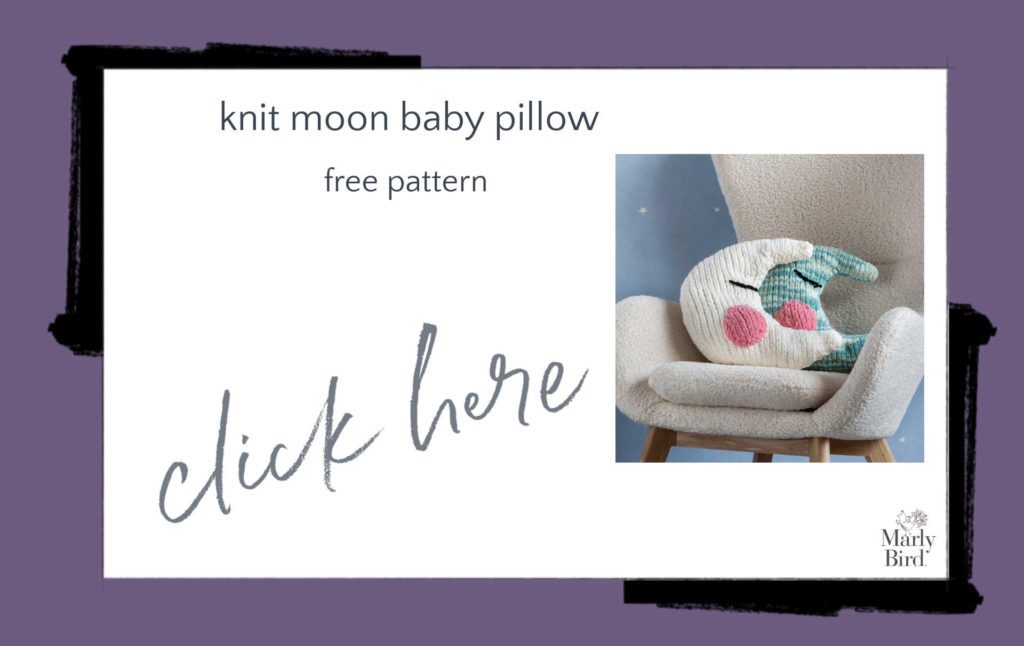
Knit Moon Baby Pillow Free Knitting Pattern

Planets

Explore all our solar system with these planet-themed projects.

  • Solar System Crochet Baby Blanket
  • Crochet Saturn Baby Pullover
  • Solar System Crochet Mobile
  • Ring Around the Planet Crochet Rug
  • Galaxy Swirl Crochet Baby Blanket
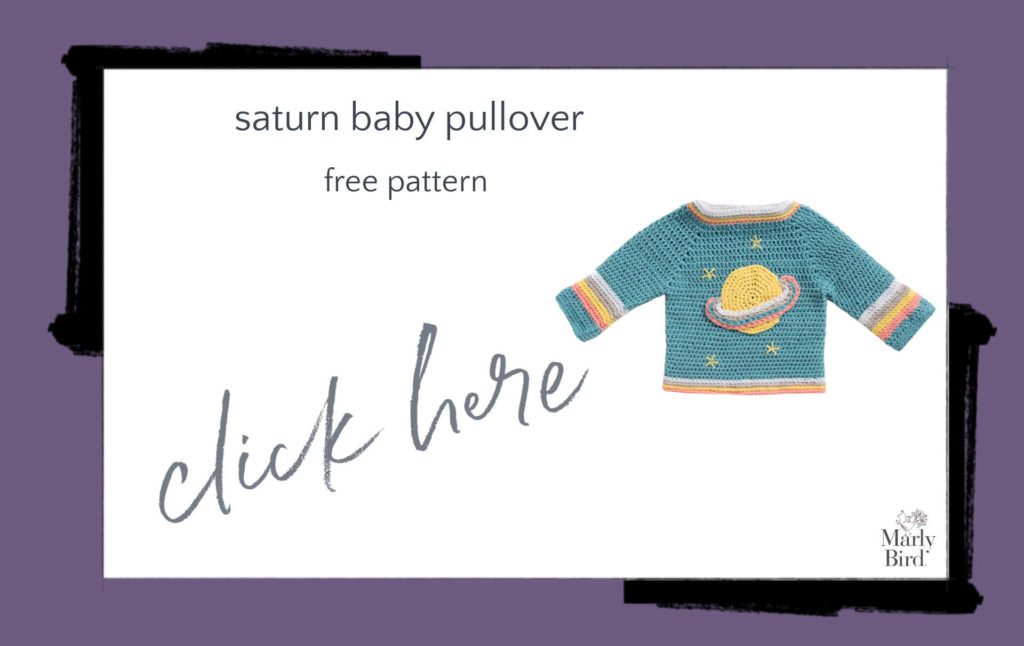
Crochet Saturn Baby Pullover Free Crochet Pattern

Also on the Blog

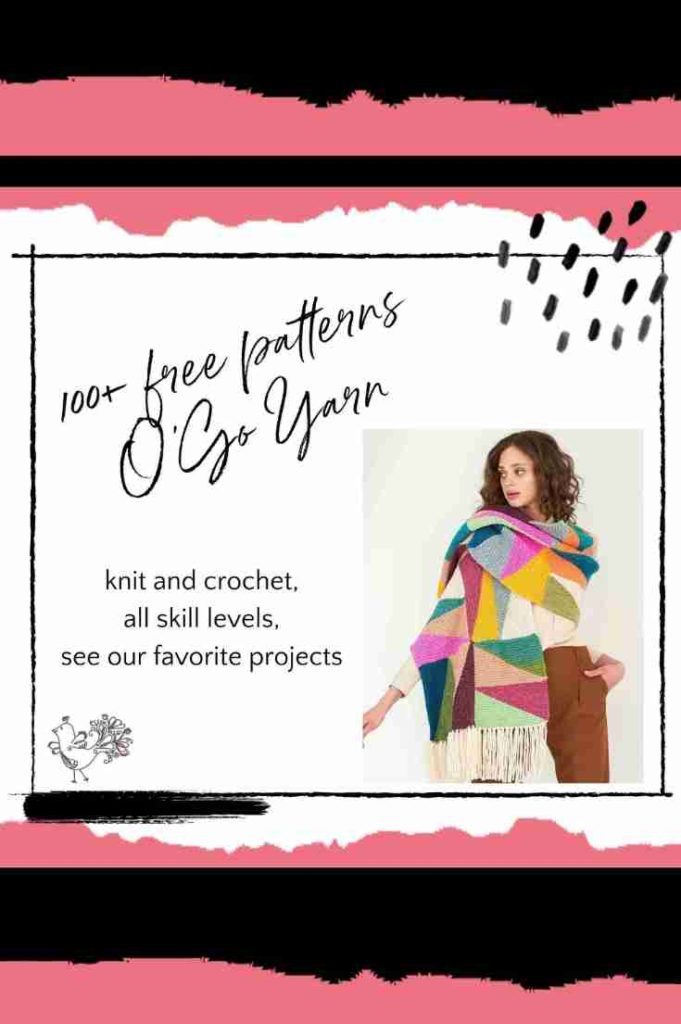
  • 100+ O’Go Yarn Patterns: Free, Knit and Crochet Patterns Using New Tangle-Free Yarn
  • 26 Free Knit and Crochet Tailgate Projects
  • 26 Free Knit and Crochet 18″ Doll Clothes & Accessories

Frequently Asked Questions

What kinds of outer space projects can I crochet or knit?

The universe is your limit! Amigurumi planets, stars, moons, suns, rockets, and aliens are incredibly popular. Space-themed blankets and baby items are beautiful with star and moon motifs. Astronaut stuffed toys and UFO plushies make amazing gifts. Constellation-inspired shawls and scarves in dark yarns with contrasting color stars look stunning. Space-themed hats with moon and star colorwork are wonderful for kids and adults alike. With 55 patterns in this collection, there’s a space project for every skill level and every corner of the galaxy.

Are space-themed amigurumi patterns good for beginners?

Many of them are perfect for beginners! Simple planet shapes are basically just spheres of different sizes with color changes… great single crochet practice in the round. A crescent moon can be a simple curved shape. Stars have a classic pointed shape that uses basic increases and decreases. Rockets and aliens get more complex with multiple pieces and embellishments. This collection covers the full range from very simple to more detailed… pick a planet or simple star for your first space project!

What yarn colors work best for outer space projects?

Deep blues, purples, and blacks for space backgrounds. Bright yellows and whites for stars. Greens, teals, and bright colors for fun alien characters. Earthy tones for rocky planets. Blue-green for Earth. Red-orange for Mars. The great thing about space is you can go as scientifically accurate OR as imaginative as you want. A galaxy-inspired variegated yarn in deep tones with specks of contrasting color makes incredible space blankets and accessories. And metallic or sparkly yarn? Perfect for adding that cosmic shimmer.

Can I make space-themed gifts for adults?

Space enthusiasm transcends age… ask any adult who watched the moon landing as a kid, or anyone who binges space documentaries. A beautifully made solar system mobile (crocheted planets hanging from a mobile frame), a constellation wall hanging, or a set of planet amigurumi makes a genuinely special gift for a space lover of any age. For adults, consider slightly more sophisticated designs… realistic proportions, correct planet colors, or constellation-based patterns rather than cartoon rockets.

Are there space patterns for both knitters and crocheters in this collection?

Yes! Both crafts are represented. Crochet excels at amigurumi planets and space creatures with its ability to create 3D shapes easily. Knitting brings beautiful constellation colorwork, mosaic patterns, and intarsia star motifs to garments and accessories. If you’re BiCrafty… you get double the space to explore! And for the true space enthusiast in your life, combining both crafts in a gift set (knitted star hat plus crocheted planet stuffies, for example) is a truly out-of-this-world present.

Filed Under: Free Patterns

Brighten Up Your Day With This Colorful Granny Square…

August 26, 2021 By Marly Bird Leave a Comment

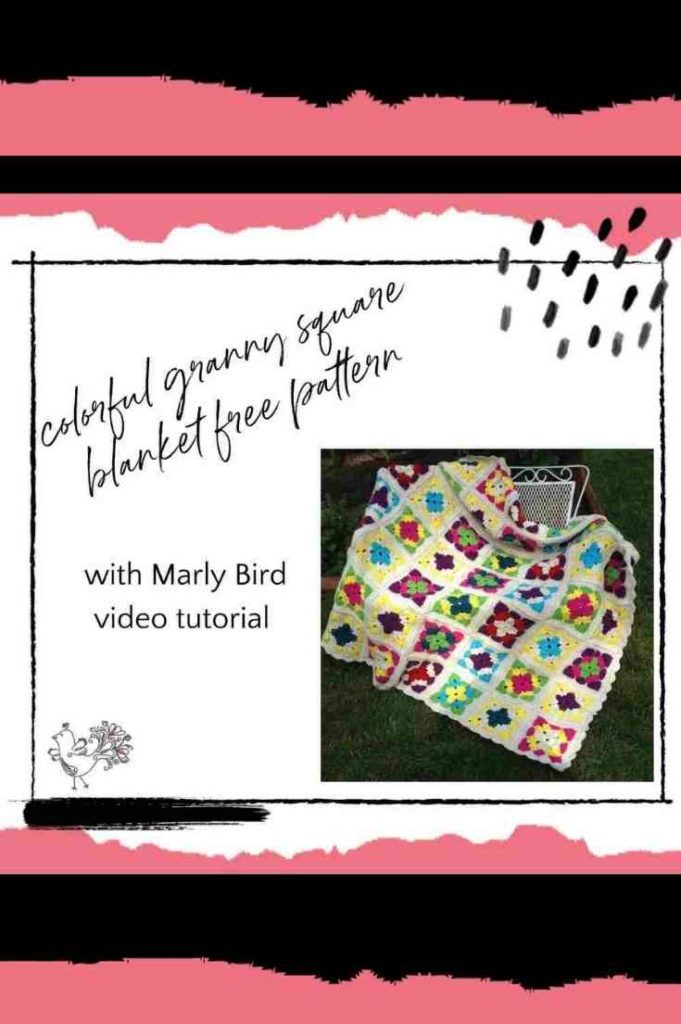
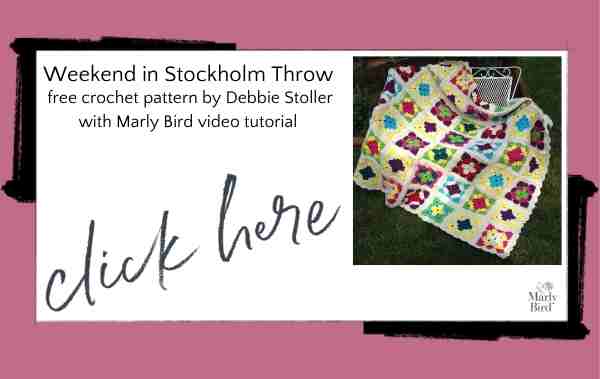
Granny Square Day may be over for the year. However, granny square projects never go out of style. If you’re in need of a bright, colorful, joyful project then look no further. The Revisiting Weekend in Stockholm Throw is a perfect choice. It’s a colorful granny square blanket that is easy to make. Moreover, it’s a delight to see those colors come together.

free crochet blanket pattern with video tutorial

The Origin Of This Colorful Granny Square Blanket Free Pattern

This is a free crochet blanket pattern from Yarnspirations. Debbie Stoller originally designed it. She called it the Revisiting Weekend in Stockholm Throw. Later on, I did a full crochet video tutorial to show you exactly how to follow the pattern. You can find that video below. Therefore, you have both the written instructions and the video tutorial to guide you along.

More About This Free Crochet Blanket Pattern

This colorful granny square blanket pattern uses eight different colors of yarn. You’ll combine them in different ways, meaning with different colors in each round, ending up with twelve different color combinations. You’ll make six squares each in four color variations. Then you’ll make four squares each in the remaining eight color combinations. All together, you’ll crochet 56 granny squares. The different colors will reverberate across the blanket to create a colorful garden of floral granny squares. The whole thing is a bright delight.

Digging Into the Pattern Details

Here are some of the things you’ll want to know as you begin to work on this colorful granny square blanket pattern:

  • It uses Red Heart Super Saver Yarn. Don’t forget that you can now get this yarn in the new O’Go Yarn format!
  • You’ll use a size 5.5mm [US I-9] crochet hook. In other words, this is a basic worsted weight crochet blanket pattern.
  • This is a beginner crochet project. It uses basic crochet stitches: single crochet, double crochet, and treble crochet. If you can work those in the round to create floral granny squares, then you can crochet this blanket.
  • The free colorful granny square blanket pattern includes an assembly diagram. This shows you the best way to layout the squares. Of course, if you want, you can switch it up to create your own variation on the design.

Watch the Instructional Video

You’ll find a link to the pattern below. And here is my instructional video for how to crochet this blanket. I take you step-by-step through the process. Therefore, you should find it easy to figure it out if you’ve gotten stuck in any part of the pattern. It’s truly an easy pattern, though, so you should be able to tackle it. Once you’ve gotten the first square or two down, it’s just a matter of switching up the colors.

Free Colorful Granny Square Blanket Crochet Pattern

This is a free crochet pattern from Yarnspirations. You can find it here or click the image below:

Free Colorful Granny Square Blanket Crochet Pattern

More Posts About Granny Squares:

  • How to Crochet a Granny Square 2 Ways
  • Roundup of Books About Granny Squares
  • 90+ Granny Square Projects
  • Blooming Granny Square Baby Afghan
  • 44 Free Knit and Crochet Square Patterns

Frequently Asked Questions

Is this a hard pattern to follow?

Honestly… no! This is considered an Advanced Beginner crochet project. It uses basic stitches like single crochet, double crochet, and treble crochet. If you can do those in the round for granny squares, you’re golden!

How many granny squares do I need to make for this blanket?

So here’s the thing… you’ll need to crochet a total of 56 granny squares. You’ll make six squares each in four different color variations, and then four squares each in the remaining eight color combinations.

What yarn and hook size does the pattern suggest?

Yes! The pattern uses Red Heart Super Saver Yarn, and you’ll want a 5.5mm [US I-9] crochet hook. So it’s a pretty standard worsted weight yarn project.

Can I make up my own color combinations?

Absolutely! While the pattern suggests 12 different color combinations using eight colors, you can totally switch it up to create your own unique design. The assembly diagram is just a suggestion, after all!

Is there a video tutorial to help me if I get stuck?

You bet! I’ve made a full crochet video tutorial that walks you through the pattern step-by-step. It’s linked on the page, so you can follow along with both the written instructions and the video if you need a little extra guidance.

Filed Under: Crochet, Free Patterns

How to Calculate Crochet Gauge

August 25, 2021 By Marly Bird Leave a Comment

In another post, I shared 20 reasons why being a crocheter makes it easier to learn knitting. One of those reasons is that you already know what gauge is from learning to crochet. Therefore, you can apply the same gauge knowledge to your knitting. However, I know that some people do avoid dealing with gauge altogether. It may be the excitement of starting a new project, thinking you may not have enough yarn, or being on a time crunch. Even as an experienced crocheter, you might not know how to calculate crochet gauge. So I decided to share an older video with you here so you can learn or brush up on your gauge skills.

crochet gauge

What Is Gauge in Crochet?

Often crafters think of gauge as something complicated. But, when you think about it:

Crochet gauge is simply a measure of the size of your stitches in width and height.

That’s all it is. You calculate crochet gauge to determine how wide and how tall your crochet stitches are. This small step ensures your work will match the sizes given in the pattern for the project you want to make. When you ‘get gauge’ your project will fit as the pattern states.

Let’s discuss this a little more.

Everyone Crochets Differently

In theory, if you follow a pattern correctly, you should crochet a piece exactly like the designer intended, right? Wrong! Because everyone crochets a little bit differently. Even though you’re using the same crochet hook and yarn as the pattern suggests, your gauge could be quite different from the designer’s. In other words, the width and/or height of your stitches could be different.

Why is that? Well, there are several reasons for differing stitch sizes. Here are a few of the main ones.

Crochet Hook Brands And Styles

Not all crochet hooks are made equal. Yes, there are standard sizes, but different brands have different styles of hook heads and shafts. Take the two big names, for example – Boye and Susan Bates are the biggest names that spring to mind. If you compare the heads of these crochet hooks, they look slightly different.

Boye crochet hook heads appear to be more rounded. The working end of the crochet hook and the tip of the hook head are like rounded points.

Susan Bates crochet hooks have rounded points at the head tip, but the hook itself has a wider flat area inside of the hook.

Both of the above brands have a flat section on the shaft where you can rest your thumb so the hook doesn’t spin in your hand.

Handmade wooden crochet hooks are different again depending on the design and style of the craftsperson who made them. Often, these wooden crochet hooks have no thumb rest, and the whole shaft remains round.

This is not at all an exhaustive list. There are many more brands to try. Some have ergonomic handles and others alternative handles; the basic ones are simply plastic.

Tensioning Methods

There are probably as many different tensioning styles as there are crocheters! We may all be taught the same or similar ways of yarn tensioning for crochet, but we all tend to find and stick with what works best for us.

When you consider how age-friendly crochet is, you can understand why there may be so many different tension styles. A very young crocheter might struggle to have each hand do different things at the same time, but an older crocheter may have hand problems such as arthritis or a repetitive strain issue.

Finer yarns may be a little more difficult to work with and might require a wrap or two around the pinkie to help prevent slippage.

Knitters may hold the yarn differently again. There is really no wrong way to tension yarn for crocheting; it’s just what works best for you.

Stress Levels

It might seem strange, but stress levels can significantly affect your crochet gauge. If things aren’t going your way, you might get a tighter gauge than if you were more relaxed.

Crochet Speed

When you start a new project and are getting used to the stitch pattern, you might be focusing hard and feel a little stressed. Once the pattern becomes familiar, you may speed up, loosen your gauge, or tighten it depending on your tendencies.

Skill Levels

As a beginner crocheter, keeping your gauge consistent is often tough. You might struggle with wavy edges, loopy or tight stitches, and tensioning your yarn evenly.

Honestly, just keep practicing! Consistency comes with practice, so keep practicing your crocheting, and your gauge will become more consistent over time.

Yarn Substitution

I’m sure we’ve all done it…substituted yarn that’s not quite the same weight as the pattern skipped the gauge swatch and dived right into the project. What happened? We got something that was too small or too large, just didn’t fit right, or downright hated it.

That’s another reason gauge is not to be skipped or taken lightly. All these small differences can add up to huge differences when working on a large project. That’s why designers calculate crochet gauge and share it in their patterns.

When you begin a crochet project, work a swatch to check for gauge. Measure it against the designer’s recommendation. If yours is smaller, you might go up a hook size to compensate. Likewise, if your stitches are bigger than the designer’s, you might go down a hook size.

Why Is Crochet Gauge So Important

It’s important to calculate crochet gauge at the beginning of a project for several reasons. These include:

  • Your wearables might not fit if you’re gauge doesn’t match the designers’.
  • Even with non-wearables, you need to crochet to gauge if you want the item to be the same size as intended.
  • You might run out of yarn if you don’t calculate for gauge. The recommended yarn amount is for the designer’s gauge. Therefore, if you crochet “bigger,” you use more yarn.
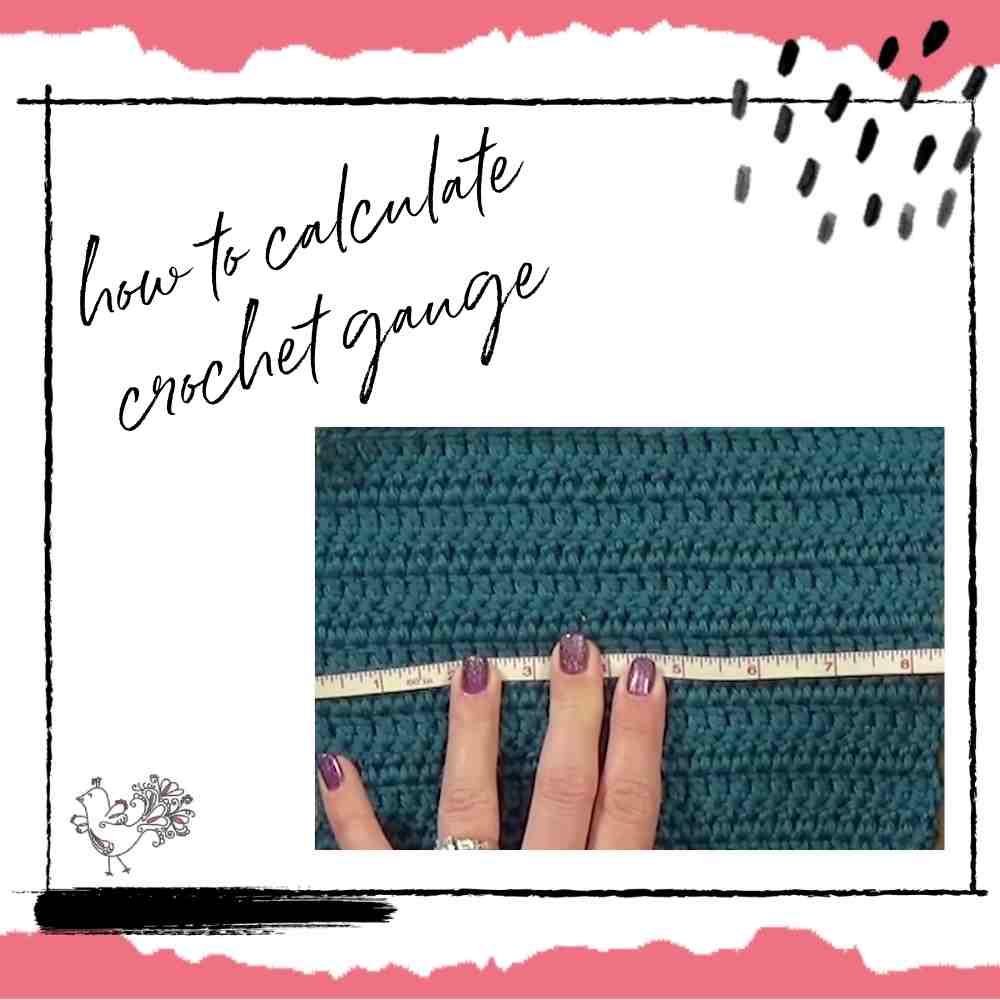
how to calculate crochet gauge

Can I Calculate Crochet Gauge Once and Know What It Is Forever?

At first glance, it sounds like you can calculate crochet gauge once. Then you know how you crochet and can adjust to patterns accordingly.

Unfortunately, this is not the case. Your gauge isn’t going to be the same each time. There are too many factors that go into it (as I mentioned above), such as:

  • Your tension changes depending on your stress level, tiredness, and whether you’re trying a new or familiar crochet technique.
  • The yarn you’re using. Even one worsted weight yarn can create a subtly different gauge than another in the same weight.
  • Your crochet hook. You might crochet differently depending on the hook you’re using.
  • The stitch pattern in the project. Your gauge is different if you’re working single crochet than if you’re working front post double crochet.

Therefore, you can’t just say, “oh my gauge is this.” Instead, you should crochet a gauge swatch every time you start working on a new crochet pattern. Don’t worry; it gets easier with time.

How to Calculate Crochet Gauge

Now that you understand why it’s so important to figure out your gauge for each crochet project, it’s time to learn how to do it.

It doesn’t take much…only the crochet pattern, a crochet hook in the appropriate size for your yarn, the yarn you want to use, a tape measure or ruler, something to write on and with, a flat surface, and some time.

Work a swatch in your chosen yarn with your chosen hook then watch the video below for your calculation instructions. It’s simple math. You’ve got this!

See? It’s not so hard after all. Once you understand how and why to make these calculations, it becomes easier every time.

See below for more beginner crochet tutorials.

You Might Also Like:

  • Learn How to Crochet: The First Five Stitches To Learn
  • How to Crochet a Granny Square 2 Ways
  • How to HDC with Variations

Frequently Asked Questions

What exactly is crochet gauge?

So here’s the thing… crochet gauge is basically just a measurement of how big your stitches are, both in width and height. It’s super important because it makes sure your finished project turns out the size the pattern says it should be. If your gauge is off, your project might end up way too big or too small!

Why is my crochet gauge different from the pattern’s?

Honestly… everyone crochets a little differently, even when using the same yarn and hook! Things like the brand or style of your crochet hook, how you hold your yarn (tensioning methods!), and even your stress levels can change how big your stitches are. It’s totally normal!

Do I really need to make a gauge swatch every time?

Yes! I know, it sounds like a pain, but your gauge isn’t always the same. It can change depending on your mood, how tired you are, the yarn you’re using, the hook, and even the stitch pattern itself. So, it’s always best to crochet a swatch for each new project to be sure.

What if my gauge swatch is too small?

Don’t worry… if your swatch is smaller than the pattern calls for, it means your stitches are too tight. To fix this, you’ll want to go up a hook size. This will give you bigger stitches and help you match the designer’s gauge.

Can crocheting faster affect my gauge?

You bet! When you’re first learning a new pattern, you might be focusing really hard and crocheting slower, which could make your stitches tighter. Once you get into the groove and speed up, your tension might loosen up, or tighten up, depending on your tendencies. It’s just another reason why checking your gauge with a swatch is so important!

Filed Under: Crochet, Tips, Tricks, Techniques for Knitting and Crochet

20 Reasons Why Being a Crocheter Makes Learning Knitting…

August 24, 2021 By Marly Bird 1 Comment

For several months this year, we ran weekly BiCrafty Bootcamp: Knitting Lessons for Crocheters. Although anyone can learn to knit from these lessons, our premise was that being a crochet makes learning knitting easier. Therefore, we included “Crocheter’s Edge” tips in each lesson. In other words, we shared exactly what you already know in crochet that can make it easier to grasp the ins and outs of knitting. We thought we’d round up all of those tips today, to give you a complete sense of how crochet skills make learning knitting easier.

learning knitting easier

How to Start

Crocheters already know the slip knot. Just like in crochet, that’s the first thing that you’ll learn in knitting. Having the self-confidence of already knowing this first part will make learning knitting easier. After all, you’re starting out on the right foot.

The Importance of Gauge

Most crocheters already understand what gauge is. Likely you already know how to figure it out. Moreover, you understand why it’s important, particularly for wearable projects.

Tension

Additionally, crocheters understand that tension affects your work. Furthermore, you know that tension affects gauge. You might not be able to easily control your tension at first. After all, getting used to knitting needles can be as awkward as when you first learned to hold a crochet hook. However, comprehending that your tension is the problem, and knowing that practice will help with this, makes learning knitting easier.

You Know About Yarn

Knowledge of yarn will help in choosing yarn for knitting projects. You already know about yarn weight and fiber.

Do note, however, that yarn behaves differently on needles than on hooks. Therefore, just because something works for you in crochet doesn’t always means it’ll be the top choice for knitting. Don’t worry, you’ll figure it out! Either way, your foundational knowledge of yarn helps. Remember in crochet when a yarn label baffled you? You don’t have to worry about that now.

Some Knowledge of the Tools

Although knitting needles are different from crochet hooks, you might have some familiarity with the feel of the tools in your hand. You also know about stitch markers, tapestry needles, etc.

Likewise, you have working knowledge of different tool sizes. You understand that a size D crochet hook and a size J crochet hook serve different purposes. Therefore, you’ll easily grasp different needle sizes as well.

Finally, you’ll have some sense of how to hold your knitting needles. Many people hold their dominant-hand needle exactly like they do their crochet hook.

Learn more about knitting needles and yarn for beginners.

Counting Stitches

You know how to count stitches. It’s really easy to count your stitches in knitting. Easier than in crochet. Nevertheless, it is very crucial to do so. You know all about this as a crocheter. Therefore, it makes learning knitting easier.

How to Read a Knitting Pattern

You have some familiarity with the language. Remember when you first looked at a crochet pattern and it was all gibberish to you? While you might not be familiar with knitting abbreviations, yet, you do have a basic working knowledge of how a pattern reads. You know that you’ll be able to get this.

Creating Fabric From a Single Stitch

As a crocheter, you already know that you’re creating fabric as you work. As you first begin to knit, you’ll use the same stitch over and over again to create your fabric. For example, you’ll use knit stitch only or purl stitch only to create a piece of garter stitch fabric.

Combining Stitches To Create Different Fabric

Likewise, as you add to your stitch knowledge, you’ll be able to combine knit stitches to create different fabric. You know the difference in feel and drape between a single crochet square and one that uses both single and double crochet stitches, right? Likewise, when you combine knit and purl stitches to create stockinette stitch, that’s a new fabric. Your basic understanding of stitch combinations in crochet makes learning knitting easier.

Working Similar Stitches in Different Ways

As a crocheter, you’ve got an edge up on the knit and purl stitch (which are the main two stitches in knitting) because you’re already used to working a similar stitch in slightly different ways. For example, if you know how to front post crochet and back post crochet then you know how to work the exact same hand movement in a slightly different manner. This is the same idea. Knowing how to manipulate your crochet hook to create the same stitch in an opposite ways makes learning knitting easier.

You Know How to Change Colors in Yarn

You know how to add a new yarn in crochet, including for striping. Therefore, you also know how to change colors in knitting. There’s a slight difference about when you do it. (That’s because in crochet you do it the loop before you want the color change and in knitting you do it the loop of.) But the gist of it is the same, making learning knitting easier as a crocheter than as a brand new newbie.

Weaving in Ends

There are different ways to weave in ends in both knitting and crochet. Therefore, you might find that the method you crochet is or isn’t conducive to knitting. Either way, your knowledge of the concept makes figuring out in knitting easier than if you’d never woven in ends before.

Learning Ribbing in Knitting is Easier if You Know it in Crochet

When we got to the first lesson on knitting ribbing, we had these crocheter’s edge thoughts for you:

  • You probably already understand how ribbing affects the fabric that you’re creating. You get more stretch than if you simply work in the same stitch across a whole row over and over again.
  • In crochet, you’ve probably alternated stitches within a row. Therefore, you can easily comprehend how to make different knit stitches within the same row.
  • Have you ever alternated a front loop and back loop stitch across a row? Or front post / back post stitches (for example, to make basketweave crochet patterns)? Then you get the concept of working one stitch, then working what’s essentially its opposite stitch, and alternating across the row. Since knits and purls are basically opposites of each other, it’s a similar concept.

This reiterates some of the above. For example, you understand how to work the same stitch in opposite directions, more or less. Truly, what you know in crochet will continue to make learning knitting easier at every stage of the process.

Moving from Rows to Rounds

As a crocheter, you already know how to join your work to work in the round. Moreover, you understand what working in the round entails. While there are slight differences, that knowledge will help as you learn to knit in the round. For example, you already know how to watch carefully when you join to make sure that you’re not twisting your work.

Increasing and Decreasing

As we began to make our first knit hat, it was time to start talking about shaping. Therefore, we learned decreasing. As a crocheter, you comprehend that increasing means adding stitches in a round or row. Likewise, decreasing means reducing stitches in a round or row. Moreover, you have a sense of how to do that and why we do it. This makes learning knitting easier.

When we learned to knit triangle lace, we also covered how and why you might increase and decrease in the same row/round. As a crocheter, you already know it’s to create a pattern without changing your stitch count.

Some Stitches Will Seem Really Familiar

There are some stitches in crochet that aren’t all that different in knitting. For example, seed stitch shows up in both crafts. Moss stitch, granite stitch, and checkerboard stitch are similar. While they aren’t identical, it’s helpful to have a sense of what the fabric should look like as you knit.

Pattern Repeats

As you advance in knitting, you’ll obviously work with more complicated patterns. Therefore, you’ll come across pattern repeats. In other words, you’ll work maybe five rows of a pattern then repeat those same five rows again. Likely, this concept is familiar to you from crochet.

Both Crafts Have Benefits

Both knitting and crochet have benefits. They can provide occupational therapy, mindfulness practice, build self-esteem, reduce depression and so much more. If you find those experiences in crochet, then chances are that you’ll find them in knitting as well.

Things To Remember As You Keep Knitting

By the end of BiCrafty Bootcamp, we were all knitters. Therefore, we didn’t need the crocheter’s edge tips anymore. But the Marly Bird team wanted to leave you with these thoughts:

  • There’s always more to learn in either craft.
  • However, you can choose very simple projects with basic stitches any time that you want.
  • Crochet and knitting both have healing properties. Work them into your daily self-care routine.
  • When you lose your crojo, try a knitting project. And vice versa.
  • Crochet and knitting are both tough on the hands and the posture. Therefore, make sure to take breaks and do exercises.

Learn how to knit with Marly Bird on YouTube.

Frequently Asked Questions

I’ve crocheted for years, but I’m nervous about learning to knit… what’s the biggest advantage I have?

Honestly… your biggest advantage is that you already know so much! You’ve got the slip knot down, you understand gauge and tension, and you already know all about yarn weights and fibers. It’s like you’ve already got a head start on the whole process!

Will knitting needles feel super weird compared to my crochet hook?

So here’s the thing… yes, they can feel a little awkward at first, just like holding a crochet hook probably did when you first started. But you already know how to manipulate tools to create fabric, and you’ll get the hang of knitting needles just as quickly. Plus, you might even hold one needle just like you hold your hook!

Is reading a knitting pattern going to be like a foreign language?

Yes! Well, sort of. While the abbreviations might be new to you for now, you already have a working knowledge of how patterns are structured. You know that they’re instructions to follow, and you’ll totally be able to figure out knitting abbreviations, just like you learned crochet ones!

I heard knitting and crochet can be good for my mental health, is that true for knitting too?

Absolutely! Both crafts have amazing benefits, like acting as occupational therapy, helping with mindfulness, and boosting self-esteem. If you’ve experienced those good vibes from crochet, you’ll find them in knitting too. Sometimes, when you lose your crafting mojo, switching to the other craft can even help!

What’s the one thing I should remember as I keep knitting?

Honestly… there’s always more to learn in either craft, but you can always choose simple projects with basic stitches whenever you want. Just remember that both knitting and crochet can be tough on your hands and posture, so be sure to take breaks and do some exercises!

Filed Under: BiCrafty Bootcamp Learn to Knit, Dibble Dabble Inspiration, Knitting, Tips, Tricks, Techniques for Knitting and Crochet

  • « Previous Page
  • 1
  • …
  • 62
  • 63
  • 64
  • 65
  • 66
  • …
  • 97
  • Next Page »

Let's Be Social

Join the Marly's Minions Facebook group to share, ask questions, or chat about all of your yarn related crafts!

Join the group
Cartoon of a smiling woman with brown hair in a bun, glasses, black jacket and green shirt, waving next to large "hi" text.

Quick Links

The Pattern Shop

Our Free Patterns

Blog

Marly Bird House

Learn to Knit & Crochet

About

Giveaway Terms and Privacy Notice

Find Us Everywhere

Join the Newsletter

YouTube Channel

Marly's Minions FB Group

Etsy Store

Ravelry Store


AN ELITE CAFEMEDIA HOME/DIY PUBLISHER

Information from your device can be used to personalize your ad experience. Do not sell or share my personal information.

Privacy Policy   Terms   Marly Bird Legal Documents Copyright © 2026