Search
Close
  • The Pattern Shop
  • Our Free Patterns
    • Browse All Our Free Patterns
    • Our Free Knitting Patterns
    • Our Free Crochet Patterns
  • Blog
    • All Blog Posts
    • All Free Patterns
    • Dibble Dabble Inspiration
    • Giveaways
    • Make-Alongs
    • Product Reviews
    • Roundups
    • Tips, Tricks, Techniques for Knitting and Crochet
Stylized bird with pink and gray swirling tail above elegant “Marly” text, logo for crochet accessories and home decor.
  • Marly Bird House
  • Learn to Knit & Crochet
    • Newbie? Start Here
    • Video Tutorials
    • Knitting Definitions
    • Crochet Definitions
    • Common Techniques
    • Size Charts for Knitting and Crochet Projects
  • About
×
  • The Pattern Shop
  • Free Patterns
  • Blog
  • Marly Bird House
  • Learn to Knit & Crochet
    • Newbie? Start Here
    • Video Tutorials
    • Knitting Definitions
    • Crochet Definitions
    • Common Techniques
    • Size Charts for Knitting and Crochet Projects
  • About
Stylized bird with pink and gray swirling tail above elegant “Marly” text, logo for crochet accessories and home decor.
Search
Close

New Patterns NOW Available in Ad-Free PDF! Check out The Pattern Shop

11 Free Crochet Cables Patterns to Make

October 28, 2020 By Marly Bird 1 Comment

Crochet cables add interest and texture to your patterns. Don’t miss these 11 FREE designs from crochet bloggers! There are beanies, a sweater, headbands and other accessories, and home decor items.

Crochet cables are made using post stitches, which go around stitches in the row below instead of into stitches in the row below. Post stitches “pop out” from the fabric and allow for textures and designs to be made.
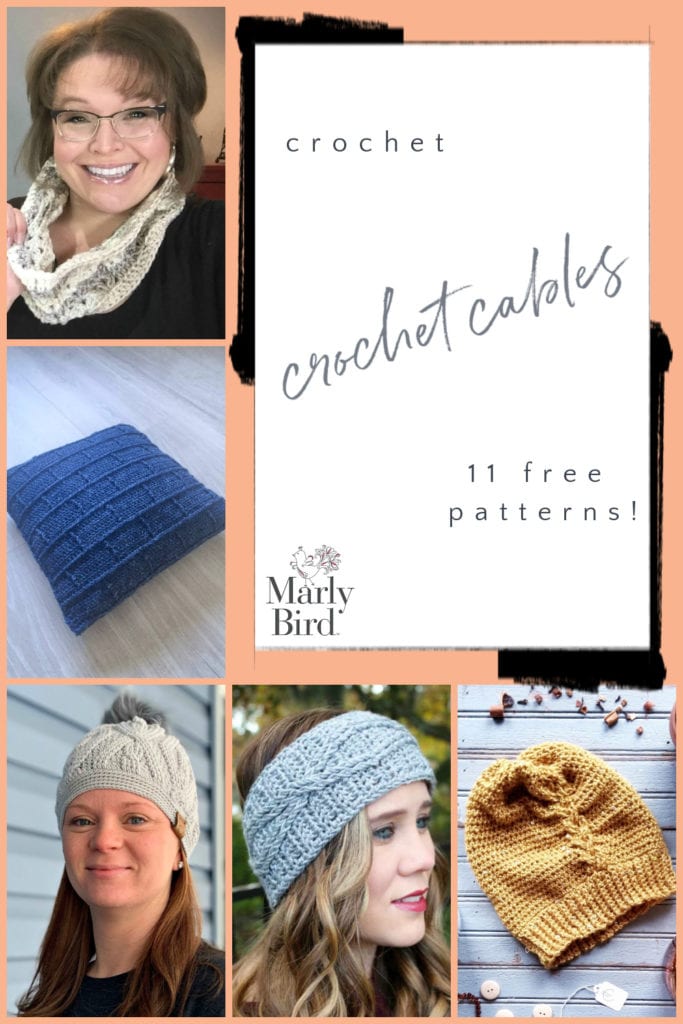
11 Free Crochet Cables Patterns
  1. Diamonds & Twist Cabled Beanie by A Crocheted Simplicity All-over cables highlight your stitching with this beanie.
  2. Alicia Ear Warmer by Desert Blossom Crafts This cable pattern gives the illusion of a gathered headband with no actual gather.
  3. Neo Mint Cable Hat by HanJan Crochet Cables all around this beanie are a classic design.
  4. Cabled Pocket Scarf by Hooked On Patterns Cabled pockets accessorize this trendy pocket scarf.
  5. Roma Beanie by Rebekah Haas Crochet A beautiful beanie with a single cable design.
  6. Woven Cable Basket by Nicki’s Homemade Crafts A textured basket, reminiscent of real basket weaving, helps you organize your life and looks cute doing it.
  7. Tunisian Concept Cowl by Raffamusa Designs A tall Tunisian crochet cowl will keep you cozy in cold weather.
  8. Nivis Cardigan by Joy of Motion Crochet Cables down the sleeves of this cardigan are a welcome and surprising touch!
  9. Crossroads Headband by Two Brothers Blankets A simple crossed cable along the center of this headband is a great introduction to crochet cables.
  10. Building Blocks Cushion by Dora Does Cables make up a textured geometric design on this cushion.
  11. One Skein Soft Essentials Cowl by Marly Bird Use crochet cables and shells in the same cowl and learn multiple techniques at once. Plus, there’s a free video tutorial!

Frequently Asked Questions

What are crochet cables all about?

So here’s the thing… crochet cables are made using post stitches, which go around stitches in the row below instead of into them. This makes them pop out and create all sorts of cool textures and designs!

I’m a beginner, can I try these cable patterns?

Honestly… some of these patterns are great for advanced beginners! The Crossroads Headband is even mentioned as a super simple way to get started with cables. You can totally do it!

What kind of things can I make with crochet cables?

Yes! You can make all sorts of things… beanies, headbands, scarves with pockets, baskets, cowls, a whole cardigan, and even cushion covers. So many fun options!

How do you even make a crochet cable?

Well, it’s all about post stitches. They’re worked around the post of a stitch from a previous row, which makes them stand out from the fabric. It’s what gives you that lovely cable texture!

Are all these patterns really free?

You betcha! The whole point of this roundup is to share 11 FREE crochet cable patterns from different talented designers. Happy stitching!
Filed Under: Free Patterns, Round Ups

Free Knit Chemo Cap Pattern for Breast Cancer Awareness

October 5, 2020 By Marly Bird Leave a Comment

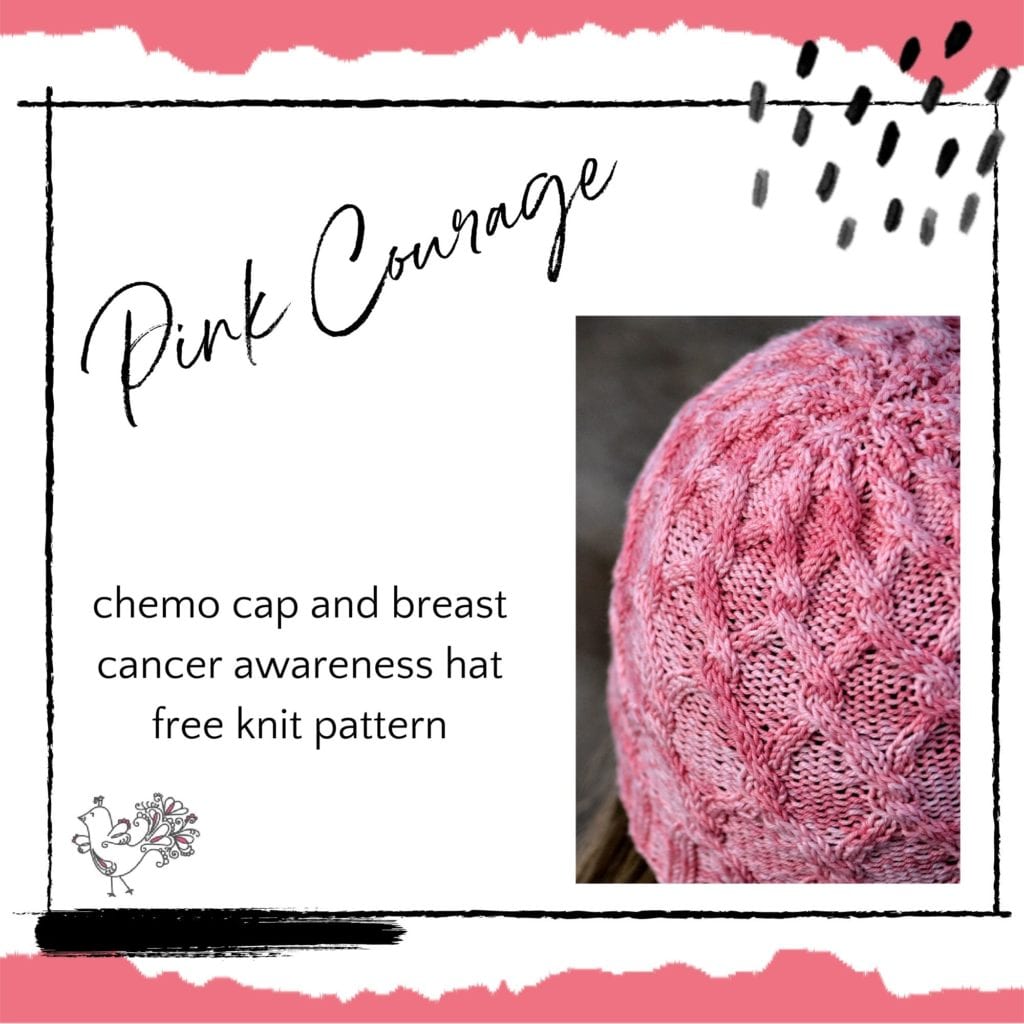
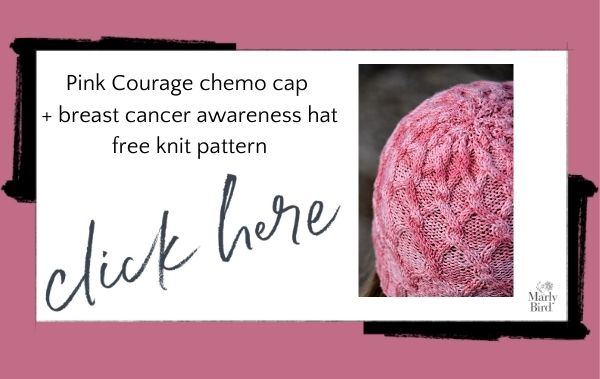
October is Breast Cancer Awareness month. Therefore, it is the perfect time to make a knit chemo cap. This free knit chemo cap pattern is crafted in a beautiful pink hue to highlight the cause. It’s a good choice whether you want to whip one up quickly for yourself to raise awareness or you want to make a whole batch of them to donate to hospitals or cancer charities.

free knit chemo cap pattern and breast cancer awareness hat by Marly Bird

What is Breast Cancer Awareness Month?

As the name suggests, this month raises awareness about breast cancer. Many of us know someone who affected by this disease. If you haven’t, though, then you might not realize how prevalent it is.

Here are some key breast cancer awareness facts:

  • Over one quarter of a million women in the United States receive a breast cancer diagnosis each year.
  • Every year more than 40,000 American women die of breast cancer.
  • Although breast cancer primarily affects women over age 50, younger women can also get the disease.
  • In fact, men can sometimes get breast cancer as well.

If any of those facts surprised you, then you can see why raising awareness is so important.

It’s especially important to raise awareness about breast cancer in 2020 due to the complications of COVID-19. People with breast cancer may be at particular risk for COVID-19. Moreover, the coronavirus pandemic has delayed some breast cancer treatments. In particular, chemo has become increasingly important as a treatment option when other treatments, such as surgeries, face delays.

What is a Knit Chemo Cap?

A knit chemo cap is a functional gift of love that shows support and care for someone undergoing cancer treatment. When going through chemotherapy, people lose their hair. Their heads can blister, feeling painfully sore. The lack of hair can make them more prone to feeling cold. Plus, they may feel self-conscious about their baldness. Chemo caps help with all of those things.

A knit chemo cap is made with soft yarn that will soothe the sensitive skin rather than irritate it. People craft the hats with love, intention, and care. Some people recite prayers or mantras while knitting chemo caps; similar to a prayer shawl, this infuses the item with compassion and well wishes. When the recipient receives and wears the knit chemo cap, they feel this care. Knowing that the crafter, and a whole community of other people, is behind the creation, they may also feel courage as they battle breast cancer.

Raising Awareness With a Pink Knit Hat

Pink is the color for breast cancer. Throughout the month of October, you’ll see people wearing pink ribbon pins and pink clothing to raise awareness. Of course, you can also wear these throughout the year, to let people know about the important issue of breast cancer at any time. A pink knit chemo cap like this one is a great way to do that.

You might choose to use this pattern to make:

  • A single knit chemo cap to wear yourself; anytime someone comments on it, that’s a great excuse to share some information for breast cancer awareness
  • Full set of knit chemo caps to wear as a group – one for every person in your family or in your book club; the more people wearing them, the more likely strangers will ask questions and then you can raise awareness
  • Caps to donate to people going through cancer treatment; while anyone can wear the pink knit chemo cap, people undergoing chemotherapy are the primary intended recipients. Donate to your local cancer center, hospital, or charity. You can donate one or many. You may include a note of strength and courage with your donation.

Charities for donation include Knots of Love and Halos of Hope.

About This Pink Knit Chemo Cap

Like many of you, breast cancer impacted my life. My friend Nicole McMaster died at a young age from breast cancer complications. I have created this pink knit chemo cap in her honor.

Nicole absolutely loved knit cable stitches. Therefore, I’ve chosen to highlight those as the centerpiece of this free knit chemo cap pattern. The way that the cables intertwine on this hat is a visual metaphor for the way Nicole’s life intertwined with mine and so many others on this earth, touching us deeply in the short time that we had her here.

This is a seamless, bottom-up knit crochet hat pattern worked in the round. The pattern is available in three sizes.

Pink courage chemo cap knit pattern

You can also find the pattern on Ravelry.

Has breast cancer impacted the life of someone you love? Share something about the experience in the comments to honor those affected and raise more awareness.

Frequently Asked Questions

What makes a knit hat good for someone going through chemotherapy?

A few specific things! Ultra softness is essential… the scalp becomes very sensitive during chemo treatment, so the softest possible yarn is non-negotiable. A seamless construction (knit in the round) avoids any seam lines that could irritate the scalp. A gentle stretch for a snug but not tight fit. A brim that can be folded up or down for different coverage levels. No embellishments that could press against the scalp. Machine washable yarn so the recipient can care for it easily. These details make the difference between a hat that gets worn and one that sits in a drawer.

What yarn should I use for a chemo cap?

The softest yarn you own! Test by pressing it against your cheek or inner wrist… if it feels soft there, it’ll feel soft on a sensitive scalp. Bamboo and bamboo blends are incredibly soft with natural temperature-regulating properties (helpful for hot flashes from some treatments). Very soft merino like Malabrigo or Cascade 220 Superwash is lovely. Soft acrylic like Lion Brand Pound of Love is practical, machine washable, and affordable. Avoid any wool that feels the slightest bit scratchy, and avoid novelty or textured yarns. When in doubt, the softest option wins.

What’s the ideal size for a knit chemo cap?

Slightly slouchy fits most heads comfortably! A finished circumference of about 17 to 19 inches (slightly smaller than head circumference) gives a snug but comfortable fit with stretch. If you’re donating to an organization, they often have specific size requirements… always check their guidelines. For making for a specific person, ask for their head measurement and make the hat about 1 to 2 inches smaller in circumference so it fits snugly without sliding. A hat that stays in place without feeling tight is the goal.

Are there organizations that accept knit chemo cap donations?

Yes! Many hospitals’ oncology departments welcome hand-knit chemo cap donations directly. The American Cancer Society has local chapters that coordinate handmade donations. Local cancer centers and infusion clinics often have donation programs. Check Ravelry for local charity knitting groups focused on chemo caps. When donating, always contact the organization first to confirm they’re accepting donations and to get their specific requirements for yarn type, size, and construction. Every organization has different needs.

Can I add any decorative elements to a chemo cap?

Keep it simple and gentle! Avoid buttons, beads, or any embellishments that could press against the scalp or snag. If the recipient loves a bit of personality in their hat, a small crocheted flower or bow sewn firmly to the OUTSIDE of the brim (not inside) can be sweet. For a gifted chemo cap, a simple, clean design without embellishments is the safest choice because you don’t know the recipient’s sensitivities. If making for someone specific, ask what they’d like! Some people want as simple as possible, others appreciate a cheery design.

Filed Under: Knitting, Our Free Patterns, Pattern, Uncategorized

Crochet Animal Pillow Book Review

February 26, 2020 By Marly Bird Leave a Comment

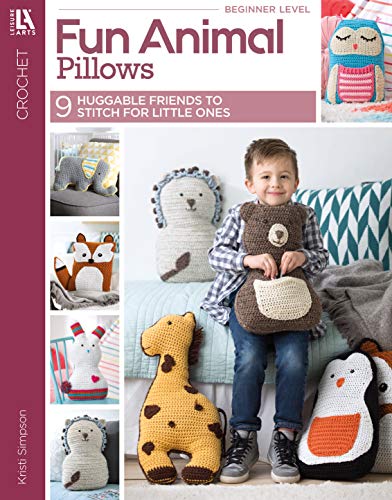
I’m here today to share with you a really fun new book of crochet stuffed animals. These aren’t just regular stuffed animals, though. These are animal-shaped pillows. It’s always fun to make a unique twist on something right? So why make a typical animal when you can make huggable crochet animal pillow projects instead?!

crochet animal pillow book

Fun Animal Pillows by Kristi Simpson

Inside Fun Animal Pillows you will find 9 crochet animal pillow patterns. These are designed so that you can stitch them for little ones. However, you can also make these for teens or even for yourself. They make surprisingly cute decor, not just for nurseries, but also for living room couches. And they’re great car pillows, too. As a result, these crochet animal pillow patterns make great birthday gifts, baby shower gifts or surprise gifts just to say I love you! Learn more about the book and what you can find inside its covers below.

[Read more…]

Filed Under: Book Reviews, Crochet, Product Reviews, Uncategorized

How to Choose Temperature Blanket Colors and Yarn

January 28, 2020 By Marly Bird Leave a Comment

Once you decide that you want to make a temperature blanket to record a year or time period then you will have a lot of decisions to make. For example, you’ll need to choose a time period and location. Additionally, you’ll need to choose your temperature blanket pattern. Finally, you’ll need to choose your temperature blanket colors and yarn. Picking colors and yarn for your temperature blanket is important because you need to know how many colors that you will use, what range of colors you will need, and how many balls of yarn you might need. This post is here to guide you.

BUT FIRST: Check out our detailed guide for how to knit or crochet a temperature blanket.

How to Choose Temperature Blanket Colors and Yarn

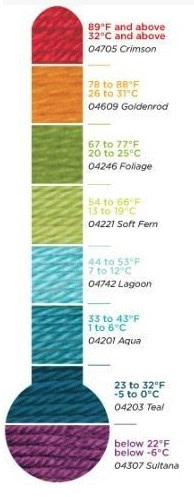
How to Choose Temperature Blanket Colors (and how many!)

Yarn color chart labeled with temperature ranges and corresponding colors: crimson, goldenrod, foliage, teal, and sultana.
EXAMPLE OF COLOR SELECTIONS

Before getting started, you should check the high and low for the year in the location you will be doing the blanket for. This will allow you to see the full range of temperature changes and then you can break it down from there into sections. More information on temperature blanket location and time period here.

Most often, people pick between 8-10 colors to represent their temperatures. Each of these colors will represent between 5-12 degree changes. This all depends on how much of a difference you have between your high and low for the year.

Although you will see that many temperature blankets are done with rainbow colors, having red be the warmer temperature and blues being the colder temperature, you can pick whichever colors you enjoy. Pick a palette that you love, something that will fit your home. Even if that means having your hottest day of the year in a shade of blue, do what works for you! It is really just about showing the difference throughout the time period. You can also work the blanket entirely in different shades of blue (or whatever color you love)!

TIP: Remember that you will be working on this blanket for an entire year. Make your color selections something that will excite you throughout the year.

Choose Temperature Blanket Colors and Yarn

How to Choose The Right Yarn for a Temperature Blanket

Because you will be using a range of colors, it is suggested that you pick a line that has many choices to give you variations. There are quite a few great options that you could use for your temperature blanket.

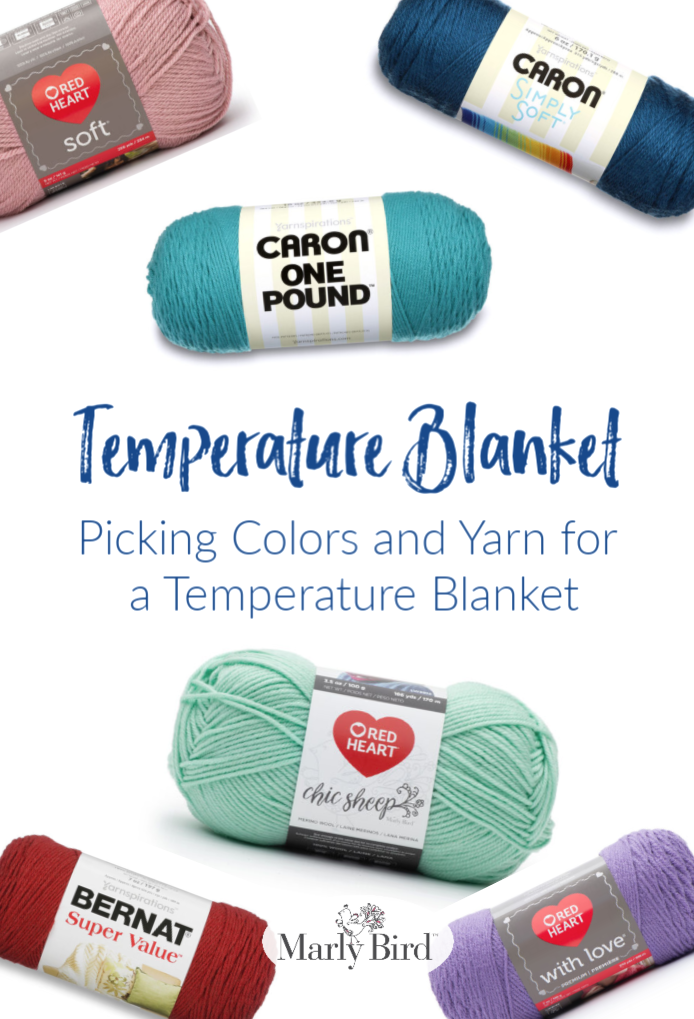
No matter what yarn you choose for your blanket, be sure that it is something that is easy to get. I would hate for you to get halfway through your blanket to find out you don’t have enough yarn and then you can’t get a specialty yarn, or you don’t have yarn in the right dye lot. Some great examples of good yarn to choose include:

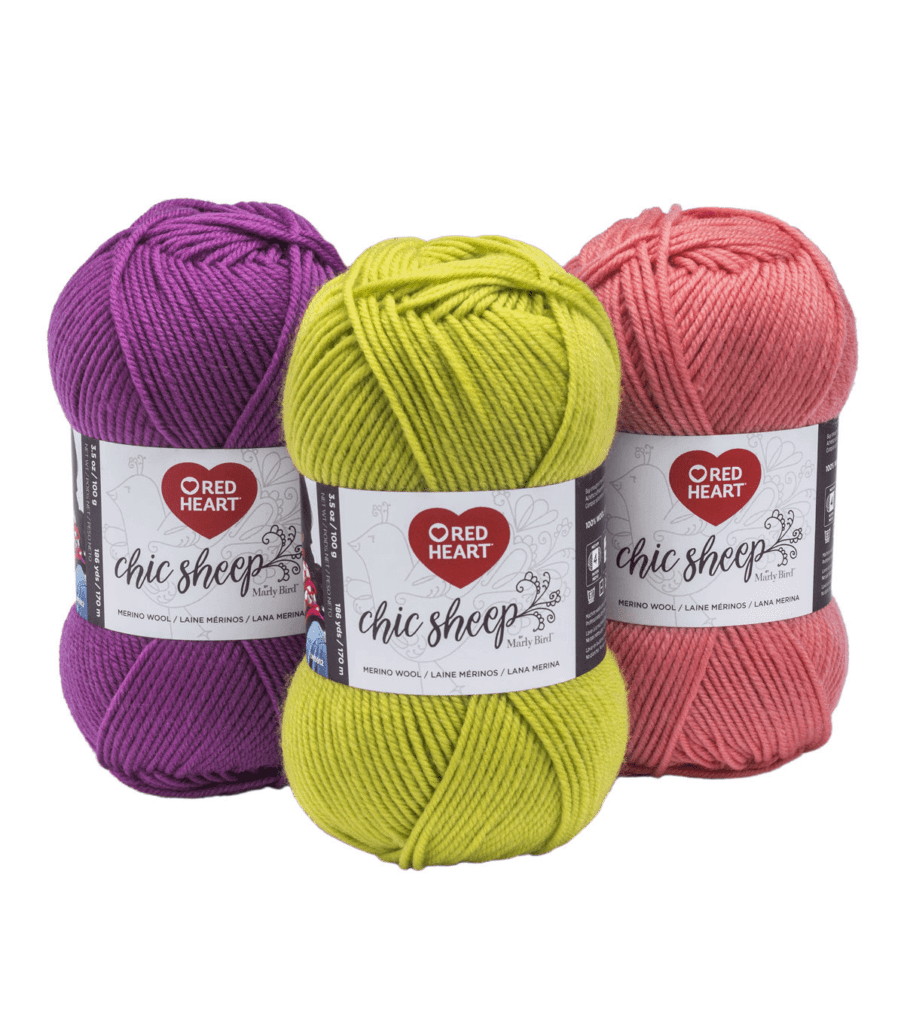
Red Heart Chic Sheep by Marly Bird™
  • Red Heart Super Saver
  • Red Heart With Love
  • Caron Simply Soft
  • Bernat Super Value
  • Caron One Pound
  • Chic Sheep by Marly Bird™
  • Red Heart Soft
  • WeCrochet Swish Worsted
  • WeCrochet Wool of the Andes Worsted
  • WeCrochet Mighty Stitch
  • WeCrochet Shine Worsted
  • WeCrochet Brava Worsted

These are all worsted weight yarns. However, you could choose a different yarn weight. Learn more about yarn weights here.

How Much Yarn Do I Need For My Temperature Blanket?

It is hard to tell exactly how much yarn you will need for this project. Just like meteorologists, we can’t definitely tell what the weather will be during the year so we need to make a guess. I suggest having at least 2 balls of each color that you are going to use as a starting point.

Let Your Temperature Blanket Pattern Guide You

If you’re using a knit or crochet blanket pattern, then let it guide you in choosing your temperature blanket colors and yarn. The pattern will tell you what yarn weight and colors go well together. You can vary from this but it’s a great starting point.

Get Our Temperature Blanket Tracker!

Make your temperature blanket easier on yourself by grabbing our AMAZING temperature blanket tracker? Just use the button below to get access to the document. Make sure that you download a version to your own computer/Google Docs.

Temperature Blanket Tracking Sheet

Start here to learn how to knit or crochet a temperature blanket. Other helpful posts:

  • Choosing Time Period and Location for Temperature Blankets
  • Popular Basic Stitch Patterns for Temperature Blankets
  • How to Start a Temperature Blanket Anytime and Benefits of Doing So
  • 33 Free Knit and Crochet Temperature Blanket Patterns
  • 49 Free Granny Square Crochet Blanket Patterns

Frequently Asked Questions

How do I choose colors for a temperature blanket?

The most popular approach is a gradient from cool to warm… blues and purples for freezing temperatures, greens and yellows for mild, oranges and reds for hot. Think of a thermometer color scheme! But it’s entirely up to you… some people use their favorite color palette, some match their home decor, some go rainbow order. The main thing is that each color should represent a distinct temperature range and the ranges shouldn’t overlap. When in doubt, lay your yarns out and see if the progression feels logical and visually pleasing together.

How many colors do I need for a temperature blanket?

Most patterns use 6 to 10 colors… one for each temperature range. The more colors you use, the more gradual the transitions and the more complex the palette. Fewer colors means bigger temperature ranges and a bolder, simpler look. A common setup is 8 colors covering everything from “below freezing” to “extreme heat.” Some crafters also add extra colors for weather events (precipitation, snow days) which creates more visual data in the blanket.

What yarn is best for a temperature blanket?

Washability and color consistency are the top priorities. You need yarn that comes in a wide enough color range to cover all your temperature categories, and it should be available in large quantities because you’ll be using it all year. Worsted weight acrylic is the most popular choice… it’s affordable, machine washable, colorfast, and comes in a huge range of colors. The same brand and line across all your colors ensures consistent weight and drape throughout the blanket. Lion Brand Basic Stitch and Red Heart Super Saver are popular choices for this reason.

Should I buy all my yarn before I start or buy as I go?

Buy it all upfront if you can! Dye lots can vary between purchases and colors can get discontinued mid-project. Having all your yarn secured from the same dye lot at the beginning means color consistency all year. Estimate how much of each color you’ll need based on your local climate (more of the mild temperature colors if you live somewhere temperate, more extremes if you have dramatic weather), add a buffer, and buy it all at once. Store it all together so you’re ready for every day of the year.

How do I track what color to use each day?

Keep a simple chart! Write out your temperature ranges and the corresponding colors… tape it near your project or take a photo for your phone. Use a weather app or website to check the day’s temperature (high, low, or average… pick one method and stick with it all year). Some crafters join temperature blanket communities on Facebook or Ravelry where people share daily reminders and check-ins. The hardest part is just remembering to do it every day… setting a daily alarm helps a lot!

Filed Under: Crochet, Dibble Dabble Inspiration

Crochet Amigurumi Unicorn with Left and Right Handed…

March 15, 2019 By Marly Bird Leave a Comment

Want to learn how to Crochet an Amigurumi Unicorn with Marly Bird? This crochet unicorn stuffed animal pattern is free from Yarnspirations. It was originally designed by Nancy Anderson. However, I’ve done a video tutorial for it to supplement her written crochet amigurumi unicorn pattern. The unicorn might seem intimidating at first, especially if you are new to amigurumi. However, with the help of a crochet expert (me!), you will have a finished crochet toy by the end of the day!

Video Tutorial-How to Crochet an Amigurumi Unicorn
[Read more…]

Filed Under: Crochet, YouTube Video Tutorial

  • « Previous Page
  • 1
  • …
  • 95
  • 96
  • 97

Let's Be Social

Join the Marly's Minions Facebook group to share, ask questions, or chat about all of your yarn related crafts!

Join the group
Cartoon of a smiling woman with brown hair in a bun, glasses, black jacket and green shirt, waving next to large "hi" text.

Quick Links

The Pattern Shop

Our Free Patterns

Blog

Marly Bird House

Learn to Knit & Crochet

About

Giveaway Terms and Privacy Notice

Find Us Everywhere

Join the Newsletter

YouTube Channel

Marly's Minions FB Group

Etsy Store

Ravelry Store


AN ELITE CAFEMEDIA HOME/DIY PUBLISHER

Information from your device can be used to personalize your ad experience. Do not sell or share my personal information.

Privacy Policy   Terms   Marly Bird Legal Documents Copyright © 2026