Search
Close
  • The Pattern Shop
  • Our Free Patterns
    • Browse All Our Free Patterns
    • Our Free Knitting Patterns
    • Our Free Crochet Patterns
  • Blog
    • All Blog Posts
    • All Free Patterns
    • Dibble Dabble Inspiration
    • Giveaways
    • Make-Alongs
    • Product Reviews
    • Roundups
    • Tips, Tricks, Techniques for Knitting and Crochet
Stylized bird with pink and gray swirling tail above elegant “Marly” text, logo for crochet accessories and home decor.
  • Marly Bird House
  • Learn to Knit & Crochet
    • Newbie? Start Here
    • Video Tutorials
    • Knitting Definitions
    • Crochet Definitions
    • Common Techniques
    • Size Charts for Knitting and Crochet Projects
  • About
×
  • The Pattern Shop
  • Free Patterns
  • Blog
  • Marly Bird House
  • Learn to Knit & Crochet
    • Newbie? Start Here
    • Video Tutorials
    • Knitting Definitions
    • Crochet Definitions
    • Common Techniques
    • Size Charts for Knitting and Crochet Projects
  • About
Stylized bird with pink and gray swirling tail above elegant “Marly” text, logo for crochet accessories and home decor.
Search
Close

New Patterns NOW Available in Ad-Free PDF! Check out The Pattern Shop

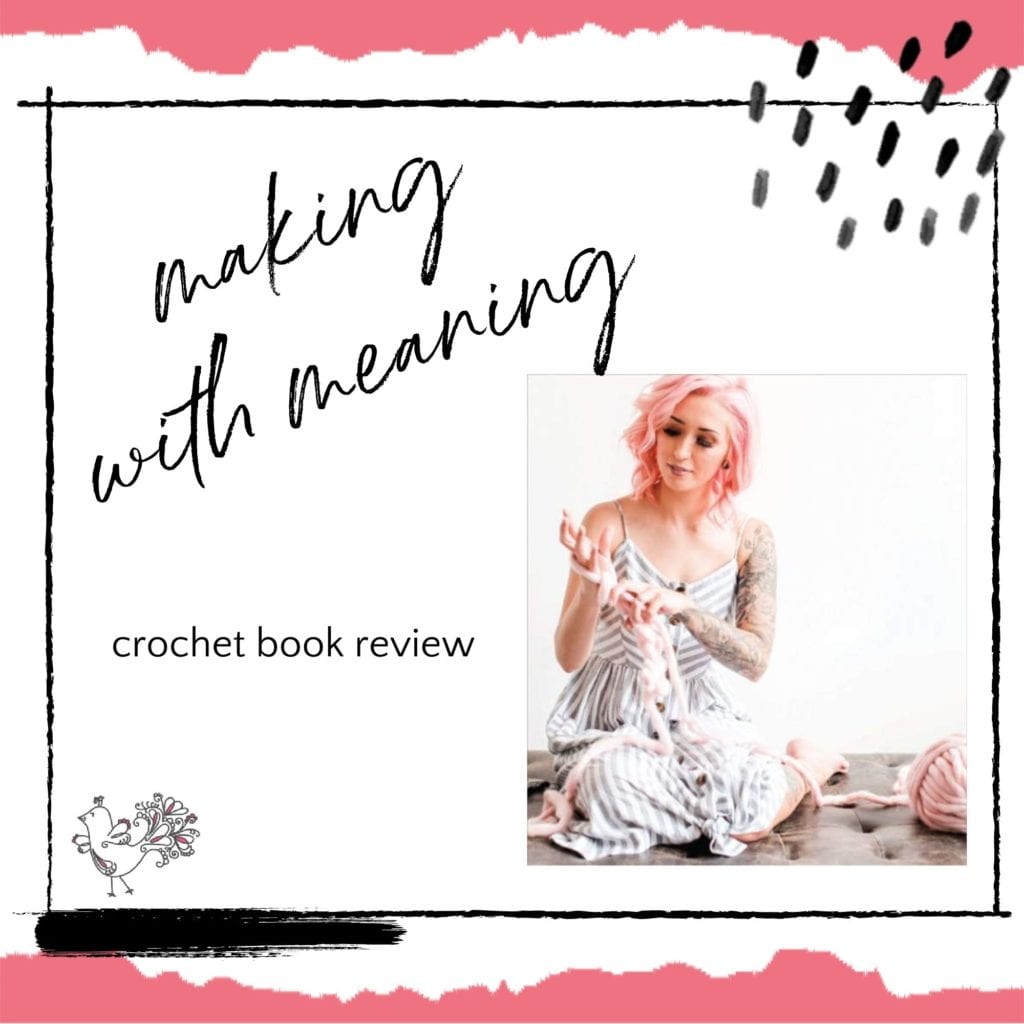
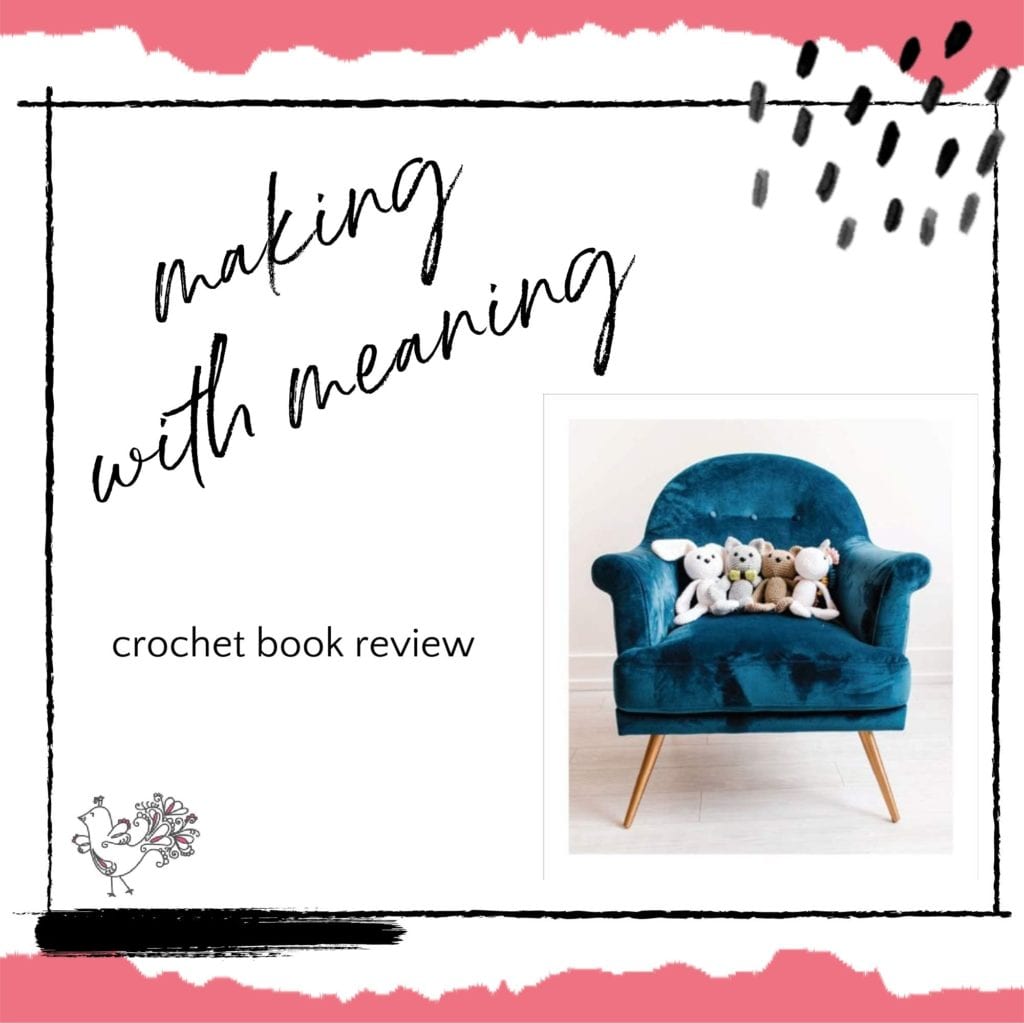
Making with Meaning Crochet Book Review

March 17, 2021 By admin Leave a Comment

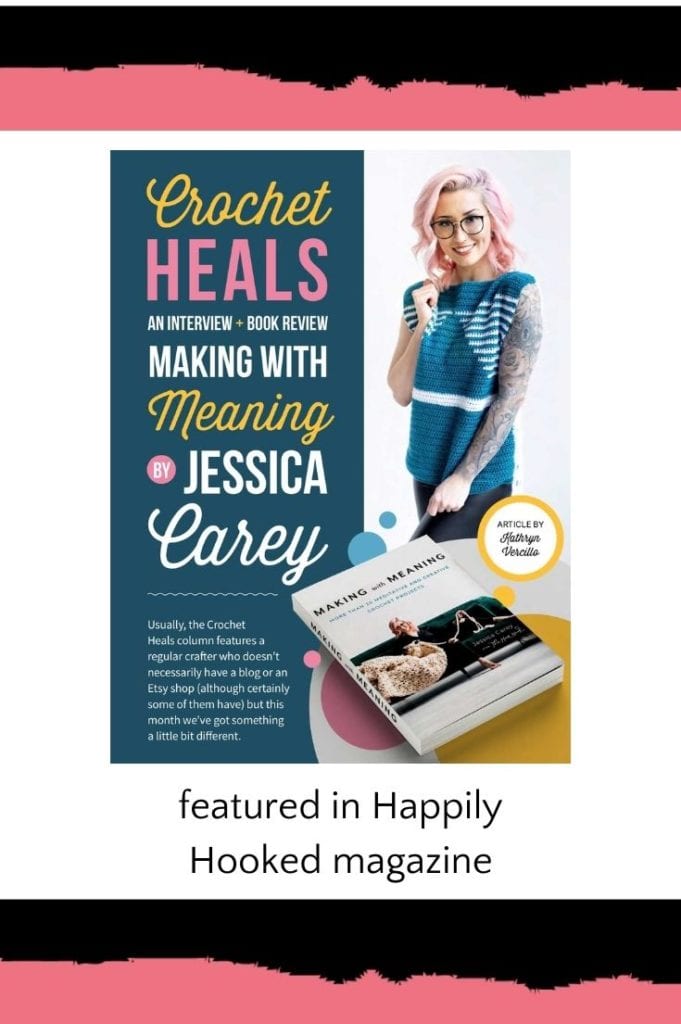
Hi everyone, Marly's blog content director Kathryn here. A few months ago I reviewed Jessica Carey's book Making with Meaning for Happily Hooked digital magazine. I also interviewed the author about how crochet heals her. Jessica recently announced some exciting news: she'll be opening a new retail yarn store in Oregon soon! In honor and support of that, I wanted to share that book review with you today. I also want to let you know where you can read the interview.

Making with Meaning by The Hook Nook

Making with Meaning: Book Review

Making with Meaning is truly a special book. It’s got 150+ pages of interesting information for crocheters. It’s filled with 20 different meditative crochet projects, so if you’re looking for a book with some terrific patterns, then you won’t be disappointed.

But more than that, these patterns are complimented by essays and thoughts about how crochet helps us to relax, de-stress, and improve our well-being. It’s these words that really bring the meaning of the work to life.

“The more I crochet, the bigger the gift I am able to give myself, it seems.” – From the introduction to Making with Meaning 

Each of the twenty crochet patterns in this book has a very simple pattern repeat. This allows you to easily learn the pattern so that you can stitch meditatively, mindfully, and in such a way that you make space for the many benefits of crochet that Jessica addresses in this book.

Jessica’s Personable Tone Makes This Book Relatable

Jessica speaks to the reader in a way that immediately feels warm and engaging. Her tone flows easily from inquiring therapist to supportive friend to a cheerleader for crafting through the hard times. You’ll find this even in the pattern descriptions but particularly in the book’s introduction and other writings. If you love reading as much as you love crochet, then you’ll find settling down with this book to be comforting, relaxing, and yes, therapeutic.

A Very Special Reason to Learn How to Crochet

Jessica shares some very personal stuff in Making with Meaning, including that there was abuse and trauma in her childhood. When she became a mother, she wanted to make sure to do things differently with her own children, in ways both big and small. One thing she wanted was to give her children special handmade items that they would always be able to take with them, knowing that their mama infused them with care and love – something she didn’t have from her own childhood. And so, when her daughter was almost one, Jessica decided that she would learn how to crochet.

the hook nook in happily hooked magazine

Crochet as Life Digestion

My personal favorite quote from the introduction, which explains so much of what makes crochet healing for others is:

“As I work each stitch, I get lost in my thoughts, and I love to use this time to think about different things in my life, to explore potential outcomes to different issues, to piece together meaning in an unfortunate situation, to spend time in prayer, and to sit in the gratefulness that I have for all the lessons I’ve learned and the experiences I’ve had. It’s a perfect ‘life digestion’ situation.”

We all need ways to “digest life.” There is so much stuff swirling around in our minds all of the time, from the mental To Do lists to the traumas of the past to anxiety about the future. We need ways to come back to the present moment, and meditative crochet does that for us. The feel of the yarn in our hands, the rhythmic motion of the crochet hook moving back and forth, it soothes and calms us and settles the mind. 

At the same time, it’s not as though our thoughts disappear. But it’s almost as if they fade into the background a little, sorting themselves out quietly while we craft. We digest them as we make something with our hands. Sometimes, we don’t even realize that we’re processing a problem as we crochet, and yet, at the end of the project, we discover we have a solution.

Other Benefits of Crochet

Obviously, this entire book is a love letter to crochet. But here are some of the specific benefits that Jessica cites throughout the book:

  • Crochet enhances the quality of life and can add deeper meaning to the day-to-day.
  • Creating family heirlooms or special gifts for loved ones allows you to share love.
  • Accomplishing crochet goals helps build self-worth.
  • Connecting with others through crochet builds community.
  • Crochet serves as a form of meditation, making a calm space in your mind.
  • You can indulge in “something intangible about intentional coziness” that is immensely comforting and healing. 

Plus, for Jess, crochet has allowed her to create a business that she absolutely loves, plus to realize her lifelong dream of writing a book.

Jessica Carey book review

Five Key Themes and Patterns to Support Them

Making with Meaning is divided into five key themes, each of which has projects that complement it. You see, these are not just crochet patterns, even though there are patterns that will give you lovely finished projects. They are ideas and projects for processing different life issues, for giving yourself space to be with your thoughts and feelings, for digging deeper into your own soul so that you can excavate the richness of life, and for bringing all of that back outwards in order to impact the world around you through the beauty of your crafting. 

Gratefulness and Motivation

This is about using crochet to find ways to practice gratitude, which can give you the motivation to see the sunnier side of life, even during very tough times. Jessica also talks about how so often we want things in life to be other than what they are but if we practice gratitude for what we do have, it can make us less interested in the “what ifs” and “somedays” and more grounded in the beauty of the present moment. It can also motivate us to find ways to adapt our lives to have those things we want, without taking for granted all that we already do have.

Jessica emphasizes that even as we set and meet goals, it’s important to pause and see just how far we’ve already come – to be grateful for the journey. We can use crochet in all aspects of the journey – we can set and meet crochet goals, looking to the future while also taking pride in what we’ve already accomplished. And we can pause in the moment of making and feel gratitude for the process itself. Jessica suggests using intentional prayer or even just speaking out loud what you’re grateful for as you stitch.

Fun fact: Olympian Tom Daley Knits and Crochets for Therapy

Perspective and Mindfulness

Jessica explores how we can take on the challenging of broadening our own perspectives. She shares some of her own experiences of having to learn the hard way that her way wasn’t the “right” or “only” way but also that this doesn’t make her “bad” or “wrong” … that there are many perspectives among people and that we benefit when we see another point of view. 

Jessica also introduces the idea of mindfulness practice, bringing awareness to exactly what’s happening in the present moment. This honors your own perspective and experience while making way for others to be as they are. She writes, “As Makers, we have the ability to create something new out of our materials. We are able to bring an idea to life and watch our dream become reality.” By sinking into our own experience and expressing it, we put new perspectives out into the world for others to learn from. And by opening our mind to others, we make our own worlds bigger.

Intention

Jessica moves here from mindfulness (awareness of the present moment) to intention (consciously choosing our action in the moment.) It’s unfortunately easy to go about our days on autopilot. However, each day, we have the opportunity to set and meet intentions. In doing so, we can create the lives we truly want to live. She encourages crafters to use the patterns in this section of the book to really focus and crochet with intention, to understand not just what you’re making but why and how you feel about it as you do.

Love

Jessica says, “Through crochet, we are able to share ourselves in a special and thoughtful way. We are able to use our time, our talent, our sacrifices for a specific person.” As we learned already, she learned to crochet so that she could craft something with love for her daughter. Every single time that we craft for others, it’s an opportunity to express our love. And when we take the time to craft for ourselves, there is love in that as well; we model crafting as self-care to those that we love. The crochet patterns in this section are all stuffed animals, which you can make as a huggable, squeezable, tangible reminder of your love for someone else.  

Acceptance and Forgiveness

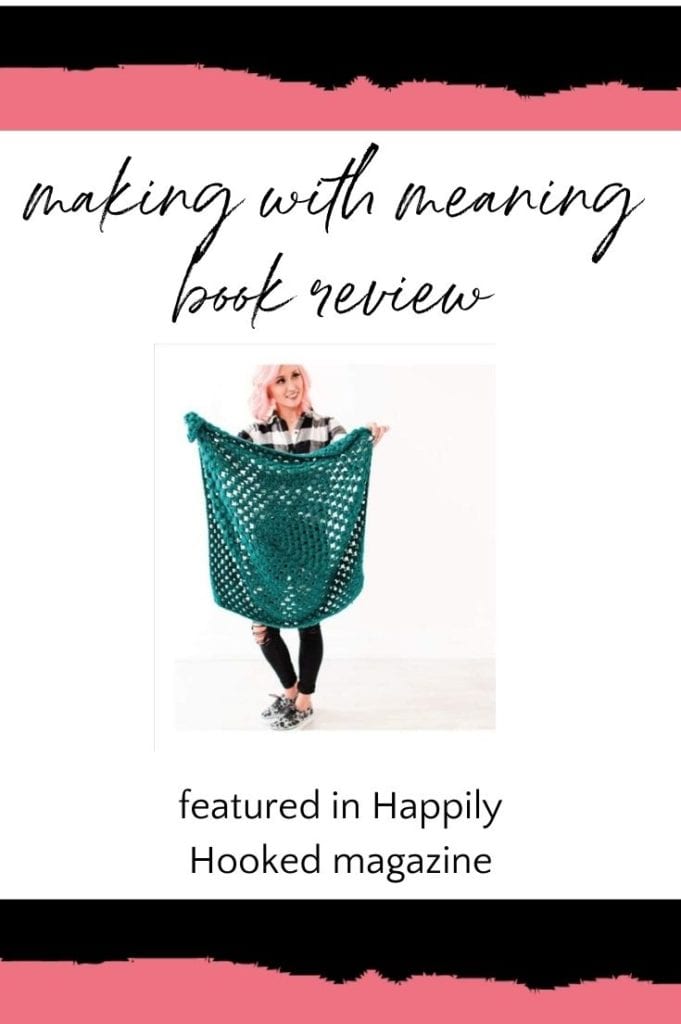
We don’t forgive others so much for them as we do for ourselves. We find ways to let go of hurts so that we can live more fully. After all, we don’t have control over the things that happen to us. However, we do have some control over our reactions and how we choose to respond. This chapter, which ends the book, is all about crocheting things for yourself, to nurture and care for yourself as you work through the difficult emotions surrounding “your pain points and areas in your life where you could begin to venture into acceptance and forgiveness.” For example, there’s the Halo Blanket, an extra-soft, fuzzy, hug-in-the-form-of-a-blanket that you can crochet for yourself, enjoying the process as much as the final product.

Each section begins with an essay on the theme. And each essay ends with a challenge, giving you a good sense of how to utilize the patterns in that section to better understand and integrate the theme.

book review about meditative crochet

And a Few Basics

As you can tell, what I think is important about this crochet book is the “meaning” part of “Making with Meaning.” It’s so rich and unique and different from a regular crochet pattern book. But I don’t want to give you the false impression that the patterns aren’t just as important. Jessica has done a great job of the “making” part of the book, too. Here are some highlights:

  • An “about crochet” section that shares some great information about the history of crochet, the materials of the craft, etc.
  • Step-by-step photo-rich instructions for basic crochet stitches; beginners can use this book to learn how to crochet
  • Easy-to-find, affordable yarn choices for each project
  • All of the projects are 1-2 colors (or use a variegated yarn) so you don’t have to worry about color changes
  • Clear written patterns with beautiful photos showing the finished item and details
  • Projects are often made with large crochet hooks (many are size K) so they work up quickly
  • Variety in projects from winter beanies to baby blankets, market bags to stuffed animals; there’s a little bit of something for everyone.

In summary, this is a great crochet book with twenty fun, simple, meditative patterns that are perfect to make for yourself or to give as gifts. But more than that, this is a book filled with thoughts and inspiration from a heartfelt crafter who makes herself vulnerable in order to inspire you to find new ways to use crochet to get in touch with yourself and enjoy a deeper, richer meaning from life.

Learn More About How Jessica Heals Through Crochet

the hook nook on yarn thing podcast

This crochet book review originally appeared in the December 2020 issue of Happily Hooked digital magazine. It was accompanied by an interview with Jess about how crochet heals and benefits her. You can read the interview over at The Hook Nook blog.

Be sure to subscribe to Happily Hooked magazine to read Kathryn's monthly Crochet Heals column and other book reviews and feature articles about crochet designers, authors, and artists.

Ready to learn more about Jessica Carey right now? She was on The Yarn Thing Podcast last year. Go have a listen! And Happily Hooked has also been on the podcast so be sure to check that out as well.

Frequently Asked Questions

What's this book “Making with Meaning” all about?

Oh, this book is super special! It's got over 150 pages packed with all sorts of goodness for us crocheters. You'll find 20 lovely projects, but what really makes it shine are the essays and thoughts about how crochet helps us relax, de-stress, and just feel better…

Is this book good for beginners who are just learning to crochet?

Honestly, yes! The book has a section with step-by-step instructions and pictures for basic crochet stitches, so if you're brand new, you can totally learn here. Plus, the patterns themselves are designed with simple repeats, which is perfect for getting the hang of things while you stitch meditatively.

What kind of benefits does crocheting give you according to this book?

So many wonderful things! The book talks about how crochet can make your life richer, help you share love by making gifts, build your self-worth, connect you with others, act as a form of meditation for a calm mind, and just bring this cozy, comforting, healing feeling…

Are the patterns in “Making with Meaning” really complicated?

Nope! Jessica made sure each pattern has a really simple repeat, so you can totally stitch away without having to think too hard. This lets you focus on the meditative side of crochet and really soak in all those amazing benefits she talks about.

Besides the patterns, what else makes this book so great?

Well, the “meaning” part of the title is HUGE… It's filled with Jessica's personal stories and insights into how crochet has healed her, which makes it so relatable. It’s less like a regular pattern book and more like a heartfelt chat with a crafting friend about how our yarny hobby can truly enrich our lives.

Filed Under: Book Reviews, Crochet

Creative Collaboration: Stitch Story’s Story

March 5, 2021 By admin Leave a Comment

Creative Collaboration with Stitch Story

Hi, Kathryn here today. I'm Marly's blog content director. And about once a month I share a story about how crochet is helping individuals and communities. While my major focus is mental health benefits, I've also explored many other aspects of yarn crafting benefits. For a while, my particular area of interest was the power of creative collaboration.

In fact, I had a whole newsletter about it. During that time, I shared Stitch Story's family adventures in yarn and craft collaboration. I also had the honor of sharing this story in the April 2019 issue of Happily Hooked Magazine. I wanted to share it here with you today. My hope is that it will inspire your own ideas for creative collaboration – whether with your family or with others. Plus, since Marly Bird is so great at collaborating with others, it seems like a good fit.

All photos in this post are from Stitch Story's collection.

Note: There may be affiliate links in this post. If you click one and make a purchase, a percentage goes to me. Your price doesn't change. Thank you for the support.

Intro to the Stitch Story Story

Stitch Story crochet jewelry

I've been communicating with Shelby Allaho for years. I first discovered her through her Stitch Story crochet blog. In the years since, she launched eWoodStory, a fiber arts, jewelry, and wood frame collaboration with her husband. More recently, she launched Spinerations, a yarn spinning business in collaboration with her daughter.

I am endlessly inspired by her work. Among other things, she's done a lot of really fascinating work combining weaving and crochet. I've loved seeing her work change over the years, and I've really loved seeing these collaborative businesses develop. So, of course, I thought she was the perfect person to ask about collaboration, particularly as it relates to families working together.

I am humbled and honored that she took the time and energy to share herself in the interview here. 

Interview with Shelby about Creative Collaboration

Here is what Shelby had to say about yarn crafting and creative collaboration in her family and her business.

First, let’s start with your individual work in crochet and other fiber arts. What can you share about that journey?

Creative Collaboration In Yarncrafting


I have always loved textile and fiber arts. In fact, my grandmothers taught me to knit, crochet, embroider, and sew at a young age. I loved sewing and making my own clothes. When I was about 9, I decided that I wanted to study fashion design.  I had collections of vintage clothing and jewelry that provided endless inspiration for anything I would make.

Right after high school, I moved to London to study fashion design and merchandising. Although I didn’t specialize in working with fibers in college, I always had a knitting project on my needles! 

After college, I moved to Atlanta, Georgia and worked at an embroidery design company. After a few years, I worked my way up to art department director. We mostly digitized corporate logos, but we also got to do some creative pieces as well. 

Next Steps


My favorite clients were childrenswear companies. Some asked me to freelance for them. Plus, I designed embroideries from concept to sketch and then digitized them.  I loved being able to design whimsical embroideries with vintage inspiration. Subsequently, I went on to win awards in the industry for my childrenswear designs. I worked in embroidery until 1997. That was when I married my Kuwaiti husband, Emad. Then we left the US to move to Kuwait.

After spending some time getting to know my new culture, I got back into working with my hands, and got into making hair accessories in decoupage and felt. I made a business out of it under the name of “Holdilocks”. I spent hours creating tiny felt flowers. They were made into barrettes to sell in Kuwait and in the US.

After a year or so, I was in London visiting a friend who took me to an amazing shop there called VV Rouleaux. It was unlike any other shop I had ever been to. It quickly became one of my favorite places, with its vintage vibe and French millinery supplies and trims. What really changed my creative life were the crocheted accessories they had on display from Paris. They were so beautiful, and exciting, that it really opened my eyes to what crochet could be. I decided to get back into to crocheting and took a beginners’ class at my local yarn shop.

A New World of Crochet


I learned the basics, but I wasn’t really interested in following patterns. My eyes were opened again when I discovered The Freeform Crochet Workbook by James Walters and Sylvia Cosh. It really spoke to me, and it made me realize the organic beauty that you can create using crochet! Soon after, I found the most wonderful online group of freeform crocheters, called the International Freeform Group. It was a very friendly, active, and creative group! We did yarn exchanges, project exchanges, and round robins. Those were really fun and inspiring times!

I met so many wonderful people including the legendary Margaret Hubert. She fortunately later became my crochet design mentor, I also met the wonderful crocheter Bonnie Pierce. She was the first to ask me to design and write my own crochet patterns. I never thought of writing patterns, since I was not a pattern follower myself. Surprisingly, it came fairly easy to me, and I really enjoyed the process. My first designs were published in the “Crochet Pattern a Day Calendar” in 2006. I did lots more freeform and had patterns published online as well.

Around this time, I joined the Crochet Guild of America. With the help of Margaret Hubert, I became a professional member. I began designing for magazines, books, and yarn companies. I had the honor of being asked by Margaret to do some designs for the “Runway Crochet” book. That led to me her publisher asking me to do my own book. However, they wanted all of the book projects to be completed in a short time. I didn't want to sacrifice too much family time. Therefore, I asked the publisher to find me a co-author. Fortunately, the talented Ellen Gormley agreed to join me in writing “Crocheting Clothes Kids Love”. We split up the projects based on the type of pieces each one of us likes to design. I really enjoyed doing the book as a team, collaborating and developing ideas together. 

Speaking of collaborating, let’s dig into that aspect of your life and work now. You have collaborations with your husband (eWoodStory) and your daughter (Spinerations). Tell us about those …

Creative Collaboration with eWoodStory


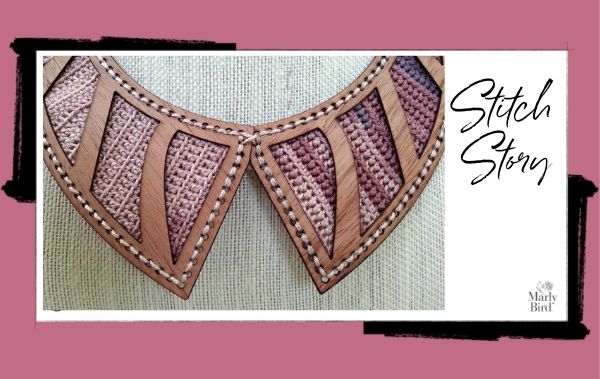
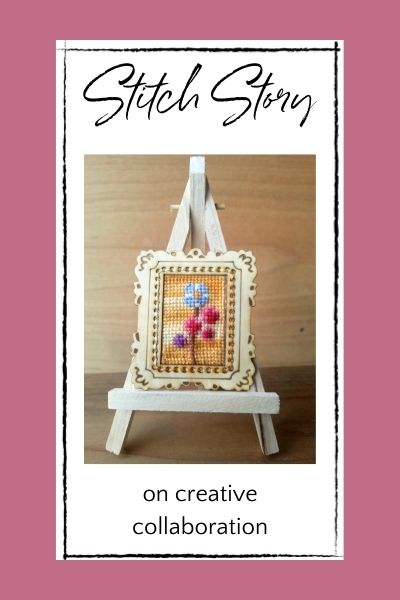
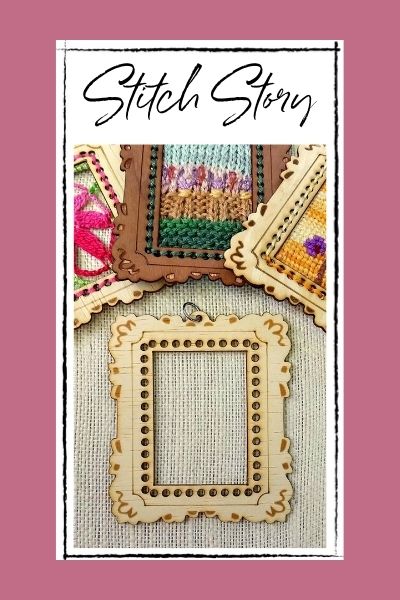
Shortly after finishing the book, Emad and I decided that it was finally time to start collaborating. He had recently left his job in the Navy to pursue woodworking, and we wanted to find a way to combine his love of wood and my love of fibers. This is when we started eWoodStory. We sourced some special exotic woods and began with crochet jewelry kits, and stitchable frame pendants for people to stitch their own creations into. I got to know many talented people through our Featured Artists Series, and I became more interested in hand embroidery, and began to incorporate more of it into my work. 
 
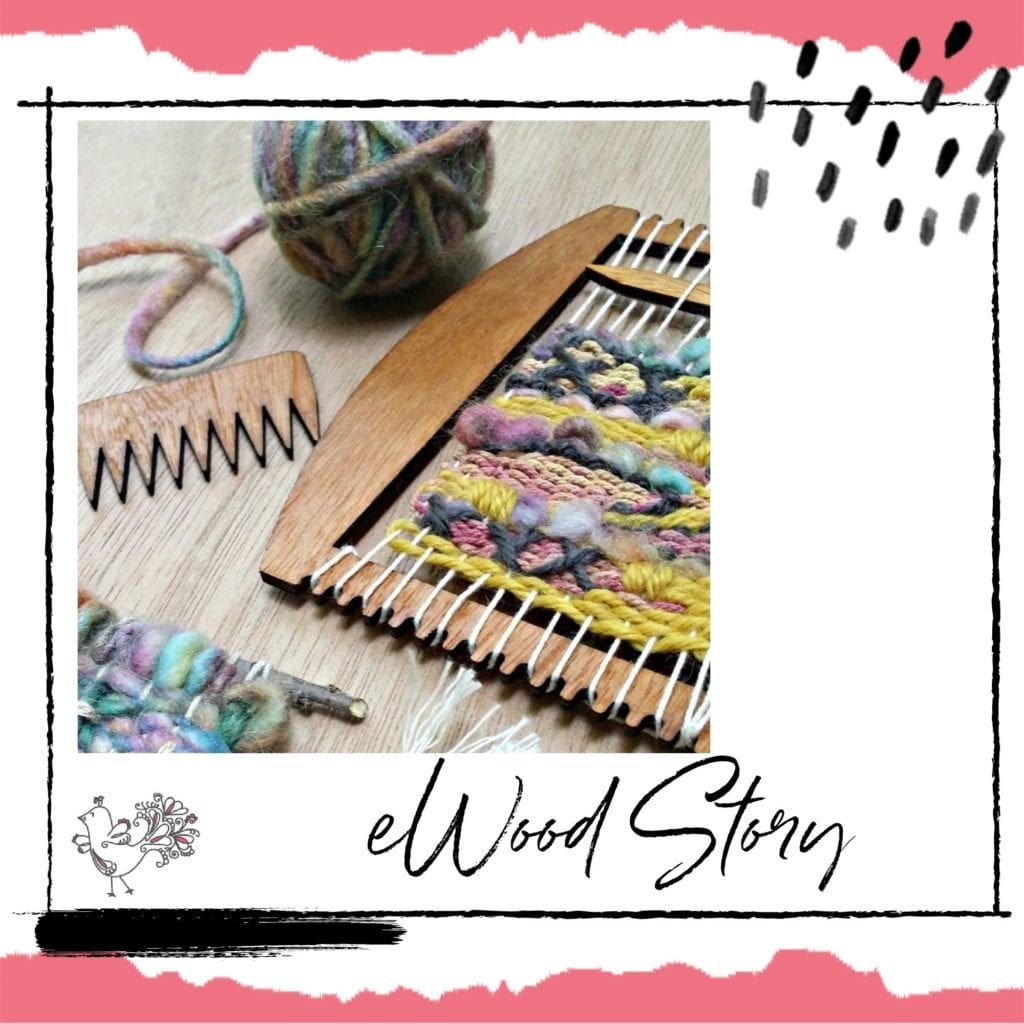
In 2015, the Sadu House- a cooperative in Kuwait for traditional weavers – asked us to meet with Lesli Robertson, a fiber arts professor from Texas. We worked together for over a year on the Weaving Stories project, and in the process, I fell in love with weaving! Modern weaving reminded me of working in freeform crochet, and I instantly felt comfortable doing it. I spent some time learning techniques, and creating some of my own, before developing the weaving Kit for eWoodStory. By that time, I knew what I wanted in a loom. I wanted to design an attractive loom that was versatile, easy and comfortable to use. We were thrilled with the response we got to our looms, and have since developed a mini version. 

Individual Growth Through Creative Collaboration

Stitch Story and eWoodStory


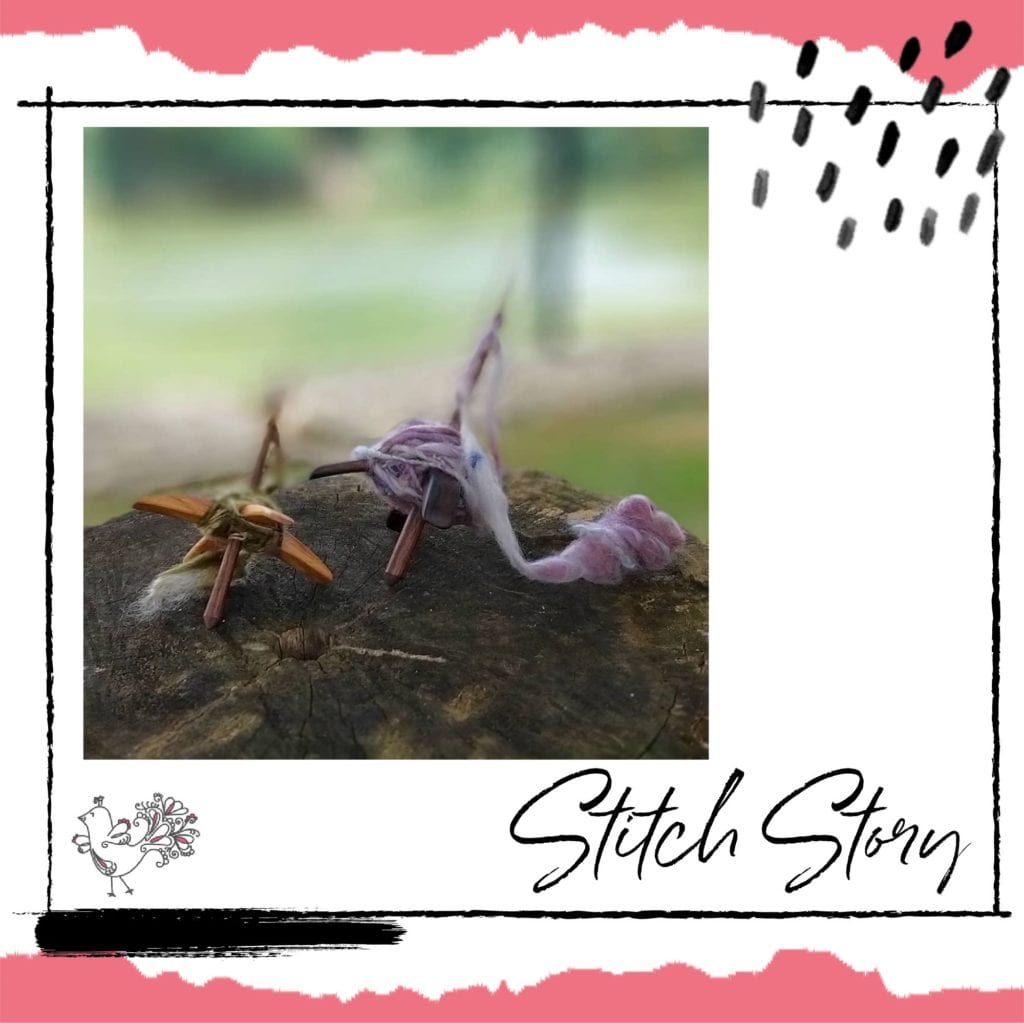
In doing quite a bit of weaving to promote the looms and in teaching workshops, I was looking for yarns with character, and that looked especially good when woven in. I found that handspun yarns were my favorite to use! That led me to wanting to spin my own yarns, starting with a drop spindle and now a spinning wheel as well
 
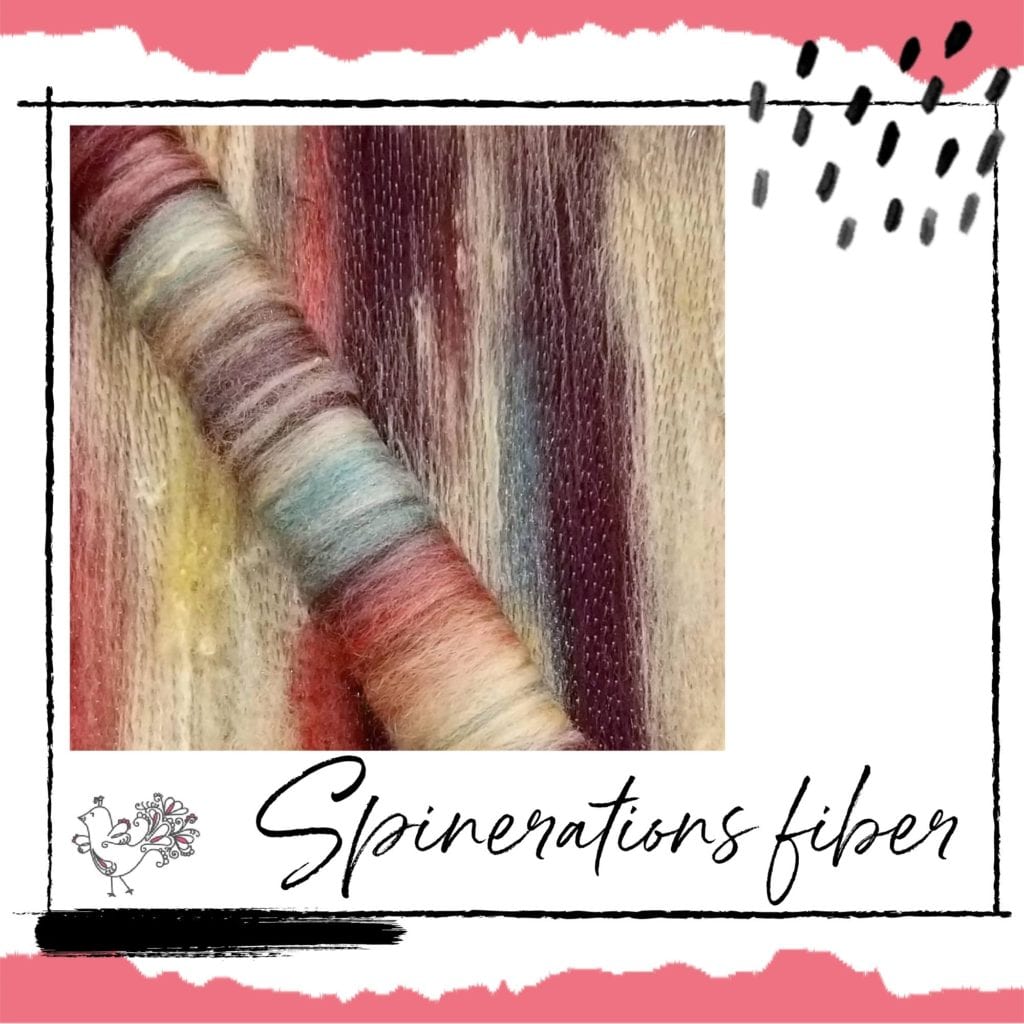
My daughter Sara has always joined along in my fiber arts adventures, and when spinning came into our lives, she felt instantly compelled to learn and quickly picked up the skill. It has become the thing that we most like to do together. We can be in the studio for hours preparing fibers and spinning. Sara has always been interested in our eWoodStory collaborative business, and since we were enjoying spinning so much, we decided to branch out to sell one-of-a kind yarns for weaving through Spinerations.


Put succinctly, what does collaboration mean to you? 


Collaboration to me means working together and sharing our strengths to create something even better than we could create as individuals. 

What does collaboration look like in each of your businesses? Who does what? How do decisions get made? What are the best parts and the least best parts?

Spinerations Fiber


For eWoodStory, usually I have an idea inspired by something I am working on, and I make a sketch and start brainstorming ideas with Emad. After we have discussed and worked out all of the details, we make a prototype. Emad does the artwork on the computer, and cuts the pieces, and I make samples and decide if the design needs any changes. Then we finalize the design. We create the booklets and decide on the packaging, and get the items ready to sell, and I deal with the shops.  
 
Since Spinerations is a new business, we are still working out all of the roles. We are spinning as much yarn as we can now to build up a stock to pull from, and to create curated yarn packs. We are brainstorming as we go, and we are working on gathering interest in what we are doing and gaining a following. 


How does collaboration differ in eWoodStory and Spinerations? How is it the same?


With eWoodStory, usually I come up with the concept of what I would like us to create, and my husband analyzes and refines the idea. In Spinerations, we are inspired as we spin, and we bounce ideas off each other and talk them through to agree on something we are both excited about. Since we all have similar interests in our family, we are often talking about our work in our daily lives, and our work time and leisure time is almost seamlessly integrated.

You mentioned some other collaborations. How does working with others differ from collaboration with family?


Yes, for example, I have worked as a textile collaborator for Sadu House. When I managed the Weaving Stories Exhibition, one of the main objectives was to create a woven wall that was inspired by a traditional Bedouin tent divider. This woven installation was comprised of 72 pieces from over 30 international artists and makers telling the artists’ personal stories of Kuwait. The techniques they used range from weaving to crochet, knitting, quilting, macramé, fabric painting, hand and machine embroidery, and 3D printing. 
 
It was a different experience because I was dealing with many types of people and their work styles, and we were working with a definite deadline. 


What are the pros and/or cons of collaboration with family?


Working with family has mostly pros in my opinion, because you are more than just a team, you have more control of the outcome, and there is the highest level of trust. 
 
Since working on our projects is also what we like to do for fun in my family, we are always simultaneously working on projects for one of the businesses, we have a woodworking workshop and studio in our home, and so it is convenient to work anytime. 

Mothers and daughters are always an interesting dynamic … what is it like in Spinerations?


We often have very different viewpoints, but that benefits us when we are working, because somehow our strengths and weaknesses balance out. We try to help and encourage each other as we work.


As you know, my personal interest in the health benefits of crafting – and generally how it improves life for individuals, relationships, and communities. What are your thoughts on this … how does living creatively benefit you? 


My day isn’t complete unless I have made something! Creating is what gets me out of bed in the morning, and what almost keeps me from going to bed at night! Worries seem to fade when I am working on a project!
 
Now that I have several different crafts I am working on, I work them into my day based on the time I have or how I am feeling. Spinning is really the most relaxing and energizing at the same time. The entire process, from choosing colors and textures and combining them to the actual spinning is an adventure full of surprises. We never quite know for sure what the finished yarn will look like until it is finished. Usually looking at the finished hank of yarn inspires the next. As long as there is fiber in the house, we are busy and happy!

You Might Also Like:

  • eWoodStory on the YarnThing Podcast
  • Stitching as Self-Care
  • 33 Crochet Designers You Definitely Want to Know

Frequently Asked Questions

What is Stitch Story and who is Shelby Allaho?

Oh, hi there! Stitch Story is Shelby Allaho's crochet blog, and she's an absolute inspiration when it comes to creative collaboration. She's also launched eWoodStory with her husband and Spinerations with her daughter!

Can you tell me about Shelby's family collaborations, eWoodStory and Spinerations?

Honestly, they're amazing! eWoodStory combines her husband's woodworking with her fiber arts love… think crochet jewelry and stitchable frames. Spinerations is with her daughter, focusing on handspun yarns for weaving. They sound like so much fun to work on together!

What does collaboration mean to Shelby?

Yes! She says collaboration simply means working together and sharing strengths to create something even better than they could on their own. It's all about synergy!

How does working with family compare to working with others for Shelby?

Well, working with family is mostly pros for her… there's a super high level of trust and they have more control over the outcome. It sounds like their work and leisure time just blend together beautifully!

What's the dynamic like between Shelby and her daughter Sara in Spinerations?

Oh, it's a lovely balance! They often have different viewpoints, which actually helps because their strengths and weaknesses balance each other out. They really try to help and encourage one another as they create!

Filed Under: Crochet, Dibble Dabble Inspiration, Knitting, Product Reviews

Why You Should Use That Precious, “Too Nice,” Amazing…

February 1, 2021 By admin Leave a Comment

don't wait to use your best yarn

Hi, it's Kathryn (Marly's blog content director) here today. My personal area of specialty is working at the intersection of art/craft and healing – specifically using knitting and crochet to improve your mental health and quality of life. So, once or twice a month, I'll be popping up here on the blog to share some thoughts with you about that. Today's tip: don't wait to use your luxury yarn. You know, the yarn that's expensive, precious fiber that you've been putting off using until “someday.” Someday is today and you deserve to use that yarn right now. This post is an excerpt from my book “Hook to Heal: 100 Crochet Exercises for Health, Growth, Connection, Inspiration, and Honoring Your Inner Artist.“

Note: This post includes affiliate links. That means if you click a link and make a purchase, Marly gets a small percentage of the sale. It's a great way to support her and your own price doesn't change at all.

Use the “Nice China,” Wear the “Nice Dress” and Knit or Crochet with the “Nice Yarn”

I thought of this exercise from my book Hook to Heal because of an entirely unrelated book that I was reading. In the memoir All Happy Families, Jeanne McCulloch writes:

“Look, china breaks, that doesn't mean you don't use it.

Look, a heart breaks, that doesn't mean you don't use it.”

It reminded me of how often we are afraid to use the wonderful things in life. As if we must save them for a “better” time when we “deserve” them more. But the time is now. And we make our lives richer when we use the nice things. And often when we use our “nice” things, more nice things come to us. But we fail to do in part because of a fear of scarcity. Here's what I wrote about that in Hook to Heal, in the chapter on Creating Abundance:

yarn is luxurious

Holding Back Due to Fear of Scarcity

Fear of scarcity shows up as a frequent problem in creative lives. So does it's flip side: fear of abundance.

Fear of scarcity comes from this feeling that there is not enough. Therefore, you must hoard what you have. In contrast, fear of abundance comes from the belief that if you have too much then you’ll have problems associated with corruption and obsession with material goods over spiritual matters.

In both cases, the fear creatively restricts the individual. And let me just say that most of us do have one or the other or perhaps even both of these fears. By building abundance in our creative work, we are able to generate more of the things that we want. We do this not only for ourselves but to give to the world around us.

Don't Save Luxury Yarn and Other Nice Things For Later

One of the most basic, and very common, ways that this manifests in people’s everyday lives is in the “saving” of nice things “for the right occasion”. In recent history, we typically saw this with “the good china”. The most beautiful dishes were only taken out to celebrate huge holidays at home and collected dust the rest of the year. Although this sometimes still happens, what is even more common now is to save our favorite clothing for some other day instead of just wearing it “for no reason”.

Think about it; do you have a favorite dress or even a favorite t-shirt or pair of jeans that makes you feel so great when you put it on that you never want to wear it just to go to the store but instead save it for some “big event”? So often, those events don’t come. Or if they do, you have ten different things to wear that you’ve been “saving”. You can celebrate abundance in your everyday life by allowing yourself to use all of the things that are special, that make you feel great. Yes, even in a pandemic when you're not seeing anyone outside your house, you can wear the nice dress.

Want to know the story about how I used my grandmother's satin napkins – a wedding present that had gone unopened for half a century? That's in Hook to Heal.

There is certainly a time and place for really fabulous things – the wedding dress or the irreplaceable ancient heirloom – but for the most part our nice things can be used in regular life, adding abundance to the everyday and infusing life with more magic. And you can start with using your luxury yarn.

treat yourself to yarn you love

Life is Abundant and Luxury Yarn Represents That

Crafters hoard their nice yarn out of fear of scarcity – or fear of abundance. I love to buy expensive hand-dyed hand-spun luxury yarn. I especially love to make those purchases at fiber festivals where I can sometimes meet the animals that gave their wool to me.

But then I don’t want to use those yarns because usually I’m just making some random item that is a lot more about process than product. Therefore, it seems like a “waste” to use that yarn on a random granny square that doesn’t even have an intended purpose yet. And that’s okay in its way. I can keep a few of those skeins on my work table and handle them and enjoy their texture just the way that they are. However, I have to be careful not to let my stash of “too good” yarn overtake my space while only using the yarn that doesn’t feel “as good”. We deserve to work with the luxury yarn. We shouldn't relegate ourselves to the “less good.”

Life is abundant. My dictionary says first that it's “a very large quantity of something,” However, it then goes on to a definition I like better which is: “the state or condition of having a copious quantity of something; plentifulness”. It’s not about having excess; it’s about having plenty. Ultimately, it's about having a lot of what we want and knowing that there’s more around the corner. My dictionary’s example is “vines and figs grew in abundance.” I love that image. Nobody needs tons of vines and figs but isn't it so beautiful that they grow in abundance?! And when we look for it in the right places and treat ourselves to it in the right ways, we have beautiful abundance as well.

Life so often feels scarce. We have too limit time. We have too little resources. Perhaps we worry that we don't have enough love or that we ourselves aren't “enough.” But actually, life is abundant. We often have plenty. And the more we embrace and enjoy things like the luxury yarn we already have in our stash, the more we feel that abundance. It's a good feeling.

Exercise for Creating Abundance: Use Your Luxury Yarn

embrace abundance

The exercise: Use your nicest skein of luxury yarn to crochet something frivolous.

The purpose: Use something that you’re afraid to let go of in order to open the door for more to come in.

Operating from a fear of scarcity can severely limit your experiences of life. It can be helpful to build up your faith and trust that there will indeed be enough, that your family will always get fed and the universe will provide you with creative tools and that there is always more yarn where that came from!

What is Luxury Yarn?

Luxury yarn might be one-of-a-kind, hands-on, hand-dyed yarn made of a really unique fiber such as yak wool. However, it doesn't have to be that. In fact, it might not even be expensive. Luxury yarn or the “nice yarn” in your stash is just whatever you love so much that you've been a little afraid to use it up. It might be a really soft wool or a particular color of a favorite yarn that you're worried you'll never find again. What is luxury yarn to you?

Fun fact: Back in 2015, Marly interviewed designer and author Cirilia Rose who was working with Zealana to promote their possom yarn. It's actually a luxury yarn!

Marly's also shared Kristin Omdahl's Bamboo So Fine luxury yarn. And she's chatted multiple times with Knitlandia author Clara Parkes; when her book Knitlandia came out it stimulated a conversation in the comments all about the joys of cashmere yarn. And in a review of Sandi Rosner's 21 Crocheted Tanks and Tunics, she wrote, “Yarns chosen were intended for summer or warmer climates, so she looked for washables in linen, cotton, bamboo, silks are not generally machine washable, but a luxury fiber can be so worth it.”

And a tip: SOAK Wash is one option for washing items knit and crocheted with luxury yarn.

Yarnspirations Luxury Yarns

You can find quite a few luxurious yarns over at Yarnspirations. To get started, you might want to check out:

  • Sugar Bush Nanaimo Yarn: “a fingering weight blend of baby alpaca and mulberry silk”
  • Sugar Bush Bliss Yarn: “blend of cashmere, mulberry silk, and superfine merino”
  • Patons Alpaca Blend Yarn: The alpaca makes it luxuriously soft while the acrylic makes it washable and durable
  • Patons Silk Bamboo Yarn: This blend is so silky soft!

And of course Marly's Chic Sheep Yarn, which is 100% merino wool, is always a treat to work with!

Luxury Yarn Exercise Steps:

  1. Take out your most precious skein of yarn. You know the one, the one that you felt a little bit guilty paying so much money for and have had in your stash for three years now because you are waiting for the exact right item to make with this super special skein of yarn.
  2. Crochet something less-than-special with that skein of yarn. Make a dishcloth or a really basic scarf. Or make something nice that you've really wanted to make if you must, but the more mundane, perhaps the better.
  3. Enjoy this new thing that you've made. Use it. Or place it where you can see it every day. Heck, crochet a granny square or knit a rectangle then place it in a frame and hang it on the wall to enjoy.
  4. Go to the yarn store and buy a new special skein of yarn. Take your time to find one that really calls out to you. This is reinforcement for your brain that there is always more out there.

Bonus Tips for This Exercise

  • Keep your best skeins of yarn out where you can see them and enjoy them and get inspired to use them!
  • Ask yourself how “Step Two” above made you feel. Many people react strongly to this part. You might want to journal about this.
  • If you can’t go buy a new skein of luxury yarn right now (Step Four above), that’s okay. Go through your stash of yarn and see which skein calls out to you as the most precious skein now that the favorite one has been all used up. You will likely discover that your view has shifted and a skein you previously thought was “okay” is now “the best”. Challenge your perspective.

Taking it further: Donate your crocheted item to a thrift store. You have no way of knowing if it will be treated well and that beautiful skein might very well be “wasted”. It’s okay. Really. Confront your feelings about this in your crochet journal. Yarn is a safe space to explore very complex psychological challenges in life. When you do, you might find that you get stronger in other areas of life as well.

Marly Bird Knit and Crochet Patterns Using Luxury Yarn

You can use your luxury yarn to make anything that you want. If you need inspiration, here are some of Marly's patterns that have used special yarn:

Stellar Stripes Shawl: Available in Knit and Crochet Patterns

The stellar stripes shawl, available as both a crochet pattern and a knit pattern, uses Bijou Basin Sport yarn, which is 100% Yak Yarn.

striped crochet shawl pattern

Pink Courage Chemo & Breast Cancer Awareness Knit Cap Pattern

pink courage chemo cap free knit pattern

Chemo caps are made with soft yarns because people going through cancer treatment have sensitive skin. What a great way to use luxury yarn. Marly provides several luxury yarn options for this pattern, including Stunning String Studio's Luxury Fingering Yarn, which is a blend that includes merino wool and goat cashmere fiber.

Topping Knit Scarf Pattern

Topping Scarf Knit Pattern by Marly Bird

This knit scarf pattern uses one skein of Bijou Basin Ranch “Lhasa Wilderness.” This luxury yarn is 75% yak/ 25% bamboo fiber. Luscious.

Trail Hoodie Knit Pattern

trail hoodie knitting pattern by Marly Bird

This pattern uses Bijou Spun “Himalayan Trail” by Bijou Basin Ranch. This luxury yarn is 75% yak/ 25% merino wool.

Drew Sweater Vest Knit Pattern

men's sweater vest knit pattern

This men's sweater vest pattern, inspired by fellow designer Drew Emborsky, is knit with a 100% fine merino yarn.

You Might Also Like:

  • Craft as Therapy: Maximize the Cozy in Crochet and Knitting
  • Happy You Year! Take Some Time to Stitch For Yourself
  • 3 Mindfulness Exercises to Help You DeStress

Frequently Asked Questions

Why do crafters hoard “precious” yarn without using it?

Oh, this is so relatable! We save special yarn because we want to use it for exactly the right project… and that perfect project never quite materializes. Or we're afraid of “wasting” it on something that doesn't turn out perfectly. Or we just love having it and worry that using it means it'll be gone. The “precious yarn hoarding” tendency is universal in the crafting community and it comes from a place of genuine love for beautiful fiber… but it also means our most treasured skeins sometimes sit untouched for years while we reach for the “good enough” yarn instead.

What's the argument for using luxury yarn now rather than saving it?

Because yarn ages and you age… and a beautiful skein kept in a drawer gives you exactly zero joy compared to something made from it that you can touch, wear, and share. Luxury yarn loses nothing by being made into something beautiful. A finished object in that precious cashmere or hand-dyed silk will bring you daily joy for years. The skein in the drawer brings you a theoretical future joy that keeps getting postponed. And practically speaking… moths, accidents, fires, moves… yarn in storage faces risks that a finished beloved object in your wardrobe does not.

How do I choose the right project for a special yarn skein?

Ask yourself: what would make this yarn MOST itself? A beautiful hand-dyed silk deserves something that shows off its drape and sheen… a shawl, a cowl. A luxurious cashmere-blend wants to be something that touches your skin daily. A unique single skein of indie dyer magic deserves a project where you'll see all of it… not hidden in the sleeve of a sweater. The project that honors the yarn is the right project. And if you're not sure? A swatch is a great starting point… it gives you a feel for the yarn without committing to a specific project.

What if I use the precious yarn and the project doesn't turn out well?

Then you frog it (rip it out) and try again with a different pattern or different construction! Yarn doesn't wear out from being worked and re-worked unless you're excessively rough with it. The yarn is still there, still beautiful, still available for another try. And even a “failed” project taught you something about what that yarn needs. The real loss would be never using it at all. Give yourself permission to experiment… luxury yarn would rather be part of a learning experience than sit in a drawer forever.

What's a good first project for using a precious yarn skein?

Something small and high-impact that showcases the yarn! A one-skein shawlette or cowl in a simple stitch that lets the yarn shine. A pair of fingerless mitts in a beautiful but forgiving construction. A delicate hat. The project should be: sized for one skein (so you don't feel limited by quantity), relatively simple (so the yarn does the work), and something you'll actually use and see regularly. Don't save your best yarn for a complex project that might intimidate you into never starting… use it in something achievable and beautiful.

Filed Under: Marly Bird Premium Patterns, Our Free Patterns

Craft as Therapy: Maximize the Cozy in Crochet and Knitting

January 18, 2021 By admin 1 Comment

Hi, Kathryn here, Marly's blog content director, sharing some thoughts with you on how to make the most of cozy crochet and knitting to improve your life through crafting.

Crochet and knitting can be such healing crafts for so many different reasons. One of the core reasons, although sometimes overlooked in discussions about craft as therapy, is that yarn crafting is COZY. Call it “hygge” or “homey” or whatever word feels right for you, but frankly yarn just makes us feel all safe and warm and snug as a bug. The texture of working with a soft yarn, the feeling of a cozy shawl wrapped around you … it truly helps. And simply by tuning in to what's cozy about crafting, we can make our lives feel better in ways big and small.

NOTE: This post contains affiliate links. If you click a link and make a purchase then I get a small percentage of the sale. Your price does not change. Thank you for your support.

That Feeling of Being COZY

Cozy hand in a chunky gray knitted sleeve on soft fabric, promoting therapeutic crafting.

As I write this, I'm sitting propped up against a full-sized body pillow, wearing that oversized chunky wool crochet sweater that you see a glimpse of in the photo above. My pup is cuddled up next to me and a mug of hot chocolate at the ready. I am cozy, which is one of my most favorite feelings in the world. While I love to feel inspired, invigorated, and so many other things, what I want on most days is to feel cozy. I like cozy crochet, cozy homes, cozy moments.

When I think about being cozy, I think about the utter comfort of respite. I am cozy when I am in my favorite pjs, under my favorite blanket, with one or more of the people I love the most. I feel cozy in front of a roaring fire, reading a favorite book, in conversation on the couch with my best friend. When I feel cozy, it's a break from all of the hectic things in the world. It is a place of rest, reprieve … not even rejuvenation (though it leads to that) but just calm lovingness.

And so of course I want to find ways to utilize my love of crochet to get even more cozy. It is a craft that lends itself well to the concept of cozy. Yarn is cozy, especially plush yarn. It is cozy to work with and cozy to wear and cozy to wrap up in on a cold day. But how can we take its natural qualities even further to intentionally create even more coziness for ourselves? That's what I hope to encourage you to do here, with some ideas of my own that I hope will also inspire you to come up with your own cozy approach to craft as therapy.

Of course course, cozy is going to mean different things to different people. There are certain things that many of us find to be cozy – warm drinks in our hands, warm blankets wrapped around us, warm fuzzies from great moments in relationships. But “cozy” is also related to nostalgia, to the things that make us feel safest and calmest. So as you work with the concept of coziness in your own crochet or knitting, you might want to take the time to journal and muse upon what truly feels most cozy for you.

knit half circle shawl pattern

An Exercise in COZY: Making a Knit or Crochet Shawl

The crochet shawl can be one of the most powerful cozy items that we ever make. The shawl has long been an object for intentional crafting – a prayer shawl, which can be adapted to your own unique religious / spiritual traditions is something that is specifically intended to bring comfort and care to the recipient. You infuse it with your love and good intentions and share that through each stitch. Then the person who receives the gift receives that love and literally wraps it around themselves. And you can take that approach to making yourself cozy through crafting, by making a shawl just for yourself.

 Tip: If you really don't see yourself even using a shawl, you can crochet yourself a blanket instead. Large shawl patterns even work as lap blankets.

A Note on Prayer Shawls

We've talked about prayer shawls a lot in recent posts so I won't go into that more here but check out this post for a good starting point:

define prayer shawl

The post shares a lot about what prayer shawls are. Moreover, it links to 40 knit and crochet prayer shawl patterns. Okay, now back to getting cozy with your own crochet shawl …

What Is Cozy For You in Knitting and Crochet?

First, let's explore a few questions about what feels cozy to you in crochet. Consider the following:

  • What fiber immediately comes to mind when you think of “cozy”?
  • Which colors would you like to be wrapped in to get cozy?
  • What yarn weight is going to feel the most cozy wrapped around your shoulders?
  • How large or small does a knit or crochet shawl need to be for you to feel like it's truly cozy?
  • Is there anything else that your knit or crochet shawl needs to feel cozy?

Picking a Cozy Knit or Crochet Shawl Pattern

With the answers to those questions in mind, it is time to pick a crochet shawl pattern. The prayer shawl patterns we've rounded up previously are a great place to start:

  • Free Crochet Shawl Patterns
  • 20 Free Knit Shawl Patterns
cozy knitting and crochet

How to Maximize COZY in Knit and Crochet Shawl Making

Once you have the crochet pattern in hand and you get your supplies ready, it is time to craft your knit or crochet shawl. To do this, you want to really infuse your space with utmost coziness.

Consider this a very special gift of comfort to yourself and take it seriously when crafting it.

Making Your Space Cozy

Let's consider some of the ways that you might want to make your craft space more cozy:

  • How can you alter the lighting in a way that facilitates crafting but is still cozy?
  • What is the coziest spot in your house for knitting or crochet?
  • What can you add to your craft area to make it cozier? Pillows, blankets, a space heater, a cute rug, a pot of tea, an essential oil diffuser, candles … what is going to be most cozy for you?
  • What sounds do you want to hear to feel cozy as you craft? Find cozy music or background noise or silence.
  • What else do you need to make your space cozy?
cozy crafting

Craft as Therapy: Being Intentional and Cozy as You Stitch

As you sit down to work on this shawl, take a moment to really settle in. Relax your shoulders, feeling them drop down away from your ears, creating space in your body. Take a few slow, deep breaths. Remember that your intention is to be as cozy as possible. Really give yourself the chance to take this crafting time slowly so that it is as comfy as possible.

As you work on this crochet shawl, you might want to use prayer shawl techniques to craft an intention into each stitch. It may be as simple as repeating the affirmation, “I deserve to be cozy.” Other affirmations include “I am cozy,” “cozy is comfy” and “crafting keeps me cozy.”

When the knit or crochet shawl is complete, it can be helpful to do some kind of closing ritual for the shawl before you begin to wear it. Here is an example of such a ritual:

  • Light a candle and take a moment to relax. 
  • Lay the crochet shawl out in front of you. Touch it and really take in the tactile sensation.
  • Give gratitude to the shawl for allowing you the time and space to embrace coziness while crafting.
  • Set an intention that each time you wear the shawl you will be reminded the respite of being cozy.
  • Ask the shawl to share in your intention. (Yes, I know, this can feel cheesy, but these rituals can be so empowering if we can get past how cheesy they feel!)
  • Say your affirmation – “I deserve cozy” or “I embrace cozy”, for example.
  • Place the shawl around your shoulders and revel in the coziness for as long as you can.
  • Blow out the candle.

Try to remember this ritual each time that you wear that shawl. You don't have to repeat the ritual (though you can) but just take a moment to reflect upon it and remember how good cozy can feel.

We want to know what cozy means for you in crafting? Share a cozy knit or crochet experience with us in the comments or on social media!

You Might Also Like These COZY Knit and Crochet Patterns:

cozy crochet and knit ponchos
stitch for yourself

Also, learn about crochet and knitting as occupational therapy.

Frequently Asked Questions

Does knitting and crochet actually have therapeutic benefits?

Yes… and there's real research supporting it! The repetitive hand movements in knitting and crochet activate the relaxation response, reducing heart rate and blood pressure. The focus required creates a flow state similar to meditation that quiets anxious thoughts. Bilateral movement (using both hands) stimulates both brain hemispheres. The sense of accomplishment from finishing a project builds confidence. And the social aspects of craft communities combat loneliness and isolation. Multiple studies have documented improvements in mood, reduced anxiety symptoms, and even benefits for chronic pain management from regular crafting practice.

What is “hygge” and how does crafting relate to it?

Hygge (a Danish concept… pronounced roughly “hoo-ga”) is the art of creating cozy, warm, comfortable moments and atmosphere. It's about savoring simple pleasures, being present, and cultivating a feeling of wellbeing. Crafting is a perfect hygge activity… you're creating something with your hands, you're often in a cozy setting with a warm drink, and the rhythmic nature of the work invites slowing down and being present. Making handmade items for your home and loved ones is deeply hygge. The yarn crafting community and the hygge philosophy are natural allies.

How can I make my crafting time more therapeutic?

Set the scene! A comfortable chair, good lighting, and your favorite drink creates a crafting environment that supports wellbeing. Choose projects that match your current mental state… if you're anxious, a simple, familiar stitch you can work without concentration. If you need stimulation, try something technically engaging. Work without screens competing for attention when you want a truly meditative experience. Join a crafting community (online or in person) for the social aspect. And make things that matter to you… gifts for people you love, items for your home, or projects that connect you to something meaningful.

Can crafting help with anxiety and stress?

Many people find it genuinely helps! The focused attention that crafting requires naturally draws your mind away from rumination and worry… it's very hard to catastrophize about work when you're counting stitches. The physical sensation of yarn and the productive hand movement are calming. The sense of accomplishment from creating something is mood-lifting. And knitting or crochet gives you a socially acceptable way to keep your hands busy… which helps a lot of anxious people who struggle with idle moments. It's not a replacement for professional support, but it's a genuinely powerful complementary tool for managing daily stress.

Are certain types of projects more therapeutic than others?

It really depends on what you need! For mindfulness and meditation-like calm: simple, repetitive projects you can work without charts (garter stitch scarves, basic blankets). For engaging distraction from anxiety: more complex patterns that require enough attention to quiet the noise in your head. For a sense of accomplishment: projects that have visible progress and a clear completion point. For social connection: group projects, make-alongs, and community crafting. The most therapeutic project is the one that meets your current emotional need… there's no universally “most calming” craft.

Filed Under: Crochet, Free Patterns, Knitting

51 Free Checks and Blocks Crochet and Knitting Patterns

December 28, 2020 By admin Leave a Comment

Checks and blocks are classic patterns that can be made in so many ways! Whether you're doing a bright gingham, a classic checkerboard, multi-colored blocks, or using texture instead of color, there's a way to interpret this pattern your way.

Download the 51 Yarnspirations patterns for checks and blocks patterns to crochet and knit and get started on your next project today!

51 Free Checks & Blocks Crochet and Knitting Patterns

Checked Patterns

These classic checkerboard patterns alternate squares of two colors.

  • Cables & Checks Blanket & Pillow Set
  • Cables & Checks Set
  • Checkered Hat
  • Checkered Hot Pad
  • Checkers Board Game
  • 3 in 1 Crochet Hand Warmers
  • 3 in 1 Knit Hand Warmers

Gingham Patterns

Gingham is traditionally a mix of a bold color — often red — and white, in a checkerboard pattern. These gingham patterns include traditional gingham patterns and some untraditional gingham patterns in alternate colors.

  • Crochet Pic-a-Nic Basket
  • Gingham Baby Blanket
  • Gingham Dishcloth
  • Gingham Hat
  • Gingham Crochet Picnic Blanket
  • Gingham Pillows
  • Keep in Check Crochet Cloth
  • Gingham Check Rug
  • Gingham Blanket
  • Windowpane Gingham Baby Blanket
  • Gingham Blanket
  • Knit Gingham Panels Blanket
  • Mod Gingham Dishcloth
  • Crochet Gingham Plaid Afghan

Block Patterns

Colorful blocks — of three, four, or more different colors — are arranged together. Some of the blocks are striped, and they may have a border around them.

  • Dinosaurs Blanket
  • Alize EZ Checked Blanket
  • Mystery Afghan Knit Along
  • I Love Pink Blanket
  • Mitered Blanket
  • Denim Plaid Blanket and Pillows
  • Building Blocks Knit Blanket
  • Baby Steps Blanket
  • Shifting Blocks Knit Scarf
  • Color Chip Wrap
  • Check Yourself Crochet Scarf
  • Monochrome Swatch Knit Sweater
  • Keep in Check Crochet Blanket
  • Blocked and Cropped Crochet Pullover
  • Check Stitch Set
  • Outlined Squares Shoulder Bag
  • Trip Around the World Throw
  • Building Blocks Throw
  • Color Block Crochet Scarf
  • Color Block Panels Blanket
  • Color Block Throw
  • Sampler Block Throw
  • Checker Crochet Baby Blanket

Textured Patterns

Solid-color patterns with multiple textures create a checkerboard pattern from the contrast.

  • Textured Checks
  • Candi's Checked Cowl
  • Garter Blocks Blanket
  • Checkerboard Textured Throw
  • Textured Checks Cardigan
  • Baby Blocks Blanket and Hat Set
51 Free Checks & Blocks Crochet and Knitting Patterns

Also on the Blog

  • Free Textured Crochet Patterns
  • 14 Seed Stitch Patterns: Texture in Both Knitting and Crochet
  • 11 Free Crochet Cables Patterns to Make

Frequently Asked Questions

What are “checks and blocks” patterns in knitting and crochet?

Checks and blocks patterns create a grid or checkerboard-like visual effect through color alternation, texture alternation (raised vs. recessed squares), or a combination of both. Classic checkerboard colorwork alternates two colors in equal-sized squares. Textural checks alternate raised stitches (like cables or post stitches) with recessed plain stitches to create a dimensional block pattern in one color. The 51 patterns in this collection showcase both approaches in beautiful variety across different project types.

Are checks and blocks patterns good for beginners?

Many of them are! Simple two-color checkerboard patterns are very beginner-accessible especially when the color changes happen at row beginnings rather than within rows. Basic textural block patterns using post stitches are intermediate. The collection spans skill levels so you can find something appropriate regardless of where you are in your crafting journey. The geometric, regular nature of checks and blocks makes them particularly good teaching patterns because the repeat is so logical and consistent.

What's the easiest way to create a checkerboard effect?

Alternating rows of two colors in equal-width blocks is the simplest approach! Work 4 rows in Color A, 4 rows in Color B, and stagger the block placement every other pair of color sections. For a true checkerboard, each block needs to be directly above a different color from the row below. The staggering is what creates the checker effect rather than horizontal stripes. Using a chart makes the color placement logic immediately visual. Start with a small swatch to understand the pattern before committing to a full project.

How do I prevent color bleeding in a crochet or knit checkerboard?

Carrying yarns up the side is a great option for simple two-color checks! Instead of cutting and reattaching each color at every color change, you twist the two yarns together at the edge every time you switch. This keeps the yarns connected and eliminates most weaving-in work. For checkerboards with larger blocks where the carry would be very long, cutting and reattaching may be cleaner. And as always with colorwork: make sure both yarns are colorfast (check by wetting and pressing to white fabric) before starting your project.

Do checks and blocks patterns work for all project types?

Most of them! Blankets and throws look absolutely stunning in checks and blocks patterns… the geometric regularity is pleasing at large scale. Bags, pillows, and home goods all work beautifully. Garments can use checks and blocks as allover texture or as accent sections. Accessories like scarves and cowls show off the pattern nicely. The one consideration is for very fitted garments where the chunky geometric pattern might affect the apparent fit at the waist or chest. For most project types though, checks and blocks create beautiful, interesting fabric.

Filed Under: Free Patterns, Round Ups, Uncategorized

Merry Holidays: Plaid Crochet Christmas Afghan Free Pattern

December 10, 2020 By admin 2 Comments

The Plaid Crochet Christmas Afghan free pattern is so much fun to make. And after I tell you a little bit more about it, I've got a video tutorial that will help you craft it. Ready to get started? You can download the free pattern now and then scroll down to see the video.

*This post contains affiliate links. By clicking one of these links a small portion of your purchase will go to the blog, the price you pay will not change. Thank you for your support.*

xmas afghan free crochet pattern

Download the FREE Plaid Christmas Afghan crochet pattern now and get started.

This Christmas Crochet Afghan Is Easier Than You Think!

This crochet Christmas blanket pattern looks challenging if you've never worked in plaid crochet before. However, it's far easier than you might think. You'll use really basic crochet stitches to make this blanket. If you can chain and double crochet then you can make this blanket!

The Plaid Christmas Crochet Afghan is made in two parts. You'll start by crocheting mesh. It's really easy to do and it forms the entire base of the afghan.

After making the filet crochet fabric, you will crochet chains to weave into the mesh. That's how it becomes plaid crochet. Watch the video to see how I complete this technique. It's far easier than you might have guessed.

Important Notes About the Plaid Christmas Afghan Free Crochet Pattern

This pattern does produce quite a few ends to weave in. That's because you change colors frequently to create the plaid design. My tip is to weave them in as you go. I stop about every 10 inches into the blanket to weave in my ends so that I don't save them all for the end. Watch the video to see my cautionary tale if you don't follow my tip!

Also, remember that you don't have to use these colors for this crochet blanket. It's made with Red Heart Super Saver, which comes in lots of different color options. In fact, when you go to download the pattern, you'll have the option to buy the yarn. And you'll see that each yarn color easily gives you the option to “change yarn color.” So it's easy to pick the palette that works for you.

Obviously, the red and green makes it a Christmas blanket. But if you don't think that you'll finish it by Christmas, or you just want to be able to use it all year long, then don't hesitate to change up the colors. Try white, blue, and grey for a wintry crochet blanket. Select the colors of your favorite sports teams. Or simply go with colors that you like. 

xmas crochet afghan pattern

Plaid Christmas Afghan Crochet Pattern Materials:

  • RED HEART® Super Saver®: 6 skeins 368 Paddy Green A, 4 skeins 319 Cherry Red B, and 3 skeins each 316 Soft White C, 312 Black D, and 672 Spring Green E
  • Susan Bates® Crochet Hook: 6 mm [US J-10]
  • Yarn needle

Grab your materials and join me now to make the Plaid Christmas Afghan Crochet Pattern.

Red Heart Super Saver

Download the FREE Plaid Christmas Afghan Crochet Pattern and get started.

Plaid Crochet Christmas Afghan Free Crochet Tutorial

This video will show you how to use the Plaid Crochet Afghan Free Pattern. Marly teaches you everything you need to know to make this beautiful plaid blanket which looks harder than it is. It's a great opportunity to learn some new techniques while making a gift for yourself, your family, a friend, or even for charity. You'll take it out again and again each holiday season to enjoy anew.

🎄 Countdown to Christmas 🎄

—
Days
—
Hours
—
Mins
—
Secs

Until Christmas Morning! 🎄

🤴 Start your handmade gifts now — December comes faster than you think! 🎅

You Might Also Like:

Frequently Asked Questions

Is this plaid afghan really beginner friendly?

Honestly... yes! Even though it looks super fancy, you really only need to know how to chain and double crochet to make this blanket. It's made in two parts... first you crochet a mesh base and then you add chains to create the plaid design.

How do I make the plaid design work?

So here's the thing... you start by crocheting a mesh, which forms the base of the afghan. Then, you crochet chains and weave them into that mesh. It sounds tricky, but there's a video tutorial that shows you exactly how it's done... it's much easier than you might think!

This looks like it has a ton of color changes... how do I handle all those ends?

Oh goodness, yes... there are quite a few ends to weave in because of all the color changes for the plaid! My best tip is to weave them in as you go... I like to stop about every 10 inches to weave in my ends so I don't have a giant pile at the end. Trust me... learn from my cautionary tale in the video!

Do I have to use these exact colors?

Absolutely not! The pattern uses Red Heart Super Saver yarn, which comes in a bazillion colors. While red and green make it festive for Christmas, feel free to change it up... maybe white, blue, and grey for a wintery vibe, or even your favorite team's colors!

What yarn and hook do I need for this afghan?

So glad you asked! You'll need Red Heart Super Saver yarn in a few different colors (Paddy Green, Cherry Red, Soft White, Black, and Spring Green) and a 6 mm (US J-10) crochet hook. You'll also need a yarn needle for weaving in those ends!

Filed Under: Crochet, Our Free Patterns, Pattern, Uncategorized, YouTube Video Tutorial

  • « Previous Page
  • 1
  • …
  • 10
  • 11
  • 12
  • 13
  • 14
  • …
  • 122
  • Next Page »

Let's Be Social

Join the Marly's Minions Facebook group to share, ask questions, or chat about all of your yarn related crafts!

Join the group
Cartoon of a smiling woman with brown hair in a bun, glasses, black jacket and green shirt, waving next to large "hi" text.

Quick Links

The Pattern Shop

Our Free Patterns

Blog

Marly Bird House

Learn to Knit & Crochet

About

Giveaway Terms and Privacy Notice

Find Us Everywhere

Join the Newsletter

YouTube Channel

Marly's Minions FB Group

Etsy Store

Ravelry Store


AN ELITE CAFEMEDIA HOME/DIY PUBLISHER

Information from your device can be used to personalize your ad experience. Do not sell or share my personal information.

Privacy Policy   Terms   Marly Bird Legal Documents Copyright © 2026