Search
Close
  • The Pattern Shop
  • Our Free Patterns
    • Browse All Our Free Patterns
    • Our Free Knitting Patterns
    • Our Free Crochet Patterns
  • Blog
    • All Blog Posts
    • All Free Patterns
    • Dibble Dabble Inspiration
    • Giveaways
    • Make-Alongs
    • Product Reviews
    • Roundups
    • Tips, Tricks, Techniques for Knitting and Crochet
Stylized bird with pink and gray swirling tail above elegant “Marly” text, logo for crochet accessories and home decor.
  • Marly Bird House
  • Learn to Knit & Crochet
    • Newbie? Start Here
    • Video Tutorials
    • Knitting Definitions
    • Crochet Definitions
    • Common Techniques
    • Size Charts for Knitting and Crochet Projects
  • About
×
  • The Pattern Shop
  • Free Patterns
  • Blog
  • Marly Bird House
  • Learn to Knit & Crochet
    • Newbie? Start Here
    • Video Tutorials
    • Knitting Definitions
    • Crochet Definitions
    • Common Techniques
    • Size Charts for Knitting and Crochet Projects
  • About
Stylized bird with pink and gray swirling tail above elegant “Marly” text, logo for crochet accessories and home decor.
Search
Close

New Patterns NOW Available in Ad-Free PDF! Check out The Pattern Shop

13 Circle in Square Crochet and Knit Free Patterns

February 13, 2022 By admin Leave a Comment

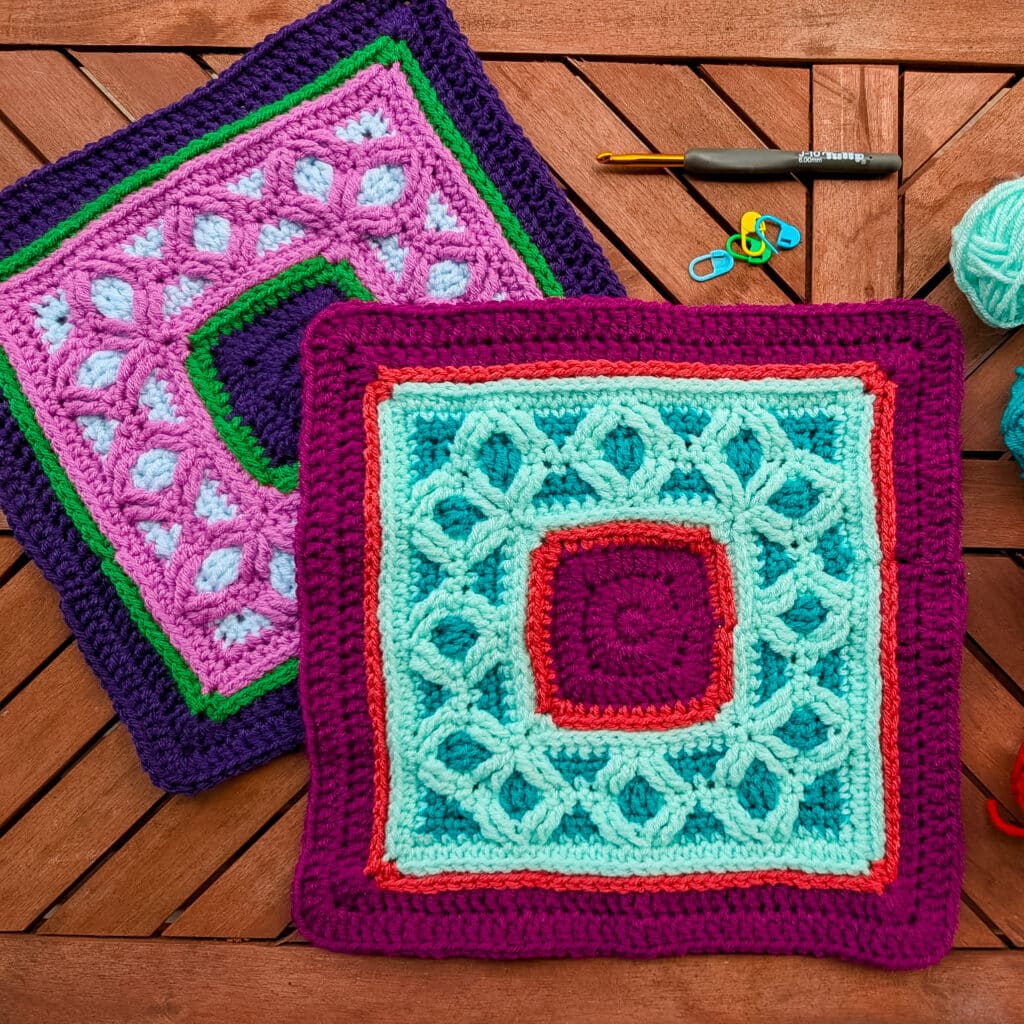
Circles made into squares are a common choice for many afghans and pillows. Knit or crochet the circle in a colorful shade, then make the square part neutral so they really stand out. These circle in square crochet and knit patterns can be used to create all kinds of different things.

To make a circle, you increase several times evenly around the piece. To make a square, you increase just at four evenly-space points. You’ll use both techniques in these patterns. Therefore, you’ll get the chance to really explore how shapes are made.

You can take what you learn making these projects and make your own projects! Take a few of the squares from a throw and combine them into a matching pillow, or make the front and back of a pillow, line it, and turn it into a bag. Your only limit is your creativity! Need some ideas: Check out our roundup of crochet and knit squares patterns.

13 Circle in Square Crochet and Knit Free Patterns

Circle in Square Crochet and Knit Projects

Most of the circle in square projects that you’ll find patterns for are blankets. After all, it’s so easy to turn squares into blankets. Therefore, most of the patterns here are throws of different sizes and styles. You’ll also find some circle in square pillows to go with them. Make a matching set for your guest room. Or to give as gifts. They are simple to make and yet they look really special.

  • Pokey Dots Throw – A colorful blanket and multicolor circles make this blanket very eye-catching.
  • Pin Point Crochet Blanket – Tiny circles expand to larger squares in this variation of the theme.
  • Circle and Square Crochet Blanket – A mix of circles in squares and squares by themselves make an unusual blanket.
  • Crochet Modern Motif Blanket – Use new O’Go yarn to make this modern blanket.
  • Circles in Squares Blanket – Two colorways for circles make this a modern look.
  • Crochet Circles Throw – Plain squares and circle square alternate for a checkerboard look.
  • Circles in Squares Throw – Large mandalas are eye-catching against a plain background.
  • Circle in the Square Pillows – Lacy circles and squares make these pillows quick to crochet. They complement the other projects here really well.
  • Crochet Circle in Square Pillows – Small circles and squares make a cute pillow. They would provide a great basis for your own project idea as well. Get creative with these!
  • Circle Takes the Square Crochet Blanket – Putting the same color around each circle brings together the many colors of this blanket.
  • Crochet Circles Throw – Little eyelets around the circles add a new look to this throw. Isn’t it fun how those little details can make a big difference in design?
  • Squared Shades Throw – A knit blanket with variegated yarn, four panels magically turn into squares from the circles they start as.
  • Circles Afghan – Bright, saturated colors stand out on this grey background.
Pin Point Crochet Blanket Free Crochet Pattern

Also on the Blog

Here are some of the other great blanket patterns that we think you might be interested in. These aren’t circle in square blanket patterns. However, they’re great knit and crochet patterns for blankets in different sizes. Blankets are just such great projects to make at any time of year. If you run out of room for them, gift them. If you run out of people to gift them to then donate them to charity.

  • 10 FREE Blanket Patterns for Knit and Crochet
  • Beginner Corner to Corner Crochet Blanket
  • Easy Crochet Motif Baby Blanket
  • How to Crochet a Granny Square

Frequently Asked Questions

What is a “circle in a square” motif in crochet and knitting?

It’s exactly what it sounds like… a circular motif centered within a square frame! Granny squares are the most iconic example… a circular center (worked in rounds starting from a ring) builds outward with corners added to create the square shape. The visual contrast between the organic circle and the geometric square creates beautiful tension that’s very pleasing. It’s a motif that appears across many craft traditions worldwide because it’s both structurally elegant and visually satisfying.

What are the 13 circle-in-square patterns like?

The collection spans both crochet and knitting with varied applications! Classic granny squares in various stitch patterns. Square motifs with circular colorwork centers. Knitted medallion squares. Cathedral window-inspired designs. Each takes the “circle in square” concept in a different direction… from traditional granny squares to more modern, graphic interpretations. Both classic and contemporary aesthetics are represented. Check the full collection for the specific patterns and find the ones that speak to your style.

Are circle-in-square patterns good for beginners?

Many are! The classic granny square is one of the most beginner-friendly crochet projects… you start with a small center ring, work outward in rounds, and the structure is very logical. The corners naturally form as you work the square increases. More complex circle-in-square designs (intricate stitch patterns, complex colorwork, knitted medallion squares) are intermediate to advanced. This collection includes options across the skill range.

What can I make with circle-in-square motifs?

These modular motifs are incredibly versatile! Blankets and throws from joined squares. Bags and totes from motif panels. Pillowcases. Garments (especially cardigans and vests built from square motifs). Wall hangings. Coasters and pot holders. The modular nature means you can combine motifs into any size or shape project you want. Mix different circle-in-square patterns in coordinating colors for a sampler-style blanket that showcases each design. The square format makes assembly very logical.

What’s the most popular circle-in-square pattern of all time?

The traditional granny square is genuinely the most iconic crochet motif in the world. Variations on it have been worked by millions of crafters across generations and cultures. It’s a design that transcends trends… when granny squares are “in fashion” they’re celebrated everywhere, and when they’re not trending, devoted crafters keep making them anyway. The basic granny square construction is so reliable, adaptable, and satisfying that it will never truly go out of style. It’s the perfect circle-in-square expression.

Filed Under: Round Ups

New Year’s Resolutions: Knit/Crochet Habit Tracker Blanket!

December 27, 2021 By admin 2 Comments

Kathryn here with a guest post for you today. This habit tracker blanket idea is a riff on the classic temperature blanket that many people start at the beginning of a new year. However, instead of tracking temperatures, you track something much more personal: your goals! This is a brand new exercise similar to some that you would find in my book, Hook To Heal: 100 Crochet Exercises For Health, Growth, Connection, Inspiration and Honoring Your Inner Artist.

Have you ever made a temperature blanket? The knit or crochet habit tracker blanket is a fresh variation on that classic New Year’s Project. You create a very similar blanket (or scarf, or whatever your project is) with strategically assigned colors and daily/weekly crafting goals. However, it’s a much more personal project.

how to knit or crochet a habit tracker blanket

What Is a Temperature Blanket?

In case you’re not familiar with the idea of a temperature blanket, or you need a refresher, let’s review. In fact, you can start by reading What Is a Temperature Blanket. But the gist is this:

  • You choose a blanket design, usually one that’s either motif-based or striped.
  • Then you assign a color to each temperature range. For example, if that day’s high temp is between 80 and 90, then you might work in red. If it’s between 70 and 80 then you might work in purple. You assign the colors to the temperatures in advance.
  • Each day or week you track the temperature. You knit or crochet one motif or one round for that day or week. (It’s designed as a daily project but some people find that a weekly temperature average works better for them.)
  • Then you keep it up until the end of the year. At that time, you have a finished blanket that chronicles the temperature throughout the year.

A temperature blanket gives you a daily or weekly craft goal. This inspires you to keep crafting even when you’re otherwise losing momentum. It’s fun to see those colors develop over time. It’s a great record of the year.

What Is a Habit Tracker Knit or Crochet Blanket?

This year, make that temperature blanket more personal than just whatever temperature it happens to be where you live. Instead, tie it to a goal. The basic idea remains the same. Here’s how to do it:

How to Knit or Crochet a Habit Tracker Blanket, Option 1 (Colorful)

  • Choose a New Year’s resolution (or goal or intention.) In fact, you can start a habit tracker blanket anytime. It can be any measurable goal. Reading more, eating more vegetables, exercising, etc. Choose something you really want to do.
  • Choose a blanket design. Here are some good basic stitch patterns that work. And here are some good temperature blanket patterns.
  • Select a time frame. (One year, one quarter, one month.) Decide if you’re making one row/round/motif per day or per week.
  • Divide your goal into measurable increments and assign a yarn color to each goal. For example, let’s say that your goal is to walk more. If you walk 0-10 minutes that day, then use blue. If you walk 10-20 minutes that day, then knit or crochet with green. If you walk 20-30 minutes per day then work with yellow. Etc. (Of course, you might use different shades of the same color instead of totally different colors. This is up to you!)

How to Knit or Crochet a Habit Tracker Blanket, Option 2 (2 Colors)

The basic idea of this version of the habit tracker blanket is the same. However, instead of having a bunch of colors correlating to increments of your goal, you just choose two colors. One is for “I met my goal today.” The other is for “oops, I didn’t meet my goal today.”

So, let’s say that your goal is to write every day. You choose a granny square blanket, with blue squares for days you write and purple squares for days that you don’t. At the end of each day you make your square. At the end of the year, you can visually see how often you met your goal. And even if you have an entirely purple blanket, well, you still made a new blanket!

Why A Habit Tracker Blanket Is Better Than a Temperature Blanket

A temperature blanket is a perfectly wonderful project. It provides you with a daily knit or crochet goal. When you achieve that goal, you feel good about yourself. That’s a terrific thing. Moreover, it does give you an interesting record of the year. You see visually how the temperatures changed throughout the year.

However, a habit tracker blanket is even better because it’s tied to something really personal to you. You not only set and achieve the goal of making the blanket but also another goal that you really care about. You might find that you push yourself to walk that extra ten minutes to use the color you want to use next.

At the end of the year, you can look back and see patterns. Sure, you see how much you did or didn’t meet your goal, which is helpful information. More than that, though, you see useful patterns such as that you read less during the busy season at work or you were more likely to walk in the summer than the winter.

Helpful Information For Your Habit Tracker Blanket

The posts we have here about temperature blankets will also help you if you decide to knit or crochet a habit tracker blanket:

  • Choosing Yarn and Colors for a Temperature Blanket
  • Granny Square Blanket Patterns (which work well for this type of project)
  • Location and Time Period Options for Temperature Blankets
  • 7 Crafty Ways to Kick The New Year Off Right

We want to encourage you along the way. Share your goals, chosen designs, and progress photos in the Marly’s Minions Facebook Group and on Instagram with hashtags #marlybird and #habittrackerblanket

Frequently Asked Questions

What’s a habit tracker blanket?

Honestly… it’s like a temperature blanket but way more personal! Instead of tracking the weather, you track your own goals… like reading more or exercising. It’s a super fun way to see your progress in a cozy, crafty way.

How is this different from a temperature blanket?

So here’s the thing… a temperature blanket is awesome for tracking weather, but a habit tracker blanket is all about *you*. You’re not just making a blanket… you’re also working on a goal that really matters to you. It’s like a double win!

Can I really use just two colors for a habit tracker blanket?

Yes! You totally can. One color can mean “I met my goal today,” and the other can be for “oops, I didn’t.” It’s a really clear visual way to see how often you hit your target… and even if it’s all one color, you still made a whole blanket!

What kind of goals can I track with this blanket?

Oh, anything measurable! You could track reading more books, eating more veggies, or getting in your daily steps. It’s all about choosing something you really want to do and breaking it down into little craftable pieces.

What if I miss a day on my goal?

Don’t worry about it! The page mentions that even if you have an entirely “didn’t meet goal” blanket, you still ended up with a new blanket. Plus, seeing those patterns over time… like maybe you read less during busy work weeks… can be really helpful info!

Filed Under: Crochet, Dibble Dabble Inspiration, Knitting

Handmade Craftivism: Dressember Fights Human Trafficking

November 30, 2021 By admin Leave a Comment

Kathryn here, Marly’s blog content director. Every once in a while I pop in with a post about a topic that’s close to my own heart. And at this time of year, that topic is Dressember. Last year, I joined the Namaste and Crochet Dressember team. Through our online craftivism, we raised $11,000 to fight human trafficking. We also raised awareness about the issue. Moreover, we shared a lot about how slow fashion (including knitting and crochet your own clothes), is an antidote to the fast fashion industry, which is a huge culprit of human slavery in the modern world. Namaste and Crochet is participating in Dressember again, so I’m back to tell you about it and encourage you to check it out.

What is Dressember?

Dressember is an event that challenges people to wear a dress and/or tie every single day of the month of December. Moreover, they ask that you post about it online. In other words, this is a style challenge. But it’s so much more than that. And thanks to Namaste and Crochet, there’s even a craftivism aspect to it. She has participated in this event for years. On her team, instead of a dress or tie, you can also opt to wear something handmade. As aforementioned, handmade clothing is one way that each of us can fight human slavery. So, that’s why I support her team, although all Dressember teams are doing great work. I love the craftivism aspect of her efforts. And as you’ll read in her story below, there are deep personal reasons why she came to care about this topic.

Dressember is an Anti Human Trafficking Campaign

Every year, Dressember raises millions of dollars to fight human trafficking. Not only do you get to enjoy dressing up every day, but you get to do so for a good cause. As you share your posts, you help raise money to combat this egregious violation against human rights. Moreover, you raise awareness about this critical issue that many people don’t know about. Even if you opt not to participate, following the cause on social media and sharing the information that others post can help raise funds and awareness.

What is Human Trafficking?

The United States Department of Justice explains that “Human Trafficking is a crime that involves exploiting a person for labor, services, or commercial sex.” The exploiters might use force, fraud, or coercion. While sex trafficking has gained a lot of attention in the news in recent years, it’s important to understand that slave labor is a big part of human trafficking. Yes, it happens. Today. In 2021. In America (and elsewhere).

The Dressember website reports that 40+ million people are impacted by human trafficking around the world today. Approximately 25% of those people are children. It’s a $150 billion a year industry.

What Does Dressember Do?

Dressember raises awareness so that people come to know that this is a major issue. The more awareness, the more chance of fighting the problem at every level. Moreover, the organization raises money and contributes it to well-researched organizations that fight human trafficking. Since launching in 2013, they’ve raised over $10 million for the cause. Check out their 2019/2020 impact report to learn more. I honestly learned so much about the issue through participating last year. It left a deep impression upon me and impacts the choices I make in purchases to this day.

Reasons to Participate in Dressember Craftivism

Fight human trafficking with Dressember Craftivism

You can participate in Dressember easily by joining the Namaste and Crochet fundraising team. Learn all about it here. There are also more details at the end of this post about how you can participate. If you’re new to craftivism, it’s just all about using crochet/ knitting/ crafting to raise awareness in the community. It can be as big or small, as political or apolitical as you want.

Dressember is a great cause. That’s the main reason that people want to participate, of course. In addition to that primary reason, here are some bonus reasons that you might want to participate in Dressember:

  • It’ll give you an opportunity to wear your own handmade items all month long. (See below about that aspect!) Get those things out of storage. Get the WIPs finished. Make something brand new.
  • You’ll be able to share your knit and crochet wearables with others in a meaningful way. Whether you highlight your own knit and crochet patterns or just showcase what you can do with hooks / needles, it’s fun to share this work with your online community. Craftivism celebrates the craft as much as the cause.
  • If you do the “wear a dress or tie” part in addition to the handmade part then you might have fun getting a little glammed up. Dressing up can feel good. It can brighten your own day.
  • You’ll get to be part of a great community. Several actually – the handmade community, the craftivism community, and the Dressember community. Maybe you’ll make some new online friends that inspire you.
  • It’s a chance to be a craftivist. You’re truly doing something meaningful by participating in Dressember. It’s powerful to use your skills for craftivism.
  • You’ll be supporting slow fashion and sustainability. This is a crucial aspect of fighting human trafficking, because the fast fashion industry is one of the sources of victimization. Craftivism makes sense if you care about sustainability, the environment, and/or slave labor in the fashion industry.

Namaste and Crochet Brings Craft to Dressember

Namaste and Crochet Dress for Dressember

Dominique Calvillo brings the handmade knit and crochet twist to Dressember by encouraging that component of the challenge on her team. She is asking as many people as possible in the knit and crochet community to join in with Dressember. Join her team here.

To participate, you can wear a dress, a tie, and/or a handmade item. If you can wear something you’ve made yourself every day of the month, then you can spread the word not only about this big issue of human trafficking but also about the power of the craft community. Wear something handmade every day, post about it, spread the word.

Again, in addition to spreading the word about – and raising funds for – fighting human trafficking, you’ll spread awareness about the value of craft, the Slow Yarn movement, and sustainable fashion. Fast fashion contributes waste to the world and exploits workers. Slow, sustainable, handmade fashion is the antidote. When you showcase your handmade garments, you let others know that they, too, can make this change.

Craft as Therapy: Who is Namaste and Crochet? 

I got to know more about Dominique and her brand Namaste and Crochet when I interviewed her for the February 2018 issue of Happily Hooked digital magazine. The magazine has allowed me to have a column, Crochet Heals, for over seven years now, through which I interview people about how crochet helps and heals them. Dominique’s story was so incredibly powerful, and I was thrilled to be able to share it with others. 

Namaste and Crochet Dresses for Dressember Craftivism

And I’d like to share a little bit with you, so here’s an excerpt from that article:

Dominique Calvillo learned to crochet from her grandmother at the age of 6, and she has been crocheting ever since. She took crochet with her as a helpful skill when she was invited to India with International Princess Project, an organization that helps female victims of human trafficking reintegrate into their lives and transition back to traditional work. She had sold her own crochet work to help fund her trip, and once she was there she found that many women knew the craft. Later, in Thailand, she taught crochet to women in similar situations.

After several years of doing this work, Dominique found herself suffering from the trauma of all that she had witnessed. It manifested in severe anxiety, and one of the only places where she found solace was in her own crochet work. She began selling some of her work and now has a Los Angeles based crochet clothing and home décor collection called Namaste and Crochet. She shares on her website:

“As I share Namaste and Crochet, more than people seeing the products, I hope that they see the power of meditation and art therapy. Amidst the daily hustles of life along with constant stimulus and distraction. It’s easy to forget to take a moment to center the mind and spirit. It’s no wonder that depression and anxiety run so rampant in our society.”

Dominique hopes that as the business grows it will be able to benefit the lives of women affected by human trafficking.

How did anxiety impact you when you came back from Cambodia / Thailand?

From an interview on Dressember: “A heaviness and deep depression overtook my heart as I continued my month working and being confronted with the ugliest parts of humanity. During that trip, I witnessed slavery within the coffee industry, the brutal child begging system, and was a part of the rescue of a three-year-old Thai girl who was being sold for sexual acts by her mother. I came home with crippling anxiety about war.”

Anxiety and depression had gripped my mind so tightly after that month in southeast Asia that I was living in an alternate reality. My anxiety was specifically about war and I was convinced that humanity was about to blow itself up. I couldn’t talk about politics (worst timing as the election was in full swing), I couldn’t watch movies with violence, and some days I couldn’t handle daily tasks like driving in traffic or being in crowded public places. I don’t think anyone quite understood the depth at which I was struggling, so I felt quite alone in the process and tried to act like my usual carefree self.

What inspired you to use crochet to help you through this time? How did you do so? In what ways was it helpful?

From Dominique’s website: “Most days I spent 2-8 hours meditating with my crochet, lost in the beauty of the stitches instead of dwelling on fearful thoughts.”

Crochet absolutely helped me out of those terrible thought processes. I can be a little obsessive, so to have a new positive obsession was so helpful. I began to focus on patterns and new shapes for my dresses. It gave me hope. There were days I didn’t want to be alive anymore, but those turned into days when I needed to finish a project. I still turn to crochet for therapy and even if my struggle is not with crippling anxiety, I still learn patience and truths about humanity as I sit and meditate with my art.

Benefits of Knitting and Crochet for Individuals and Communities

handmade craftivism

Both knitting and crochet have many different health benefits. They help decrease the symptoms of depression, anxiety, trauma and other mental health conditions. People use crochet to practice mindfulness, stop ruminations of the mind, reduce stress, and meditate or pray. 

Moreover, whether or not they physically craft with other people, knitting and crochet bring people together in community. People share their makes and patterns online, connecting across many aspects of diversity. And thanks to craftivism, people also use knitting and crochet to raise awareness about the causes that they care about.

Participate in Dressember

All of these benefits for both individuals and communities mean that it makes perfect sense that Dominique is asking the knit and crochet community to come together to participate in Dressember. By participating, you reap the benefits of individual crafting, coming together with others as a community, and raising awareness about an important cause. 

The Namaste and Crochet Dressember craftivism team

You can join the Namaste and Crochet Dressember team right here. Joining is free, then you can use the platform to quickly create a Dressember page for yourself right alongside the other knit and crochet team members. Together, you’ll raise money for the cause just by sharing your Dressember posts on your own social media. As a team, Namaste and Crochet hopes to raise $11000 for the cause again this year, but you can set your own personal goal as low or high as you want to contribute to that. Every dollar helps.

Or you can donate to her team or any other Dressember team. If you’re wondering where the money goes, Dressember raises funds to support things like therapy for trauma survivors, awareness training for services providers in the system to learn how to spot human trafficking, and long-term economic empowerment for survivors.

You can also help when you just simply follow along and spread the word through social media likes, shares, comments, and so forth. Craftivism can be at any level of participation that feels right for you. Namaste and Crochet can be found on Facebook and Instagram. I’ll be sharing occasional posts on the Marly Bird Instagram page but you’ll find them more regularly on my own account @createmefree. Look for hashtags #namasteinadress #youcandoanythinginadress and #dressember / #dressember2021.

You might also like:

  • Knitting for Charity
  • Crochet for Charity
  • Red Scarf Project
  • Wings of Hope Hat

Frequently Asked Questions

What exactly is Dressember?

So here’s the thing… Dressember is a challenge where folks wear a dress and/or tie every day in December and share it online. It’s a style challenge with a super important cause behind it… fighting human trafficking!

How does crafting tie into Dressember?

Honestly… you can totally join the Namaste and Crochet team and wear something handmade instead of a dress or tie! It’s called craftivism, using your awesome skills to raise awareness and fight against human trafficking… plus, it’s a great excuse to wear your handmade goodies all month long!

What is human trafficking, and why does Dressember fight it?

Yes! Human trafficking is a crime where people are exploited for labor or sex, and it’s a huge issue… over 40 million people are affected worldwide. Dressember raises millions to support organizations that fight this by providing therapy, training, and empowerment for survivors.

Besides supporting a good cause, are there other perks to joining Dressember?

Oh, absolutely! You get to wear your handmade creations, share your amazing craft skills with your community in a meaningful way, and maybe even get a little dressed up! Plus, you join a whole bunch of wonderful communities – handmade, craftivism, and Dressember!

How can I get involved with the Namaste and Crochet Dressember team?

It’s super easy! You can join their team for free on their fundraising page, which lets you set up your own Dressember page to share on social media. Every bit you raise helps, and even just following and sharing their posts makes a difference!

Filed Under: Crochet, Dibble Dabble Inspiration, Knitting

20+ Reasons I Am Thankful For Crochet (and Knitting Too!)

November 25, 2021 By admin Leave a Comment

Hi, Kathryn here. As you might know, I’m Marly’s blog content manager. I used to run the now-defunct crochet blog, Crochet Concupiscence. When I did, I published a Thanksgiving post every year, sharing exactly why I’m so thankful for crochet. I shared this post last year. And I am sharing it again this year, with an update because several of you on Instagram shared why you’re thankful for knitting and crochet:

Why Are You Grateful for Knitting, Crochet and Yarn?

why are you thankful for crochet

We asked, you answered:

thanksgiving knitting
thanksgiving crochet
benefits of crochet

Marly Makes Thanksgiving Special

Before I share the rest of the post, I wanted to say that Thanksgiving is really special here at Marly Bird.

turkey trot 2021

First of all, it’s Turkey Trot season. This annual stitch-along event is such a cool way for the knitting and crochet community to come together. You get to create something fun, connect with other crafters, and spend the whole weekend in crafty solidarity. It’s fabulous. If you haven’t checked it out, go do that right now.

Give Thanks Back to Marly by Signing Up Free for Creativebug

free online craft classes with creativebug

Marly has both knit and crochet classes on Creativebug. There are also so many other craft classes and other forms of craft inspiration there. If you sign up in November, you get two months entirely free. Cancel before that if you don’t want to pay anything. Otherwise, you get half off a membership (so it’s less than $5 per month) for as long as you stay signed up. How does this help Marly? She’s a Creativebug affiliate, so she gets earnings even if you don’t pay anything. Marly gives so much to the craft community for free. She works really hard. So sign up and send others to sign up as a thanks for all that she does.

20 Reasons I Am Thankful for Crochet

Now, on to my guest post. Portions of this appeared in various posts on my old blog over the years. The article in full appeared in the November 2020 issue of Happily Hooked Crochet Magazine. I have a monthly column there about how crochet heals people. And Marly was featured in the magazine recently as well. I am endlessly thankful for crochet, and I hope that the reasons below make you feel that gratitude today as well.

20 reasons I am Thankful for Yarn

Every Thanksgiving I pause to give thanks for so many things. Most of my things are like anyone else’s – health, family, etc. Especially this year, I think, we are all grateful for the little things. But my list has always included something that isn’t on everyone’s list: the ways I am thankful for crochet. I hope you’ll feel inspired to appreciate, celebrate, and enjoy the craft with us this holiday weekend. Happy Thanksgiving!

I Am Grateful for How Crochet Connects Me to Others

I am particularly grateful for the ways in which crochet has connected me to other people, both online and in real life. Here are five examples:

1. There is a rich social media following for crochet lovers.

Some days I don’t have the energy to do much besides just scroll through beautiful, colorful online images of what other people are making. Even that brightens my day and gives me a sense of connection to a world bigger than my own thoughts. On better days, I am lucky to exchange thoughts, comments, ideas, feedback, inspiration, and more with the other people out there who are part of the #crochet community on Facebook, Instagram, Pinterest, and other channels. I love feeling linked with others in this way.

2. Crochet lets me meet people who are different from me.

All kinds of people crochet. Sometimes I connect with activists who are using crochet in innovative ways to spread socio-political messages. Other times I connect with people who have views that are very different from mine on so many levels. We come from different walks of life. And while it’s certainly important to have hard discussions about issues on which we may not all agree, it’s also important for us to find our common ground. Crochet gives me common ground with so many people who are different from me. That’s a starting point, and for that, I am so thankful for crochet.

3. Crochet connects me to the generations before and after me.

Crochet is a handcraft whose history consists of thousands of individual stories. Until relatively recently, it was passed on from one family member to the next. Many people will share that they learned from a mother, an aunt, a grandmother. My grandmother crocheted. My mom was the one that taught me. Crochet connects me to this visceral thing that they did by hand, that I do by hand. I have crochet items that my mother made. I hope that crochet items I made will be passed down to other generations after me. Plus, I have taught a few people to crochet and maybe they will teach others. In this rich, deep, nearly inexplicable way, crochet connects me to other generations. Just the mere act of crocheting invisibly links my stitches with theirs. I am so thankful for this.

4. Crochet has allowed me to participate in community activities.

I have contributed pieces to a variety of yarnbombing and crochet art installations. Other people put these things together, and I just sent in my piece, but in doing so I became part of a whole. Each year on Granny Square Day, I post a few squares to my digital community, and I watch eagerly as a virtual blanket unfolds from so many crafters participating in this event. I have joined I Love Yarn Day activities online and in person. I have donated crochet to a variety of different charities over the years.

And when crochet designer Marinke Slump passed away, I started the Mandalas for Marinke project, through which more than three hundred people collaborated to contribute crochet mandalas to raise awareness about depression and suicide. I then collaborated further with the artists from Threadwinners and two Southern California galleries to bring that mandala project to the public in art spaces. Participating in community events and activities through crochet can be big or small, but it is always meaningful. I am grateful for this.

5. Crochet allows me to interview people about crafting.

I started a crochet blog back in 2011 (which I sold in 2017). In the years since, I have had the chance to write about crochet for numerous online and print publications, including the monthly Crochet Heals column at Happily Hooked. Crochet is a seemingly neutral topic that people are open to discussing, and yet as we dig deeper together, we learn meaningful, authentic truths about how crochet has impacted our lives. In doing the interviews to write about crochet, I have had the chance to connect in amazing ways with hundreds of creative yarn crafters. I am so thankful for crochet and the role it’s played.

benefits of knitting and crochet

I Am Thankful for the Ways Crochet Heals Me

My mom taught me to crochet as a child but, like many people, I didn’t stick with it. I rediscovered the craft in my late twenties, during a debilitating battle with depression. It healed me then and it heals me today. This is probably the thing for which I am most grateful.

6. Crochet Saved My Life

When I wrote my book, Crochet Saved My Life, I worried that people would think that the title was a ridiculous exaggeration. But it wasn’t. It literally saved me from life-threatening depression. Of course, it didn’t do that alone – therapy, meds, a support system were all critical to my survival at that time. But crochet played a key role. It was one of the few productive, creative, sanity-saving things that I was capable of doing at the time. And once that book was published, I learned that so many other people actually feel the exact same way. This craft can save people.

7. Crochet eases my troubles with insomnia.

I have struggled with sleepless nights for as long as I can remember. I have tried most things that you have heard people suggest. Some work better than others. As I’ve gotten mentally and physically healthier, I can sometimes go months without terrible struggles. But the insomnia always comes back. If you’re not careful, it can make you feel like you’re losing your mind. Crochet helps. Instead of tossing and turning, ruminating and stressing, wondering when I’ll fall back to sleep, I can just grab the project by my bed and relax into making loop after loop until I’m ready to sleep again.

8. I practice self-care through crochet.

There are many different ways that we can take care of ourselves through crochet. In fact, I devoted an entire chapter of crochet exercises to the topic of self-care and self-esteem building in my book Hook to Heal. It can be as simple as taking ten minutes for your own relaxation every day or as detailed as making a spiritual practice out of crafting. Sometimes I crochet a luxurious item just for myself. Sometimes I give myself permission to do nothing else in the day except crochet. In all of these ways, crochet heals me. Because of that, I’m thankful for crochet.

9. Crochet is a tool to practice mindfulness.

By now, I think that we all know that there are many physical and mental health benefits of mindfulness practice. But for many of us, it’s hard to just sit still and meditate. Crochet offers concrete, tangible ways to bring mindfulness into daily life. Before I could engage mindfully in any other way, I could focus and connect to the moment through crochet. In both of my aforementioned books, I discuss using crochet as a mindfulness tool. That’s not because I think mindfulness is trendy. It’s because it’s truly helped heal me day upon day, year upon year. For that, I am thankful.

10. Crochet reminds me that it’s okay to be imperfect.

Crochet is probably one of the most forgiving crafts out there. Don’t like how something is turning out? Frog it and start over. Or try a different stitch or a different pattern. Even when you make a mistake in a crochet project, you can often leave that mistake in without impacting the entire project. For example, dropped stitches in a knit blanket can lead the whole thing to unravel but miss a stitch in a crochet blanket and it’s not really a big deal. I love this about the craft, and I love that it reminds me that life is imperfect and so are we and that’s totally okay. And even the knitters can be grateful – a mistake in knitting is not a big deal in the scheme of things. It’s fixable.

gratitude for yarn

I Am Thankful for How Crochet Has Been a Part of My Career

I am a full-time freelance writer. Over more than a decade of doing this work, I’ve written about a huge array of different topics. But of course, I mostly want to write about the topics I’m passionate about, and I’m so lucky that there has been a market for writing about crochet. I am so very grateful to have joined the Marly Bird team this year!

11. I made decent money off of my crochet blog.

At one point, my now-defunct crochet blog Crochet Concupiscence had more than 600,000 monthly page views. I built that blog from nothing all by myself, and although I made a ton of mistakes along the way, I’m so proud of where I was able to take it. I never made a fortune off of it, and considering how much time I spent working on it, I really didn’t make much at all. But thanks to advertising, sponsored posts, collaborations, and promotion of my other stuff I was able to at least make the blog sustain itself financially. And then in 2017 I sold the blog. There were pros and cons to that but to be able to create something on a topic that you love and have other people want to read it is a fulfilling thing.

12. I have loved writing for other websites and magazines.

I am so thankful for the platform that people have given me to share my love of this craft. Honestly, I am humbled every time that crochet authors, designers, and makers share their thoughts with me. I am appreciative of every small and large publication that has paid me to share my writing on crochet. Especially, I love that there are people who get paid for other parts of crochet – creating patterns, doing technical editing, putting it all together for a business … the fact that any of us can make any money doing this thing we love is wonderful. Again, huge gratitude to Marly for letting me join her team to share crochet here. It makes me thankful for crochet in new ways!

13. Crochet taught me about self-publishing.

I wasn’t sure that there would be a market for Crochet Saved My Life. For that reason and many others, I self-published that and several other crochet-related books. It was a learning process. It wasn’t easy. I made mistakes. But it has always been an exciting journey. I’m grateful for the tools available to allow me to self-publish. And I am hugely grateful for the people who have helped me every step of the way. Crochet designers and authors who publish themselves or with small or large publishers are putting great things out into the world. Of course, Marly has published lots of books; get them at Leisure Arts.

14. Writing about crochet has allowed me to reach others.

After I published Crochet Saved My Life, so many people reached out to me with their stories. Since then, I’ve gotten a master’s degree in counseling psychology, but at the time, I didn’t know much about helping others. And yet, through writing about this craft, I was able to reach a few people. My heart touched theirs and in turn they touched mine back. It doesn’t matter whether you’re a writer or not. If you have ever crocheted something for someone else or taught them the craft, you’ve probably touched someone’s life. And if you share your crochet on social media, you may be inspiring people without even knowing it. People don’t always share how you’ve touched them, but through crochet, there’s a chance that you have.

15. I’ve bartered my crochet skills.

Crochet is a skill. Not everyone can do this craft or wants to learn. But I can, and so I’ve been able to trade on that skill. I don’t sell my own crochet work, but I’ve definitely bartered it. Someone wants a handmade something and I’m able to make it and in return they can give me something. I love bartering. It’s about saving money but it’s also about trading resources within community. I believe in that. And I am grateful for crochet because of it. 

reasons to be grateful for knitting and crochet

And Here Are Other Reasons I’m Grateful for Crochet

16. Crochet offers a way to support other people financially.

I believe in buying local when I can. I believe in supporting independent entrepreneurs and small business owners. Crochet gives me a practical way of doing that. I need supplies for crochet, and whenever possible, I try to get those supplies directly from other people. When I buy yarn, I try to support fiber farms, indie yarn dyers, and small yarn stores. When I want a crochet pattern, I try to buy individual patterns or books from independent designers or small publishers. And even when I can’t buy something, I try to promote the good stuff from the great people – through reviews or sharing on social media or otherwise spreading the word.

17. Crochet taught me to embrace being an artist.

I was always creative, but I never felt comfortable calling myself an artist. And I generally felt uncomfortable with “art” since I felt like I couldn’t paint or draw. Crochet was this great entry into an artistic world. When I first started, of course, I followed other people’s patterns closely. But over time I started changing up yarn choices, playing with stitches, making my own things without a pattern. Over time, I began to see that this was an art form, that I was making art. Sure, it might be humble art. But did you know that there was an entire movement of crochet artists in the 1970s (particularly those who attended the Platt Institute in New York) who turned the art world on its head by celebrating fiber art and other domestic arts? This is no small thing. And I am proud to be a part of that legacy, in even the smallest of ways. Side note: If you’re interested in crochet as art one of the best resources out there is The Fine Art of Crochet by Gwen Blakley Kinsler. And my book Hook to Heal shares 100 exercises for creativity in crochet.

18. There is always something new to learn in crochet.

One of my very favorite things about crochet is that you don’t need to know much to make something useful and yet there is always more to learn. In other words, you can learn just a few basic stitches and with that can make blankets, scarves, and other things. However, if you want to learn more, you can … and you can keep going and going. There are so many different stitches and techniques and ways to put different skills together that I’m not sure I could ever learn it all. I love that when I want to just relax, I can rely on old favorite stitches, but when I’m ready to stretch myself, it’s easy to find something new to learn in crochet. And, of course, Marly is a stellar teacher. Visit her YouTube for terrific knitting and crochet tutorials.

19. Crochet literally warms me.

Is there anything cozier than settling in under a crochet blanket in front of a fireplace? When I think about the things for which I’m thankful, it’s not just the big things that matter but also the everyday small little things. When I focus on little joys, my day is better, and each good day adds up to a good life. There are so many little ways in which crochet brightens my day and one way is that it literally warms me up. 

20. Crochet gives me joy.

Crochet is fun. It’s creative. We can play with yarn. I like doing it. Crochet gives me pure joy each and every time I engage with the craft. Joy is certainly something I am thankful for.

Happy Thanksgiving!!! Feel free to share why you’re thankful for crochet and/or knitting in the comments below!

Frequently Asked Questions

How does crochet connect you to others?

So here’s the thing… crochet is amazing for connecting with people! You can find a whole community on social media, meet folks from different walks of life, and even connect with people across different generations. It’s all about finding that common ground through our love of yarn!

Can crochet really help with mental health?

Honestly… yes! The post mentions how crochet can literally save your life by helping with depression. It’s also a fantastic tool for easing insomnia, practicing mindfulness, and reminding us that it’s okay to be imperfect. So much healing in those stitches!

Has crochet been a part of your career?

Yes! It’s so cool how crochet can be a career path. The author talks about making money from a crochet blog, writing for publications, and even self-publishing books about crochet. Plus, it’s a great way to connect with other crafters and share your passion.

What if I make a mistake in my crochet project?

Oh, don’t you worry about that! Crochet is super forgiving. If you don’t like how something is turning out, you can always frog it and start over. Even if you make a mistake, it usually doesn’t mess up the whole project, which is a great reminder that it’s okay to be imperfect, both in crafting and in life.

What are some of the less obvious benefits of crochet?

Well, besides the obvious joy and warmth crochet brings, it can also help you support other crafters financially by buying supplies from indie dyers or small shops. It even helps you embrace being an artist, realizing that what you create with yarn is a form of art. Plus, there’s always something new to learn, keeping your crafting journey exciting!

Filed Under: Crochet, Dibble Dabble Inspiration, Knitting

19 FREE Crochet Christmas Tree Skirt Patterns

November 3, 2021 By admin 1 Comment

When the holidays roll around I love to make things for my home that will make it a little more festive. Each year there is something new that I make in my home. Usually after looking around I will see something and think, “I could design something to decorate that” and get to work. I have pulled together 19 beautiful crochet Christmas tree skirt patterns to help you add one more handmade item to your Christmas decorations.

Crochet Christmas Tree Skirts

Christmas tree skirts are the perfect place to add a little crochet into your Christmas decorations. Not only can you make them for yourself but there are so many choices that you can find one to gift as well. Check out the FREE patterns below to see which of these crochet Christmas tree skirts you will be making for your home.

19 Free Crochet Christmas Tree Skirts

Free Crochet Christmas Tree Skirt Patterns

Granny Hexagon Crochet Tree Skirt

These simple yet beautiful hexagon motifs make this a quick pattern to make.

Designed By: Petals to Picots

Materials: 

  • 2 colors of worsted weight yarn
  • I hook
  • scissors and yarn needle

View the Granny Hexagon Crochet Tree Skirt pattern

Granny Hexagon Crochet Tree Skirt Free Crochet Pattern

Fabulous Flurries Tree Skirt

Bring the snow inside with this beautiful snowflake embellished tree skirt pattern.

Designed By: YARNutopia by Nadia Fuad

Materials:

  • Red Heart Super Saver Yarn  (300 yards)
  • Red Heart with Love Metallic in White (30 yards)
  • Ribbon (5/8 inch wide)
  • J-6.00mm Crochet Hook
  • E-3.50mm Crochet Hook
  • Yarn Needle
  • Scissors

View the Fabulous Flurries Tree Skirt pattern

Fabulous Flurries Tree Skirt by Yarnutopia

Crochet Plaid Tree Skirt

This plaid tree skirt sets the tone of a room with the lumber jack feel. Beautiful wood buttons accent this striking pattern. Don’t just stick to black and red, customize the colors to your home.

Designed By: Whistle & Ivy

Materials:

  • Bernat Softee Chunky  (5 Wine, 5 Black, 3 Berry Red)
  • Size 11.5 mm hook

View the Crochet Plaid Tree Skirt pattern

Plaid Tree Skirt by Whistle and Ivy

Happy Holidays Tree Skirt

A traditional red, white and green tree skirt with an increase detail to make it pop.

Designed By: Moogly

Materials:

  • US – K. 6.5mm hook
  • 1420 yds Lion Brand Vanna’s Choice (Aran/yarn symbol “4”/UK: 10 ply; 145 yds; 3oz)
    Color A: Cranberry – 560 yds (4 balls)
    Color B: White – 450 yds (3 balls)
    Color C: Kelly Green – 410 yds (3 balls)

View the Happy Holidays Tree Skirt pattern

Happy Holiday Tree Skirt by Moogly

Pompom Trimmed Tree Skirt

Packages and ornaments shouldn’t be the only ones to have fun with pompoms this year. Add them as an embellishment to your tree skirt points.

Designed By: Salena Baca

Materials:

  • RED HEART® Super Saver®: 2 skeins 316 Soft White B, 1 skein each 319 Cherry Red A, 512 Turqua C, 706 Perfect Pink D, 672 Spring Green E, and 718 Shocking Pink F
  • Susan Bates® Crochet Hook: 5.5mm [US I-9]
  • Yarn needle
  • Pompom maker or 3″ (7.5 cm) piece of heavy cardboard

View the Pompom Trimmed Tree Skirt pattern

Pompom Trimmed Tree Skirt Free Crochet Pattern

Holiday Tree Skirt

This lace tree skirt is the finishing touch for the base of your tree.

Designed By: Katherine Eng

Materials:

  • RED HEART® Celebration: 1 ball each of 9840 Blue/Silver A, 9240 Lime/Silver B, and 9340 Aqua/ Silver C (Celebration is discontinued so we suggest using Red Heart Soft)
  • Susan Bates® Crochet Hook: 5.5 mm [US I-9] and 6 mm [US J-10] for Tie
  • Yarn needle

View the Holiday Tree Skirt pattern

Holiday Tree Skirt Free Crochet Pattern

Holiday Hearts Tree Skirt

Share the love of your family through the ornaments on your tree to the tree skirt hugging the base.

Designed By: Michele Wilcox

Materials:

  • RED HEART® Super Saver®: 3 skeins 400 Grey Heather A, 1 skein each 316 Soft White B and 319 Cherry Red C
  • Susan Bates® Crochet Hook: 5mm [US H-8]
  • Yarn needle

View the Holiday Hearts Tree Skirt pattern

Holiday Hearts Tree Skirt Free Crochet Pattern

Victorian Tree Skirt

Go back in time with these beautiful ruffles around the edge of this motif tree skirt.

Designed By: Brenda Lewis

Materials:

  • RED HEART® Super Saver®: 2 skeins 376 Burgundy A, 1 skein each 316 Soft White B and 633 Dark Sage C
  • Susan Bates® Crochet Hook: 5.5mm [US I-9]
  • Yarn needle

View the Victorian Tree Skirt pattern

Victorian Tree Skirt Free Crochet Pattern

Granny Tree Skirt

Granny squares aren’t just for your grandmother any more. With these bright colors this tree skirt is a great way to use up your left over ends from all the other projects you have been working on this year.

Designed By: Ann Regis

Materials:

  • RED HEART® Super Saver®: 1 skein each of 334 Buff A, 322 Pale Yellow B, 256 Carrot C, 319 Cherry Red D, 378 Claret E, 358 Lavender F, 886 Blue G, 656 Real Teal H, 672 Spring Green I, 389 Hunter Green J
  • Susan Bates® Crochet Hook: 6.5mm [US K-10.5]
  • Yarn needle
  • Stitch marker

View the Granny Tree Skirt pattern

Granny Tree Skirt Free Crochet Pattern

Crochet Christmas Tree Skirt Pattern

These two color granny squares surround a beautiful start that will finish off your tree.

Designed By: Petals to Picots

Materials:

  • red and white worsted weight cotton yarn (approx. 710 yds each)
  • an H hook
  • tapestry needle
  • scissors

View the Crochet Christmas Tree Skirt pattern

Crochet Christmas Tree Skirt by Petals to Picots

12-Pointed Star Crochet Christmas Tree Skirt

Sticking with the traditional chevron shape for this tree skirt allows you to play with the colors to make it your own.

Designed By: B.Hooked Crochet

Materials:

  • 5 Skeins Red Heart Super Saver (3) Burgundy, (1) Bright White and (1) Guava
  • 6 mm Crochet Hook
  • Darning needle
  • Scissors

View the 12-Pointed Star Crochet Christmas Tree Skirt pattern

12 Pointed Star Christmas Tree Skirt from BHooked Crochet

Christmas Tree Skirt

Granny pentagons around the neck of this tree skirt tie in the chevron pattern throughout. The button closure and holly leaves are the perfect accessories to this project.

Designed By: DD Hines

Materials:

  • Red Heart Super Saver in Ranch Red (1 skein), Tea Leaf (2 skeins) and Aran (2 skeins)
  • 6.00mm crochet hook

View the Christmas Tree Skirt pattern

Christmas Tree Skirt from ddhines

More Crochet Christmas Tree Skirts from Yarnspirations

There are even more crochet Christmas tree skirts at Yarnspirations!

  • Christmas Tree Skirt
  • Tricia’s Tree Skirt
  • Crochet Tree Skirt
  • Flirty Tree Skirt
  • Joyous Tree Skirt
  • Crochet Tree Skirt
  • Bells & Flakes Tree Skirt Edging

Also on the Blog

  • Knit and Crochet Stocking Stuffers
  • Chic Sheep Dream Blanket
  • How to Make Yarn Bobbins

Frequently Asked Questions

How many patterns are actually in this collection?

Despite the “12 free” in the original title, the post has been updated and now includes 19 free crochet Christmas tree skirt patterns! More options mean more chances to find exactly the style that fits your home decor and your skill level. The collection includes everything from simple solid-color skirts to elaborate lace designs and colorful motif-based patterns. Check the full post for the current count and all the pattern options.

What’s the most common size for a crochet Christmas tree skirt?

About 48 inches in diameter is the standard… large enough to drape generously around the base of a full-sized Christmas tree and cover the tree stand. Some skirts are made with a back opening so you can place it around the tree after it’s in the stand. Smaller trees (tabletop versions, apartment-sized artificial trees) might only need a 24 to 36 inch skirt. The patterns in this collection should specify finished measurements so you can choose based on your tree size.

How long does it take to crochet a full-sized tree skirt?

It’s a significant project! Expect 15 to 40+ hours depending on the stitch pattern and yarn weight. A dense solid single crochet skirt takes longer than an open lace pattern. Bulky yarn goes faster than worsted. Starting in October or November for Christmas delivery is not too early for more elaborate designs. That said, a simple ruffle or basic pattern in bulky yarn can sometimes be done in a weekend if you’re dedicated. The heirloom quality of a handmade tree skirt makes the time investment worth it… it’ll be used for decades.

What yarns are best for crochet tree skirts?

White, cream, red, and green are the classic Christmas tree skirt colors. Machine washable acrylic is practical since a tree skirt lives in storage 11 months a year and gets handled a lot in December. Red Heart, Lion Brand, and similar brands in classic holiday colors work beautifully. For a more elegant look, a cotton skirt in cream or white with simple lace edging looks stunning under any tree. Metallic yarn accents (a gold yarn used for highlights) adds a festive sparkle. Some crafters do multicolor skirts that coordinate with their tree ornament palette.

Do I need to add a backing to a crochet tree skirt?

It’s optional but adds a lot! A simple fabric backing (felt, fleece, or cotton) protects the crochet from the rough tree stand and makes the skirt look more polished when it gets flipped or rearranged. Cut the fabric to a circle slightly smaller than the skirt and hand stitch around the edges. Red or green felt (matching the skirt color) is the easiest option. Some crafters add batting between the crochet and the backing for extra cushioning and durability. The backing adds maybe an hour to the project but significantly extends the skirt’s lifespan and quality.

Filed Under: Free Patterns, Pattern

Generations of Crochet and How it Heals Families

August 3, 2021 By admin Leave a Comment

Hi all, Kathryn here today with a post for you. As you know, I’m Marly’s blog content director. And you might know that my own personal niche is writing at the intersection of craft and therapy. So I love to explore how knitting and crochet heals individuals and communities in various ways. To that end, I try to pop in here once every month or two with a “craft heals” story for you. I hope this supplements our usual Marly Bird content in way that interests you. Today I’m sharing a story about generations of crochet.

a family story through crochet

Most Of Us Have Generations of Crochet In Our History

Or it not specifically generations of crochet, we can trace back knitting, sewing, etc, through our generations. (If you didn’t try our Crafty Family Tree project idea, then now would be a great time to try it!) Sometimes it skips a generation. Sometimes we learned crochet from moms or aunts or grandmas. Other times we learned it on our own but thinking back we can recall that grandmothers crocheted. Regardless, crochet / crafting ties us to the generations before us.

It may not even be in our own family line. Yet, we’re connected through that thread that runs through generation after generation since the craft began. We recognize one another and we recognize ourselves in the makers of the past.

So today I wanted to bring you an interview I did that relates to this idea of generations of crochet. It originally appeared in one of my Patreon-only posts. Then I brushed it up and it appeared in the May 2018 issue of my column “Crochet Heals” which you can find each month in Happily Hooked Digital Magazine. I bring it to you in full here today and hope that you enjoy!

Generations of Crochet Heals: Dana Browne and Fannie Mitchen

Fannie Mitchen is a woman who always crocheted, which is true of many women, of course. What she did differently is that she began to consciously crochet her own life story. She made dioramas of crochet telling this story throughout her life. This didn’t go unrecognized; in the early 1980s an Arkansas mayor declared a Fannie Mitchen Day, at which time her work was exhibited in a Threads of Life exhibit at a local museum.

Hours can be spent poring over Fannie’s website, looking at her dioramas and learning her life story. She is quoted as saying, “I have used dye, coffee, wax, spray, and wire as well as thread and imagination to tell the story of our life together.”

Thus, the story begins with her marriage. Some of the 125 photos go on to share details about her life, while the others add visual details where we can really appreciate the crochet work. Through these snippets, we learn not only about her story individually but also what it was like for a woman to live in Arkansas throughout much of the twentieth century including through the Great Depression. 

As she says, “I guess reminiscing is a sign of old age, but with eighteen great-grandchildren, that privilege should be mine and there is so much marvel about – from wood stoves to electric ones, “Horse and Buggy” to cars, sleigh rides to water skiing, air planes, telephones, radios, televisions, and so many great medical discoveries.” We are connected to the generations through these stories. And she told them literally through generations of crochet.

Did Crochet Heal Fannie?

Although her images and the associated text don’t speak specifically to healing through crochet, there are hints of it all over the place. She mentions early on that she quit teaching because she got married; you can sense that there’s a little regret in this. Moreover, it seems no coincidence that she started crocheting her life story at this same time. She mentions having babies just before The Great Depression. She took the whole family to California for eight months in the hopes of work. Notably, she never self-pities. Not does she mention anything specifically about crochet as a way to get through this. Nevertheless, anyone who crafts to cope can see how it might have helped. Fannie does mention that “many hours were spent singing or telling stories to the children” so we can see how her domestic creativity likely extended to many areas of her home. And how this might lead us to generations of crochet.

Of World War II, she says, “Except for anxiety for my two brothers and our many friends, and the minor inconvenience of rationing and shortages, our lives did not change much because of the war.”

We don’t know how much she crocheted at this time. Moreover, we don’t know whether she ever knit or crocheted for the troops as many people did. We can only guess.

She shares briefly the devastation of losing a young grandchild in the 1950s, Our hearts go out to her. And we don’t know, but hopem that she stitched her way through that grief.

crochet healing through generations

We Know About Fannie In Large Parts Thanks to Family

Fannie’s great-granddaughter Dana Browne was young when Fannie passed. However, they’ve played a strong role in one another’s lives. Dana and her husband collected, photographed and archived as many of the crochet dioramas as they could. (Unfortunately some had been destroyed). Moreover, they put in long effort to get them permanently placed at the Historic Arkansas Museum in Little Rock, Arkansas. Dana generously sat down for an interview about this experience. I’m humbled that she let me share this story about generations of crochet in her family.

Hi Dana. Let’s start with what memories do you have of your great grandmother?

My great-grandmother passed away in 1982 when I was only ten years old. Therefore, I never got to know her as well as I would have liked. However, I do have a few scattered images in my memory. I remember visiting her at their home in Crossett, Arkansas. When she wasn’t in her armchair crocheting (in a room that I always thought was much too dark for sewing), she was in the kitchen, wearing her apron and cooking. One of my favorite things that she cooked was a soft custard. Hers was so rich and creamy iIt wasn’t until recently that I managed to replicate it. I used her recipe and did a lot of research on proper custard making techniques. For example, I learned not to modernize it with lowfat milk. 

I also remember that my great-grandmother was a religious woman. They attended the Church of Christ in Crossett, and my great-grandmother had her regular seat in her pew. You knew it was her seat because she had a foot stool that lived there. Maybe I got my height, or lack thereof, from her. Either way, I often think of her when I pull out my portable footstool. 

What do you know about her crochet – how she learned, why she enjoyed it?

I have not been able to find any information on how she learned to crochet. However, as she grew up in a rural area, sewing and crocheting was a fairly common endeavor for women. Therefore, I imagine she learned from a necessity more than from the perspective of it being the hobby that led to the story of her life. That was the way that generations of crochet happened back then. She crocheted many gifts of tablecloths, pictures, toilet paper covers, baby booties, quilts, etc. If it could be made by crochet, she made it.

How do you think she might have benefited in her life from this ongoing craft process?

When Rosalyn Spencer, Fannie’s daughter, passed away, I inherited the scrapbooks of newspaper clippings, letters, and cards that had been collected through the years regarding the collection and her crochet.

I read through everything. I scanned and preserved it before passing it to the Arkansas Historic Museum with the doll collection. In doing so, I realized how much she loved sharing the craft with people.

She loved talking to new people that she would meet when her work was displayed at state fairs and sidewalk festivals. She loved sharing the collection with school children. In fact, she would have classes visit her house. She would talk to them about what life was like “in the old days”. In a day when the world was smaller, her works allowed her to know people that she never would have met otherwise. She was able to touch those lives and have hers touched in return.

This is exactly what I mean when I say crafter today are impacted by generations of crochet, whether we realize it our not! How does her work inspire you?

The amount of detail and time that she put into her craft is awe-inspiring. Even when she received criticism, such as from the one woman who complained that her scenes were not to scale, she never let it diminish her spirit or stop her from crocheting and improving her craft. I can only hope to learn from her example. I try to maintain her sweet spirit. And I try to embody her continuing desire to improve even when others are set against me.

Do you do any crafts?

I was probably eight or so years old when she tried to teach me how to crochet. My hands were so small, that I got very frustrated trying to hold the hook and work the stitches. When I gave up, she simply smiled, and said that we would try again in a few years. Sadly, she passed away when I was ten, and I will forever be sad that I never learned how to crochet.

My great-grandmother’s blood does run through my veins though, and shortly after her death, I learned how to cross stitch. For years, I enjoyed counted cross stitching before needing to make a costume and learning some basic sewing techniques. I’ve since made aprons, curtains, pillow cases, etc. although I’ll admit that machine sewing will never be as fun for me as sewing by hand. I also count photography and scrapbooking among the crafting things I enjoy, although having so many varied interests means that I am behind in everything.

crochet as family history

This is a great example of how generations of crochet can turn into other crafts while the center of the meaning of it still holds. Can you tell us about Fannie’s Threads of Life collection of her work?

In March of 1982, the Mayor of Crossett declared it “Fannie Mitchen Day” and they had a reception in the city recreation hall where they displayed the collection. For that, Fannie wrote up descriptions for each diorama for people to see as they walked through. She also took photos, had them printed, and had my aunt type up the story and print it out on an old dot matrix printer. They put together multiple books and gave the books out to members of the family. We used one of those books as a guide to tag the dioramas we considered to be part of the life story. Anything that had not been disassembled or given away was donated as the “Threads of Life” collection to the Historic Arkansas Museum.

What was it like for you and your husband to photograph her dioramas after her death?

Twenty years after my great-grandmother’s death, my husband and I drove from Dallas, TX to Monticello, AR where my Aunt Rosalyn was living. She housed the entire collection on a 9’ x 13’ wall. At the time, we had a tiny 2.1 megapixel digital camera. The boxes were sealed shut, so my aunt used some tool which allowed us to pull the glass off so we could take the photo without glare from the glass. I wish we had paid better attention because we can’t remember now how it was done. We didn’t even have proper lighting equipment, and the photos didn’t turn out all that well. Still, we had a personal website, and I learned enough to put the story up on our domain along with the photos. Long after I quit maintaining that website, we kept those pages viewable in case anyone stumbled across them. 

After my aunt passed away in 2015, we knew we had to get better photos as the original ones were rather embarrassing. By then, my husband had a nice DSLR and studio lighting and more knowledge about photography. We also took the opportunity to do some minor repairs and clean the glass which always breathes new life into the collection.

The funny thing about photographing these is that no matter how many times I see them, every time I look again, I see new things. I eventually pulled up my camera and he would take the overall photo and then hand it to me so I could grab some macros of certain aspects. Even then, there is stuff now that I know I missed. 

Can you tell us more about the process of archiving her work? How did that process impact your grief process of her death?

I don’t remember my great-grandmother’s death that much. I was only in second grade, and I did not attend her funeral. In 2015, when my Aunt Rosalyn passed away, I started going through the scrapbooks and scanning the newspaper articles. It is funny how even though those books were out with the collection when we visited, I never took the time to actually read the articles and letters. In figuring out how to best scan them, I actually sat and read through them, and I was amazed at how emotional that experience was. One of the letters was from a lady in Dallas. She had seen the collection at the 1968 Texas State Fair, and it moved her so much she wrote a long letter to my great-grandmother detailing her own life in rural America and the memories that my great-grandmother’s collection invoked. I became curious about the writer who had a very unique name, so searched her name on the Internet and managed to find her niece who was very happy to receive a scanned copy of that letter, and I was so happy to have been able to share that with her. 

Connecting to others through this story of generations of crochet. I love this! What is your personal favorite piece in her collection and why?

I don’t think I can pick one favorite. I love the girls in their Sunday dresses pulling in the trot lines for Sunday lunch. The outhouse always makes me laugh. I love the 50th Wedding Anniversary with the metallic gold threads used in the tiny silverware. However, I think that my favorite is the same as my mother’s, which is the ironing scene. I love the ironing board set up on the backs of the wicker chairs, and it completely won me over when I was taking my macro photographs and saw the tiny little cloth that the lady is using to hold the iron because of course you wouldn’t hold a hot iron without one! I am always amazed at Fannie’s attention to detail. 

What do you most want people to know about Fannie?

My great-grandmother was a simple, kind, Christian woman who loved her family and loved sharing her ability to create beautiful crocheted works of art with the world. If one wants to know what life was like for the average woman living in rural 20th century America, one could not find a better example than Fannie Taylor Mitchen.

Do you have a story about generations of crochet / crafting in your family? Share it with us! We love these stories!

You Might Also Like:

  • What Would Frida Do? Applying Frida Kahlo’s Creativity to Your Knit and Crochet
  • Creative Collaboration: Stitch Story’s Story
  • Kvetka of the Creative Hook Shares How Crochet Heals

Frequently Asked Questions

Can you tell me more about Fannie Mitchen?

Honestly… Fannie Mitchen was a woman who crocheted her life story through dioramas. She used thread, imagination, and other materials to tell her life story, which included details about life in Arkansas through much of the twentieth century. Her work was even recognized with a Fannie Mitchen Day in the early 1980s!

How does crochet connect generations?

So here’s the thing… crochet, and other crafts, can tie us to the generations before us. Even if it’s not in your own family, you’re connected through the history of the craft. It helps us recognize ourselves in the makers of the past!

Did Fannie’s crochet help her through tough times?

Yes! While the text doesn’t explicitly say she crocheted to cope, it’s hinted at. She started crocheting her life story around the time she got married and was going through the Great Depression. Anyone who crafts to cope can see how it might have helped her through those times.

What’s the connection between Fannie and Dana Browne?

Well… Dana Browne is Fannie Mitchen’s great-granddaughter! Even though Fannie passed away when Dana was young, they were close. Dana and her husband worked hard to collect, photograph, and archive Fannie’s crochet dioramas, ensuring her story and her art would be preserved.

What’s Dana’s favorite piece in Fannie’s collection?

Honestly… Dana finds it hard to pick just one favorite! She loves the details in many of them, like the ironing scene with the tiny cloth used to hold the hot iron. She’s always amazed by Fannie’s attention to detail.

Filed Under: Crochet, Dibble Dabble Inspiration

  • « Previous Page
  • 1
  • …
  • 8
  • 9
  • 10
  • 11
  • 12
  • …
  • 151
  • Next Page »

Let's Be Social

Join the Marly's Minions Facebook group to share, ask questions, or chat about all of your yarn related crafts!

Join the group
Cartoon of a smiling woman with brown hair in a bun, glasses, black jacket and green shirt, waving next to large "hi" text.

Quick Links

The Pattern Shop

Our Free Patterns

Blog

Marly Bird House

Learn to Knit & Crochet

About

Giveaway Terms and Privacy Notice

Find Us Everywhere

Join the Newsletter

YouTube Channel

Marly's Minions FB Group

Etsy Store

Ravelry Store


AN ELITE CAFEMEDIA HOME/DIY PUBLISHER

Information from your device can be used to personalize your ad experience. Do not sell or share my personal information.

Privacy Policy   Terms   Marly Bird Legal Documents Copyright © 2026