Search
Close
  • The Pattern Shop
  • Our Free Patterns
    • Browse All Our Free Patterns
    • Our Free Knitting Patterns
    • Our Free Crochet Patterns
  • Blog
    • All Blog Posts
    • All Free Patterns
    • Dibble Dabble Inspiration
    • Giveaways
    • Make-Alongs
    • Product Reviews
    • Roundups
    • Tips, Tricks, Techniques for Knitting and Crochet
Stylized bird with pink and gray swirling tail above elegant “Marly” text, logo for crochet accessories and home decor.
  • Marly Bird House
  • Learn to Knit & Crochet
    • Newbie? Start Here
    • Video Tutorials
    • Knitting Definitions
    • Crochet Definitions
    • Common Techniques
    • Size Charts for Knitting and Crochet Projects
  • About
×
  • The Pattern Shop
  • Free Patterns
  • Blog
  • Marly Bird House
  • Learn to Knit & Crochet
    • Newbie? Start Here
    • Video Tutorials
    • Knitting Definitions
    • Crochet Definitions
    • Common Techniques
    • Size Charts for Knitting and Crochet Projects
  • About
Stylized bird with pink and gray swirling tail above elegant “Marly” text, logo for crochet accessories and home decor.
Search
Close

New Patterns NOW Available in Ad-Free PDF! Check out The Pattern Shop

Fun Summer Project: Make Your Crafty Family Tree

May 27, 2021 By admin Leave a Comment

Kathryn here today! This is one of the exercises in my book Hook to Heal: 100 Crochet Exercises for Health, Growth, Connection, Inspiration, and Honoring Your Inner Artist. It starts with the concept of the family tree, something most of us have had to work on at some point during our school years. However, instead of emphasizing who was born to whom in the family, this crafty family tree is all about exploring how knitting, crochet, quilting, woodworking, and other craft skills were passed down through your family.

Why Create Your Crafty Family Tree?

I think this is an amazing project for getting a better sense of where your creative talents lie in your family. Is crafting something that was honored and passed down from generation to generation or are you a lone voice in this world? What does that say to you about the messages you received growing up and how you do or don’t value craft time today? Was it mostly the women in the family who did certain crafts? If so, were they valued? Or were different crafts gendered in your family?

What has happened in the generations before us filters down through our lineage and impacts us in ways both big and small. What we carry forward with us can greatly impact the generations to come. We have all of these internalized messages about crafting. Exploring our family trees through craft can help us better understand those messages and they ways in which they influence our lives to this day.

Moreover, the crafty family tree can be a fun thing to pass on to future generations. It can be a great legacy to pass on to your children and grandchildren so that they can see the hands-on artistic bloodline that they come from. It tells the story of how your family honors craft.

Plus, this just gives you a chance to look back at your own family’s makes and heirlooms with a new perspective.

fun summer craft project

How to Make a Crafty Family Tree

Here are the basic steps to make a crafty family tree. Adapt them as you see fit.

Draft out your basic family tree as you know it.

If you aren’t sure how to do this, you’ll find ample resources online to get started. You can keep it very simple. Keep the tree simple in terms of who was who. Most family tree resources ask for birth and death dates and other details but you don’t need that information when you’re making a crafty family tree. This is a version focused on creativity.

Also, define family in the way that feels right for you. You can add people to your family tree that are honorary members through crafting. For example, a schoolteacher might have taught you to crochet. If that means a lot to you, give her a branch on your crafting family tree! We have birth families but that’s not all that “family” means.

Make a Note of Anyone Who Knits or Crochets

Think about who taught you how to knit or crochet. What stories do you know of people in the family who did this type of yarn work? Make a note of them on the crafty family tree. You might use a certain color or a symbol such as a yarn ball by their names.

Does / did anyone in your family do any other fiber art or needlecrafting?

Sewing, embroidery, quilting, macrame … these are all sort of cousins to our knitting and crochet. Therefore, you should mark those on the crafty family tree. Again, use a color or symbol by the names to showcase these crafts.

Now how about any other crafts?

Woodworking, painting, boat building … you can expand the categories as far as you want to explore what creative things were done in your own family. Add these to the crafty family tree.

Tip: When exploring memories, try to think of what people did in their free time. However, also consider what they did for a living. Moreover, think about how they helped the family around the house. In generations past, mothers mended everyone’s socks; it may have been a necessity but it was also a crafty skill. In my family, grandpa was a tailor. One of my grandmothers embroidered and crocheted for fun.

Dig deeper into researching your family’s crafty history.

Your initial pass through might just be based on your own memories. Next, ask other family members about their crafty memories. Moreover, search through family obituaries. You might be surprised that many of them mention the person’s passion for crafts! Use all of this information to color in your crafty family tree.

Make Creative Connections Using Your Crafty Family Tree

Your first family tree will show the lineage of you with children below you and parents above you. However, now you ca get creative with the design and layout. This might allow you to see new things about your craft history.

Rearrange the information to show how crafts were passed down through the generations. Which ones did only boys do? Only girls?

Perhaps your aunt was your “crafty mother” who passed crochet down to you? Maybe knitting skipped a generations.

Crafty Versions of Crafty Family Trees

Make a version of the crafty tree that you can pass down to the generations younger than you. This might be a scrapbook that includes photos of various craft work, for example. This can make an amazing gift, especially for someone else in the family who has budding artistic tendencies. Alternatively, consider making a big visual tree in knitting or crochet, with a crochet leaf for each member. You can label the leaves using fabric paint. Have fun with this summer project!

You Might Also Like:

  • Why You Should Use That Precious “Too Nice” Luxury Yarn Today
  • Craft as Therapy: Maximize the Cozy in Crochet and Knitting
  • 3 Mindfulness Exercises to Help You DeStress
  • 17 Summer Craft Tips

Frequently Asked Questions

What’s a crafty family tree?

So here’s the thing… it’s not about who married whom, but about how crafting skills were passed down through your family! It’s a fun way to explore your creative roots and see if you’re a lone crafter or part of a long lineage.

Why should I make one of these?

Honestly… it’s a fantastic way to understand where your own creative talents come from. It can shed light on the messages you received about craft time growing up and how those still influence you today. Plus, it’s a super neat legacy to pass on!

Do I need to be a genealogy expert to make this?

Nope! You can keep it super simple. We’re focusing on the crafty side, not birth and death dates. You can even add honorary members, like a teacher who taught you a special craft!

What kinds of crafts should I include?

Start with knitting and crochet, of course! But don’t stop there… think about sewing, quilting, woodworking, painting… anything creative that people in your family did, whether for fun, for a living, or just around the house.

Can I make this a special gift?

Yes! You can create a special version to pass down to younger generations. Think of a scrapbook with craft photos or even a big visual tree made with yarn and crochet leaves. It’s a heartfelt gift for anyone with budding artistic tendencies!

Filed Under: Dibble Dabble Inspiration

Knitting as Occupational Therapy

May 12, 2021 By admin 1 Comment

Hi, Kathryn here today! If you’ve been following along with BiCrafty Boot Camp: Knitting Lessons for Crocheters then you already know that I suffered a hand injury a few months ago. Obviously, it put a cramp in my crafting. As we’ve continued on with these knitting lessons, I’ve found ways to make use of knitting as occupational therapy. Going back to my roots, I reviewed what I’d researched in the past. I had looked into crochet for occupational therapy. So, I adapted that to my current situation.

crafting as occupational therapy

Important Note on Crafting for Hand Therapy

Both knitting and crochet can be used as therapy for mental and physical health ailments. However, as with any injury or therapy, you should always consult professionals before proceeding. The information here is based on my own research. More importantly, it’s based on my own hand injury. Every situation is different. So, although I hope you’ll take some tips and thoughts about knitting as occupational therapy from this article, it should not replace direct advice from your doctor, physical therapist, etc.

What Is Occupational Therapy?

Excerpted from my book Crochet Saved My Life:

“Occupational therapy is a significant part of healing in the treatment of a diverse range of conditions including physical problems, mental health issues and developmental disabilities. The Bureau of Labor Statistics describes the work that occupational therapists do as treating “patients with injuries, illnesses, or disabilities through the therapeutic use of everyday activities. They help these patients develop, recover, and improve the skills needed for daily living and working.” The “everyday tasks” that are used as tools by occupational therapists are as diverse as the conditions for which the treatment is used and yes, one of the tasks in some settings can be crochet. An article by Erin Morton about therapist Mary E. Black goes further in defining the occupational therapist as “part nurse, part social worker, part psychologist and part craftsman”. That’s right, craftsman (or craftsperson if you prefer).”

History of Crochet and Knitting as Occupational Therapy

Also excerpted from Crochet Saved My Life. Note that while the book emphasizes crochet, most of the same benefits apply to knitting. This includes knitting as occupational therapy.

“Crochet is a craft that is great for use in occupational therapy settings. It can be used to help develop neuromuscular skills, fine motor skills and cognitive skills and it is something that can be done by people of almost any age. This, along with its affordability, makes it a great option for occupational therapists to consider.

In fact, in the 1970s alternative therapies and crafting was popular. Therefore, some instructors at Occupational Therapy schools required their students to create files of instructions for crafts including crochet and macramé to use as a resource for their future patients.”

Crafts Work As Therapy For All Ages

“Crafts can be widely used in occupational therapy because they’re appropriate to all ages, developmental levels and institutional settings. Sara Gormley, OTS, writing for StuNurse Magazine, says, “Crafts are an appropriate medium across the lifespan from toddlers stringing cereal necklaces to the elderly crocheting pot holders. Settings appropriate for use to assess or treat disability include, but are not limited to: early intervention programs, school based settings, mental health and rehabilitation, hospitals and nursing homes.”

knitting as occupational therapy

Crochet and Knitting as Occupational Therapy Has Changed Over Time

There have been “ups and downs of how crafting was used over time in therapeutic settings and how the waxing and waning of its use tends to have a lot to do with the politics of occupational therapy as an industry rather than the way patients may perceive its benefits. The very first professional journal of occupational therapy included an article recommending crafting in OT settings and crafting was first used as a treatment for the mentally ill and then after World War I it was extended to use in physical therapy settings for war-injured veterans.

But things get tricky over time when it comes to crafting in therapeutic settings because of the changing philosophies surrounding “best practices” in the field. This is something you can see in any field, of course. From 1900 – 1930 or thereabouts occupational therapy included an emphasis on crafting to encourage individual self-expression as part of the treatment process. In fact, from 1920 – 1930 there was a lot of momentum in spreading the word about the benefits of occupational therapy including crafting. This was, in many ways, the heyday of crafting as a form of occupational therapy with many strides made in celebrating how crafts can heal in both physical ways and psycho-social ones.”

However, things changed with The Depression Era. When money goes away, social programs often change their emphasis and focus. Crafting was still used as treatment but with a heavy emphasis on physical treatment, not mental treatment. It became primarily a form of physical therapy. This lingered for decades although we saw some return to mental health crafting after The Depression was over.

Knitting as Occupational Therapy for Hand Injuries

Although we now realize the mental benefits of crochet and knitting as occupational therapy, this emphasis on physical therapy alone has helped us in regards to knitting as hand therapy. And that’s what’s been useful to me during this time of healing.

Knitting and crochet are useful in treating both acute pain and chronic pain. Ironically, they can treat arthritis even though arthritis can make it difficult to knit or crochet. What’s true, and became obvious to me in recent weeks, is that you have to be deliberate, intentional, slow, and steady in order to make knitting as occupational therapy a positive thing rather than a negative thing.

What I’m Learning About Knitting to Heal My Hands

As we first started BiCrafty Boot Camp, I kept overdoing it in order to quickly learn how to knit. Then my hands would seize up and I’d barely be able to function. However, after slowing down, I realized that knitting (and crochet) actually helps my hands if I don’t rush it. I realized:

  • I had to craft for very short periods of time with long break in between. Overdoing it made the injury worse instead of better.
  • Paying close attention to how each stitch felt was critical. I learned to adjust the way I was holding needles and yarn to feel right in my hands given the constraints of the injury,
  • Held correctly and worked slowly, knitting helped to stretch out the damaged area of my hand. (I got a dog bite and the scar tissue caused a tightening in my hand.) Therefore, I could actually use the knitting as exercise.
  • Knitting and crochet work slightly different muscles. It’s been best to do a little of each, alternating one, then the other. How awesome to be bicrafty!

Remember again that all of this is very individual. Work with your professionals. Trust yourself. Pay attention to your needs. See how knitting as occupational therapy can work for you personally.

You Might Also Like:

  • 3 Mindfulness Crochet Exercises to Help You DeStress
  • Making With Meaning Book Review
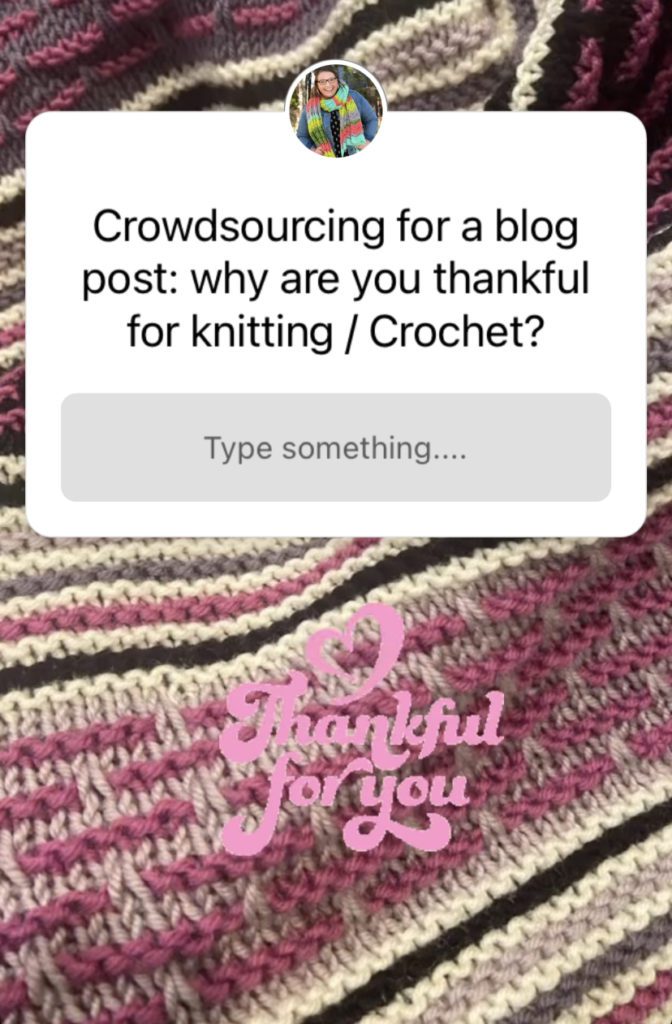
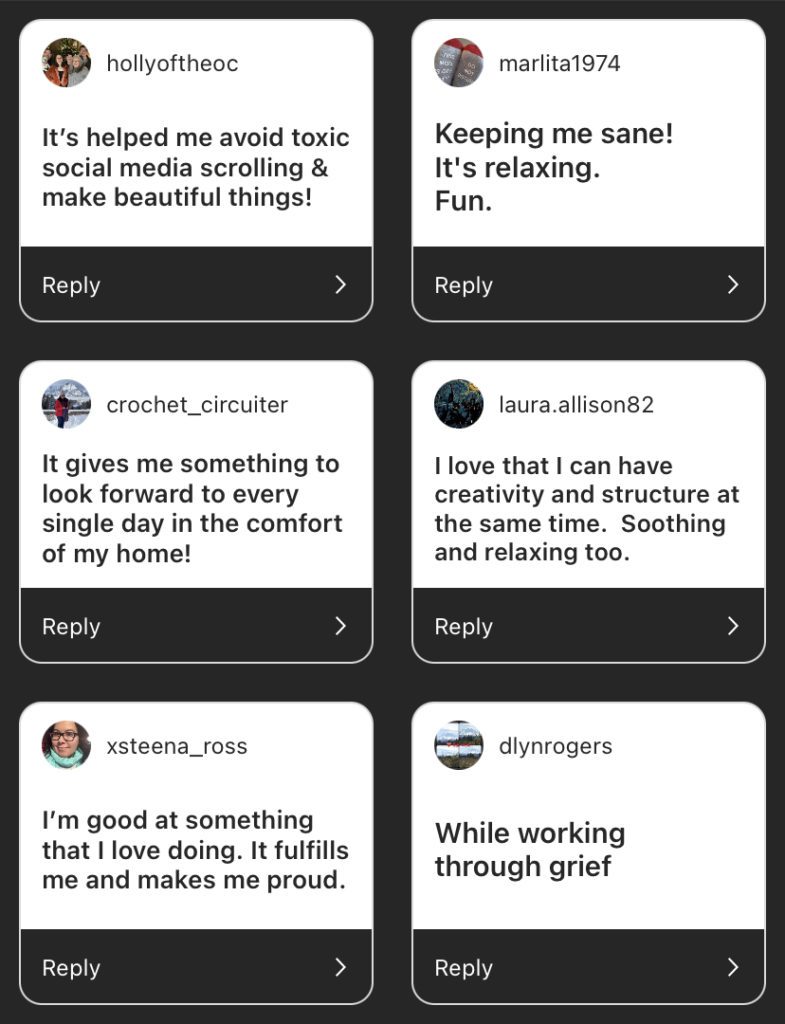
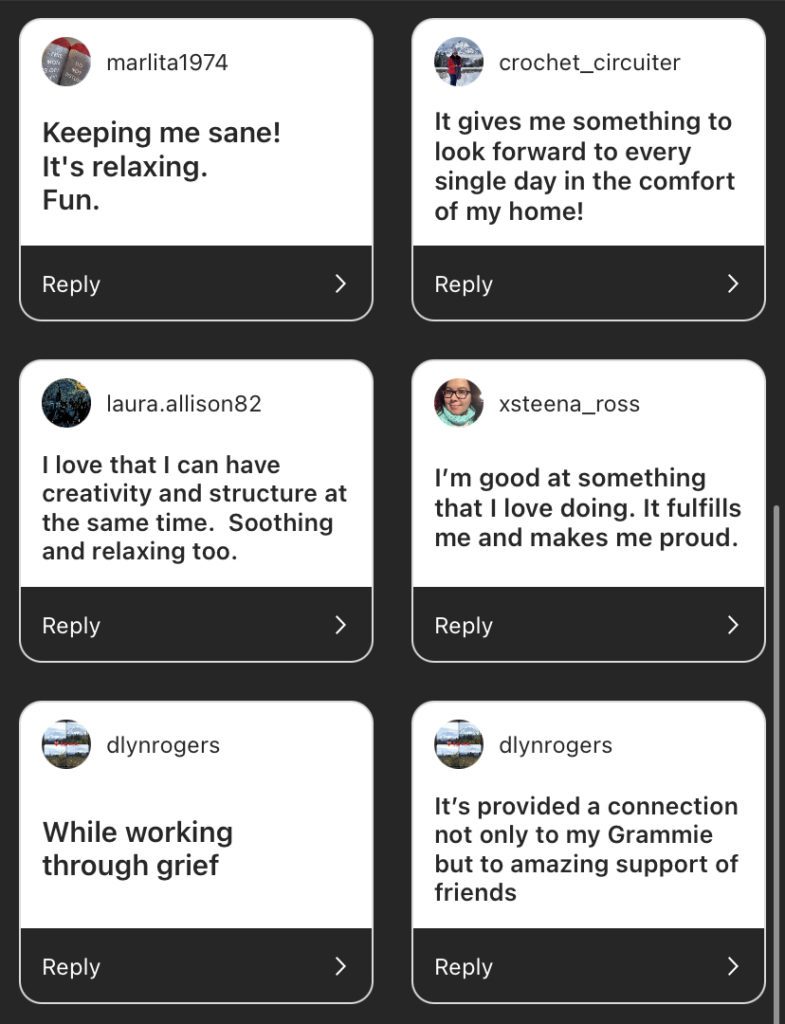
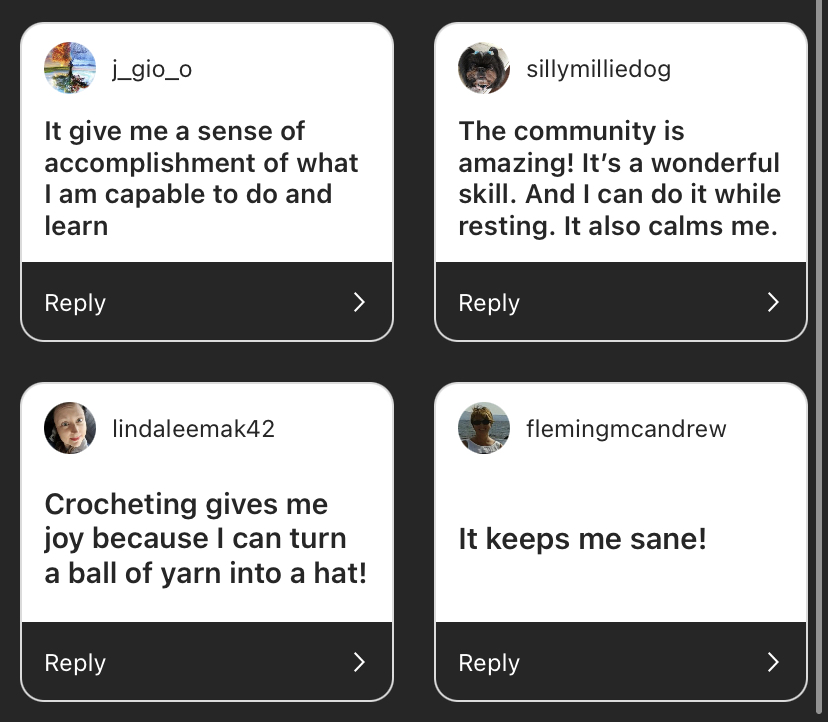
  • 20 Reasons I Am Thankful For Crochet (And Knitting Too!)
  • Olympian Tom Daley Knits and Crochets for Therapy

Frequently Asked Questions

How does knitting function as occupational therapy?

Occupational therapy helps people develop, maintain, or restore skills needed for daily life and meaningful activities. Knitting checks a lot of OT boxes! It develops fine motor skills and hand-eye coordination. It requires following a pattern which exercises cognitive function, memory, and sequencing. The bilateral hand movements promote brain connectivity. The rhythmic, repetitive motion has well-documented calming effects on the nervous system. And the sense of accomplishment from completing a project builds confidence and motivation. Occupational therapists sometimes specifically recommend craft activities for patients recovering from various conditions.

Can knitting help with anxiety and stress?

Research and lived experience both strongly support this! The repetitive hand movements in knitting trigger a relaxation response similar to meditation… slowing heart rate, lowering blood pressure, and reducing cortisol levels. The focus required to follow a pattern creates a mindfulness state that naturally quiets anxious thoughts. Many knitters describe it as their primary stress management tool. Knitting circles (in-person and online communities) also provide social connection, which is powerful for mental health. It’s not therapy in the clinical sense… but knitting has genuine therapeutic benefits for many people.

Is knitting good for people recovering from injury or illness?

It can be! Knitting is used in rehabilitation for people recovering from strokes, brain injuries, and hand/arm surgeries… the fine motor movements support neurological recovery and hand strengthening. For people dealing with chronic illness, knitting provides meaningful activity during periods of limited physical capability. For those managing chronic pain, the absorption of knitting can help shift focus away from pain. Always consult healthcare providers about specific rehabilitation goals, but knitting is generally considered a beneficial and accessible activity for many recovery situations.

Are there specific types of knitting better suited for therapeutic purposes?

Simpler, repetitive patterns work best for therapeutic use because the focus should be on the process and movement rather than complex problem-solving. Garter stitch (knit every row) is wonderfully meditative. Stockinette in the round (knit every round) is rhythmic and calming. Anything with a simple repeat you can memorize and work without constant reference to a pattern. For cognitive benefits, pattern work that requires attention and counting can be deliberately challenging in a good way. The “right” therapeutic knitting depends entirely on the specific person and their goals.

How can I introduce knitting to someone as a therapeutic activity?

Start very simple! Chunky yarn and large needles make the movements slower, more visible, and less demanding of fine motor precision… ideal for someone new to the craft or working through limited dexterity. A garter stitch square is a perfect first project. Short sessions are better than long ones, especially at first. Celebrate small wins and focus on the process rather than the finished product. If the person has specific physical limitations, a knitting OT (yes, there are specialists!) can provide adaptations like needle holders, modified grips, or one-handed techniques.

Filed Under: BiCrafty Bootcamp Learn to Knit, Dibble Dabble Inspiration, Knitting

What Would Frida Do? Applying Frida Kahlo’s Creativity…

May 9, 2021 By admin Leave a Comment

Hey, Kathryn here. I’ve been reading a book this week called “What Would Frida Do: A Guide to Living Boldly” by Arianna Davis. It’s a brief biography of the famous artist. The twist is that the author uses her in-depth research into Frida Kahlo to suggest some life and creativity tips for others. She is very careful to note that we can never know what someone else is thinking, especially an artist as complex as Frida Kahlo. So this is simply her educated interpretation as an author with a deep love for the artist. With that in mind, the book gives some great self-help tips that apply to creativity. And you might apply them to your knitting and crochet to enhance your experience of crafting.

Note: This post contains affiliate links, so I get a percentage of sales made from the links. Your price doesn’t increase. Thanks for the support.

What Would Frida Do: The Book

what would frida do guide to living boldly

What Would Frida Do: A Guide to Living Boldly is a combination biography, art history book, and self-help guide with a little bit of the author’s own memoir tidbits thrown in. The author notes that she’s a feminist woman of color but she is not Mexican, like Frida was. She recognizes that she sees things through her own biased lens. And she does a good job of sharing Frida’s life and explaining why she interprets it as she does through that lens. If you don’t know anything about Frida Kahlo, it’s a good primer but shouldn’t be your only resource. Whether or not you love the artist, she was a bold creative woman whose life lessons might inspire you in many ways.

Frida Might Figure Out What Color Means For You Personally

Knitting and crochet are obviously visual crafts. One of the first thing we do with ay new project is to choose the yarn. While we certain choose it with yarn weight, fiber, and drape in mind, our primary consideration is usually color. The color of a project can completely change the way we experience what we make.

One of the most interesting parts of this book for me was a section from Frida’s diary in which she laid out what she felt different colors meant. Of course, there are tons of resources out there about color theory and the psychology of color. You can do your own research to help you choose colors that inspire a certain mood (craft with yellow, for happiness and joy, for example.)

However, as much as humans are the same, we’re also all unique. How you experience color may differ from your neighbor. You might have associations that trigger certain emotions when you craft with certain colors. So take a cue from What Would Frida Do. Come up with your own list of associations with different colors. Consider this when you knit or crochet. For example, if blue is a color that you associate with sadness, try avoiding it when you’re having a hard time. Or notice when you’re using it a lot as a tool to ask yourself what’s going on for you.

what would Frida do knitting and crochet

Frida’s Color Associations

The author of What Would Frida Do shared the diary entry that she saw in the Museo de Frida in Coyoacan, Mexico. It lays out the deeper meanings that Frida associated with each color. I won’t share them all here, but a few include:

  • Green is associated with “warm and good light.”
  • However, leaf green might remind her of “leaves, sadness, science.”
  • Whereas dark green is the “color of bad news and good business.”

Frida associated navy blue with tenderness and distance. Cobalt blue felt for her like “electricity and purity.”

As you can see, she didn’t have typical associations with each color. Moreover, one color might inspire multiple feelings or thoughts. Additionally, she looked at different hues from a typical basic color psychologist, including reddish purple and greenish yellow on her list.

What do different colors means for you?

Other Tips from What Would Frida Do to Apply to Your Crafting

what would Frida do

Each chapter has a theme: What Would Frida Do about love or confidence, for example. At the end of each chapter the author offers three self-help tips. You’re encouraged to use these as inspiration from Frida for your own creativity and life lessons. Here are a smattering of those tips that might apply to enhancing your experience of knitting and crochet:

Make a statement.

Don’t be afraid to use bold colors, creative techniques, and things that draw attention directly to the items that you knit and crochet.

Keep a journal.

You can use a creativity journal to track your knitting and crochet projects. My book, Hook to Heal, offers both crochet and journal exercises for improving life.

Surround yourself with things that inspire you creatively.

Frida’s house and studio had animals, flowers. fruits, and lots of bright colors, among other things that inspired her. Does your space inspire your crafting? Does it need a brush up?

What’s your signature style?

The author mentions that Frida had a signature look and that you might do the same. This doesn’t only apply to what you wear. You might think about your signature color palette, techniques, or products. How can you alter your crafting so that every time someone sees it, they know its by you?

Celebrate your culture.

Frida was known for celebrating her Mexican roots in her fashion and her art. Are there ways you can use your culture and family history within your knitting and crochet?

Craft handmade gifts for people.

The author notes that Frida always gave personalized gifts to people. In particular, she often painted portraits for others. Use your skills with knitting and crochet to give to others. A handmade yarn item is a special gift indeed.

Use your creative outlet to cope with pain.

Frida Kahlo lived a life of intense, chronic physical pain. Arguably she struggled with mental pain as well. Painting was her outlet. We know that knitting and crochet can be therapeutic. Lean into that.

In a different chapter, the author of What Would Frida Do notes that it’s important to feel your pain, specifically emotional pain. Use your craft to work through it and process it so that it doesn’t get bottled up inside.

Be yourself.

People have tried to box Frida into different categories – surrealist painter, for example. But she defied all categories. She was categorically only herself. Of course, you can use knit and crochet patterns but have fun putting your own stamp on everything you do from color choices to how you photograph your finished pieces for social media. Along with being yourself, the author suggests that you don’t give a hoot what anyone else thinks!

Frida Kahlo Craft Merchandise

Here are a few Frida-related items that you might enjoy if you’re a fan of her work:

Handmade Frida Kahlo Crochet Doll

Note that this is a crochet doll, not the pattern, available through Darn Good Yarn. They also sell reversible Frida Kahlo face masks.

frida crochet doll

Frida Kahlo Project Bag

You’ll find lots of great tote bags on Etsy including this Frida Kahlo bag including this one from ByMrsBye.

frida kahlo project bag

Crochet-Inspired Frida Pillow

Loving this pillow made with fabric that combines a granny square print with Frida.

frida kahlo granny square print pillow

Crochet Little Heroes Book

A Frida Kahlo crochet pattern is included in this book.

crochet little heroes amigurumi book

You Might Also Like:

  • Kvetka of The Creative Hook Shares How Crochet Heals
  • Creative Collaboration: Stitch Story’s Story
  • Why You Should Use That Precious, “Too Nice,” Amazing Luxury Yarn Skein Today

Photos, except book cover and merchandise, via Unsplash

Frequently Asked Questions

Can I really learn about Frida Kahlo from this book to help my crafting?

So here’s the thing… the book “What Would Frida Do: A Guide to Living Boldly” uses Frida Kahlo’s life to offer creativity and life tips. While it’s not strictly a crafting book, the author shares insights that you can totally apply to your knitting and crochet to make your crafting experience even better!

How can Frida’s ideas about color help me pick yarn?

Honestly… Frida had some really unique ideas about what different colors meant to her. The book mentions her diary entries and how colors like green and blue brought up really specific feelings for her. You can totally use this as inspiration to think about what colors mean to *you* personally and how they affect your mood while you’re crafting.

What’s one of the biggest takeaways for crafters from this book?

Yes! One of the biggest things is to “make a statement” with your work. Don’t be shy about using bold colors or trying out fun techniques that really catch the eye. It’s all about letting your unique style shine through in whatever you create!

Is keeping a journal something Frida would do for crafting?

Well… the book suggests keeping a journal, and it’s definitely something that could help your crafting! You can use it to track your projects or even explore your creativity, kind of like Marly’s own book, “Hook to Heal,” which has journaling exercises for crocheters.

Can I really use my crafting to deal with tough emotions, like Frida did?

Absolutely! The book talks about how Frida used painting as an outlet for her pain, and we know that knitting and crochet can be super therapeutic too. So lean into that… use your craft to help you process difficult feelings and emotions instead of bottling them up.

Filed Under: Crochet, Dibble Dabble Inspiration, Knitting

5 Things You Have to Know About Salena Baca’s New Book…

April 30, 2021 By admin Leave a Comment

It’s always exciting to see what Salena Baca is up to. The founder of the American Crochet Association is always working on something new and interesting. Recently she just came out with a new book of crochet tops patterns for beginners. It’s called Crochet Tops: 26 Simple Patterns for First-Time Sweaters, Shrugs, Ponchos, and More. If you’ve always wanted an easy guide to making crochet shirts, then this is a book that you need to put on your bookshelf.

Note: This post contains affiliate links. I receive a portion of sales from those links. Your price doesn’t change at all. Thank you for the support.

crochet tops patterns book

About Salena’s New Book of Crochet Tops Patterns

Here are some of the basic things that you should know about this new book of crochet tops patterns:

  • It’s a skill-building book. If a beginner starts at the beginning and works their way through the book, they’ll steadily grow their crochet skills. If you essentially want a lesson in “how to crochet a shirt” from the ground up then this book will offer you that guide.
  • There are more than two dozen crochet tops patterns in this collection. You’ll find eight crochet ponchos, three cardigans, two vests, two tees, one tank, one shrug, one duster, one blouse, one dolman, one kimono, one pullover, one crop top, and three other tops. In other words, there is a lot of variety.
  • Each crochet pattern is sized for at least three sizes. Some are available in six sizes. There’s an effort towards some inclusivity.
  • These crochet tops patterns are primarily made using worsted weight yarn. However, there are different yarn weights as well including one super bulky and one fingering weight top. The smallest hook sizes is G while the largest hook size is M.

5 Things You Have to Know About This Book

book of crochet tops

We got a chance to interview Salena about this book. Therefore, we were able to get some extra information for you. Here are five things you should know:

1. It Was Inspired by Two Simple Shapes

One of Salena’s previous books is Two Simple Shapes: 26 Crocheted Cardigans, Tops, and Sweaters. It sounds a little bit familiar, right? 26 designs all for tops. So we asked her what’s different about this book. She explained that the new book is for beginners, although any crocheter might enjoy the patterns.

Salena says that she took the feedback she received on Crochet Tops and used it to make this book, which she says could be a precursor to Two Simple Shapes. She adds, “The more I crochet, the more I see how skills, concepts, and designs can be more approachable with some simple skill-building advice and projects!” Therefore, she really wants people to use this book for skill-building. She wants crocheters to see that they truly can make wearable beautiful garments even with simple stitches.

2. She Loves Every Yarn In This Collection

Salena was able to choose only the yarns she loved the most to work with on this collection. It was important to her that the yarn was not just nice to crochet with but would also provide the fit and drape that would make each crochet top look good on different body types. The yarn used in this collection includes Red Heart Colorscape and Red Heart An Italian Story Ombra. Salena also suggests several suitable yarn alternatives for each pattern so that you have options.

3. Salena Likes Top Down, In the Round Top Construction

You’ll have the opportunity to learn a variety of different methods of crocheting tops through this book’s patterns. You’ll find tops made in a few pieces that are seamed together, tops made of crochet motifs, and tops crafted using very simple shapes. The last section of the book is all top-down, in the round crochet tops. Salena loves these as both a designer and a maker because you can easily see if the pattern is shaping out the way that it’s supposed to when you work in this style.

4. It Takes a Lot to Design a Good Crochet Top

The crochet tops patterns in this book make everything so simple for you as the crafter. However, it isn’t easy creating a top that fits nicely and looks good. As already discussed, the yarn choice makes a big difference. Salena explains that she also had to learn a lot about how various stitches, techniques, gauge, and construction methods would change the fit, style, and drape of a piece. She says, “Pairing a yarn and stitch pattern together is crucial, and many times I have to try a few yarn types before I get the right match for a design.” And a little insider designer tip: “When I’m finally ready to write instructions, I find spreadsheets are helpful with grading and double-checking my equations.”

5. Other Recent and Upcoming Crochet Books by Salena

Salena worked on another crochet book that will be out this summer, a collection of crochet market bags. And she’s currently working on the patterns for a brand new skill-building book. Keep your eye out!

Get the Book

Ready to make these crochet tops patterns a part of your personal library and wardrobe? Get the book here.

Crochet Tops Book

See all of the book’s patterns on Ravelry.

You Might Also Like:

  • 2021’s Crochet Books to Buy or Pre-Order Today
  • Let’s Meet Salena Baca
  • Salena Baca Returns to YarnThing Podcast
  • 20 Free Crochet Summer Tops Patterns
  • 30 Free Crochet Summer Tops Patterns
  • 12 Free Crochet Summer Tops

Frequently Asked Questions

Is Salena Baca’s new book good for total beginners?

Yes! Honestly, this book is specifically designed as a skill-building guide for beginners. If you want to learn how to crochet a shirt from the ground up, this book offers that instruction.

How many patterns are in this crochet tops book?

So here’s the thing… there are more than two dozen patterns in this collection! You’ll find a super nice variety, like ponchos, cardigans, vests, tees, tanks, shrugs, and even a few other fun tops.

What kind of yarn does the book use?

Well, the patterns mostly use worsted weight yarn, which is super common and easy to find. But Salena also includes a few options with different yarn weights, like super bulky and fingering weight, and even suggests alternatives for each pattern so you have choices!

Does Salena like crocheting tops a certain way?

She sure does! Honestly, Salena loves designing and making top-down, in-the-round crochet tops. She says it’s the best way to easily see if the shaping is working out just right as you go!

What’s different about this book compared to Salena’s other “Two Simple Shapes” book?

So here’s the thing… this new book is specifically geared towards beginners, even though anyone could enjoy the patterns. Salena took feedback from her “Two Simple Shapes” book to make this one even more approachable for skill-building and learning how to make beautiful garments with simple stitches!

Filed Under: Book Reviews, Crochet

Kvetka of The Creative Hook Shares How Crochet Heals

March 25, 2021 By admin Leave a Comment

This interview by Kathryn Vercillo originally appeared in a 2017 issue of Happily Hooked digital magazine. It’s been updated with new links to share here on the site. In it, Kvetka of The Creative Hook crochet blog shares how crochet heals her and others.

crochet heals interview with kvetka of the creative hook

Who is Kvetka?

Kvetka of The Creative Hook in the UK learned to crochet as a child then resumed again when doing her degree work, ultimately leading her to a degree and career in Arts Health, which incorporates her understanding of how crochet heals us..

She loves working with color and texture, incorporating their healing features into her own life. She says, “Crochet as a technique creates a feeling of protection, something familiar which is the very reason for choosing this process.”

What are your fondest memories of learning to crochet?

I was taught to crochet by my grandmother when I was maybe 10 years old. I made some white flowers as a practice run and was very pleased with them. Memories are funny; I remember that they were crocheted out of white wool, but they may have actually been made from cotton, because my grandmother only used cotton for crochet. At that time wool was only ever used for knitting. I still remember those flowers, though, and the memory still makes me happy. 

kvetka crochet interview

You returned to school and crochet played a part in that. Can you tell us more about this?

I took up crochet again when I was studying for my BA in Visual Arts and then later whilst studying for my MA in Arts Health. The satisfaction of both studying and crafting have been helpful for me. The fact that I appreciate the craft’s health benefits, which I have felt and recognized myself, has led me to my change of career path – to working in Arts Health. 

One important thing in terms of how crochet heals in my life is that crochet has definitely been a conversation starter. Crochet can be a very easy and spontaneous way to connect with someone over a common interest. 

I was able to discover some interesting facts about crochet when preparing and researching for my degree show. For example, at least in Slovakia, crochet started as a very utilitarian craft for fishermen to make their fishing nets, and was only later taken up by women and used for making lace/ doilies. I have also discovered some interesting facts about some of my family members when I organized a family crochet project, results of which were also part of my Degree Show in 2008. So, crochet has come together with my education in both personal and professional ways.

You mentioned the craft’s benefits and that crochet heals; what benefits has crochet brought to your life?

Crochet has helped me to work through difficult decisions, big life decisions, by occupying my hands with a tactile material. I worry a lot and sometimes struggle to stop anxiety-inducing thoughts. I suspect that sometimes I suffer from mild depression, even though I have never been diagnosed. Crochet heals that a bit.

In the past, I have used other techniques to help, like writing lists, drawing, dancing and creative writing, which I still utilize, however, crochet has been one of the most helpful coping mechanisms when it comes to stresses and anxieties. Utilizing the repetition and rhythm of the process of crochet, I have been able to come to conclusions and explore different options for solving problems. It’s truly amazing how crochet heals.

I feel sure that I would not have been able to see these same solutions if the process was limited to ruminating on the same subject; by not concentrating on the issue, the solution can present itself in time, intuitively discovered as opposed to cognitively reasoned. Crochet offers this. I have used this in the past during very difficult times, and I still use crochet in this way to help with distraction for problem solving.

Crochet also offers a great form of focus. I have created a mindfulness / awareness practice with the help of crochet.

Read even more about the benefits of crochet on this page of Kvetka’s website.

mindfulness crochet interview with kvetka

What type of crochet projects offer you the most personal benefit?

The choice of project very much depends on my mood. That is why I love the extent to which the crochet projects can vary.  There always seem to be a story behind my pieces, which as important as the piece, if not more important for me, than the piece itself.

Although I have gone through a phase where I only used white yarn, I use a lot of color these days. I LOVE color, so I use a lot of bright colors, which makes me smile every time I look at a project, in progress or after completion. 

Additionally, I love the tactile nature of crochet and have worked a lot with 3d stitches. I have made a blanket which is kind of a memory sampler, which includes all my favorite stitches, reminding me of specific projects. It also includes some other stitches that were new to me, ones I have always wanted to try. 

See some recent makes here.

Do you have a preference for small or large projects?

Sometimes I feel like crocheting small items for people as presents, which I hope will bring them joy, but then sometimes I prefer to work on a large project where I do not have to make many decisions along the way and can just keep going. Other times I like to make small squares or flowers that I later bring together to create a final piece, but which at the time are done quite quickly, and therefore I get the satisfaction of a finished piece quite quickly even though it’s ultimately for a large project. 

Read the story of Kvetka’s misshapen blanket.

crochet heals kvetka of the creative hook

What crochet project are you most proud of?

The blanket that I had made for my mother’s milestone birthday, where I organized my family members once again to each crochet something for me that I was able to make into a present for her that came from all of us. This gift was a surprise and it turned out well, although my favorite part was the planning, organizing and connecting of the pieces. The process seems to be more valuable to me than the finished piece, which is why the use of the process in Arts Health fascinates me also.  

Have you ever seen how crochet heals other people?

I have facilitated and attended crochet groups within various mental health facilities, where the mindfulness of crochet is explored. I’ve seen crochet used as a way to focus and ground an individual struggling with a variety of mental health ailments by taking part in crochet as an embodied activity, and I have also seen crochet used as a way of promoting social inclusion.

What is the most important thing you would want to tell someone who is just learning to crochet?

Have fun. Discover the things you want to do at your own pace. I have not come across anything in life so varied as crochet; it has such a rich history, and variety of use that is truly inspiring. What I love most about crochet is that you do not have to have a plan to start with. You can accomplish so much with just one stitch. It is easy to learn, and even easier to do. Patterns are great but do not worry about them in excess.

When I teach, I tend to go through the stitches, but I always offer options on how to develop each stitch. I like to emphasize that crochet can be an amazing craft and a very freeing and mindful experience. Because it is so versatile, as long as you understand the basics, you are fine. And also, crochet is so very easy to undo if you make a mistake. So if you are unsure if you are reading a pattern correctly, experiment some and try it in different ways, see how it could be done so that you are happy with the result!

And last but not least: Keep going!

mindfulness crochet interview

What would you say you are personally best at in crochet?

Playing with patterns. Reading them. Understanding them. Changing them. I can adapt patterns to make what I need to be made. Like any skill, this can be a nuisance sometimes; if I don’t read the pattern properly and make presumptions, and then later on realize that I have made a mistake and have to undo a lot of stitches, then I’ve caused myself a hassle. Overall it’s a great skill though.

What is your favorite crochet quote or saying?

There are a few actually:

  • A lady never reveals the size of her yarn stash.
  • Crochet is cheaper than therapy.
  • Crochet is not a hobby, it’s a post-apocalyptic life skill.

Follow Kvetka on Facebook.

Follow her on Instagram.

You Might Also Like:

  • Making with Meaning Crochet Book Review
  • 20 Reasons I Am Thankful for Crochet and Knitting
  • 8 Ways to Celebrate I Love Yarn Day
  • Knitting as Occupational Therapy
  • Olympian Tom Daley Knits and Crochets for Therapy

Frequently Asked Questions

What’s Kvetka’s story with crochet?

So here’s the thing… Kvetka learned crochet as a kid from her grandma and then picked it up again for her degrees. She actually went on to get a career in Arts Health because she saw how much crochet could heal!

How does crochet help with anxiety?

Honestly… Kvetka uses crochet to help with her worries and anxiety. The repetition and rhythm of crocheting really help her hands stay busy and allow her mind to find solutions to problems without just overthinking them.

What kind of crochet projects does Kvetka like best?

Yes! Kvetka loves how versatile crochet projects are and how they can match her mood. She really enjoys working with lots of bright colors and loves the tactile feel of 3D stitches.

What’s Kvetka’s advice for new crocheters?

Oh, this is a good one! Kvetka says to just have fun and go at your own pace. She loves that crochet is so varied and inspiring, and that you can do so much with just one stitch!

Has Kvetka seen crochet heal others?

Absolutely! She’s facilitated crochet groups in mental health facilities and seen how crochet can help people focus and feel grounded. It’s also a wonderful way to connect with others!

Filed Under: Crochet

Making with Meaning Crochet Book Review

March 17, 2021 By admin Leave a Comment

Hi everyone, Marly’s blog content director Kathryn here. A few months ago I reviewed Jessica Carey’s book Making with Meaning for Happily Hooked digital magazine. I also interviewed the author about how crochet heals her. Jessica recently announced some exciting news: she’ll be opening a new retail yarn store in Oregon soon! In honor and support of that, I wanted to share that book review with you today. I also want to let you know where you can read the interview.

Making with Meaning by The Hook Nook

Making with Meaning: Book Review

Making with Meaning is truly a special book. It’s got 150+ pages of interesting information for crocheters. It’s filled with 20 different meditative crochet projects, so if you’re looking for a book with some terrific patterns, then you won’t be disappointed.

But more than that, these patterns are complimented by essays and thoughts about how crochet helps us to relax, de-stress, and improve our well-being. It’s these words that really bring the meaning of the work to life.

“The more I crochet, the bigger the gift I am able to give myself, it seems.” – From the introduction to Making with Meaning 

Each of the twenty crochet patterns in this book has a very simple pattern repeat. This allows you to easily learn the pattern so that you can stitch meditatively, mindfully, and in such a way that you make space for the many benefits of crochet that Jessica addresses in this book.

Jessica’s Personable Tone Makes This Book Relatable

Jessica speaks to the reader in a way that immediately feels warm and engaging. Her tone flows easily from inquiring therapist to supportive friend to a cheerleader for crafting through the hard times. You’ll find this even in the pattern descriptions but particularly in the book’s introduction and other writings. If you love reading as much as you love crochet, then you’ll find settling down with this book to be comforting, relaxing, and yes, therapeutic.

A Very Special Reason to Learn How to Crochet

Jessica shares some very personal stuff in Making with Meaning, including that there was abuse and trauma in her childhood. When she became a mother, she wanted to make sure to do things differently with her own children, in ways both big and small. One thing she wanted was to give her children special handmade items that they would always be able to take with them, knowing that their mama infused them with care and love – something she didn’t have from her own childhood. And so, when her daughter was almost one, Jessica decided that she would learn how to crochet.

the hook nook in happily hooked magazine

Crochet as Life Digestion

My personal favorite quote from the introduction, which explains so much of what makes crochet healing for others is:

“As I work each stitch, I get lost in my thoughts, and I love to use this time to think about different things in my life, to explore potential outcomes to different issues, to piece together meaning in an unfortunate situation, to spend time in prayer, and to sit in the gratefulness that I have for all the lessons I’ve learned and the experiences I’ve had. It’s a perfect ‘life digestion’ situation.”

We all need ways to “digest life.” There is so much stuff swirling around in our minds all of the time, from the mental To Do lists to the traumas of the past to anxiety about the future. We need ways to come back to the present moment, and meditative crochet does that for us. The feel of the yarn in our hands, the rhythmic motion of the crochet hook moving back and forth, it soothes and calms us and settles the mind. 

At the same time, it’s not as though our thoughts disappear. But it’s almost as if they fade into the background a little, sorting themselves out quietly while we craft. We digest them as we make something with our hands. Sometimes, we don’t even realize that we’re processing a problem as we crochet, and yet, at the end of the project, we discover we have a solution.

Other Benefits of Crochet

Obviously, this entire book is a love letter to crochet. But here are some of the specific benefits that Jessica cites throughout the book:

  • Crochet enhances the quality of life and can add deeper meaning to the day-to-day.
  • Creating family heirlooms or special gifts for loved ones allows you to share love.
  • Accomplishing crochet goals helps build self-worth.
  • Connecting with others through crochet builds community.
  • Crochet serves as a form of meditation, making a calm space in your mind.
  • You can indulge in “something intangible about intentional coziness” that is immensely comforting and healing. 

Plus, for Jess, crochet has allowed her to create a business that she absolutely loves, plus to realize her lifelong dream of writing a book.

Jessica Carey book review

Five Key Themes and Patterns to Support Them

Making with Meaning is divided into five key themes, each of which has projects that complement it. You see, these are not just crochet patterns, even though there are patterns that will give you lovely finished projects. They are ideas and projects for processing different life issues, for giving yourself space to be with your thoughts and feelings, for digging deeper into your own soul so that you can excavate the richness of life, and for bringing all of that back outwards in order to impact the world around you through the beauty of your crafting. 

Gratefulness and Motivation

This is about using crochet to find ways to practice gratitude, which can give you the motivation to see the sunnier side of life, even during very tough times. Jessica also talks about how so often we want things in life to be other than what they are but if we practice gratitude for what we do have, it can make us less interested in the “what ifs” and “somedays” and more grounded in the beauty of the present moment. It can also motivate us to find ways to adapt our lives to have those things we want, without taking for granted all that we already do have.

Jessica emphasizes that even as we set and meet goals, it’s important to pause and see just how far we’ve already come – to be grateful for the journey. We can use crochet in all aspects of the journey – we can set and meet crochet goals, looking to the future while also taking pride in what we’ve already accomplished. And we can pause in the moment of making and feel gratitude for the process itself. Jessica suggests using intentional prayer or even just speaking out loud what you’re grateful for as you stitch.

Fun fact: Olympian Tom Daley Knits and Crochets for Therapy

Perspective and Mindfulness

Jessica explores how we can take on the challenging of broadening our own perspectives. She shares some of her own experiences of having to learn the hard way that her way wasn’t the “right” or “only” way but also that this doesn’t make her “bad” or “wrong” … that there are many perspectives among people and that we benefit when we see another point of view. 

Jessica also introduces the idea of mindfulness practice, bringing awareness to exactly what’s happening in the present moment. This honors your own perspective and experience while making way for others to be as they are. She writes, “As Makers, we have the ability to create something new out of our materials. We are able to bring an idea to life and watch our dream become reality.” By sinking into our own experience and expressing it, we put new perspectives out into the world for others to learn from. And by opening our mind to others, we make our own worlds bigger.

Intention

Jessica moves here from mindfulness (awareness of the present moment) to intention (consciously choosing our action in the moment.) It’s unfortunately easy to go about our days on autopilot. However, each day, we have the opportunity to set and meet intentions. In doing so, we can create the lives we truly want to live. She encourages crafters to use the patterns in this section of the book to really focus and crochet with intention, to understand not just what you’re making but why and how you feel about it as you do.

Love

Jessica says, “Through crochet, we are able to share ourselves in a special and thoughtful way. We are able to use our time, our talent, our sacrifices for a specific person.” As we learned already, she learned to crochet so that she could craft something with love for her daughter. Every single time that we craft for others, it’s an opportunity to express our love. And when we take the time to craft for ourselves, there is love in that as well; we model crafting as self-care to those that we love. The crochet patterns in this section are all stuffed animals, which you can make as a huggable, squeezable, tangible reminder of your love for someone else.  

Acceptance and Forgiveness

We don’t forgive others so much for them as we do for ourselves. We find ways to let go of hurts so that we can live more fully. After all, we don’t have control over the things that happen to us. However, we do have some control over our reactions and how we choose to respond. This chapter, which ends the book, is all about crocheting things for yourself, to nurture and care for yourself as you work through the difficult emotions surrounding “your pain points and areas in your life where you could begin to venture into acceptance and forgiveness.” For example, there’s the Halo Blanket, an extra-soft, fuzzy, hug-in-the-form-of-a-blanket that you can crochet for yourself, enjoying the process as much as the final product.

Each section begins with an essay on the theme. And each essay ends with a challenge, giving you a good sense of how to utilize the patterns in that section to better understand and integrate the theme.

book review about meditative crochet

And a Few Basics

As you can tell, what I think is important about this crochet book is the “meaning” part of “Making with Meaning.” It’s so rich and unique and different from a regular crochet pattern book. But I don’t want to give you the false impression that the patterns aren’t just as important. Jessica has done a great job of the “making” part of the book, too. Here are some highlights:

  • An “about crochet” section that shares some great information about the history of crochet, the materials of the craft, etc.
  • Step-by-step photo-rich instructions for basic crochet stitches; beginners can use this book to learn how to crochet
  • Easy-to-find, affordable yarn choices for each project
  • All of the projects are 1-2 colors (or use a variegated yarn) so you don’t have to worry about color changes
  • Clear written patterns with beautiful photos showing the finished item and details
  • Projects are often made with large crochet hooks (many are size K) so they work up quickly
  • Variety in projects from winter beanies to baby blankets, market bags to stuffed animals; there’s a little bit of something for everyone.

In summary, this is a great crochet book with twenty fun, simple, meditative patterns that are perfect to make for yourself or to give as gifts. But more than that, this is a book filled with thoughts and inspiration from a heartfelt crafter who makes herself vulnerable in order to inspire you to find new ways to use crochet to get in touch with yourself and enjoy a deeper, richer meaning from life.

Learn More About How Jessica Heals Through Crochet

the hook nook on yarn thing podcast

This crochet book review originally appeared in the December 2020 issue of Happily Hooked digital magazine. It was accompanied by an interview with Jess about how crochet heals and benefits her. You can read the interview over at The Hook Nook blog.

Be sure to subscribe to Happily Hooked magazine to read Kathryn’s monthly Crochet Heals column and other book reviews and feature articles about crochet designers, authors, and artists.

Ready to learn more about Jessica Carey right now? She was on The Yarn Thing Podcast last year. Go have a listen! And Happily Hooked has also been on the podcast so be sure to check that out as well.

Frequently Asked Questions

What’s this book “Making with Meaning” all about?

Oh, this book is super special! It’s got over 150 pages packed with all sorts of goodness for us crocheters. You’ll find 20 lovely projects, but what really makes it shine are the essays and thoughts about how crochet helps us relax, de-stress, and just feel better…

Is this book good for beginners who are just learning to crochet?

Honestly, yes! The book has a section with step-by-step instructions and pictures for basic crochet stitches, so if you’re brand new, you can totally learn here. Plus, the patterns themselves are designed with simple repeats, which is perfect for getting the hang of things while you stitch meditatively.

What kind of benefits does crocheting give you according to this book?

So many wonderful things! The book talks about how crochet can make your life richer, help you share love by making gifts, build your self-worth, connect you with others, act as a form of meditation for a calm mind, and just bring this cozy, comforting, healing feeling…

Are the patterns in “Making with Meaning” really complicated?

Nope! Jessica made sure each pattern has a really simple repeat, so you can totally stitch away without having to think too hard. This lets you focus on the meditative side of crochet and really soak in all those amazing benefits she talks about.

Besides the patterns, what else makes this book so great?

Well, the “meaning” part of the title is HUGE… It’s filled with Jessica’s personal stories and insights into how crochet has healed her, which makes it so relatable. It’s less like a regular pattern book and more like a heartfelt chat with a crafting friend about how our yarny hobby can truly enrich our lives.

Filed Under: Book Reviews, Crochet

  • « Previous Page
  • 1
  • …
  • 9
  • 10
  • 11
  • 12
  • 13
  • …
  • 151
  • Next Page »

Let's Be Social

Join the Marly's Minions Facebook group to share, ask questions, or chat about all of your yarn related crafts!

Join the group
Cartoon of a smiling woman with brown hair in a bun, glasses, black jacket and green shirt, waving next to large "hi" text.

Quick Links

The Pattern Shop

Our Free Patterns

Blog

Marly Bird House

Learn to Knit & Crochet

About

Giveaway Terms and Privacy Notice

Find Us Everywhere

Join the Newsletter

YouTube Channel

Marly's Minions FB Group

Etsy Store

Ravelry Store


AN ELITE CAFEMEDIA HOME/DIY PUBLISHER

Information from your device can be used to personalize your ad experience. Do not sell or share my personal information.

Privacy Policy   Terms   Marly Bird Legal Documents Copyright © 2026