Search
Close
  • The Pattern Shop
  • Our Free Patterns
    • Browse All Our Free Patterns
    • Our Free Knitting Patterns
    • Our Free Crochet Patterns
  • Blog
    • All Blog Posts
    • All Free Patterns
    • Dibble Dabble Inspiration
    • Giveaways
    • Make-Alongs
    • Product Reviews
    • Roundups
    • Tips, Tricks, Techniques for Knitting and Crochet
Stylized bird with pink and gray swirling tail above elegant “Marly” text, logo for crochet accessories and home decor.
  • Marly Bird House
  • Learn to Knit & Crochet
    • Newbie? Start Here
    • Video Tutorials
    • Knitting Definitions
    • Crochet Definitions
    • Common Techniques
    • Size Charts for Knitting and Crochet Projects
  • About
×
  • The Pattern Shop
  • Free Patterns
  • Blog
  • Marly Bird House
  • Learn to Knit & Crochet
    • Newbie? Start Here
    • Video Tutorials
    • Knitting Definitions
    • Crochet Definitions
    • Common Techniques
    • Size Charts for Knitting and Crochet Projects
  • About
Stylized bird with pink and gray swirling tail above elegant “Marly” text, logo for crochet accessories and home decor.
Search
Close

New Patterns NOW Available in Ad-Free PDF! Check out The Pattern Shop

Reminder: Machines Can’t Crochet

March 17, 2022 By Marly Bird Leave a Comment

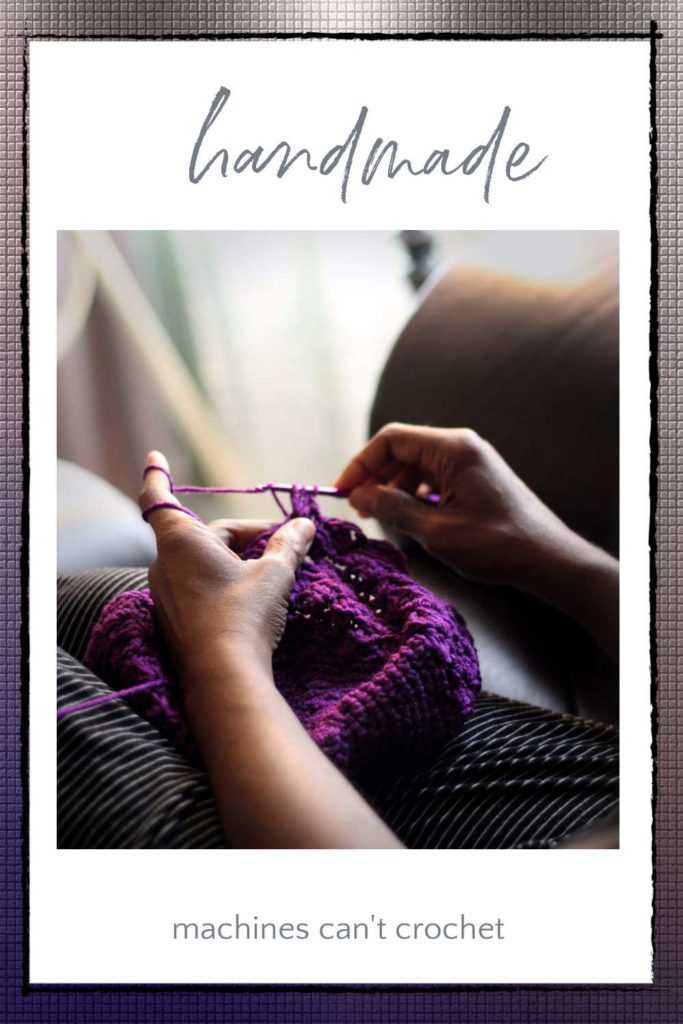
Did you know that there are machines to replicate knitting and weaving, however machines can't crochet? It's due to the unique nature of the way that you build one loop upon the other in crochet. As a result, if you see real crochet in the store, then it's been crafted by hand. That fact has come to the attention of the online crafting world recently, starting with the TikTok Trend questioning the low price of a Target crochet sweater.

machines can't crochet

The Crochet You See In The Store

If you shop in a store like Target (or anywhere else that the clothing items sold are produced in bulk), then the crochet you see is one of two things:

It's Not Real Crochet

Sometimes you see items advertised as crochet. However, when you look closer, you realize it's not true crochet. It's crochet-like lace that's been created by a machine. As a crafter, this may or may not bother you. It's a personal feeling – some people like that there's affordable crochet-like fabric out there and others hate that it's not true crochet.

Or It's Made By Hand

Since machines can't crochet (learn more about this here), the other option is that the item was made by hand. Someone, somewhere, put in the hours to crochet that item with hook and yarn.

The Target Crochet Sweater Controversy

TikTok went wild last month pointing out how a Target crochet sweater at a low price point likely means that someone isn't getting fair pay for their work. This made the news and other social media headlines and has sparked an important conversations about labor practices in the fast fashion industry.

This is something we've discussed here on the Marly Bird blog before. In fact, we talk about it annually when Dressember comes around, offering a way for craftivism to raise awareness about human trafficking in the fast fashion industry.

This post isn't about beating up on Target. It's about the following important issues:

  • Remembering that machines can't crochet so someone's hard work went into that sweater. Knowing that and caring about who did that work.
  • Raising awareness about how women in general working in the fashion labor industry often don't get paid a fair wage.
  • Understanding that this also relates to how knitters and crocheters do (or don't) get fairly compensated for their work. When you see a crocheted sweater at a craft fair for $150, realize that even this probably means a lot of low pay hours went into creating that item. It's a better rate for the crafter than the $30 fast fashion alternative, but it's still unfair.
  • Promoting the work of crafters, especially women and people of color. The more we promote and support the value of handcrafting, the more likely society is to shift towards appreciation of these arts.
  • Learning how to crochet yourself that sweater might be a better use of your time and money than simply purchasing it at the store.

What Is Fair Trade Crochet?

There are Fair Trade companies that work with crafters in other countries to produce handmade clothing, accessories, home decor, etc. Each of these companies commits to providing a fair living wage to their employees. Often, they share the name of the person who handcrafted your item along with a little bit about their story. They may provide education, small business growth opportunities, a commitment to environmentally-friendly practices and other things as well.

If you want to ethically source crochet clothing, then your best bet is to buy it directly from someone you know how makes it by hand (since machines can't crochet!) The next best bet is to work with a Fair Trade Crochet business. Remember, however, that any company can set up a website. Therefore, it's best to do a deep dive into the company's background. Try to ascertain if they really practice what they say they practice.

What are your thoughts on the Target crochet sweater controversy?

You Might Also Like:

The Target crochet sweater was a granny square cardigan. Love granny squares? Here are some of our favorite related roundups:

  • Granny Square Crochet Books
  • 44 Free Crochet and Knit Squares Projects
  • 90+ Free Granny Square Patterns

Frequently Asked Questions

Is it true that machines can't crochet?

Yes! Unlike knitting (which can be mechanized through knitting machines), crochet requires the hook to be inserted and manipulated through stitches in three dimensions… something current industrial technology genuinely cannot replicate. Every single crochet item for sale anywhere in the world was made by a human hand. This isn't just a fun fact… it's the entire reason handmade crochet has inherent value that mass-produced items cannot match. When you give someone a crocheted item, you're literally giving them human time and skill that cannot be automated.

Why can machines knit but not crochet?

Knitting machines work by having loops transferred between needles in a sequential, predictable way… the mechanics can be automated. Crochet requires inserting a hook through a specific stitch, wrapping yarn in a specific direction, and pulling it through in a specific way… and this manipulation changes for every type of stitch. The three-dimensional nature of crochet hook movement and the variety of ways stitches can be formed make it extraordinarily difficult to mechanize. Researchers have tried! But as of today, crochet remains exclusively a human craft.

What does this mean for the value of handmade crochet?

It means something profound! Every crocheted item you see… in stores, on Etsy, in someone's home… was made by a human. When pricing your work or valuing someone else's, remember that there is no factory equivalent. Your time and skill created something that could not exist without you specifically making it. Handmade crochet isn't just “made by hand”… it's only made by hand. That's not a limitation… it's what makes it special. A handmade crochet item is by definition unique and human-made in a way most crafted goods are not.

Does this affect how I should price handmade crochet items?

Absolutely! The fact that crochet cannot be mass-produced means your work has no direct factory equivalent… there's no sweatshop alternative undercutting your price on the same product. Understanding this helps with pricing confidence. Your handmade crochet has value precisely because it requires your specific human time and skill. Pricing at the cost of materials alone dramatically undervalues that. Research what skilled handmade labor is worth, factor in materials, and price with confidence knowing that your work truly cannot be replicated by any machine.

Does the uniqueness of crochet have any implications for AI and crafting?

It's a fascinating intersection! AI can generate crochet patterns (written instructions) but cannot crochet those patterns into physical fabric. The making is still entirely human. AI can assist with design, troubleshooting, and inspiration… but the hook, the yarn, the stitch, and the time remain yours. In an age where AI is automating many skilled tasks, crochet is a reminder that some human skills are genuinely irreplaceable not because of lack of effort but because of fundamental physical constraints. Crochet is one of the most enduringly human crafts precisely because of this limitation.

Filed Under: Crochet, Tips, Tricks, Techniques for Knitting and Crochet, Uncategorized

Wonderfluff Yarn

March 14, 2022 By Marly Bird Leave a Comment

It's always fun to try a new yarn. However, sometimes people are a little worried about doing that, too. After all, you invest good money in your yarn. Even affordable yarn still costs cash. Moreover, you invest your time in using it. So, if you've never tried a certain yarn before, you might put off trying it because you don't want to take the risk. Well, the Marly Bird team has been trying out Wonderfluff Yarn recently, and we have to share that we really like it. Get it here.

Disclosure: This post contains affiliate links. Your price isn’t affected but I receive commission from sales off of those links. THANKS FOR THE SUPPORT.

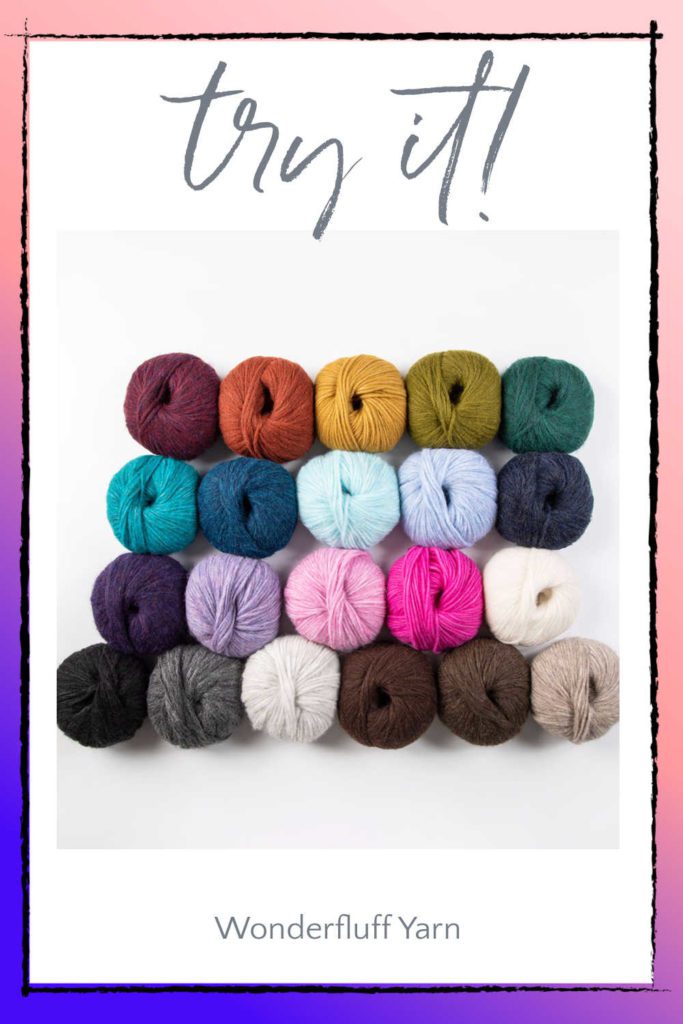
wonderfluff yarn

What Is Wonderfluff Yarn?

Wonderfluff is a bulky yet lightweight yarn. It's super soft, made from natural animal fibers. However, it also has nylon for stretch and durability. It comes in nearly two dozen beautiful colors. You get 142 yards per 50g at a cost of $8.99 currently on the WeCrochet site. Therefore, although it's not the cheapest yarn on the market, it's an affordable yarn that gives you good bang for your buck.

If you look at the description on WeCrochet, you'll see that it begins, “Softer than a kitten, fluffier than a cloud.” That might sound like an exaggeration but the point comes across – this feel like a luxury yarn. It's a delight in the hands as you knit or crochet.

Great Stitch Definition for a Fluffy Yarn

As team member Cryssi mentioned recently in one of our BiCrafty Bootcamp Live Videos, this yarn has a lot of halo. Halo is basically the amount of fluff that you see when you look at the yarn. Sometimes people don't want to work with yarn like this. After all, it can be an indication of potential pilling. It's also usually not great for stitch definition. However, as Cryssi also pointed out, Wonderfluff Yarn has surprisingly great stitch definition for a fluffy yarn.

This is due to the blend of fibers. This yarn is 70% baby alpaca and 7% soft merino wool. That's where all that kitten softness comes in. However, it's got nylon for the rest of it. More than that, WeCrochet explains that the animal “fibers are blown into and caught in a lightweight tube of nylon mesh.” As a result, you get great stitch definition. It's easy to work with. And yet it's soft. It's uniquely well-made yarn.

Alpaca Yarn That's Not Itchy

Marly never really knows if she's going to enjoy working with alpaca yarn or not. More often that not, she's allergic to it. However, she's had no problems at all working with this yarn. She's also been able to comfortably wear what she's crafted with it. So, if you tend to have problems with the itchiness of animal fibers, it might still be worth giving this yarn a try.

Crochet Hat with Wonderfluff Yarn

We used Wonderfluff Yarn to make a crochet top down hat with the BiCrafty Bootcampers. You'll use 1-2 balls of the yarn depending on your hat size. It uses simple stitches and easy construction so that you can work it up quickly. For the hat, we recommend a size K crochet hook. That said, Wonderfluff is unique as a bulky yarn that's still really light, so you can actually use a range of different hook sizes when working with it for other projects. Have fun playing with it!

Get The Yarn

Get Wonderfluff Yarn over at WeCrochet.

Wonderfluff Ombre

This wonderful yarn also comes in an ombre version! This is a 100 gram cake and there are ten different ombre colorways. Check it out. In fact, it's one of the yarn suggestions we gave for the knitting option of Turkey Trot 2021.

You Might Also Like:

  • Yarn Weight Chart and Recommended Yarns for Each Weight
  • 20 Best Super Bulky and Jumbo Yarn Options
  • 5 Eco-Friendly Yarn Options

Frequently Asked Questions

Is Wonderfluff yarn really soft?

Honestly… yes! It's described as “softer than a kitten, fluffier than a cloud.” It feels like a luxury yarn and is a delight to work with.

Does this fluffy yarn have good stitch definition?

So here's the thing… even though it has a lot of fluff and halo, Wonderfluff actually has surprisingly great stitch definition for a fluffy yarn. The blend of fibers and how they're constructed into a nylon tube really helps with that.

I'm usually allergic to alpaca… can I still use this yarn?

Yes! Marly herself often has issues with alpaca yarn being itchy, but she had no problems with this one at all. Plus, she could even wear the finished project comfortably, so it might be worth a try for you too!

How much yarn do I need for the crochet hat mentioned?

You'll need about 1-2 balls of Wonderfluff yarn for the crochet top-down hat. It uses simple stitches and easy construction, so you can whip it up pretty quickly!

Does this yarn come in other versions?

Oh, absolutely! There's also a Wonderfluff Ombre version that comes in 100-gram cakes with ten different colorways. It's super pretty!

Filed Under: Product Reviews, Yarn Review

Crochet Waistcoat Stitch

March 12, 2022 By Marly Bird Leave a Comment

(BiCrafty Bootcamp: Beginner Crochet Lessons for Knitters: Lesson 12)

Welcome back to BiCrafty Bootcamp: Beginner Crochet Lessons for Knitters. Last week, you had the excellent opportunity to work on a quick crochet hat project. This week, we're embarking on a slightly larger project. We're going to make a crochet bag using beautiful colorwork. Before we actually get into the pattern (next week), we need to learn the basics of the crochet stitch techniques that we use in the design. So, this week, in particular, you're going to learn the crochet waistcoat stitch. You might also see this called the Split Single Crochet Stitch (splsc).

BiCrafty-Bootcamp-Crochet-landing-copy - crochet waistcoat stitch

Learning New Crochet Colorwork Techniques This Week

Just to clarify, this week we'll learn new techniques. Then, next week, you'll get the actual crochet pattern. I created a crochet pattern recently for Yarnspirations that uses the techniques we're working with for the bag. Therefore, in this week's video lesson, I'll show you how to work these techniques using that pattern.

And, of course, this means that you can crochet that pattern for fun if you like. Note, however, that we aren't working on these crochet patterns in this week's lesson. Instead, we're using the colorful crochet charts in these patterns to learn the techniques we need to work on our crochet bag. So, you'll see the pattern, but we'll scroll down to the colorwork chart to use that instead of the written instructions. This week's written instructions are below!

The Crochet Pattern In This Week's Lesson

Therefore, in the video, you'll see me working on a crochet hat and mittens pattern set called the Shannon Crochet Set. The hat and mittens are each made to fit an average adult. Both the hat and the mittens use the crochet waistcoat stitch. As you can see from just looking at that crochet pattern set, this allows you to do fantastic colorwork. It's almost like Fair Isle knitting, but you use your crochet skills instead.

Used In This Week's Lesson: Crochet Waistcoat Stitch

Split single crochet (which we abbreviate splsc) is the main stitch you'll learn in this pattern. You'll also learn how to decrease in this stitch. As you might have guessed, now you're learning increases and decreases. The abbreviation for this is Spltsc2tog. In other words, you decrease by stitching two of the split single crochet stitches together. So, that's how you decrease crochet waistcoat stitch.

Also, in this lesson, we'll work with back loop and back post crochet stitches. As you know from our lesson on crochet stitch anatomy, you can work basic crochet stitches into different parts of the stitch from the row below. We've done this previously using double crochet stitches. However, you can also work them with single crochet stitches. So, you'll work single crochet through the back loop only (scbl) and single crochet around the back post (scbp.)

What's great about this part of crochet is that you can easily make a wide range of different textures and fabrics while working with the same basic crochet stitches. You already know how to make a single crochet stitch. Therefore, you can do all of these stitches. It's all about where you insert the crochet hook to make the stitch.

Split Single Crochet or Crochet Waistcoat Stitch

Although it's a beautiful crochet stitch pattern, you might not often see split single crochet stitches referenced. However, as you'll see in today's instructional video, it's a simple technique. To complete it, you insert your crochet hook between the two strands of the vertical V in the middle of the single crochet.

To reiterate, you'll work in the V of the body, not the V at the top that you usually work into. Then, you complete the stitch as usual. You'll likely find it makes a whole lot more sense when you see it in the video.

Another tip: you already learned how to work stacked double crochet stitches, right? You're inserting the hook into the same spot to make a split single crochet or crochet waistcoat stitch.

Split Single Crochet Video Tutorial

Here's this week's complete BiCrafty Bootcamp video lesson for you:

Materials for This Week's Lesson

If you think that you might eventually want to make the Crochet Shannon Hat and Mitts set instead, then here are those materials:

Yarn

You'll use just one donut for this project! Yes, for the whole set. So, order one Caron® Big Donut O’Go yarn in your preferred colorway. (Or, get a few, since you could definitely gift this hat and mitt set to many different people in your life this year.)

Crochet Hooks

For this project, you'll use two crochet hooks: Sizes U.S. G/6 (4 mm) and U.S. H/8 (5 mm) crochet hooks or sizes needed to obtain gauge. (Recommended: WeCrochet Hook or ergonomic TooShay Crochet Hook)

Optional

Notions: Locking stitch markers from WeCrochet, Chenille, and tapestry needles for weaving in ends

Notes

As you crochet the starting chain for this project, make sure that you create a loose chain. Additionally, crochet loosely as you work your single crochets. You'll be working into the post, and that's a lot easier with a loose stitch.

To change color, work to last 2 loops on hook and draw new color through last 2 loops, then proceed in new color.

Written Instructions for Crochet Waistcoat Stitch

We'll follow the colorwork chart in the Crochet Shannon Hat and Mitts pattern. However, we're going to use different written instructions. Here they are:

Ch 28. (Note that at first, in the video, I said chain 30. However, chain 28 is correct.) Join with a sl st to work in the round.

Round 1: Ch 1. Sc in each st around. Join with sl st.

Round 2: Ch 1. Splsc in next stitch and each stitch around. DO NOT JOIN WITH SL ST. You'll just begin working the next round in a spiral. This is optional, and you may see splsc worked in the round with or without the join.

Round 3: *Splsc, scbl. Repeat from * around.

Rounds 4-6: Repeat round 3.

Round 7: *Splsc with color A in next 3 st, Splsc with color B in next st. Repeat from * around. Note that you're carrying the unused color, working over it as you go.

Round 8: *Splsc with color B in next st, Splsc with color A in next 3 st. Repeat from * around. End with an extra Splsc in color B for final stitch.

This creates the pattern. However, you could add some additional rounds to the pattern. Then, you could repeat the first rounds for ribbing at the top. This would create a cup cozy. This isn't necessary, but it could be a fun project for you to practice. It'll get you ready for this week's crochet bag project.

Week 12 (cont'd) Colorful Crochet Market Bag

We started Week 12, working on learning the stitches and how to do color work. Now, we'll work on our Colorful Crochet Market bag!

Yarn

WeCrochet CotLin (70% Tanguis Cotton, 30% Linen, 123 yds / 50 g, CYCA #3 DK) 

This bag is a colorful project! Here's what you'll need for the whole project. Color A (main color): 6; Color B: 1 ball; Color C: 1 ball; Color D: 1 ball; Color E: 1 ball; Color F: 1 ball ; Color G: 1 ball

Crochet Hooks

Size G/6 (4.0 mm) or H/8 (5.0 mm)

Optional

Notions: Locking stitch markers from WeCrochet, Chenille, and tapestry needles for weaving in ends

Purse handles: We will be making a bag this week, so you can also purchase purse handles for this! Check out this awesome small business. I love to get those! 

You Might Also Want to Check Out

Here are some other designs that use the crochet waistcoat stitch or split single crochet:

  • Crochet Easy Split Tote
  • Crochet Kitty Hat
  • Marly Bird 3-in-1 Knit and Crochet Handwarmers
  • Bernie Sanders Inspired Crochet Mittens – I actually used scbl in this one but could have used splsc instead

Shoutout to Briana K Designs. She's worked extensively with the split single crochet stitch and has taught me many of the tips I use.

Frequently Asked Questions

What is the crochet waistcoat stitch sometimes called?

Honestly… you might also see it called the Split Single Crochet Stitch, or splsc for short. It's a really neat stitch for colorwork!

How do I make the waistcoat stitch?

So here's the thing… you insert your hook between the two strands of the vertical V in the middle of the single crochet, not the top V like usual. Then you just complete the stitch like normal!

Can I use this stitch for colorwork?

Yes! It's almost like Fair Isle knitting but with crochet. It allows you to do some really fantastic colorwork, which is perfect for projects like the bag we're making.

What other stitches will I learn in this lesson?

Well, besides the waistcoat stitch, you'll also learn how to decrease in this stitch (Spltsc2tog) and work single crochet stitches into the back loop only (scbl) and around the back post (scbp).

What yarn and hooks do I need for the hat and mittens pattern?

For the Shannon Crochet Set, you'll need one donut of Caron® Big Donut O'Go yarn and crochet hooks in sizes U.S. G/6 (4 mm) and U.S. H/8 (5 mm).

Filed Under: BiCrafty Bootcamp Learn to Crochet, Crochet, Make-Alongs, Our Free Patterns, Tips, Tricks, Techniques for Knitting and Crochet, Uncategorized

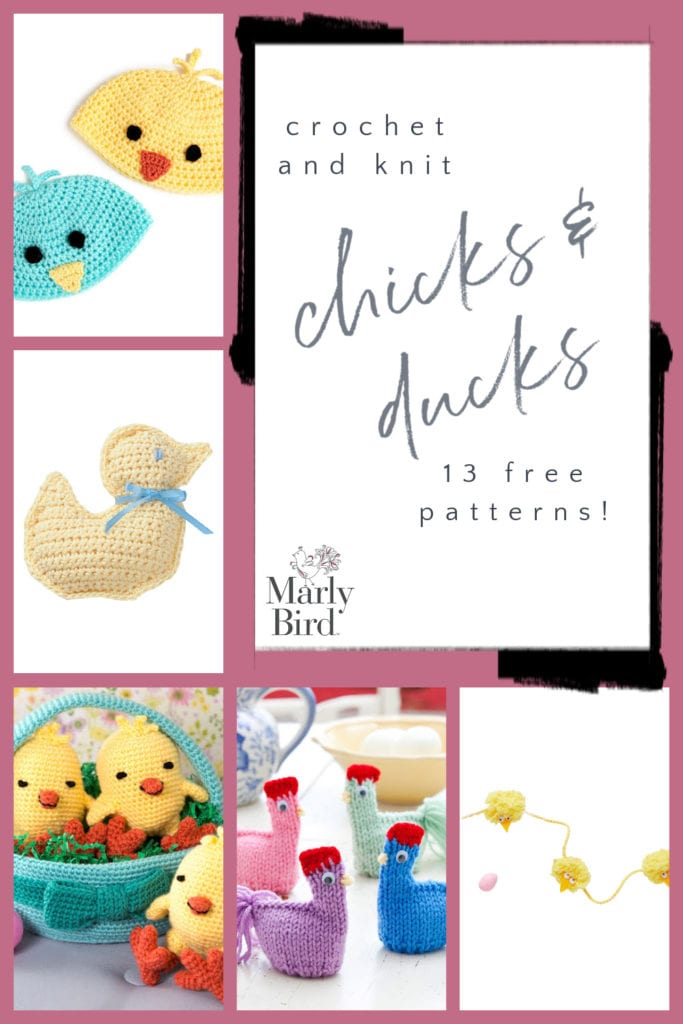
13 Free Chicks and Ducks Crochet and Knit Patterns

March 11, 2022 By Marly Bird Leave a Comment

Chicks are a common sign of spring! Whether you're raising them yourself or just watching them cross the road, chicks, ducklings, an their mamas are common sights in springtime.

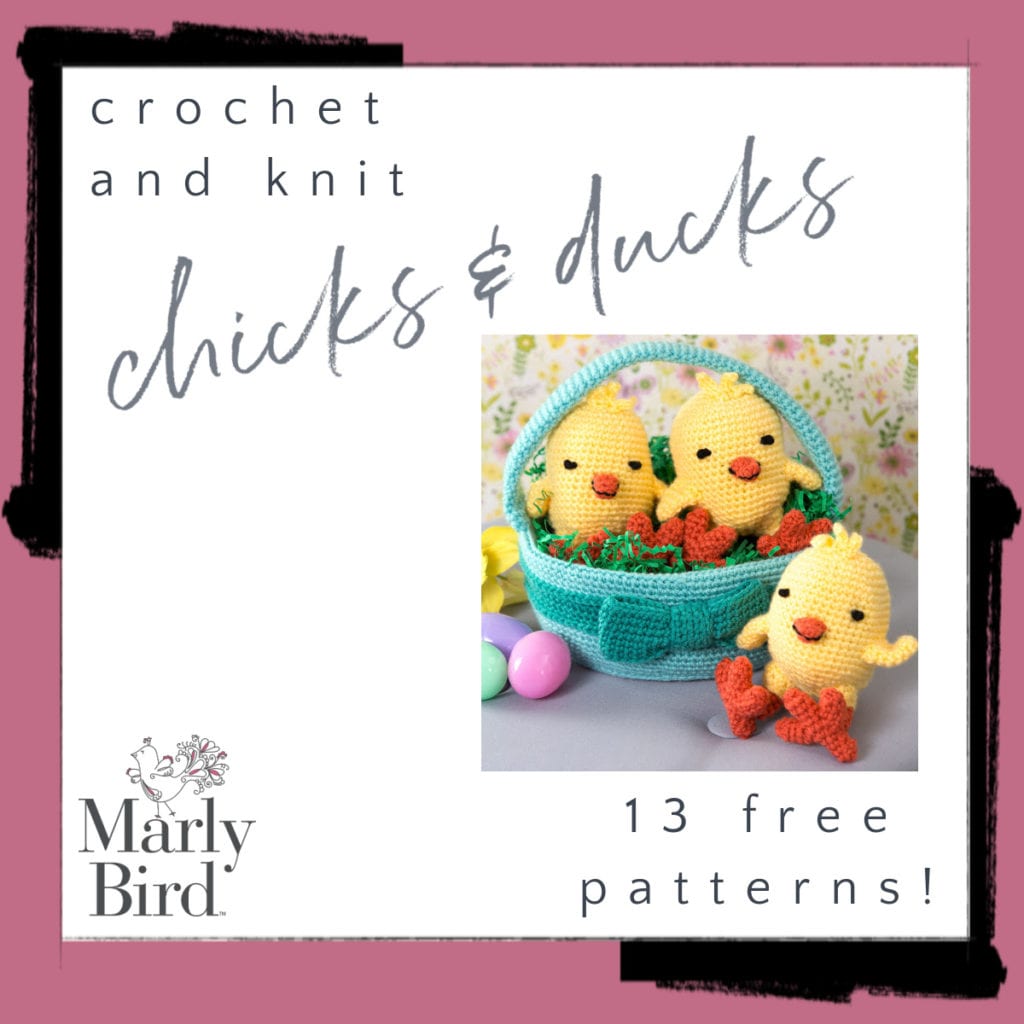
With 13 FREE crochet and knit patterns from Yarnspirations, including toys, hats, slippers, and home decorations, you'll find a chick or duck pattern that's perfect for your use!

13 Free Chicks and Ducks Crochet and Knit Patterns
  • Spring Chick Garland
  • Cozy Egg Family
  • Mama Hen Cozies
  • Cluck Cluck Change Purse
  • Free Range Chicken
  • Rubber Duckie Scrubby
  • Bunny and Chick Party Decorations
  • Chrissy Knit Chick and the Egg-Stras
  • Three Chicks in a Basket
  • Duck Toy
  • Crochet Chicken Rooster
  • Baby Chick Hats
  • Bear and Chick Slippers
13 Free Chick and Duck Crochet and Knit Patterns

Other Animals to Make

  • 6 Free Crochet Pig Patterns
  • 45 Free Bunny Rabbit Patterns to Crochet and Knit
  • Free Polar Bears Projects to Knit and Crochet
  • Crochet Animal Pillow
  • Decorating Your Room with Cute Animal Rugs-Crochet Rugs

Frequently Asked Questions

What kinds of chick and duck projects can I crochet or knit?

Spring peepers! Stuffed chick and duckling amigurumi for Easter baskets are the most popular. Easter-themed chick and duck dishcloths and kitchen items. Baby items with chick or duck motifs for spring nurseries. Little yellow chick hats for babies (unbearably cute!). Duck-themed bags and accessories. Crocheted chick or duck decorations to nestle in Easter grass. And some truly adorable “Easter basket”-style displays with a family of crocheted ducks. The 13 patterns in this collection cover this full range in both knit and crochet.

What makes a crocheted chick or duck look right?

For chicks: a round yellow body, a tiny orange beak, small orange feet, and bright eyes. They're essentially a yellow sphere with minimal additions… the simplicity is part of their charm! For ducks: a slightly more elongated body, a flat wider bill (distinctive from a chick's smaller beak), webbed feet, and sometimes a wing indication. Baby ducks/ducklings are yellow; adult mallards have that distinctive green head and brown body. Getting the beak/bill shape right is the key difference between a chick and a duck… the flat, wider duck bill vs. the small pointed chick beak.

What yarn colors work for chicks and ducks?

Yellow (bright, cheerful yellow) for chicks and baby ducks. Orange for the beaks and feet… a true orange, not too red and not too yellow. For adult ducks, green and brown with a white collar ring for mallard drake coloring; brown for female mallards. White for Pekin duck-inspired designs. And for the Easter basket aesthetic… pastels! A lavender duck, a mint green duckling, a soft pink chick… totally unrealistic but absolutely adorable for holiday crafting. The Easter color palette (yellow, pink, lavender, mint) applied to bird shapes is pure spring joy.

How long does it take to make a crocheted Easter chick?

A basic Easter chick is one of the fastest amigurumi projects you can make! The body is a small sphere worked in maybe 8 to 12 rounds. The beak is a few stitches. The feet are tiny. Total time: 30 to 90 minutes for most crafters. The simplicity is part of the appeal for Easter crafting… you can make a little batch of chicks in an afternoon and scatter them through Easter baskets, Easter egg hunts, or as table decorations. Making several at once is easy since they repeat the same simple construction.

Are chick and duck patterns appropriate for spring holidays beyond Easter?

Yes! A crocheted duckling is sweet for spring baby showers with a “rubber duck” theme. Farm-themed decor includes chickens and ducks year-round. Baby toys with bird motifs are classics. And a collection of crocheted birds (chicks, ducks, robins, bluebirds) as spring home decor doesn't need to be Easter-specific. The yellow and orange color palette of chicks translates well into general spring and sunshine themes. Make them whenever you're in the mood for something cheerful and quick!

Filed Under: Round Ups

13 Free Sheep Patterns | Crochet and Knit

March 7, 2022 By Marly Bird 1 Comment

Lambs give us sheep and sheep give us wool to crochet and knit with! Make your own sheep and lamb-themed projects with these free projects from Yarnspirations.

13 Free Sheep Patterns | Crochet and Knit
  • Little Lamb
  • Sweet Lamb Crochet Hat
  • Sheep Toy
  • Counting Sheep Blanket
  • Sheep Toy
  • Crochet Sheep Mobile
  • Yawn the Sheep Crochet Snuggle Sack
  • Loopy Sheep Pillow
  • Little Lamb Hangers
  • Lamby Pie Lamb
  • Baa Ram Ewe Crochet Sheep Toy
  • Sleepy Sheep Crochet Blanket
  • Crochet Sheep Baa-Baa-Baasket
Sweet Lamb Crochet Hat Free Crochet Pattern

Also on the Blog

  • 37 Crochet Animal Hats | Free Patterns
  • Larry and All The Balls Crochet Blanket
  • 17 Knit Animal Hats | Free Patterns

Frequently Asked Questions

What kinds of sheep projects can I crochet or knit?

From the adorable to the whimsical! Amigurumi sheep stuffed toys are the most popular… that fluffy white body with a sweet face is endlessly charming. Sheep-themed dishcloths and coasters are fun for farm-style kitchen decor. Baby items with sheep motifs (blankets, hats, booties) are precious for nurseries. You can also find sheep-shaped kitchen items, sheep pillow patterns, and accessories with sheep colorwork motifs. Sheep are universally beloved by yarn crafters… it's fitting, given where our yarn comes from!

How do I get that fluffy texture on a crocheted sheep?

Several techniques create that fluffy, woolly look! Loop stitch is the classic method… you create loops as you crochet that mimic fleece. Boucle or textured yarn automatically gives a fluffy surface without any special stitches. You can also use a fluffy novelty yarn for the body and smooth yarn for the head and legs. Some crafters even brush their finished sheep with a pet slicker brush to fluff up the yarn fibers. The loop stitch method is the most traditional and gives the most realistic woolly look.

What yarn is best for an amigurumi sheep?

For the fluffy body: boucle, loop yarn, or any textured yarn that mimics wool. For the face, legs, and inner ears: smooth worsted weight acrylic in black, dark grey, or brown for a classic sheep look. White or off-white for the body is traditional, but lamb-colored cream or even colorful sheep in any color are adorable too. Machine-washable acrylic is practical for a toy that will be loved (and potentially drooled on) by small people. Choose soft textures everywhere the sheep will be snuggled!

Are sheep patterns appropriate for gifting to non-crafters?

Sheep amigurumi are universally beloved gift items! They're cute to people who know nothing about yarn craft and especially delightful to people who DO know where yarn comes from. A handmade sheep is a playful nod to the whole textile tradition. They make wonderful gifts for new babies and young children, farmhouse decor lovers, teachers (sheep classroom themes are very popular), and honestly anyone who appreciates something handmade with personality and warmth. Little sheep friends find homes everywhere.

Can I make a whole flock of sheep quickly?

Amigurumi sheep work up at a pretty good pace once you have the hang of the pattern! The body is essentially a sphere with loop or fluffy yarn, the head is a smaller sphere, and the legs are four short tubes. After your first sheep (which takes longer as you figure out the pattern), subsequent sheep from the same pattern go much faster. Making a flock of 3 to 5 for a centerpiece, a gift set, or a baby shower display is a wonderful project. Each one can have slightly different character too… different ear positions, different expressions.

Filed Under: Round Ups

26 Free St. Patrick’s Day Projects to Crochet and Knit

March 6, 2022 By Marly Bird Leave a Comment

St. Patrick's Day is coming up, so it's time to get started on your shamrock-themed projects! Whether you're making a leprechaun for your table, a clover throw to snuggle under, or a necklace to wear, here's a St. Patrick's Day project for you!

26 Free St. Patrick's Day Patterns to Crochet and Knit

Projects to Wear

  • Celtic Cables Wrap
  • St. Patrick's Day Chapeau
  • Shamrock Headband
  • Shamrock Charm Necklace
  • Three Leaf Clover Pin
  • Celtic Knot Belt
Shamrock Headband Free Crochet Pattern

Kitchen and Dining

Make dishcloths, coasters, placemats, a scrubber, and even cup cozies for St. Patrick's Day! With shamrocks and leprechauns alike, you'll find the right way to bring the holiday into your kitchen and dining.

  • Celtic Cables Dishcloth
  • Shamrock Dishcloth
  • Shamrock Scrubby
  • Celtic Knot Dishcloth
  • Crochet Leprechaun Dishcloth
  • Sailor's Knot Dishcloth
  • Lucky Charm Knit Dishcloth
  • Luck of the Irish Crochet Coasters
  • Celtic Placemat
  • Shamrock Can Cozy
  • Go Green Cozy
  • Knit Blarney Beverage Cozy
Luck of the Irish Free Crochet Pattern

Blankets

Lucky shamrocks and Celtic-inspired textures provide seasonal touches to your living space!

  • Celtic Texture Crochet Blanket
  • Irish Lace Blanket
  • Top o' the Mornin' Throw
  • Lucky Clover Throw
  • Four Leaf Clover Throw
Lucky Clover Throw Free Crochet Pattern

Decorations

Decorate your home for St. Patrick's Day with these classic decorations! Add them in your living room, or put them as decorations in the background of your video calls.

  • Scattered Luck Crochet Garland and Confetti
  • Lucky Shamrock Banner
  • Kitrick the Leprechaun
  • Shamrock Wall Hanging
Kitrick the Leprechaun Free Crochet Pattern

You may also like

  • 8 FREE Knit and Crochet St. Patrick’s Day Patterns
  • 10 FREE Spring Sweater Patterns
  • 10 FREE Spring Shawls

Frequently Asked Questions

What kinds of St. Patrick's Day projects can I knit or crochet?

26 patterns worth of shamrocks and green! Shamrock appliques and motifs. Green accessories in all shades. Celtic knot-inspired patterns (perfect for the Irish heritage connection). Leprechaun amigurumi and accessories. Rainbow-themed items. Lucky four-leaf clover designs. Home decor for March celebrations. Both knit and crochet options are represented. The collection spans quick one-evening projects through more ambitious pieces.

What green colors work for St. Patrick's Day projects?

All the greens! Traditional St. Patrick's Day aesthetic favors bright, vivid Kelly green or shamrock green… a clear, saturated medium green. Forest green and hunter green are more sophisticated alternatives. Mint and sage read as more pastel spring green. Emerald green has jewel-toned depth. For a rainbow-themed piece, all the greens work together. For something specifically Irish-heritage inspired, the deeper, richer traditional greens feel most authentic. Whatever green speaks to you… use it!

Are shamrock patterns easy to make?

Yes! A basic crocheted shamrock is made from three small heart or petal shapes joined in a clover arrangement with a short stem. Each individual petal is a simple oval or heart shape in basic stitches. The assembly is minimal. Total time for a simple shamrock applique: 20-45 minutes. They're quick enough to make in batches for gift embellishment, decoration, or wearing on St. Patrick's Day. A collection of shamrocks strung on ribbon or twine makes cheerful garland. Definitely a beginner-accessible project.

When should I start St. Patrick's Day projects?

St. Patrick's Day is March 17th… start in late January or February for anything with significant construction time. Quick accessories and small decorative items can be made the week before. For gift-giving, a week of lead time for simple items is fine. For more elaborate pieces (a full Irish-inspired sweater, a complex Celtic knot project), start in January or even December to have it ready comfortably. The 26 patterns span this range from quick-this-weekend to significant-lead-time needed.

Are Celtic knot patterns appropriate for St. Patrick's Day?

Yes! Celtic knotwork has deep roots in Irish and broader Celtic artistic tradition. Using Celtic-inspired patterns (interlocking cables, endless knot motifs) for St. Patrick's Day or Irish heritage celebration is a beautiful and culturally appropriate connection. It's a much more sophisticated aesthetic than cartoon shamrocks… Celtic knotwork has genuine historical and artistic significance. A sweater with Irish-style cables or a scarf with a Celtic braid cable is an elegant way to honor Irish textile tradition through knitting.

“`html

Tips for St. Patrick's Day Crochet and Knit Success

Before you dive into your festive projects, here are a few things that'll make your crafting smoother and more enjoyable…

Yarn Color Choices That Pop

The classic St. Patrick's Day combo is kelly green, but don't be afraid to branch out! Try pairing emerald with gold metallics for a luxe feel, or go with lime green for something unexpected. If you're making gifts, remember that not everyone loves the holiday… so consider crafting projects in these colors year-round by focusing on the Celtic design elements instead of the St. Patrick's theme.

Pattern Difficulty Levels

Most of these projects range from beginner to advanced beginner. If you're newer to crochet, start with the dishcloths and coasters… they're perfect for practicing your stitches without the pressure of a wearable project. Cable patterns and Celtic knot designs look fancy but follow a repeating pattern once you get the hang of it.

Timing Your Projects

St. Patrick's Day sneaks up fast! If you're making multiple gifts, prioritize smaller items like pins and cozies first. These take a weekend or two, while larger projects like wraps need more lead time. Check out our guide on how to crochet faster for speed-boosting techniques that'll help you finish before March 17th rolls around.

“`

Filed Under: Round Ups

  • « Previous Page
  • 1
  • …
  • 41
  • 42
  • 43
  • 44
  • 45
  • …
  • 98
  • Next Page »

Let's Be Social

Join the Marly's Minions Facebook group to share, ask questions, or chat about all of your yarn related crafts!

Join the group
Cartoon of a smiling woman with brown hair in a bun, glasses, black jacket and green shirt, waving next to large "hi" text.

Quick Links

The Pattern Shop

Our Free Patterns

Blog

Marly Bird House

Learn to Knit & Crochet

About

Giveaway Terms and Privacy Notice

Find Us Everywhere

Join the Newsletter

YouTube Channel

Marly's Minions FB Group

Etsy Store

Ravelry Store


AN ELITE CAFEMEDIA HOME/DIY PUBLISHER

Information from your device can be used to personalize your ad experience. Do not sell or share my personal information.

Privacy Policy   Terms   Marly Bird Legal Documents Copyright © 2026