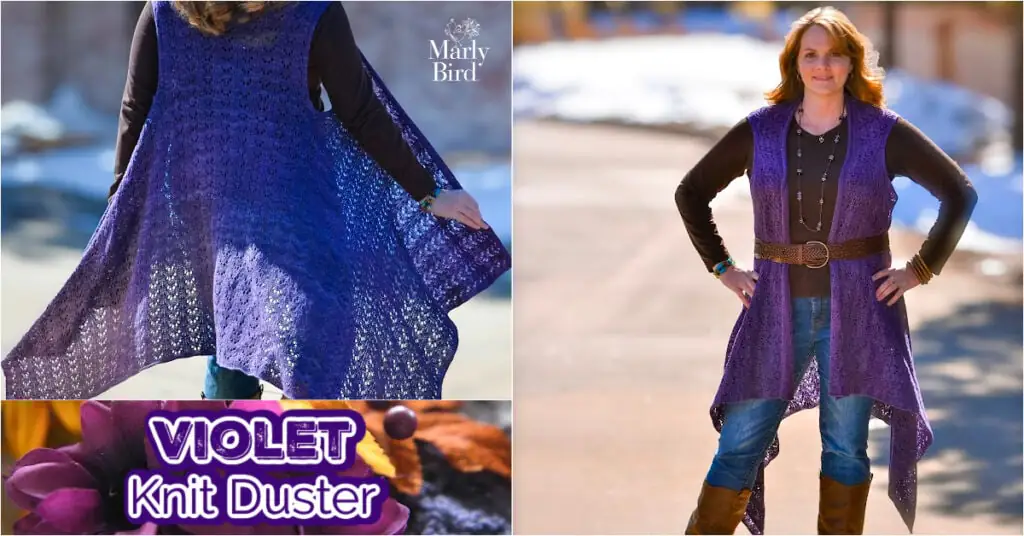
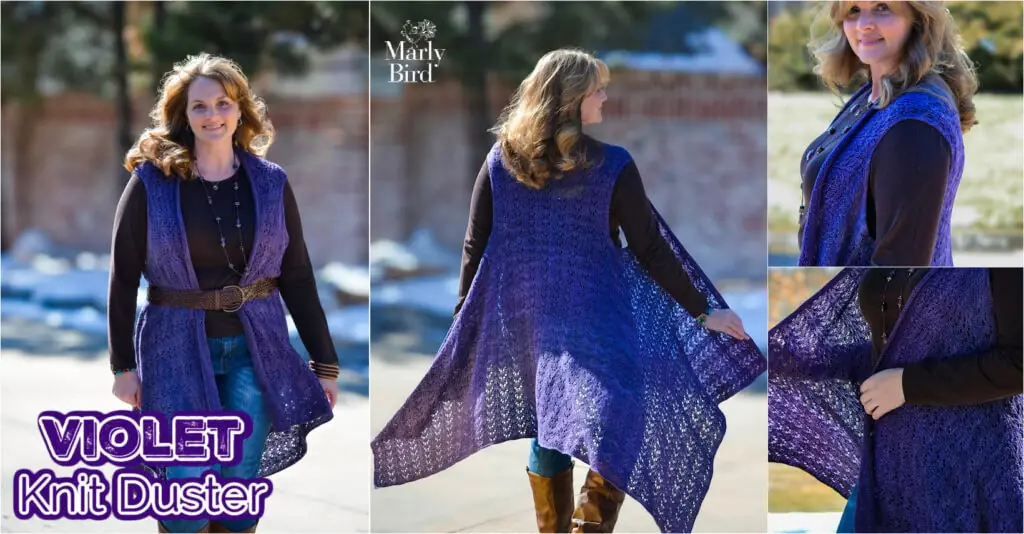
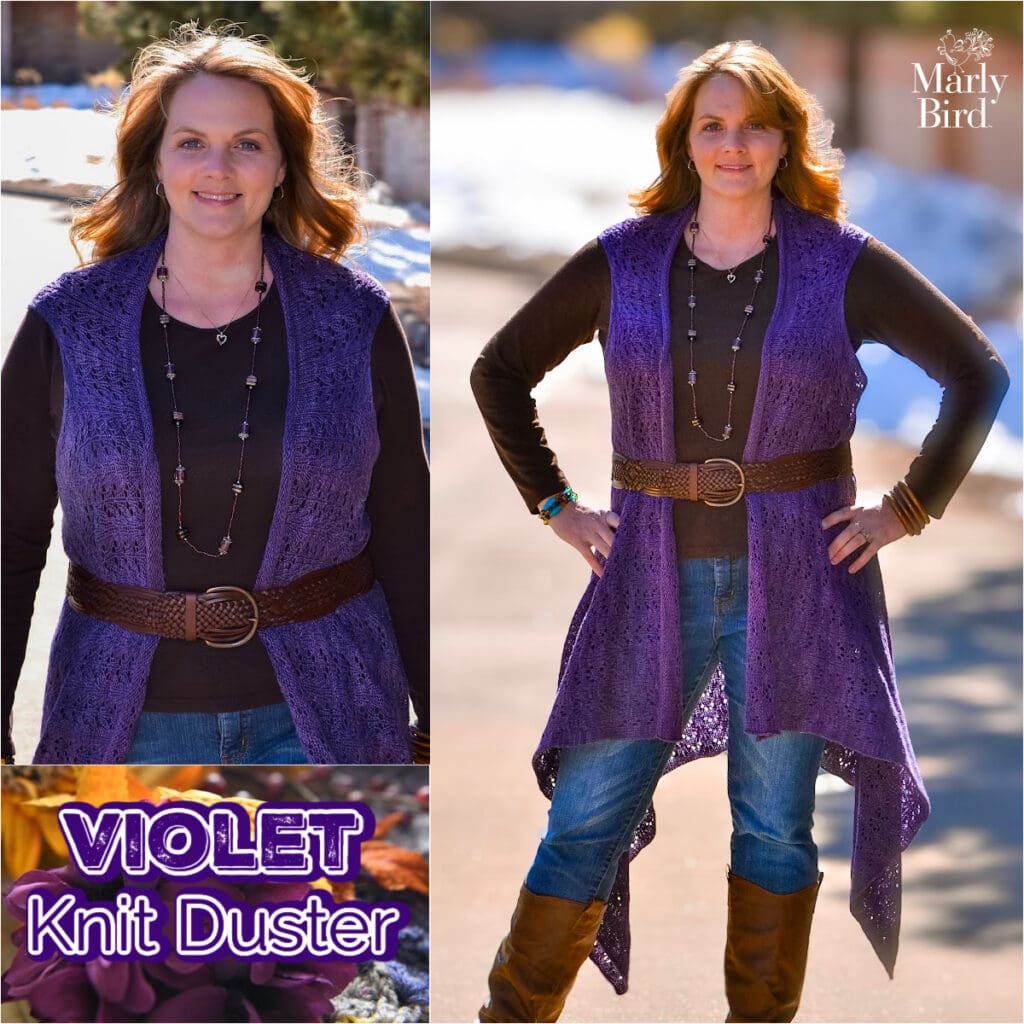
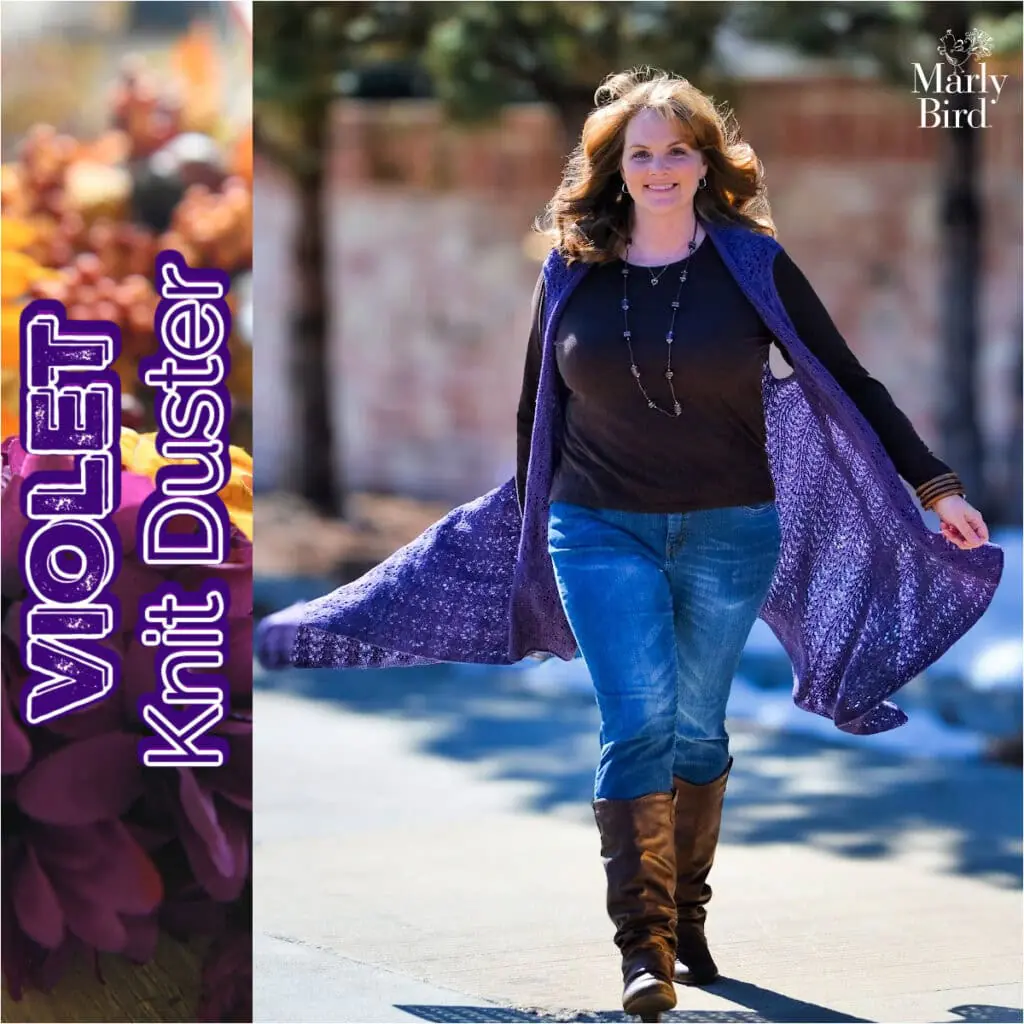
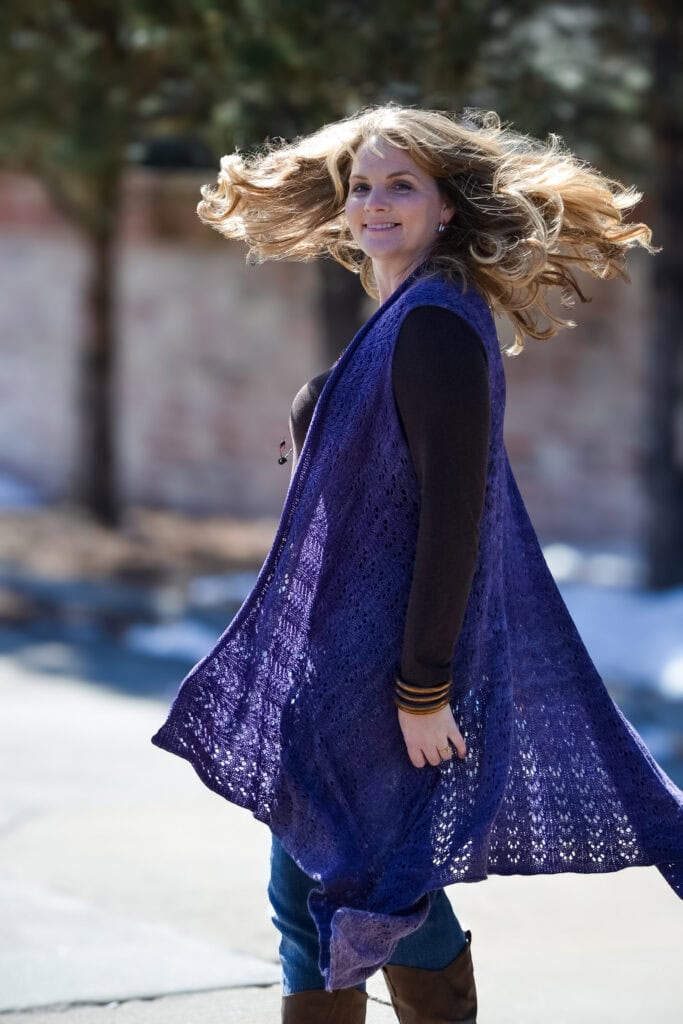
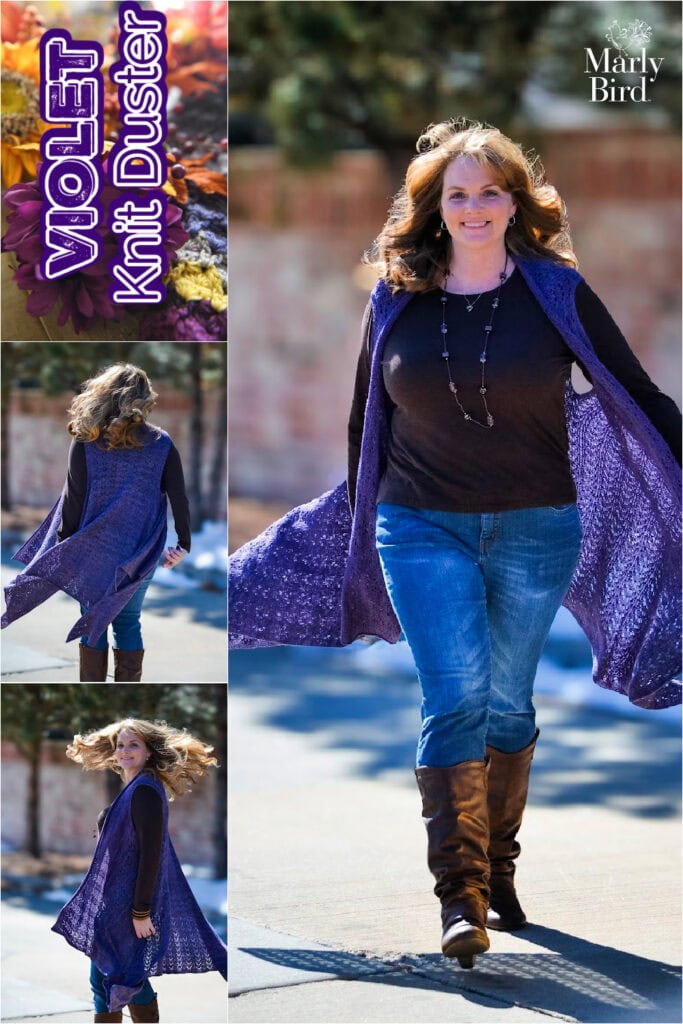
Some knit pieces don’t just fill a gap in your wardrobe — they become the layer you reach for without thinking. The Violet Knit Duster is one of those rare designs. Light but cozy, elegant without being fussy, and endlessly wearable, this free knit duster pattern was created to move with real life while still feeling special every time you slip it on.
Designed with drape, flow, and comfort in mind, the Violet Knit Duster is the kind of garment that reminds you why handmade clothing feels so good to wear.
Quick Pattern Overview
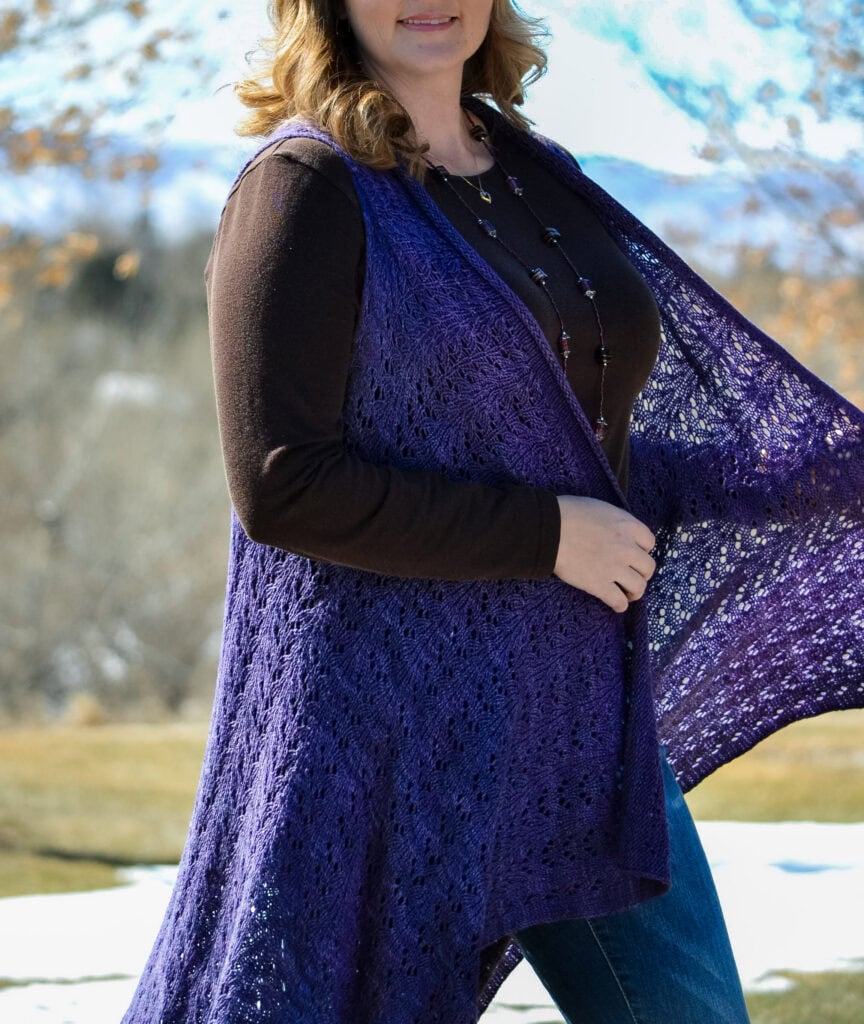
The Violet Knit Duster is a lace knit garment constructed from a generous rectangle with simple armhole shaping. The result is a relaxed, open-front duster that layers beautifully over everyday outfits.
In this post, you’ll learn:
Why this construction creates such an easy, flattering fit
How lace fabric and fiber choice work together
Yarn substitution tips for the discontinued yak/bamboo blend
How this duster fits into real, everyday wardrobes
Lace, Drape, and Why Fiber Choice Matters
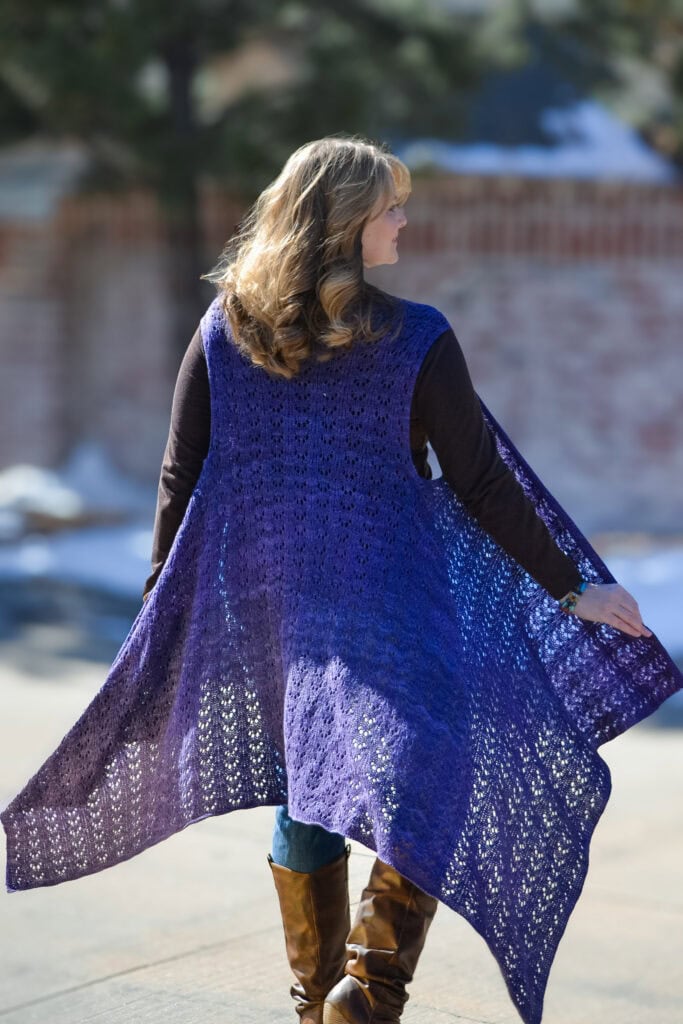
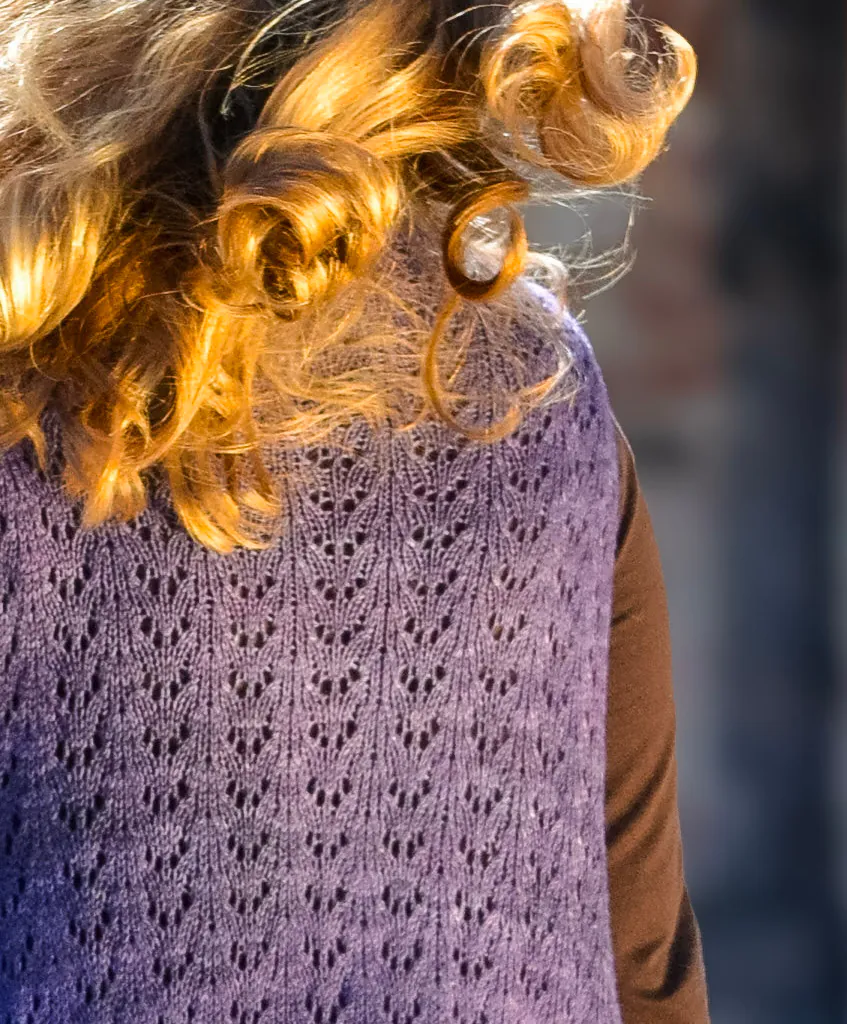
This design relies on lace structure paired with intentional fiber selection. The lace stitch pattern creates openness and movement, while the fabric’s stability comes from having enough animal fiber in the yarn.
That balance is what keeps the duster flowing without stretching out of shape — especially important for longer garments like dusters. The goal is movement, not sag.
This is why yarn choice matters just as much as stitch pattern in this design.
What You Will Love About This Pattern
Free knit duster pattern with elegant lace texture
Relaxed, open-front design that flatters multiple body types
Lightweight fabric with beautiful drape
Two length options for styling flexibility
Ideal for confident beginners ready to try a lace garment
✨ Designer Tip: This is a fantastic first lace garment because the shaping is simple and the stitch pattern is rhythmic and forgiving once established.
“This is the kind of layer that feels effortless to wear — polished enough for going out, comfortable enough for everyday life.”
Design, Fit, and Construction Details
The Violet Knit Duster is worked flat and shaped with minimal armhole construction, allowing the lace fabric to remain the star of the show. The rectangular base makes sizing intuitive, while the open front ensures an easy fit across bust sizes.
Because the fabric is lightweight and drapey, the duster hangs beautifully without clinging, making it a versatile layering piece across seasons.
Yarn Choices & Smart Substitutions
The original sample was knit using Bijou Basin Ranch Lhasa Wilderness, a yak and bamboo blend that offered softness, warmth, and fluid drape. While that yarn has been discontinued, you can successfully substitute with other yarns as long as the animal fiber content remains dominant.
Fiber Guidelines for Substitution
✔️ Wool or wool-blend as the primary fiber
✔️ Bamboo or silk allowed only as a secondary fiber
❌ No alpaca (it tends to grow and stretch too much for this design)
❌ Avoid plant-fiber–dominant yarns
Suggested Yarn Directions
Look for:
Wool + bamboo blends
Wool + silk blends
Smooth sport-weight or light DK yarns with elasticity
BO – Bind off CO – Cast on CONT – Continue K – Knit K2TOG – Knit 2 stitches together LH – Left hand P – Purl PM – Place marker P2TOG – Purl 2 stitches together REP – Repeat RH – Right hand SSK – Slip, slip, knit SLM – Slip marker ST(s) – Stitch(es) TOG – Together WS – Wrong side YO – Yarn over
STITCH PATTERNS
Stockinette Stitch (St St): Knit on RS, purl on WS.
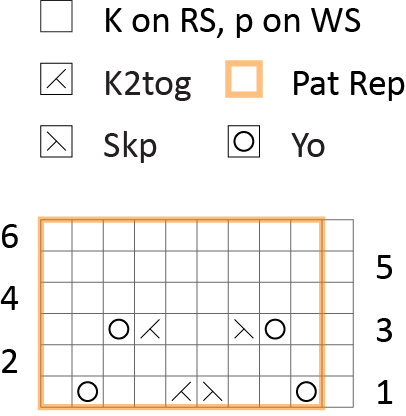
Lace Pattern (multiple of 9 sts + 1): Row 1 (RS): K1, *yo, k2, ssk, k2tog, k2, yo, k1; rep from * to end. Row 2: Purl. Row 3: K1, *k1, yo, ssk, k2, k2tog, yo, k2; rep from * to end. Row 4: Purl. Row 5: Knit. Row 6: Purl. Repeat rows 1–6 for Lace Pattern.
Directions are written for the smallest size; changes for larger sizes are shown in parentheses. When only one number is given, it applies to all sizes.
Do not join; work back and forth in rows.
As stitches are added to the needles, switch to longer needles as needed to comfortably accommodate them.
Stitch markers are used to separate the Stockinette Stitch borders from the Lace Pattern. Always slip markers as you come to them and maintain the established stitch patterns on either side.
Lace Pattern stitch counts must remain consistent between markers. If an error occurs, correct it promptly to maintain proper alignment.
During armhole shaping, the Left Front, Back, and Right Front are worked separately. Be sure to work only the instructed section before cutting yarn and placing stitches on hold.
Row gauge may differ before and after blocking. When instructed to work to a specific measurement, count rows based on the after-blocking gauge to ensure proper length.
GROW
To Unlock Exclusive Subscriber Content click the Box below and join for free by simply adding your email and creating a password! If you are having troubles, clear your cache or reset your password or login to the Grow Publisher Portal.
I'm thrilled to share this amazing pattern with you, many patterns on my blog are absolutely free! I kindly request that you don't copy and paste or distribute this pattern. Prefer an ad-free experience? Buy a digital PDF pattern for a small fee from one of my online stores for a seamless crafting journey.
I appreciate your support and readership. You are the reason I can keep doing what I love and sharing it with others. So, thank you from the bottom of my yarn-loving heart! Disclosure: This post contains affiliate links, meaning I get a commission if you decide to make a purchase through my links at no cost to you.
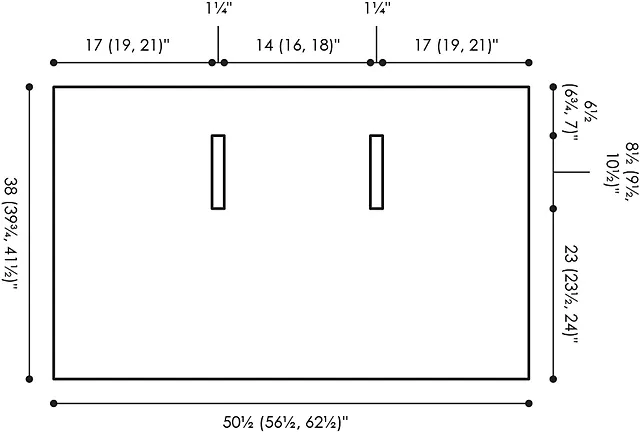
Cast on 230 (257, 284) sts. Work 2 inches in Stockinette Stitch, ending after a WS row.
Next row (pattern setup row, RS): Work 11 sts in Stockinette Stitch, place marker, work 208 (235, 262) sts in Lace Pattern, place marker, work last 11 sts in Stockinette Stitch — 23 (26, 29) stitch repeats between markers.
Work in established patterns until piece measures 22 (22½, 23) inches, ending after a WS row.
Next row (armhole setup row, RS): Work 11 sts Stockinette Stitch, slip marker, work 63 (72, 81) sts Lace Pattern, place marker, work 14 sts Stockinette Stitch, place marker, work 54 (63, 72) sts Lace Pattern, place marker, work 14 sts Stockinette Stitch, place marker, work 63 (72, 81) sts Lace Pattern, slip marker, work last 11 sts Stockinette Stitch.
Work in established patterns for 5 more rows.
Next row (armhole bind-off row, RS): Work 78 (87, 96) sts in established patterns (Right Front), bind off 6 sts, work 62 (71, 80) sts (Back), bind off 6 sts, work remaining sts (Left Front).
Work Left Front only until armhole measures 8½ (9½, 10½) inches. Place sts on holder. Work Back only to same measurement. Place sts on holder. Work Right Front only to same measurement.
Next row (rejoining row, RS): Work Right Front sts, cast on 6 sts, work Back sts, cast on 6 sts, work Left Front sts — 230 (257, 284) sts.
Work 5 more rows. Remove armhole markers.
Next row (RS): Work 11 sts Stockinette Stitch, slip marker, work 208 (235, 262) sts Lace Pattern, slip marker, work last 11 sts Stockinette Stitch.
Work in established patterns for 3¾ (4, 4¼) inches, then work 1¾ inches in Stockinette Stitch. Bind off loosely.
Shorter Size
Cast on 176 (203, 230) sts. Work 2 inches Stockinette Stitch.
Next row (pattern setup row, RS): Work 11 sts Stockinette Stitch, place marker, work 154 (181, 208) sts Lace Pattern, place marker, work last 11 sts Stockinette Stitch.
Work until piece measures 18 (19, 20) inches.
Armhole setup row follows same structure as original version with adjusted stitch counts.
Continue as written for Original Version with stitch counts noted.
FINISHING
Block piece to measurements. Click Here ➡️ Get knit lace blocking tips! Work 1 round evenly in single crochet around each armhole. Weave in all loose ends.
Styling & Wearability
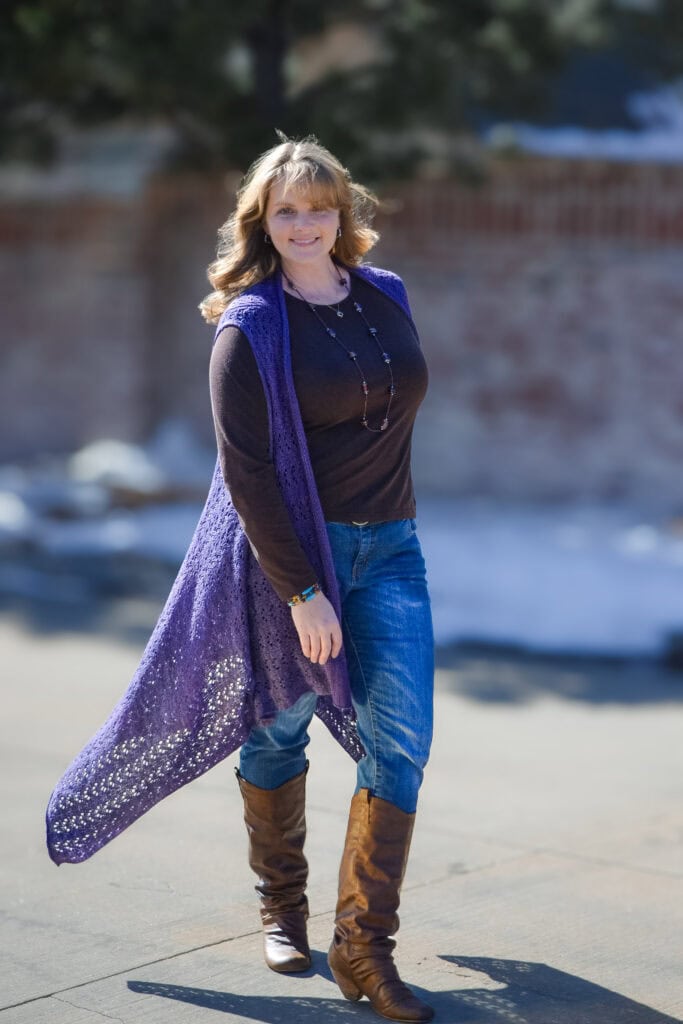
The Violet Knit Duster is designed to fit into real life. Wear it:
Over a tee and jeans for everyday layering
With boots and a dress for cooler weather
As a lightweight wrap when indoor spaces feel chilly
It’s an easy “throw it on and go” piece that still feels thoughtfully made.
More Patterns You May Enjoy
If you love garments with movement and texture, you may also enjoy exploring other knitwear designs on MarlyBird.com that focus on wearability and skill-building.
🧣 BEGINNER-FRIENDLY LACE PROJECTS
These are somewhat easy knit lace patterns for you to enjoy
You can't go wrong with any of these knit lace garments, and they are all free lace patterns on my website
Skill-Building Opportunities
This pattern helps knitters:
Read and maintain a lace stitch pattern
Understand how fiber choice affects garment structure
Gain confidence knitting lightweight wearable layers
It’s an excellent stepping stone into more advanced lace garments.
Frequently Asked Questions
Is this knit duster pattern beginner-friendly? This pattern is best for confident beginners who are comfortable with knit and purl stitches and ready to try lace.
Does lace make this garment fragile? No. The lace creates openness, but proper yarn choice ensures the fabric remains stable and wearable.
Can I substitute a yarn with silk or bamboo? Yes — as long as the animal fiber content is higher than the plant fiber. This prevents excessive stretching.
Why shouldn’t I use alpaca yarn? Alpaca tends to grow and lose shape over time, which isn’t ideal for a long lace garment like this.
Is this duster heavy to wear? Not at all. It’s designed to feel light and comfortable, even when layered.
How long does it take to knit? This is a relaxed garment project, perfect for steady progress over several weeks.
Will this stretch out over time? Not if you choose a yarn with sufficient wool content and block gently.
Is this suitable for warm climates? Yes — lighter yarn choices make this a great transitional or indoor layer.
Can I make this longer or shorter? Yes. The pattern includes length options and is easy to customize.
The Violet Knit Duster is a reminder that handmade garments don’t have to be complicated to feel special. With thoughtful construction, intentional fiber choices, and a calm knitting rhythm, this is a piece you’ll reach for again and again.
If you make one, save the pattern, share your progress, and let me know how you styled yours. #marlybird #mmmdi
Marly is a knitwear and crochet designer (and yarn addict) that is here to help you learn how to knit and crochet in a way that's fun and approachable.