Bluebonnet Crochet Lace Shawl — Free Crochet Pattern
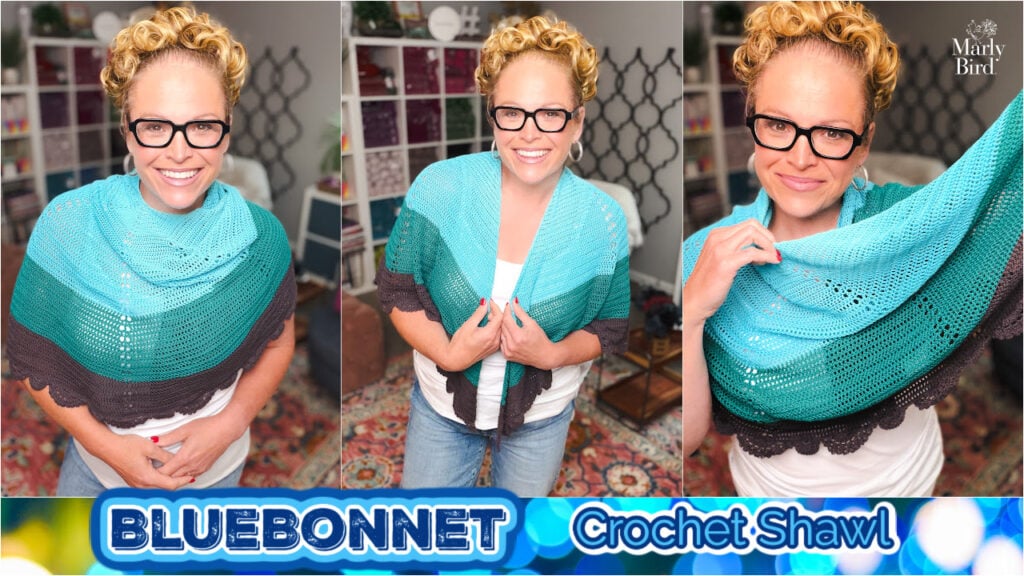
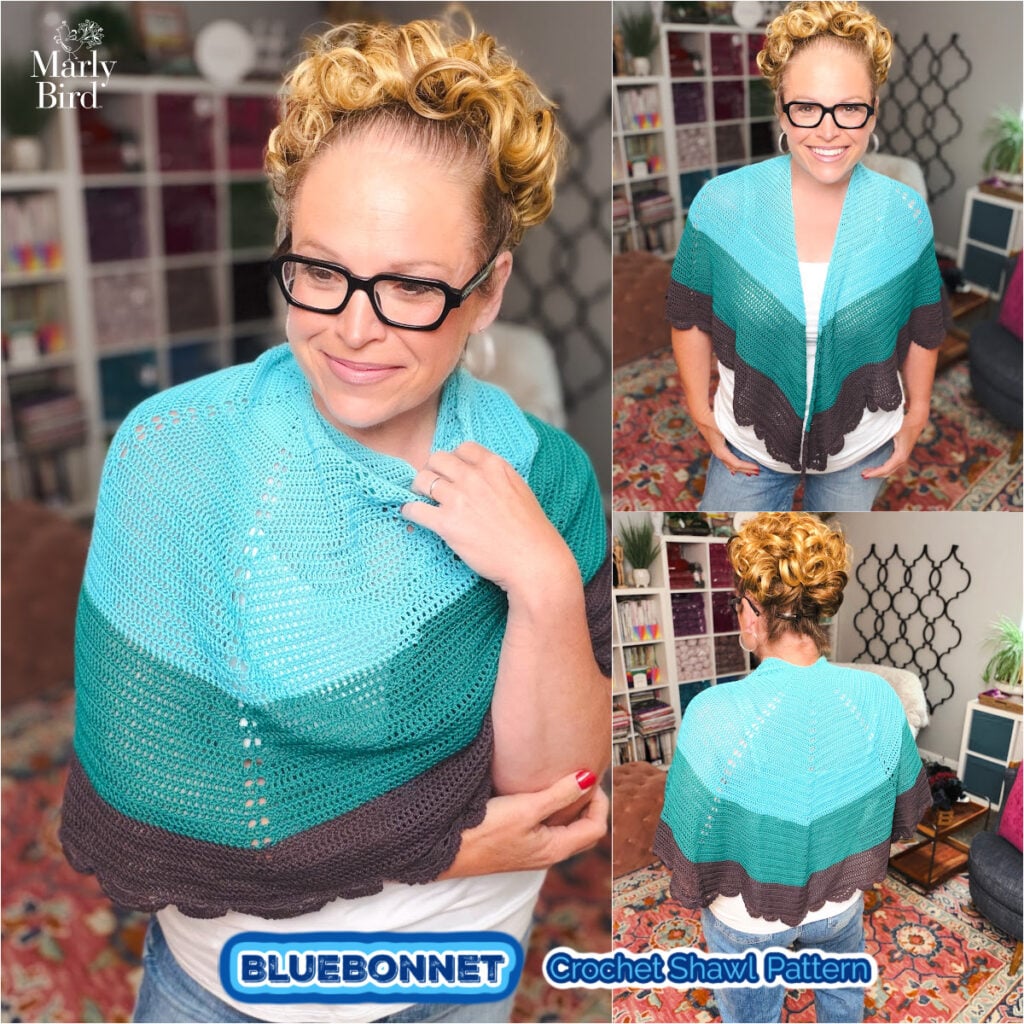
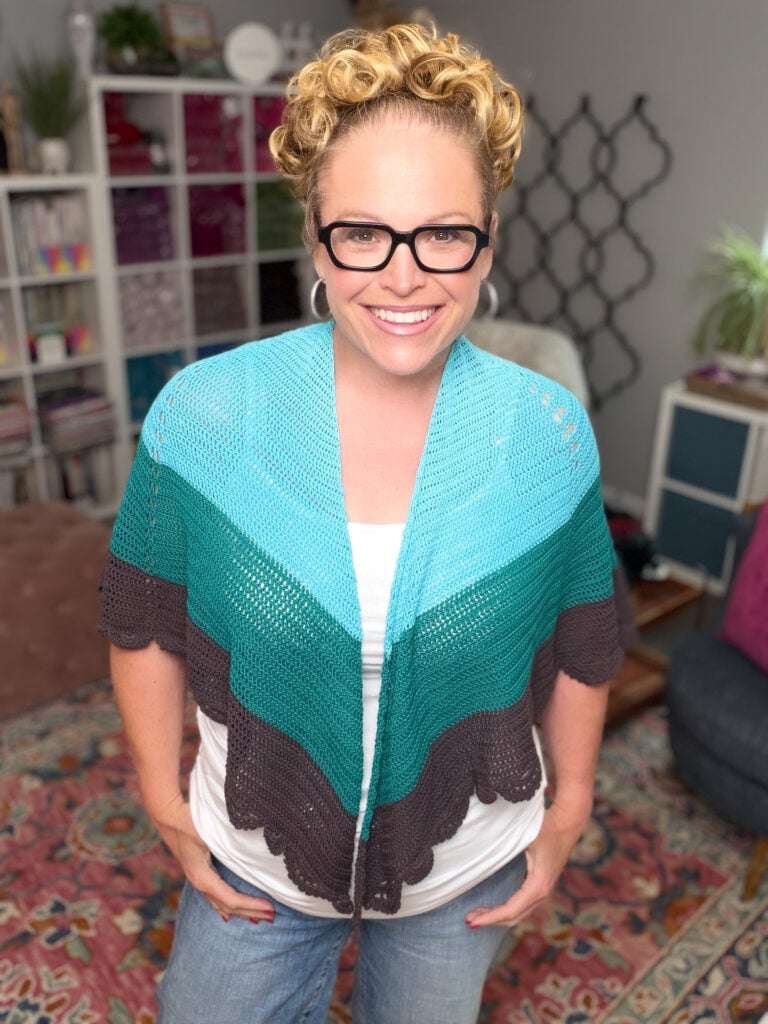
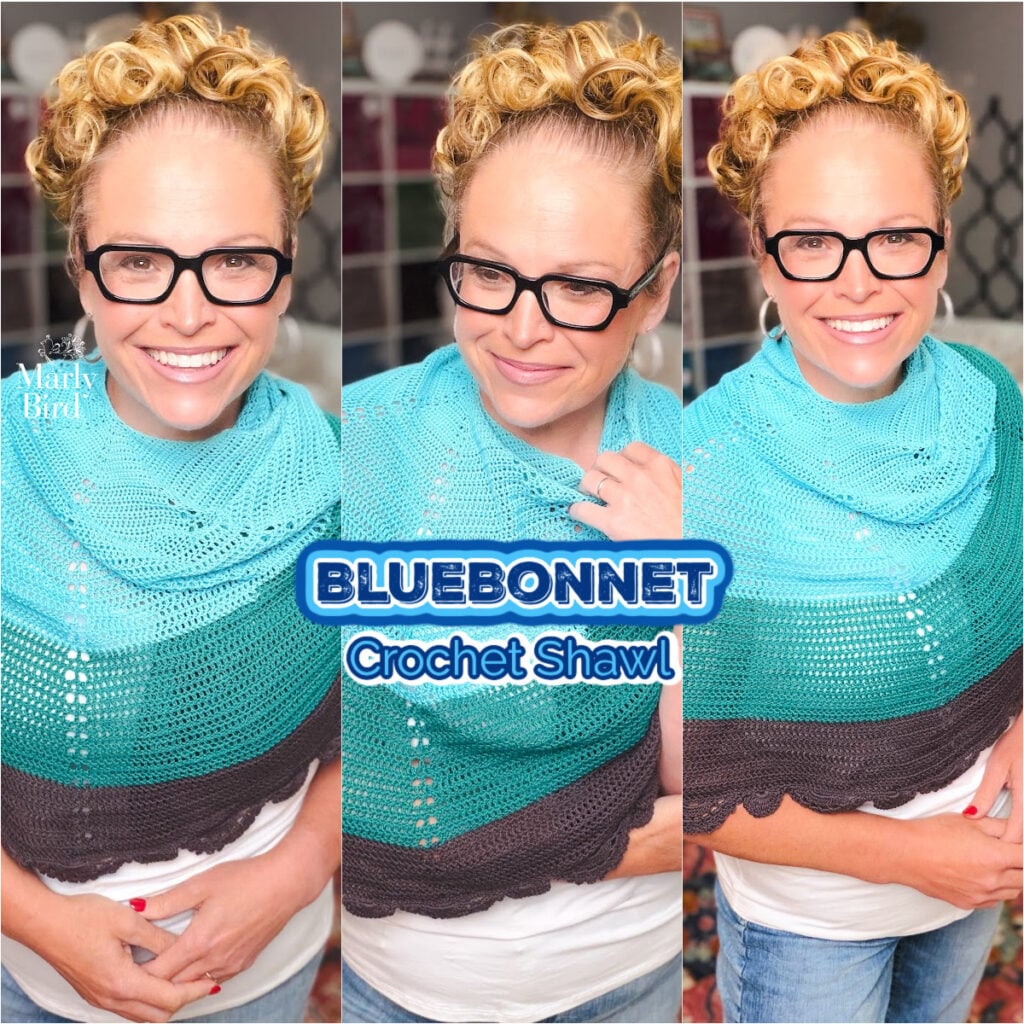
The Bluebonnet Crochet Lace Shawl is a free crochet lace shawl pattern by Marly Bird, named for the Texas state wildflower. It's worked in lightweight (CYC #1 super fine) cotton-blend gradient cake yarn, using familiar stitches in the body… single crochet, half double crochet, and double crochet… with a detailed lace edging that echoes the layered petal structure of an actual bluebonnet bloom. Perfect for spring and summer layering.
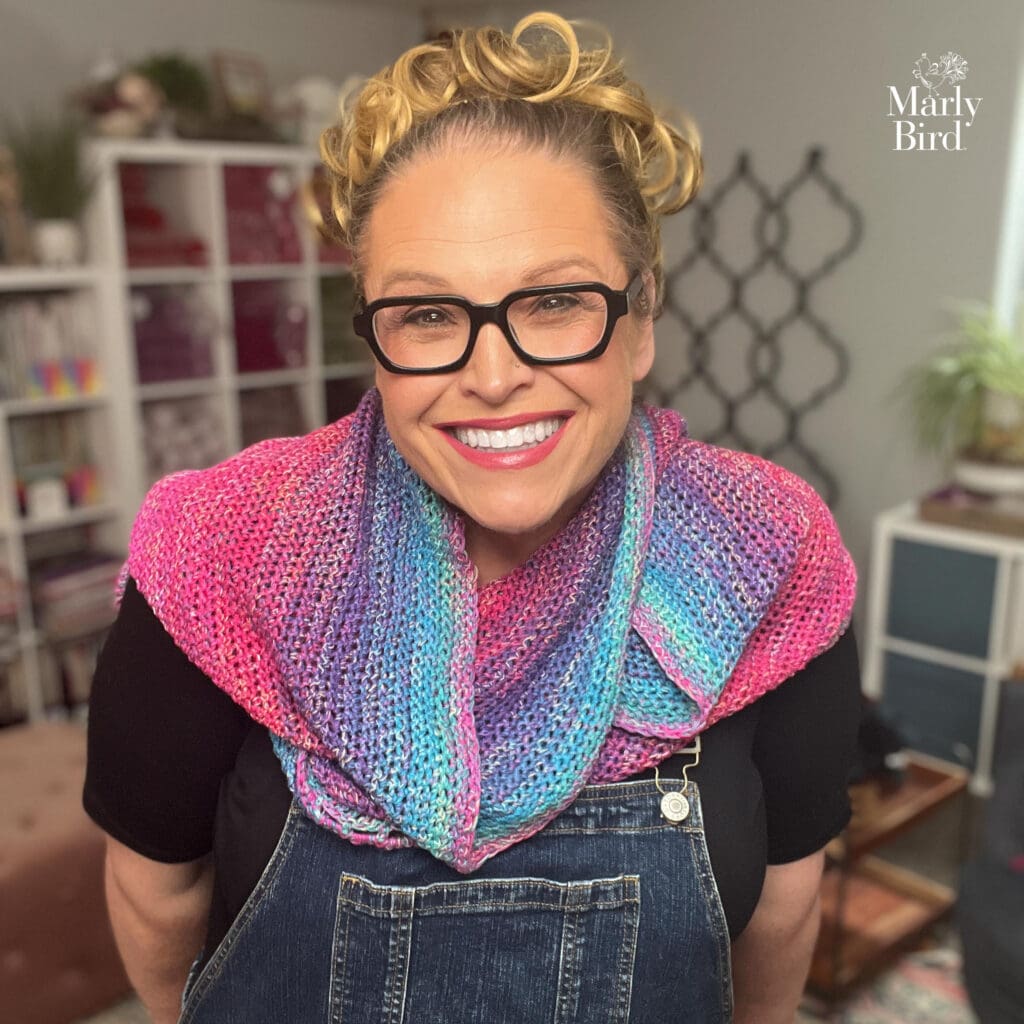
The original Bluebonnet Shawl was designed for Red Heart It's A Wrap, which has since been discontinued. If you have a cake in your stash, this is the perfect pattern for it. And if you don't… I've gathered a small list of beautiful substitute yarns below that work just as well. The natural color shifts in any lightweight gradient cake yarn do most of the design work for you, the stitches are familiar, and the finished shawl is the kind of lightweight layer you'll actually reach for when the AC is set too cold.
Hey, bestie 💛
I'm so glad you're here. The Bluebonnet Shawl is one of those patterns I keep coming back to, year after year. The first version went up on the blog way back in 2018, and we've just refreshed the whole thing… new photos, updated formatting, the same beautiful pattern in our current standard layout. It feels like a brand-new shawl all over again.
If you've never made a lace shawl before, don't worry. We'll walk through it together. And if you're a seasoned lace crocheter… you're going to love how this stitch pattern flows.
*This post contains affiliate links. By clicking one of the links and making a purchase, a small portion will go to support the blog. The price you pay does not change. Thank you for your support of the blog.*
What You Will Love About This Bluebonnet Crochet Lace Shawl 💖
🌸 A lace shawl that uses stitches you already know. The body of this shawl is worked entirely in single crochet, half double crochet, and double crochet. No surprise stitches in the main body, no charts you have to decode just to get started. The lace happens in the edging… by the time you get there, you'll already be comfortable with the yarn.
💙 The yarn does half the design work. The Bluebonnet Shawl is designed for a lightweight (CYC #1) cotton-blend gradient cake yarn. The natural long color repeats in a gradient cake do all the color-block magic for you, with zero color management on your end. The original was Red Heart It's A Wrap (now discontinued); my substitute picks are below.
🌿 It's a true summer-weight shawl. Most lightweight shawl patterns call for fingering or sock yarn… which usually means a wool blend that's lovely in fall but stuffy in July. A cotton-blend lightweight yarn drapes beautifully and breathes well, making this the shawl you'll actually wear from spring through late summer.
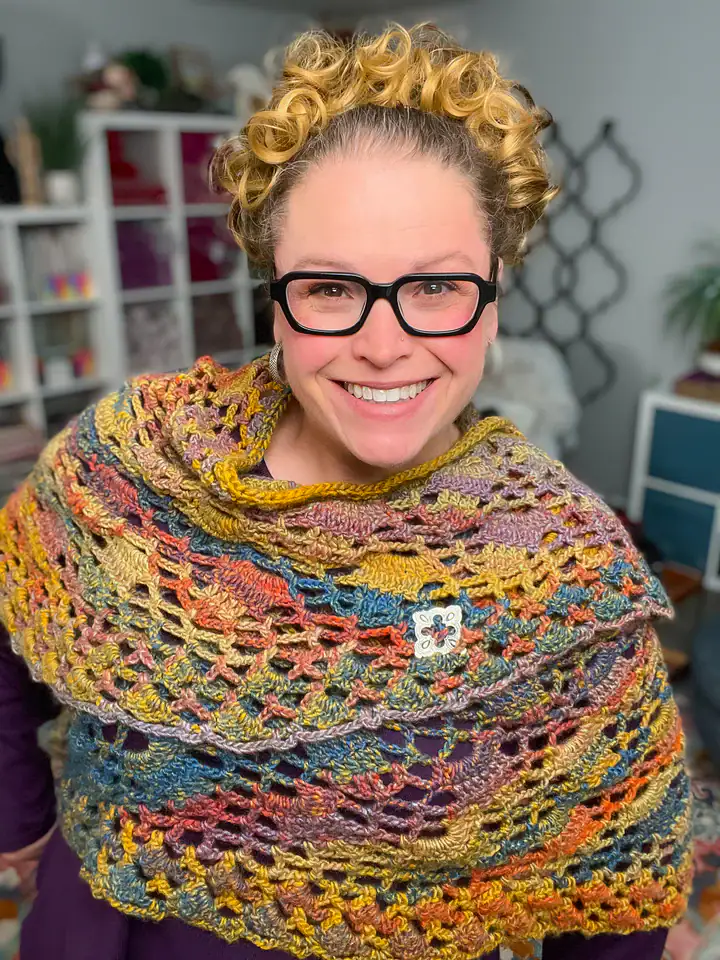
📐 A petal-inspired lace edging. The stitch pattern in the lace border was designed to echo the layered petal structure of an actual bluebonnet bloom. It's a small design detail that I love… and one you can point to when someone asks “did you make that?”
📄 Free here on the blog… ad-free PDF available too. The full pattern lives free right here on the blog, including the new stitch counts and updated formatting. If you'd rather work from a clean ad-free PDF (with charts), I've got you covered below.
Quick Pattern Overview
🧶 Craft: Crochet
🌸 Pattern Name: Bluebonnet Crochet Lace Shawl
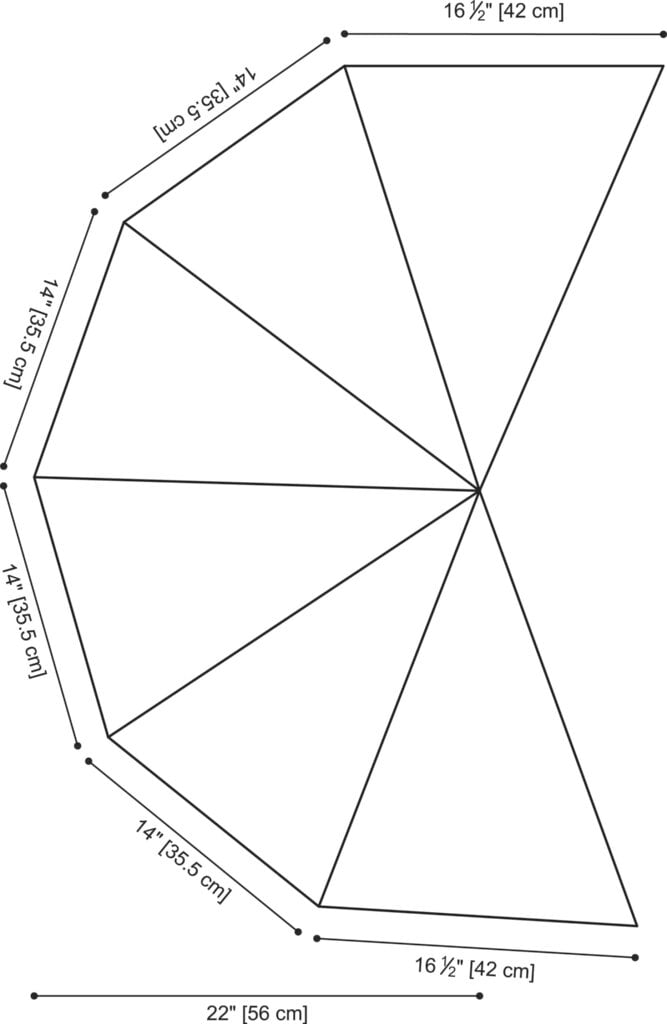
📏 Finished Size: Shawl is 23.5” [59.5 cm] deep including border and 56” [142 cm] in wingspan
🎯 Skill Level: Intermediate (advanced beginners welcome… the body is all familiar stitches, the lace edging adds the intermediate-level challenge)
🧵 Yarn: Lightweight (CYC #1 super fine) cotton-blend gradient cake yarn — see Yarn & Materials below for substitute picks. (Original: Red Heart It's A Wrap, now discontinued.)
🪡 Hook: Size E/4 [3.5 mm]
📐 Construction: Worked flat, body in classic crochet stitches, finished with a layered lace edging
🌸 Best for: Spring and summer layering, prayer shawls, gift shawls, “I want a lace shawl that doesn't require a 60-row chart” projects
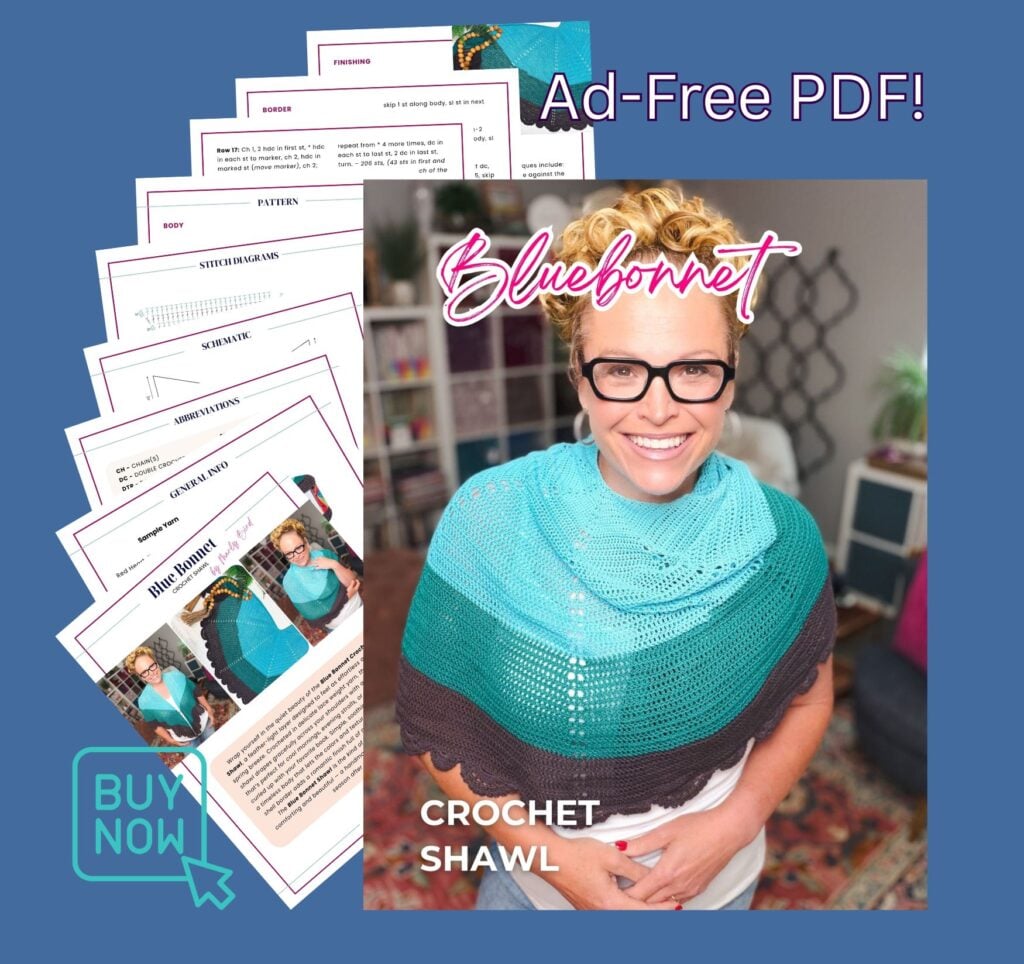
Love the Pattern but Want an Ad-Free PDF? ⭐
The Bluebonnet Crochet Lace Shawl pattern is FREE right here on the blog… but if you'd rather work from a clean, printable, ad-free PDF (with crochet stitch charts and no scrolling), I have you covered.
Grab the ad-free PDF in the shop of your choice:
- 🛒 Get the Pattern in my Shopify (shop.marlybird.com)
- 🛍️ Get the Pattern in my Etsy Store
- 💛 Get the pattern in my Ravelry Store
Get the latest Marly Bird patterns + bestie-only deals in your inbox every week. 💛
Join our Newsletter
Get Free Crochet & Knitting
Pattern Links & Coupons!

Is the Bluebonnet Crochet Lace Shawl Right for You?
This pattern is a great fit if…
✅ You have a cake of It's A Wrap in your stash — OR you want a pattern designed for lightweight cotton-blend gradient cake yarn. The shawl was designed around the way these gradient cakes shift color naturally as you crochet. Substitute yarn picks are in the Yarn & Materials section.
✅ You're an advanced beginner or intermediate crocheter ready to try lace. The body uses single crochet, half double crochet, and double crochet… stitches you already know. The lace edging is where you'll stretch, but you'll be comfortable with the yarn by then.
✅ You want a lightweight, drapey shawl for spring and summer. The cotton/acrylic blend breathes well and doesn't overheat you in warmer weather.
✅ You love a “the yarn does the work” pattern. No striping math, no color planning… just crochet and watch the cake yarn do its thing.
This pattern might NOT be the right fit if…
❌ You've never held lace weight yarn and don't want to start there. The yarn is thin and the hook is small… it takes a little practice. (See the Build Your Skills section below for a gentle on-ramp.)
❌ You're looking for a heavy, snuggle-up-in-winter shawl. This one's a featherweight… beautiful, but not your January blanket-shawl.
Explore More Free Crochet Shawl Patterns
If you love lace and lightweight crochet shawls as much as I do, you'll want to keep these in your queue too:
- 🌊 Alpaca Clouds Crochet Wrap — a free lace crochet shawl with a beginner-friendly cloud stitch and three sizes. The yarn is heavier than lace but the shawl is perfectly lightweight.
- 🌼 Fernanda Crochet Motif Shawl — join-as-you-go motifs in DK weight
- 🧣 Sunday Sideline Crochet Shawl — one-skein triangle shawl for advanced beginners
- 💚 Beginner Lace Border Crochet Shawl — a gentle on-ramp to lace borders
- 🌈 Rainbow Sprinkles Crescent Shawl — also designed for cake yarns like It's A Wrap
- 🌿 Chevron Waves Lacy Wrap — another lightweight summer-shawl favorite
And if you want the full collection in one place, head over to the Free Crochet Patterns hub.
Is Lace Yarn Too Hard for Beginner Crocheters?
Honestly? Lace yarn isn't HARDER… it's just different. Here's what to know going in.
The biggest adjustment is tension. Lace weight yarn is thinner than the worsted or DK most crocheters start with, so your stitches will feel smaller and your hook will feel finer. The trick is to keep your tension consistent… not necessarily tight or loose, just even. Stitches should sit at a uniform height. Don't worry about speed.
The second adjustment is visibility. Lace yarn is easier to work with in good lighting. If you usually crochet on the couch under a lamp, set up a brighter task light for the first few rows… it makes a huge difference.
The good news: the body of the Bluebonnet Shawl uses three of the most common crochet stitches there are. You're already familiar with them. The yarn is the new variable… not the stitches. By the time you reach the lace edging, the yarn will feel completely normal in your hands.
Build Your Skills with the Bluebonnet Shawl
Every pattern is also a chance to grow as a crafter. Here's what you'll add to your skill set when you make the Bluebonnet Crochet Lace Shawl:
🌸 Working with lace weight yarn. Once you've finished one lace-weight project, you'll have unlocked a whole category of patterns that probably felt intimidating before.
🌸 Combining basic stitches into elegant fabric. Sc, hdc, and dc are workhorse stitches… but when you arrange them with intention, they create texture and drape that looks far more advanced than the technique itself.
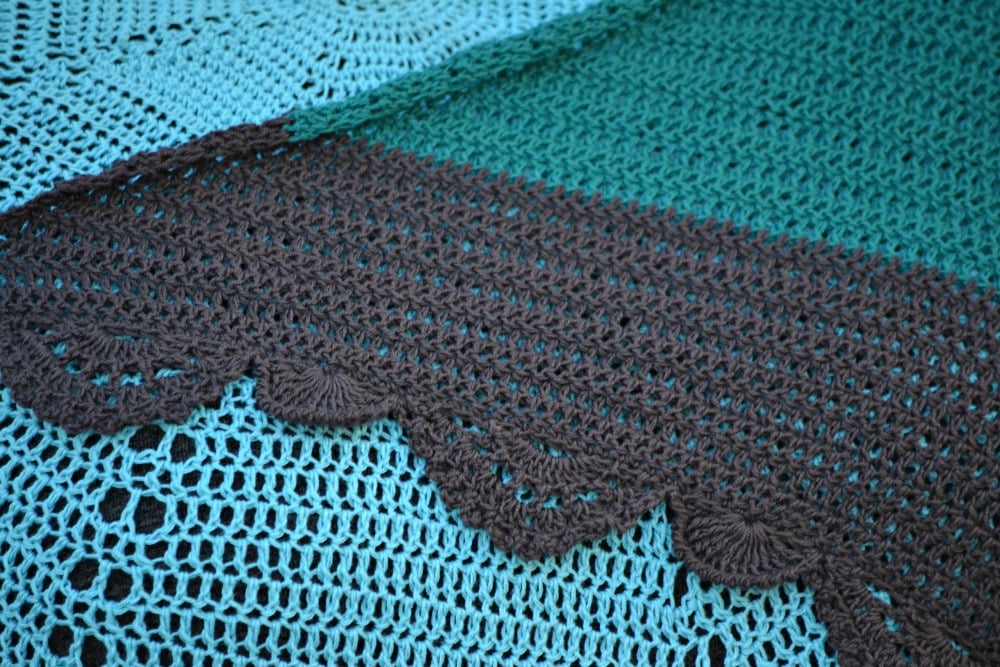
🌸 Working a lace edging. Lace borders are the gateway skill to true lace shawls. The edging on this pattern is a perfect introduction… contained, repeating, and visually rewarding.
🌸 Blocking a finished lace project. Blocking is what transforms lace from “huh, looks crinkly” to “wow, look at that drape.” See the Blocking Tips section below for the steps.
Yarn & Materials
The Bluebonnet Crochet Lace Shawl is designed for a lightweight (CYC #1 super fine) cotton-blend gradient cake yarn. The original yarn was Red Heart It's A Wrap, which has been discontinued. The good news: a number of beautiful substitute yarns work just as well, and the pattern is forgiving enough to look gorgeous in any of them.
Recommended Substitute Yarns
There isn't a perfect 1:1 big-box substitute for It's A Wrap, but these are the yarns I recommend (in order from “closest match” to “would look stunning, just adjust your hook”):
🌿 KnitPicks Candy Mountain — the closest match. CYC #1 fingering/lace weight, gradient self-striping. Easy to find, ships fast, and the color shifts behave very much like It's A Wrap. My top pick for a current, easy-to-buy substitute.
🌸 KnitPicks Summer Breeze — sport weight (CYC #2), cotton blend. Slightly heavier than the original, which means a slightly heavier shawl and a slightly larger finished size. Use a hook size up from the pattern and check gauge. The drape is gorgeous.
💙 Hobbii Sultan Deluxe Shine — cotton-blend cake yarn from Hobbii (international shipping, but worth it for the colors). A great option if you want something a little more luxe than acrylic-blend.
🌸 Hobbii Azalea and Hobbii Honolulu — two more lovely cotton-blend cake yarns from Hobbii's collection. Great for spring/summer shawls.
🌈 Ice Yarns Cakes Cotton Fine — a fantastic substitute, especially if you're trying to replace It's A Wrap Rainbow in any pattern (it works beautifully in the Tilted Blocks Shawl too).
🧩 Ice Yarns Cakes Puzzle — another cake yarn option from Ice Yarns with similar weight and gradient behavior.
☁️ Ice Yarns Mohair Pastel — if you want a completely different vibe, a lace-weight mohair would give the shawl a soft, halo-y, dreamy texture. Pastel colorways are stunning for spring.
Honest heads-up: there aren't currently any big-box (Michaels, JOANN, Hobby Lobby) yarns at this exact weight + construction. So if you want a true cotton-blend lightweight cake yarn, you'll be ordering online from KnitPicks, Hobbii, or Ice Yarns. All three are reliable shippers — just plan a few extra days into your project timeline.
Other Materials You'll Need
- 🪡 Crochet hook: Grab a set of affordable crochet hooks and never be without the right size!
- 📐 Stitch markers, scissors, tapestry needle (all your usual finishing tools)
- 🛁 Blocking supplies: blocking wires + pins and a no-rinse wool wash like Eucalan (works beautifully on cotton/acrylic blends, cotton, and mohair)
Choosing Your Colors for the Bluebonnet Shawl 🎨
The original Bluebonnet Shawl is famous for those soft, dreamy blue-to-purple-to-cream color shifts — that's the gradient cake yarn doing its magic. But here's the thing: this pattern looks gorgeous in just about any color story you can imagine. The stitch pattern itself — the petal-inspired lace edging, the panel shaping in the body — is what makes the shawl special. The yarn just dresses it up.
If a true blue-bonnet palette isn't your thing, or you want to make one for a friend whose favorite color is decidedly NOT blue, here are a few ways to think about color for this shawl:
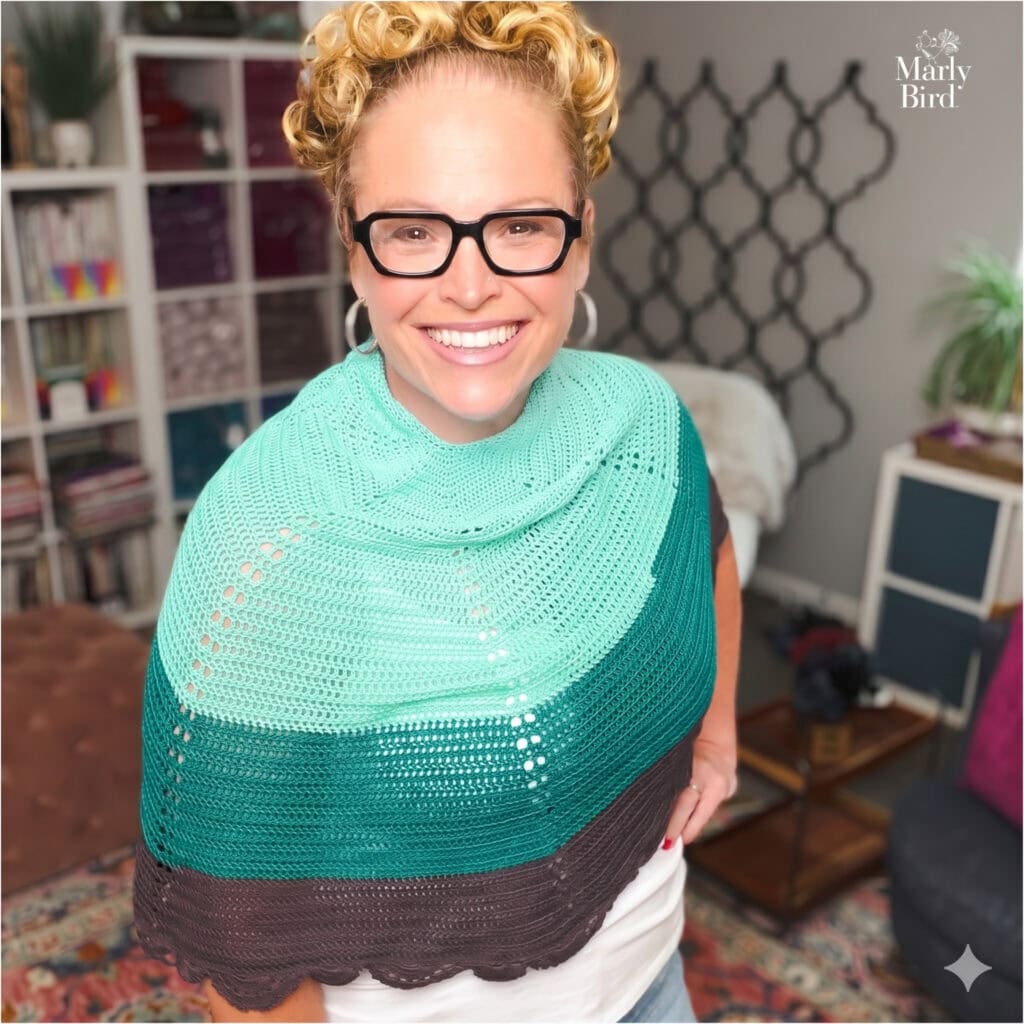
Classic Gradient Cake — The Original Look 💙
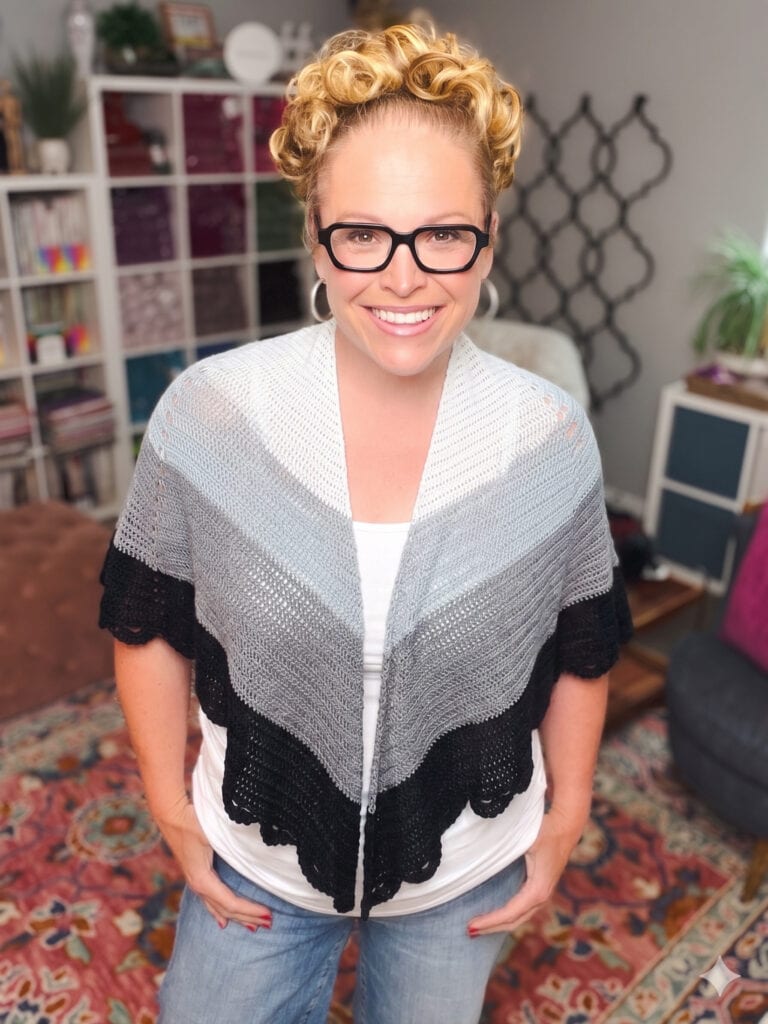
This is the shawl as it was designed — natural color shifts that move through several related shades over the course of a single cake of yarn. There's zero color management on your end: you just keep crocheting and the colors change themselves. If you love the original Bluebonnet vibe, any of the substitute yarns in the Yarn & Materials section above will give you that same gradient effect (just in different color stories).
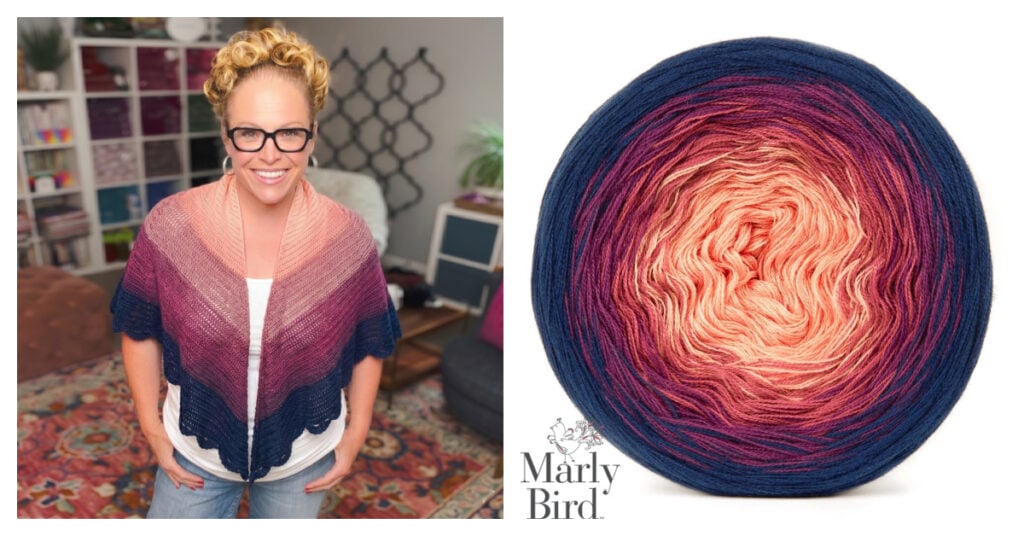
A Different Gradient — A Whole New Mood 🌅
Swap the cool blue-and-purple gradient for a warm sunset palette, a leafy forest gradient, or a soft pastel rainbow, and the shawl reads completely differently. Same stitches, same construction, totally new vibe. This is a great option if you're making the shawl as a gift and want to match the recipient's wardrobe or favorite colors.
Solid or Semi-Solid — Let the Stitches Shine ✨
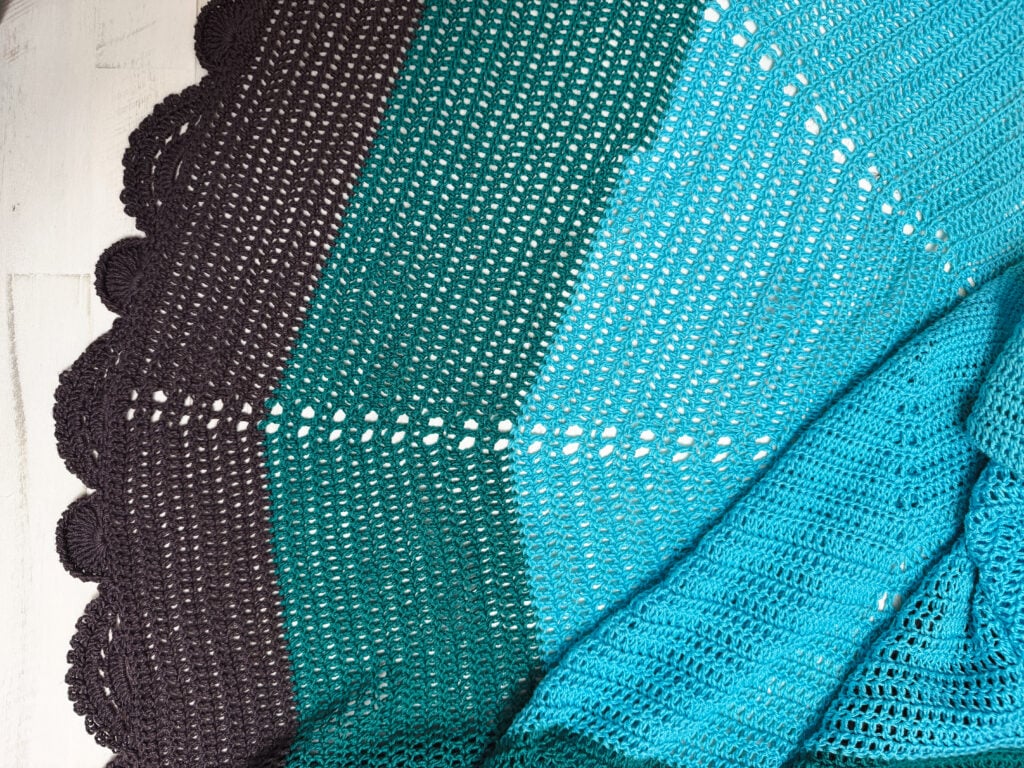
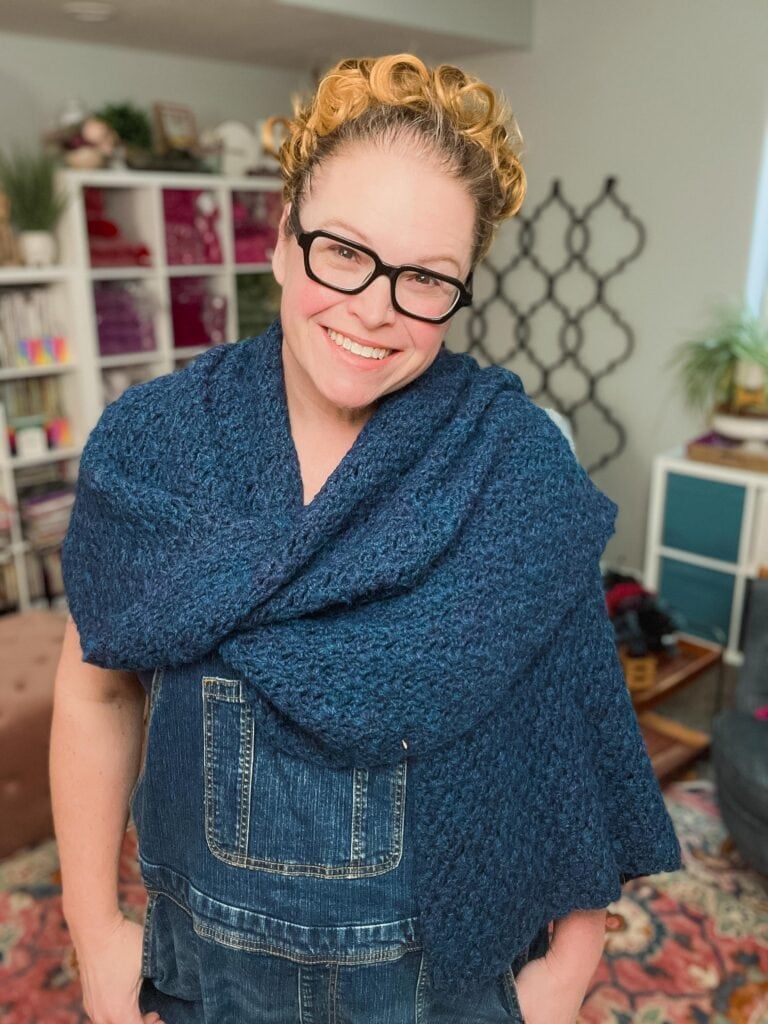
Here's a secret about lace patterns: they often look BEST in a single solid color. When you remove the visual movement of a gradient, your eye lands on the lace itself — the open spaces, the petal shapes in the edging, the way the panels swirl out from the center top. A solid Bluebonnet Shawl is a completely different garment than the gradient version, and honestly… it might be my favorite way to make it.
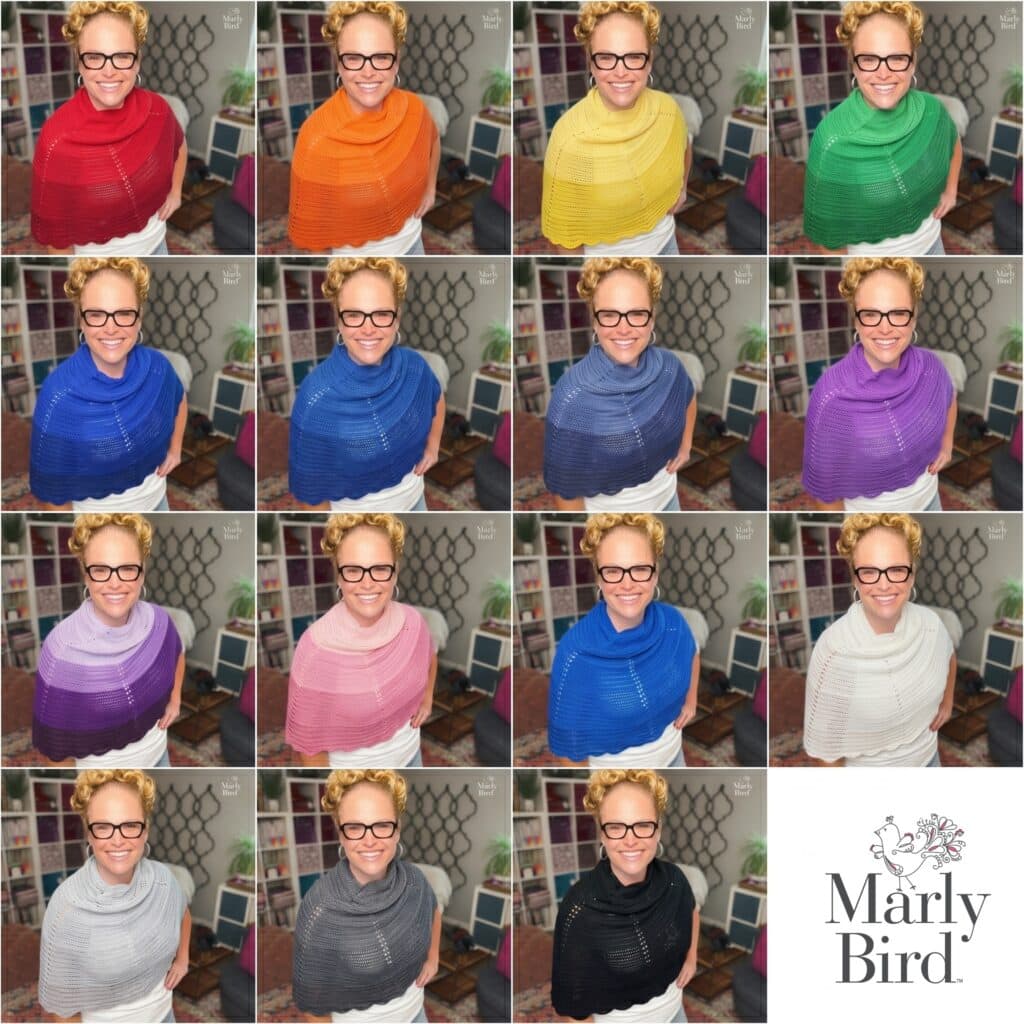
If you go solid, I recommend a soft, slightly tonal yarn (a hand-dyed semi-solid with subtle variation, or a brand's “solid” colorway that still has a little depth) over a perfectly flat color. The tiny tonal shifts make the lace look richer without competing with it. Think of it like the difference between a flat painted wall and a wall with a soft tone-on-tone texture — the textured one shows off everything in front of it better.
Color ideas for a solid Bluebonnet:
- 🤍 Soft cream or natural — timeless, bridal, perfect for a wedding wrap
- 🩶 Light gray or silver — modern, sophisticated, pairs with everything in your closet
- 💙 A single shade of blue — keeps the Bluebonnet name but simplifies the look
- 🌿 Sage green or dusty rose — gentle, wearable, neutral-adjacent
- 🖤 Deep navy, charcoal, or burgundy — dramatic, evening-friendly, the lace really pops
Video Tutorials
Two helpful video tutorials to keep open while you work on this shawl:
- 🎥 How to Bury Ends » Click here for video help
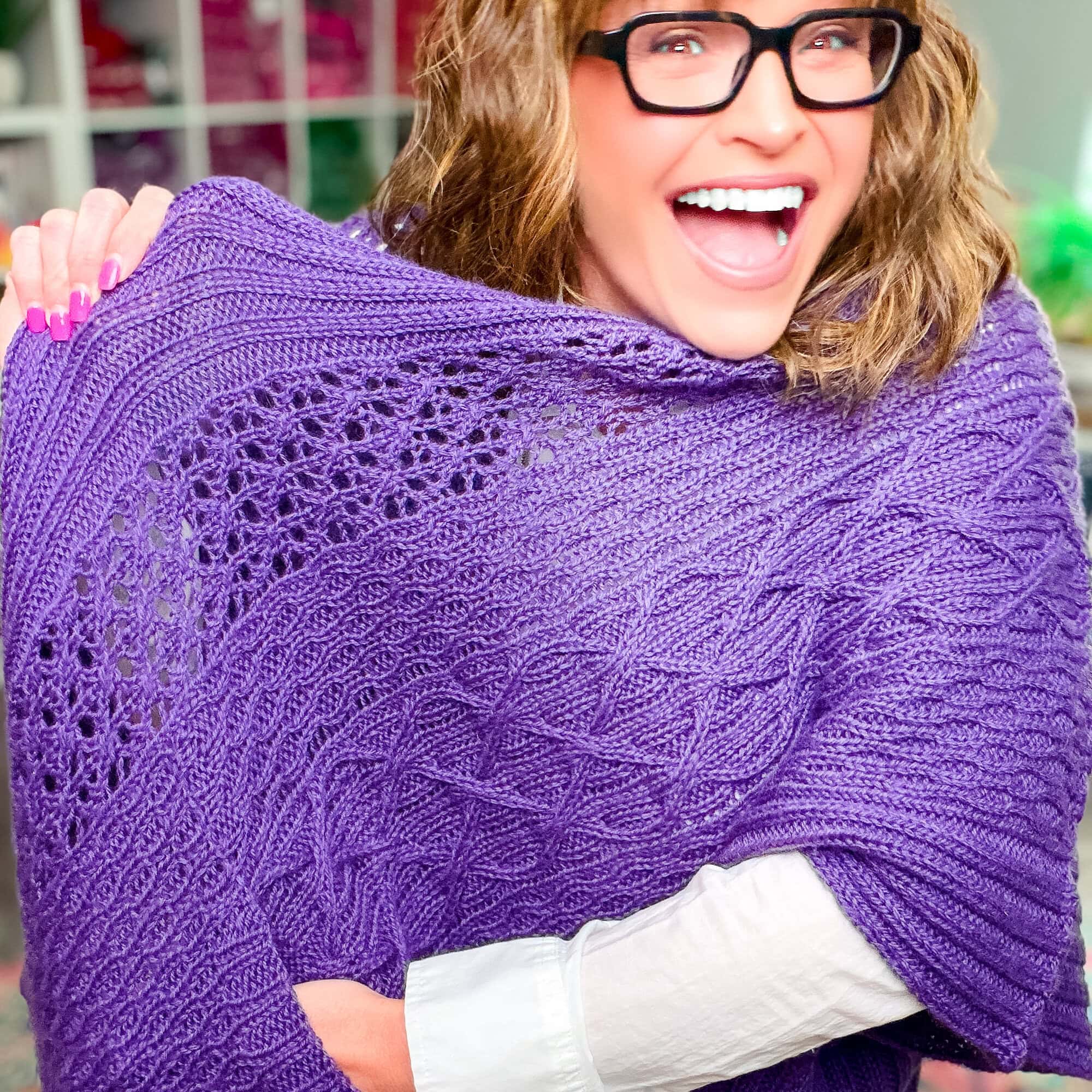
Bluebonnet Crochet Lace Shawl shown in an alternate gradient colorway, demonstrating how the pattern looks in different color stories
- 🎥 Reading Crochet Diagrams » Click here for video help
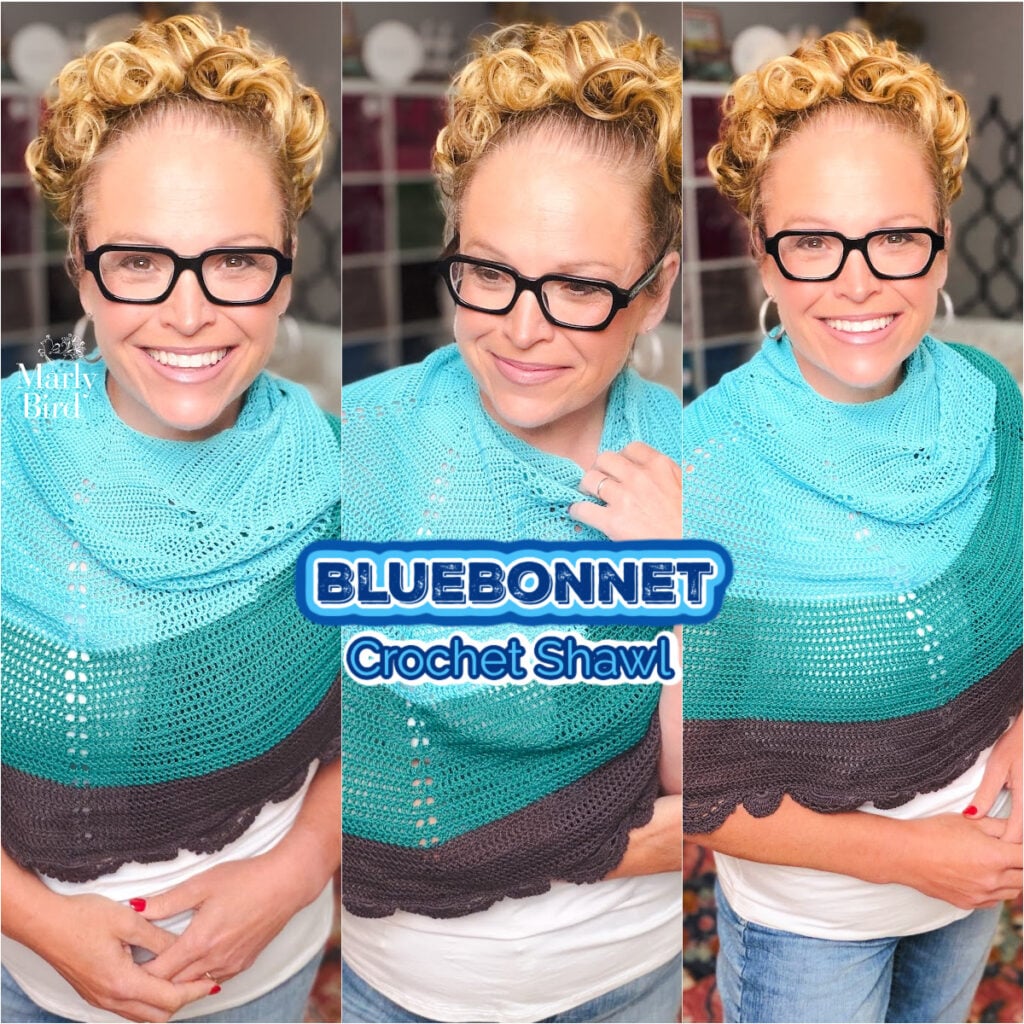
Bluebonnet Crochet Lace Shawl — Pattern Details
Skill Level
Adventurous Beginner
Finished Measurements
Shawl is 23.5” [59.5 cm] deep including border and 56” [142 cm] in wingspan
Gauge
24 dc by 11 dc rows = 4” [10 cm] by 4” [10 cm]; use any size hook to obtain the gauge.
Materials
Crochet Yarn
Red Heart, It’s a Wrap (50% Cotton/ 50% Acrylic, 1100 yds / 1006 m, 7 oz/ 200 g, CYCA# 1 fingering) : Action, 2 cakes
Note: Yarn has been discontinued.
Crochet Hook
Size E/4 [3.5 mm]
Notions
Abbreviations
Ch – Chain(s)
Dc – Double Crochet
Dtr – Double Treble Crochet
Hdc – Half Double Crochet
RS – Right Side
Sc – Single Crochet
Sl st – Slip Stitch
Sp(s) – Space(s)
St(s) – Stitch(es)
Tch– Turning Chain
WS – Wrong Side
Special Stitches
⭐️Double Treble Crochet (Dtr): Yarn over hook three times, insert hook into indicated stitch, yarn over and pull up a loop; [yarn over and draw through two loops] four times.
⭐️Reverse Single Crochet (reverse sc): Also known as a Crab Stitch; working from left to right, insert hook from front to back in next stitch to the right, yarn over and pull up a loop, yarn over and draw through 2 loops on hook.
CROCHET STITCH DIAGRAM
✨ Following along with the free pattern on MarlyBird.com? You’ll have everything you need to make the shawl, but if you want the exclusive stitch diagram charts, those are only available in the ad-free PDF version.
You’ll enjoy a clean, printable, ad-free experience while supporting Marly Bird’s free tutorials and patterns 💖
SCHEMATIC
Pattern Notes
The shawl is made from the center top to bottom with panel shaping increases made every other row.
The color change happens naturally with the yarn.

GROW
To Unlock Exclusive Subscriber Content click the Box below and join for free by simply adding your email and creating a password! If you are having troubles, clear your cache or reset your password or login to the Grow Publisher Portal.
>> Learn More About Grow Here <<
I'm thrilled to share this amazing pattern with you, many patterns on my blog are absolutely free! I kindly request that you don't copy and paste or distribute this pattern. Prefer an ad-free experience? Buy a digital PDF pattern for a small fee from one of my online stores for a seamless crafting journey.
I appreciate your support and readership. You are the reason I can keep doing what I love and sharing it with others. So, thank you from the bottom of my yarn-loving heart! Disclosure: This post contains affiliate links, meaning I get a commission if you decide to make a purchase through my links at no cost to you.
Bluebonnet Crochet Lace Shawl — Pattern Instructions
Body
A heads-up before you pick up your hook: the way this shawl begins is probably different from any shawl you've started before. You'll chain just 5 stitches, work a tiny foundation row, and then in Row 3 you'll stretch your yarn down to work into the edge stitches of Row 1 — essentially crocheting around the little starting nub to build out from the center top of the shawl.
If that sounds strange, that's because it IS a little strange the first time you do it. Most shawl patterns start with a long foundation chain or a magic ring, not a tiny anchor that you build outward from. I promise it works. Just follow the instructions exactly as written for Rows 1 through 4, and by Row 5 your shawl will look like a normal shawl-in-progress with the panel shaping clearly visible. You don't need to understand WHY it works at the start to get a beautiful finished piece — you just need to trust the instructions for the first four rows.
Once you're past Row 4, the construction settles into a rhythm: each odd row adds 2 stitches and each even row adds 12 stitches, and the markers move out across the body to shape the five panels.
Ch 5
Row 1 (WS): 2 sc in second ch from hook, sc in each of next 2 ch, 2 sc in last ch, turn.— 6 sts.
Row 2 (RS): Ch 1, 2 sc in first st, sc in each st to last st, 2 sc in last st, turn.— 8 sts.
Row 3: Ch 1, sc in edge st of row 1 (stretch yarn to reach side, work over ch just made), 2 sc in first st of row 2, sc in each st to last st, 2 sc in last st, sc in left edge st of row 1, turn. – 12 sts.
Row 4: Ch 1, 2 sc in first st and each st across, turn. – 24 sts.
Row 17: Ch 1, 2 hdc in first st, * hdc in each st to marker, ch 2, hdc in marked st (move marker), ch 2; repeat from * 4 more times, hdc in each st to last st, 2 hdc in last st, turn.—110 sts + 10 ch-2 sps.
Row 18: Ch 1, 2 hdc in first st, * hdc in each st to next ch-2 sp, hdc in next ch-2 sp, hdc in next st (move marker), hdc in next ch-2 sp; repeat from * 4 more times, hdc in each st to last st, 2 hdc in last st, turn. – 122 sts, (25 sts in first and last sections, 18 sts in each of the center sections).
Rows 19-28: Repeat Rows 17-18 – 192 sts, (40 sts in first and last sections, 28 sts in each of the center sections).
Row 29: Ch 2 (does not count as a st throughout), 2 dc in first st, * dc in each st to marker, ch 2, dc in marked st (move marker), ch 2; repeat from * 4 more times, dc in each st to last st, 2 dc in last st, turn.—194 sts + 10 ch-2 sps.
Row 30: Ch 2, 2 dc in first st, * dc in each st to next ch-2 sp, dc in next ch-2 sp, dc in next st (move marker), dc in next ch-2 sp; repeat from * 4 more times, dc in each st to last st, 2 dc in last st, turn. – 206 sts, (43 sts in first and last sections, 30 sts in each of the center sections).
Rows 31-68: Repeat Rows 29-30 – 472 sts, (100 sts in first and last sections, 68 sts in each of the center sections).
Row 69: Ch 1, sc in each st across, (move markers up). Turn.
Row 70: Ch 1, [sc in ea st across to marker, 2 sc in marked st] twice, sc in each st across to next marker, sc in marked st, [sc in ea st across to marker, 2 sc in marked st] twice, sc in each st across to end, turn — 476 sts.
Border
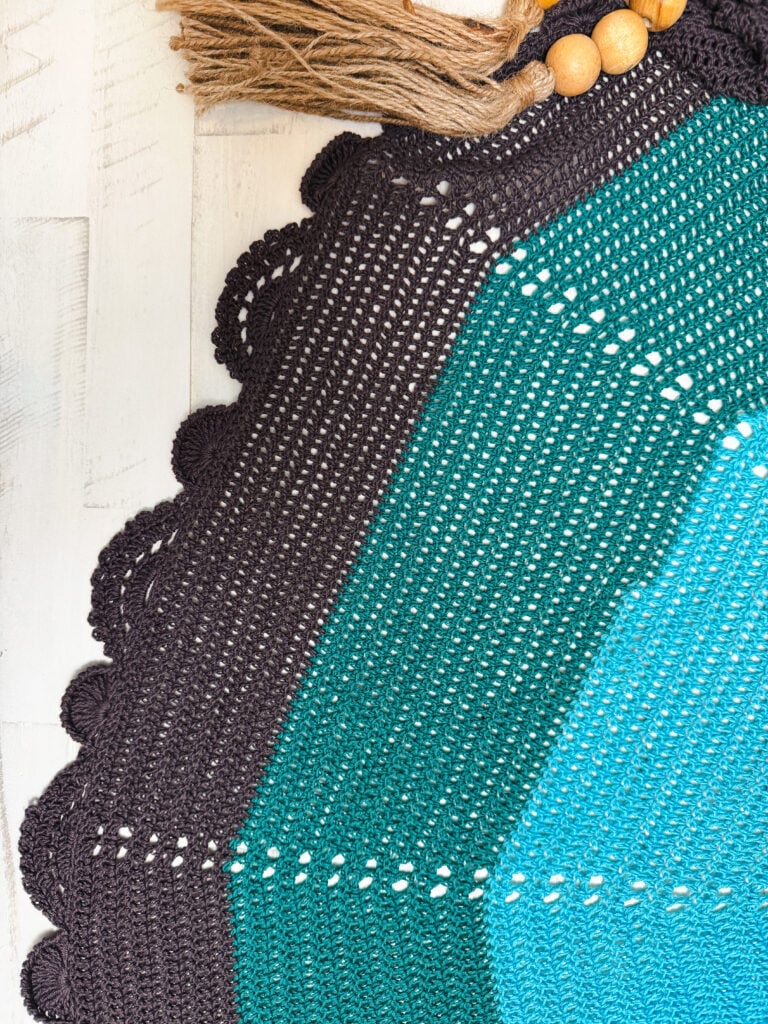
Note: Border edging is made from multiple short rows which create each scallop and shell individually. The edging has a multiple of 25 plus 1.
FIRST HALF SHELL
Row 1a (WS): Ch 1, sl st next 5 sc, turn.
Row 1b (RS): Skip 4 sl sts, 7 dtr in last sl st, reverse sc in each dtr just made (half shell completed), turn.
Row 1c (WS): Skip 3 sts on body, sl st in next st (same as prev sl st).
REPEAT FOR BODY
Row 2a (WS): * Sl st in next 7 sts, ch 5, skip 2 sts along body, sl st in next st, ch 3, skip 1 st along body, sl st in next st, turn.
Row 2b (RS): 12 dc in ch-5 space, skip 1 st along body, sl st in next st on body, ch 3, skip 1 st along body, sl st in next st, turn.
Row 2c (WS): [Ch 2, skip 1 dc, dc in next dc] 6 times, ch 2, skip 1 st along body, sl st in next st, ch 3, skip 1 st along body, sl st in next st, turn.
Row 2d (RS): [3 dc in next ch-2 sp] 7 times, skip 1 st along body, sl st in next st, turn.
Row 2e (WS): [Ch 5, skip next dc, sl st in next dc] 10 times, ch 5, skip next dc**, sl st in next 9 sts along body, turn.
Row 3a (RS): Skip next 4 sl sts, 13 dtr in next st (shell made), skip 3 sts along body, sl st in next st on body (same st as prev ch-5 sp), reverse sc in each dtr, turn.
Row 3b (WS): Skip 3 sts on body (from center of shell), sl st in next st, turn
Repeat from * on Row 2a thru Row 3b across to last 5 sts ending at ** on Row 2e.
LAST HALF SHELL
Row 4a (WS): Sl st in each st to end, ch 5 (counts as dtr), turn.
Row 4b (RS): 6 dtr in last st (half shell completed), skip 3 sts along body, sl st in next st, reverse sc in each dtr. Fasten off.
Finishing
Fasten off, weave in the ends.
Wash and Block
Wet blocking is like sending your yarn on a spa retreat. It's the process where your yarn unwinds, enjoys a soothing cleanse, and settles gracefully into its final form, allowing its true beauty to flourish.
Here's how to pamper your creation with a thorough wet block:
- Begin by submerging your piece in a basin or sink filled with water. This is a great moment to add a touch of gentle soap or specialized wool wash—enhanced with lanolin and fiber conditioners—to not only clean but also condition the yarn. (Just remember to rinse well, especially if you aren't using a no-rinse wash.)
- Remove as much water as you can without stretching or distorting the fibers.
Some helpful techniques include:
- Pressing the piece against the sink to shed excess water.
- Gently squeezing between your hands—just avoid any twisting or wringing.
- 💡 Always support the entire garment when lifting to prevent any part from stretching out of shape.
Carefully lay the piece on a large towel without stretching it. Fold the towels ends over your project and roll it up like a burrito to wick away more moisture. Aim for a balance—your piece should be damp, not sopping, and certainly not dry, to avoid any creases.
Place your piece on the blocking board with care. Now, shape it while it's damp.
Align with the grid if your board has one, centering your work for symmetry.
Gently expand your piece to the desired measurements, using your pattern's schematic and the grid for precision.
🚨 USE EXTRA CARE TO AVOID OVERSTRETCHING! As the project is damp, some yarns like to overstretch or grow and you must be vigilant to avoid this.
Secure with pins, using them sparingly to keep the fabric flat. Smooth the piece with your hands to ensure an even spread.
Leave your masterpiece to dry and take this chance to cast on a new project. Drying could take a full day, but if you're pressed for time, setting up a fan can speed up the process significantly. Do not place the project in direct sunlight as it can discolor the yarn!
Remember, wet blocking is more than a finishing step—it's an act of transformation, turning your knitted work into an heirloom-quality piece. Now, step back, let the magic happen, and watch as your stitches settle into their new, polished configuration.
Blocking Tips for Your Bluebonnet Shawl
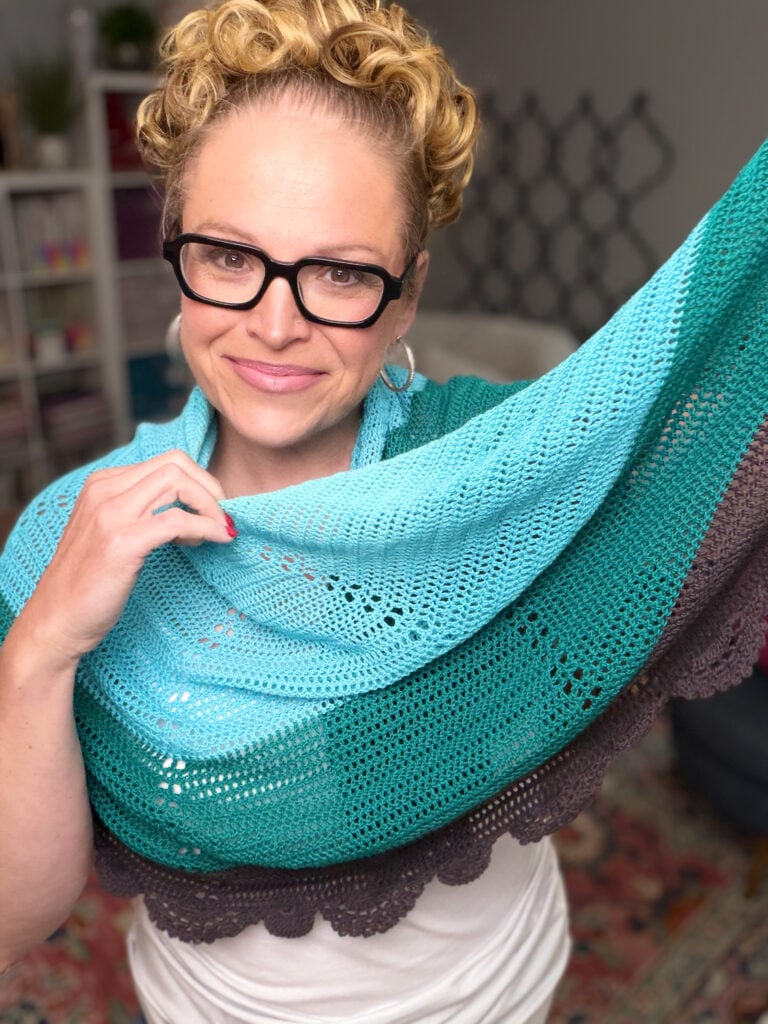
Blocking is the single biggest thing you can do to make your finished shawl look professional. Lace especially needs it… the holes open up, the drape settles in, and the fabric flattens into the shape you designed it to be. Here's how I block this one.
- Weave in all ends first. You want them secure before blocking, because wet fibers can shift.
- Fill a clean sink or basin with cool water and a tiny splash of Eucalan wool wash. Soak the finished shawl for 15-20 minutes. Press it gently under the water, do not agitate.
- Drain. Gently press out excess water (do not wring). Roll the shawl in a clean towel and press to remove more water.
- Lay the damp shawl on blocking mats. Use blocking wires along the long edges to keep things straight, and T-pins to pin out each point of the lace edging.
- Let it dry completely. This usually takes overnight depending on humidity. Don't unpin too early… the shape sets as it dries.
Once it's blocked, the lace pattern opens up beautifully and the whole shawl drapes the way it's supposed to. This is the moment you'll be glad you bought blocking supplies. 💛
Got It's A Wrap in Your Stash? More Patterns to Use It Up
If you have It's A Wrap (any of the four versions — original, Rainbow, Sprinkles, or Hues) sitting in your stash from when it was still in production, you're not alone! It was a beloved yarn, and a lot of us bought more of it than we could use up before it disappeared. Here are more of my free patterns designed around this same gorgeous cake yarn:
- 🌈 Rainbow Sprinkles Crescent Shawl — crescent-shaped, designed for It's A Wrap Sprinkles
- 🌿 Chevron Waves Lacy Wrap — chevron lace, lightweight, summer-ready
- 📚 It's A Wrap One-Ball Patterns Roundup — the full collection of patterns from me and other designers that use just ONE ball of It's A Wrap yarn. The perfect stash-busting hub.
Favorite & Queue the Bluebonnet Shawl on Ravelry

More Free Crochet Shawl Patterns You'll Love
Add these to your queue while you're here:
- 🌊 Alpaca Clouds Crochet Wrap
- 🌼 Fernanda Crochet Motif Shawl
- 🧣 Sunday Sideline Crochet Shawl
- 💚 Beginner Lace Border Crochet Shawl
- 📚 Browse the full Free Crochet Patterns hub
Frequently Asked Questions
Is the Bluebonnet Crochet Lace Shawl beginner-friendly?
It's best suited for advanced beginners and intermediate crocheters. The body of the shawl uses single crochet, half double crochet, and double crochet… stitches most crocheters know well. The intermediate-level challenge is the lace edging at the end, plus working with lace weight yarn for the first time. By the time you reach the edging, the yarn will feel comfortable in your hands.
What yarn should I use for the Bluebonnet Shawl now that It's A Wrap is discontinued?
My top substitute pick is KnitPicks Candy Mountain — it's the closest match in weight and gradient behavior. Hobbii's Sultan Deluxe Shine, Azalea, and Honolulu cotton blends are excellent options too. Ice Yarns Cakes Cotton Fine is another favorite, especially if you're replacing It's A Wrap Rainbow specifically. See the full substitute yarn list in the Yarn & Materials section above. If you still have It's A Wrap in your stash, you can absolutely use it — that's what the pattern was originally designed for.
Is lace weight yarn difficult for beginner crocheters?
It's not harder, just different. The yarn is thinner and the hook is smaller, so consistent tension matters more than with worsted weight. Good lighting helps a lot. I recommend swatching a small square in plain double crochet before you start the shawl… it gives your hands time to adjust without commitment.
How long does the Bluebonnet Crochet Lace Shawl take to make?
Most crocheters finish it in two to three weeks of casual evening crochet, depending on how much time you put in. The body works up faster than you'd expect for a lace-weight project because it uses tall stitches (hdc and dc) rather than only single crochet. The lace edging takes a little longer per row, but there are far fewer rows of it. [MARLY: confirm typical hours/weeks if there's a more specific estimate from pattern testing.]
Do I have to block this shawl?
Yes, please block it! Blocking is what makes lace look like lace. Before blocking, the fabric will look crinkly and the lace edging will feel a little scrunched up. After a proper wet-block (see the Blocking Tips section above), the lace opens up, the drape settles in, and the whole shawl transforms. It's the single biggest finishing step you can take.
Where can I get the ad-free PDF of the Bluebonnet Shawl?
The ad-free PDF (with crochet stitch charts) is available in my Ravelry shop, my Etsy shop, and at shop.marlybird.com. The PDF includes the full pattern plus charts that aren't shown on the blog version, so it's the easiest way to work the pattern without scrolling.
Why is it called the Bluebonnet Shawl?
It's named for the Texas state wildflower — those gorgeous blue-purple blooms that carpet Texas highways every spring. The lace stitch pattern in the edging echoes the layered petal structure of an actual bluebonnet bloom, which is a small design detail I love. If you've ever driven through Texas Hill Country in April, you know exactly the color and softness this shawl is named for.
Final Thoughts
The Bluebonnet Crochet Lace Shawl has been one of my favorite patterns for years, and getting to re-release it with fresh photos and our current standard layout feels like reintroducing an old friend. Whether you're crocheting it as a gift, a prayer shawl, or simply because you have a cake of It's A Wrap calling your name from the stash… I hope you love making it as much as I loved designing it. 💙🌸
If you make one, please share it with me. Tag @MarlyBird on Instagram or post in the Marly's Minions Facebook group. There's nothing better than seeing your finished pieces. 💛
And if this pattern brightened your day, share it with a fellow crocheter on Facebook — that's how patterns like this one find the people who need them most. 🌸
❤️ Your BiCrafty Bestie,
Marly Bird

This pattern debuted as Day 7 of Spring Fling 2026 (Tue May 12, 2026), part of my 20-day knit and crochet pattern celebration. The free pattern stays free forever right here on the blog… and you can grab the ad-free PDF anytime on Etsy, Shopify, or Ravelry.
👉 See the full Spring Fling 2026 lineup on the Hub
Share your finished Bluebonnet Shawl with the hashtag #SpringFling2026 + #BluebonnetShawl 💙
Categories: Crochet, Free Patterns, Marly Bird Premium Patterns, Our Free Patterns, Pattern