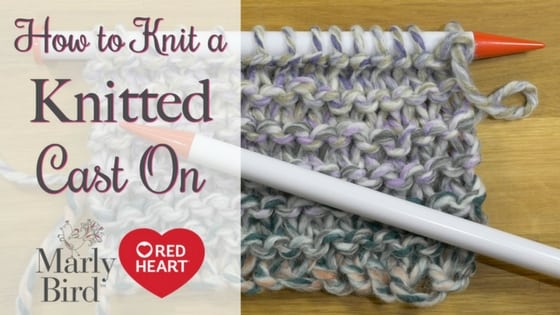
Knit Cast On Tutorial with Marly Bird
Cast-on your stitches is a breeze with the Knit Cast-On Tutorial with Marly Bird. This simple cast-on mimics the knit stitch. This makes it an easy way for beginner knitters to achieve quick success casting stitches onto a knitting needle.
*This post contains affiliate links. By clicking one of these links and making a purchase a small portion will go to the blog. The price that you pay does not change. This small commission allows me to keep bringing you free content like what is found in this post. Thank you for your continued support.*
Have you ever looked to see how many ways you can cast on your next knitting project? I honestly don’t even know the answer, but there are a LOT. Each method of casting on serves its own purpose. My go-to cast on for beginner knitters when not specified in the pattern, is the knit cast on.
This beginner-friendly cast on is a great place to start when you first pick up your needles and yarn.
Cast on, Bind off: What’s the difference?
The cast on is the beginning of your project where you load the stitches onto your needle. The bind off is the end of your project where you remove the stitches from your needle.
The cast on is important because it determines the foundation of your project. There are different cast-on methods that you can choose from. The one you choose depends on the type of project you’re making and the desired outcome. Some cast on methods provide a stretchy edge, while others create a firmer edge. It’s essential to choose the right cast on for your project to ensure that your stitches don’t unravel.
On the other hand, the bind off is crucial because it provides a finished edge to your project. Like cast-on, there are different bind off methods to choose from depending on the desired outcome of your project. Some bind off methods are stretchy, while others are firm. It’s important to choose the right bind off method. This ensures that your project has a polished look and doesn’t unravel.
While the cast-on starts your project and the bind off ends it, both are equally important for a successful project. Understanding different cast-on and bind-off methods will help you to create a professional-looking and secure finished project.
The Knitted Cast On:
The knit cast on is a popular method for beginner knitters – it’s easy to learn and creates a sturdy foundation for your project. This cast on mimics the motion of a knit stitch. This makes it an excellent choice for beginners who are just getting comfortable with the knitting technique.
To perform the knitted cast-on, you’ll need to know how to do a knit stitch. First, you will make a slip knot and place it on your needle. Then, insert your needle into the slip knot as if you were going to knit a stitch. Instead of completing the knit stitch, swivel the left-hand needle in front of the loop you just pulled up on your right-hand needle and scoop it up to transfer that loop to the left-hand needle. This creates a twist at the bottom of the loop (which is now a cast-on stitch) to keep it stable. You now have a new stitch on your left-hand needle.
Repeat this process for the desired number of stitches. Always work into the NEWEST STITCH on the left-hand needle to begin each time. Remember to keep the tension consistent throughout and always swivel and scoop. The resulting stitches should be even and not floppy. This makes it easy to work into them as you begin your knitting.
Benefits of the Knit Cast-On:
One of the benefits of the knit cast-on is that can be used for a wide range of knitting projects. It creates a firm edge that is suitable for most projects. The resulting stitches are easy to work into, making it a great choice for beginners starting to explore knitting.
The knit cast on is an excellent choice for beginner knitters wanting to create a sturdy foundation for their projects. Give it a try and see how it can improve your knitting!
How to Knit the Knit Cast-On Video Tutorial:
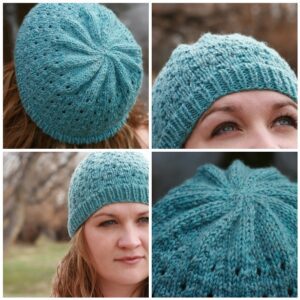
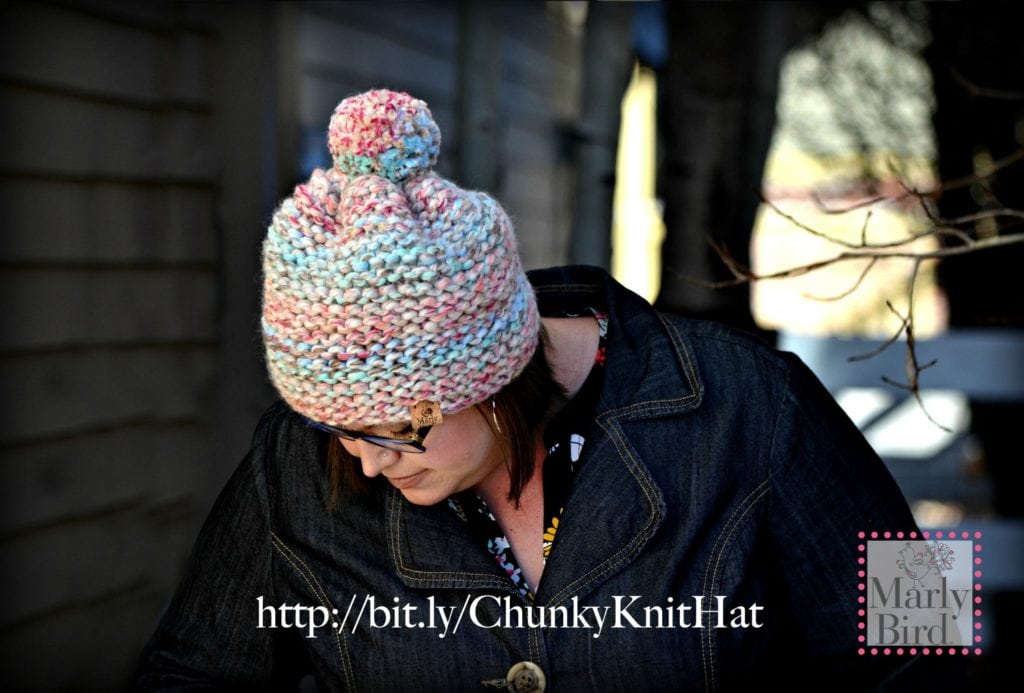
Check out some beginner knitting patterns that use the knit cast-on:
Frequently Asked Questions
What is a cast on in knitting?
The cast on is how you get stitches onto your needle to begin a knitting project. It’s the very foundation of every knitted piece. Without casting on, you have nothing to knit into! Different cast on methods create different edge characteristics… some are stretchy, some are firm, some create a decorative edge. The first stitch of every knitting project begins with a cast on, so learning at least one good method is essential before you can knit anything at all. Marly’s tutorial covers the knit cast on specifically.
What is the knit cast on and when should I use it?
The knit cast on creates new stitches by knitting into existing stitches on your needle… each new stitch is literally a knit stitch that gets placed back onto the left needle. It creates a firm, relatively non-stretchy cast on edge that’s great for adding stitches mid-project (like button bands, sleeve additions, or cast-ons within a pattern). It’s NOT the best cast on for project beginnings where you need a stretchy edge (like hat brims). For those situations, the long tail cast on or cable cast on is usually preferred. The knit cast on is an important technique to know for its specific applications.
What’s the difference between the knit cast on and the long tail cast on?
Big differences! The long tail cast on is worked before you begin and creates both the foundation row AND the first row of stitches simultaneously. It’s faster and creates a beautiful, slightly elastic edge. The knit cast on uses actual knit stitches to create new stitches and is worked while you’re knitting… it’s used to add stitches at the beginning of a row or mid-project. Both create a row of usable stitches, but the long tail is better for project beginnings and the knit cast on is better for additions mid-project. Many beginning patterns default to long tail cast on for starting.
Is the knit cast on beginner-friendly?
It’s accessible for absolute beginners because it only requires knowing the basic knit stitch! You don’t need to set up a specific length of tail, manage two yarn strands, or learn a separate technique before you’ve practiced knitting. You just make a slip knot, knit into it, and put the new stitch on the left needle. Then repeat. It’s logical and easy to understand. The downside for beginners is that it produces a less stretchy edge than long tail, so for projects where edge stretch matters (hats, sweater hems), you’ll eventually want to learn the long tail cast on too.
What other cast ons should I learn after the knit cast on?
The long tail cast on is the most essential to learn next… it’s the most versatile general-purpose cast on and produces a beautiful, stretchy, professional edge for most project beginnings. After that: the cable cast on (similar to knit cast on but sturdier), the German twisted cast on (for maximum stretch in ribbing), the provisional cast on (for picking up live stitches later), and the Judy’s Magic Cast On (for toe-up socks worked in the round). Each has specific applications… build your cast-on vocabulary gradually as different projects call for different techniques.