Knitting in Art History
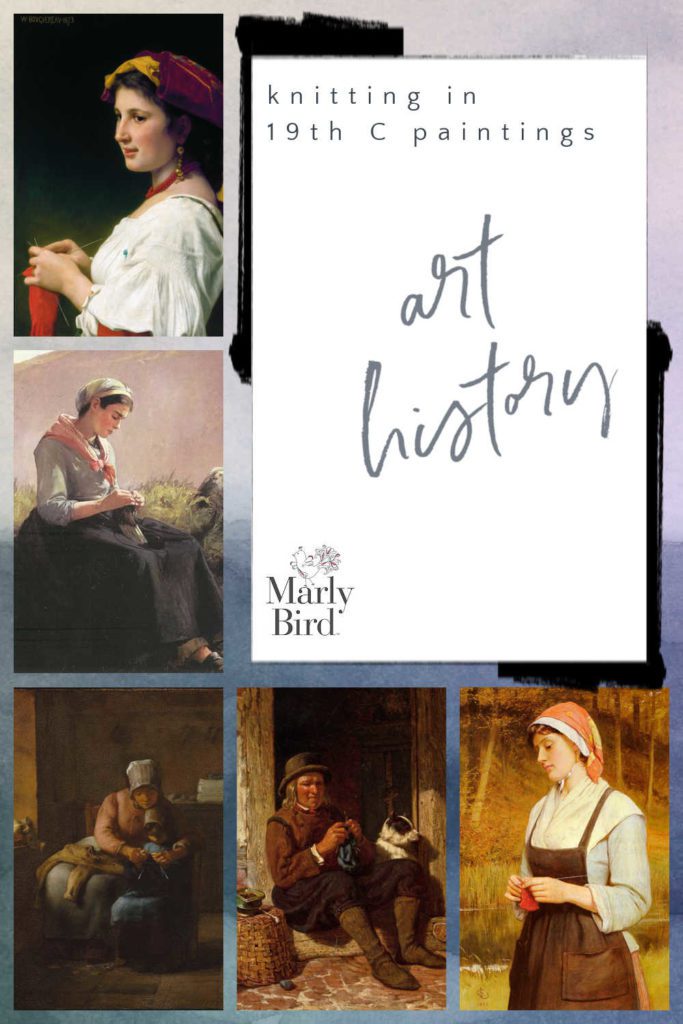
People have been knitting for centuries and knitting history is deep and rich. Did you also know that you can see snippets of knit history by exploring art history? The following images from the 19th century show a snapshot of knitting in art history.
Disclosure: This post contains affiliate links. If you purchase from these links, I receive a small amount. Your price doesn't change. THANK YOU.
The Tricoteuse
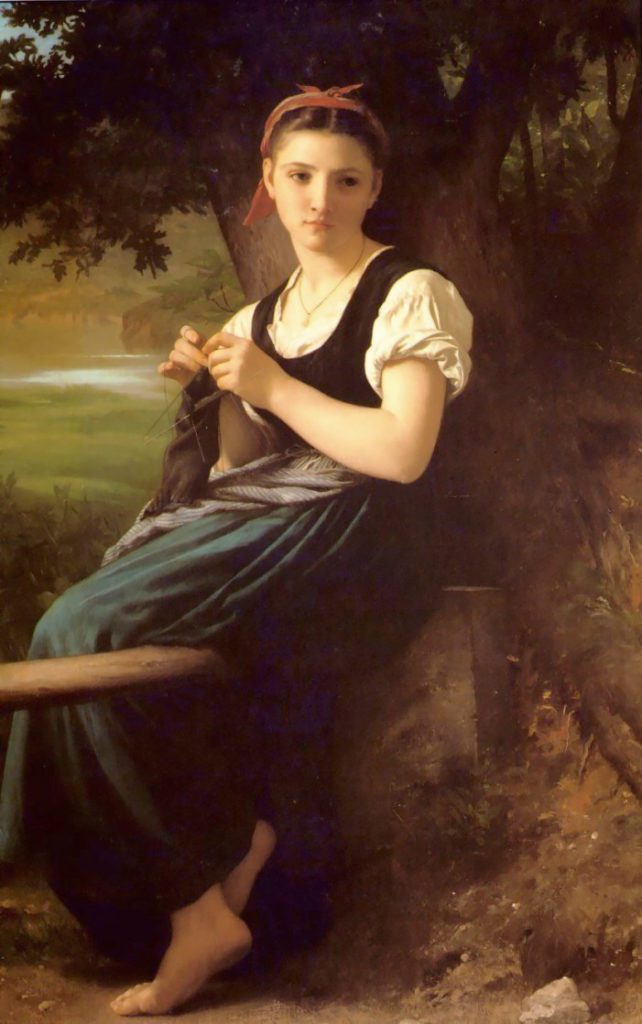
Tricoteuse is the word for “knitting girl” or “little knitter.” Artist William Adolphe Bouguereau seemed to really enjoy working with this subject since he painted many different knitting girls. One of the most popular is this one from 1879:
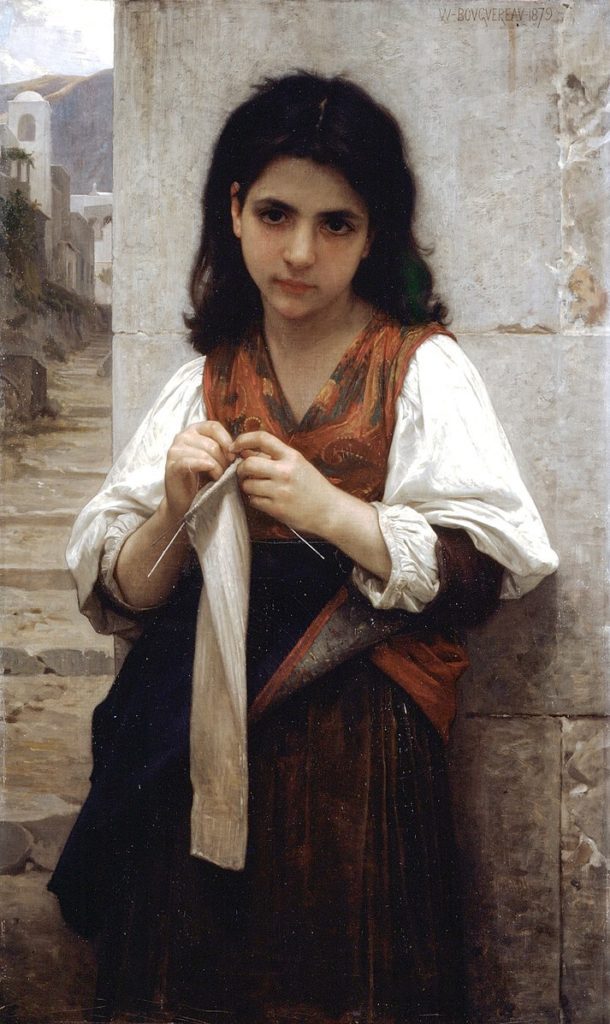
The girl looks right out at the viewer, and it seems her hands are still knitting. It appears to be very fine work on small needles, most likely stockings. Any of us who have been interrupted knitting mid-row know this look.
Here are some of the artist's other paintings of knitting in art history:
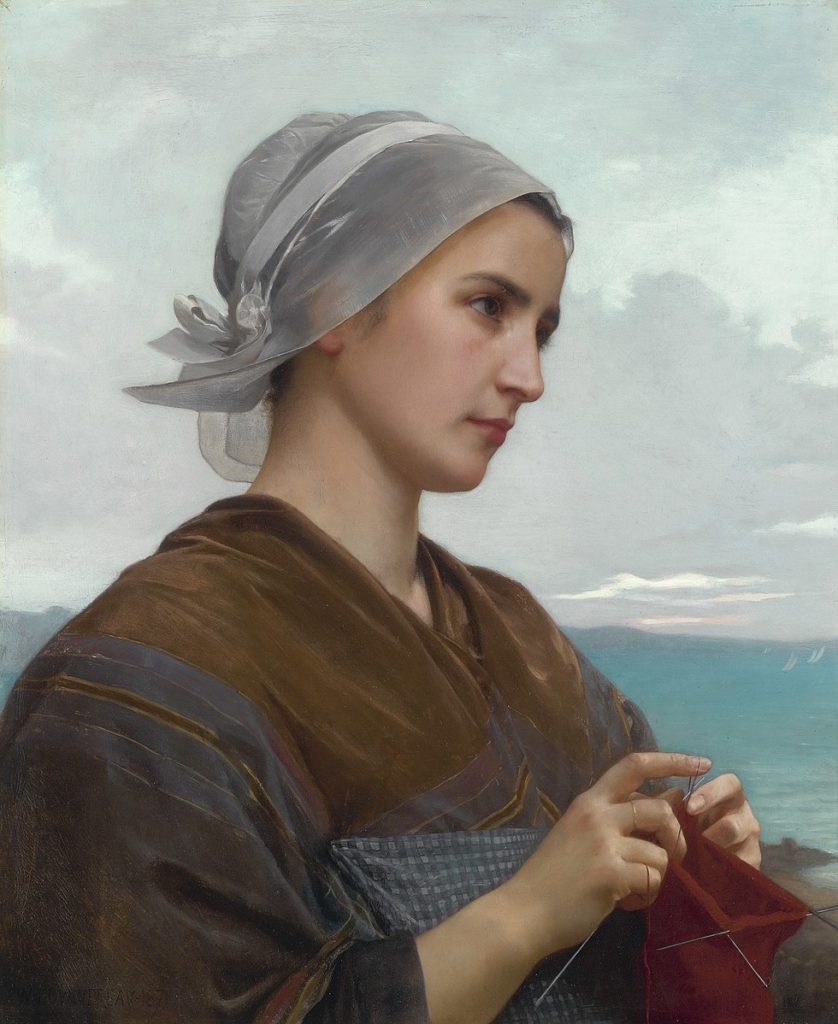
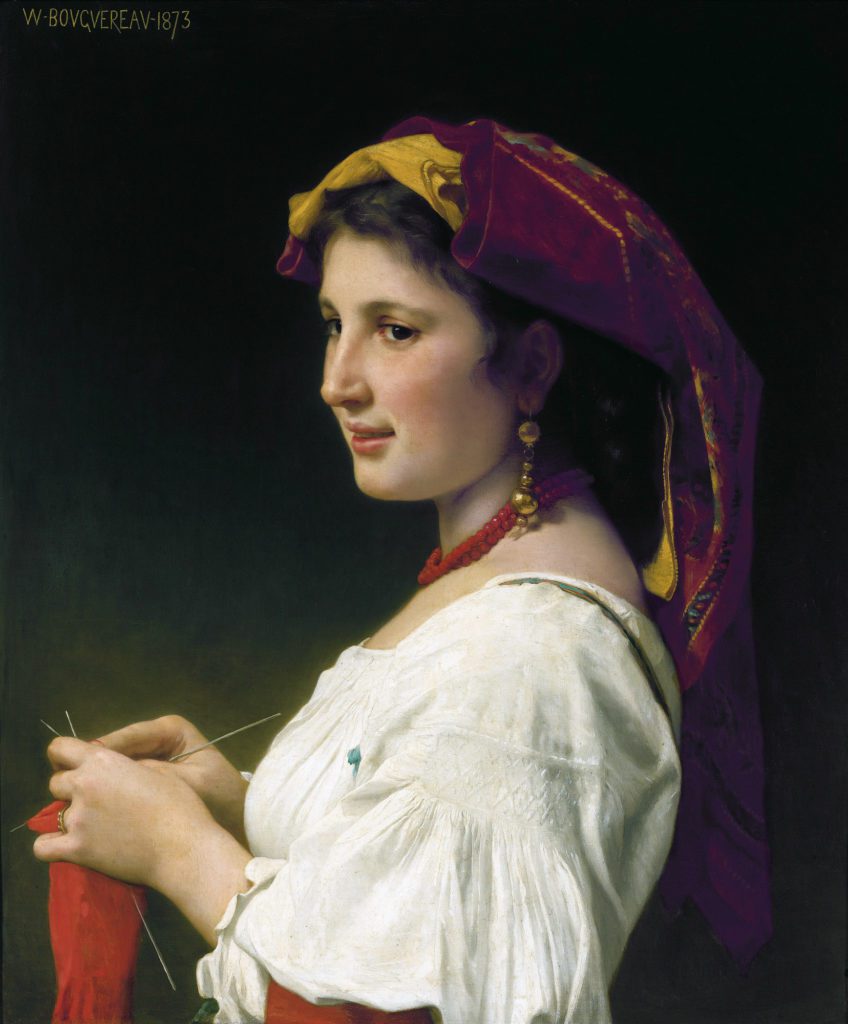
These are all oil paintings, and all the subjects seem to be knitting socks or stockings. This would have been the most common project during this time period.
Jean-Francois Millet's Knitting in Art History
Millet is another nineteenth-century oil painter who created several works featuring knitters. Two of the best are both called “The Knitting Lesson.” They each depict that age-old tradition of passing down the skill of knitting from one generation to the next.
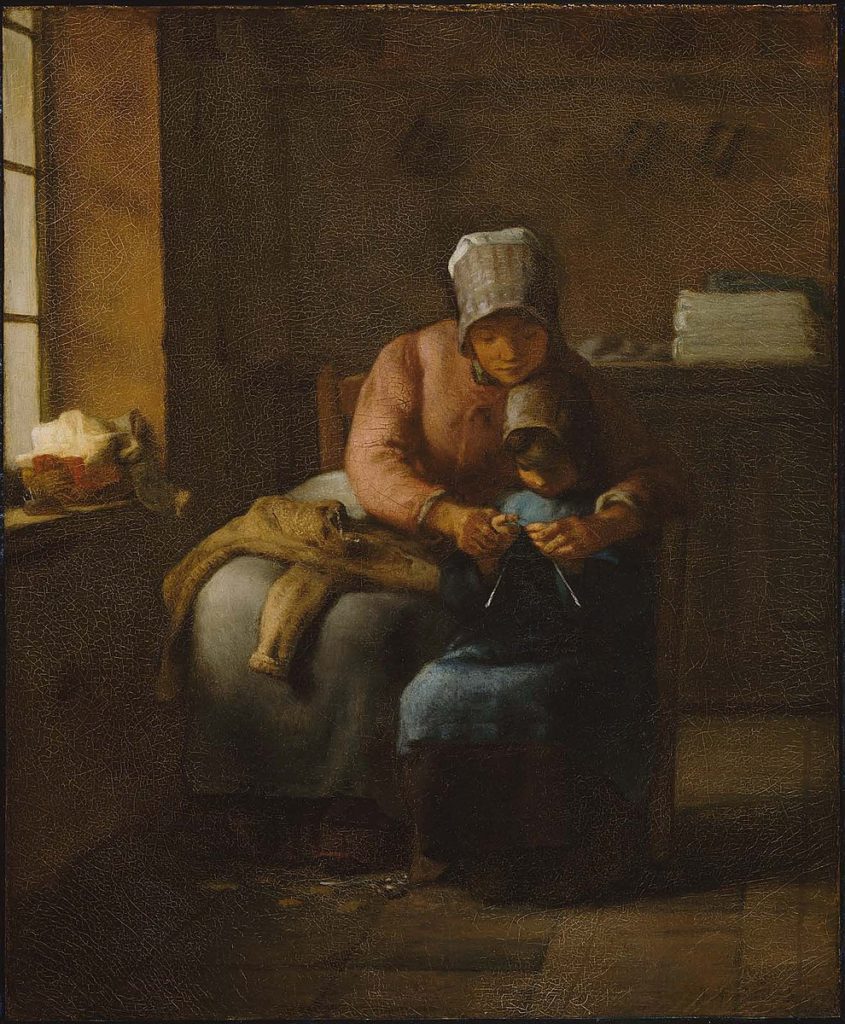
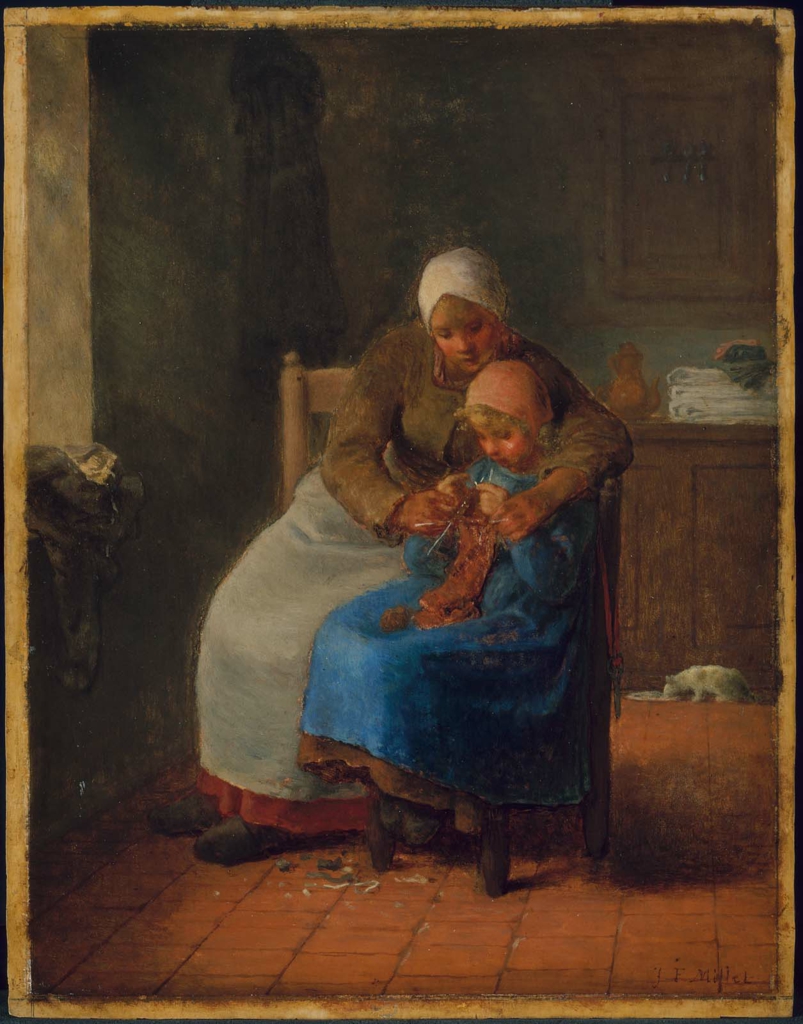
Millet wasn't the only one to paint this subject matter. Many examples show women teaching children to knit.
Millet also painted “The Knitting Shepherdess” in different versions.
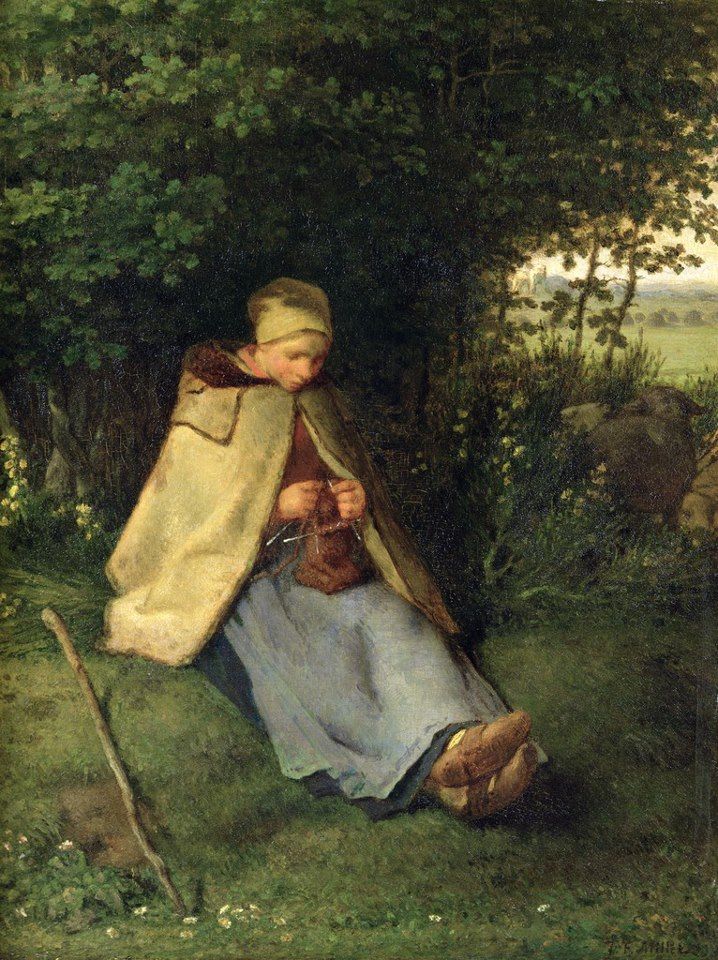
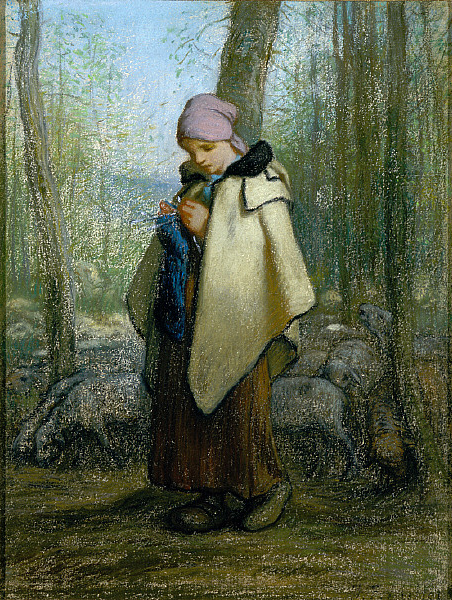
These are delightful because they show the pleasure of simply sitting alone and knitting. Even better, these women are getting sunshine and nature's benefits while knitting outdoors.
Knitting in Art History: Women Knitting Outside
Here are some of the other artists who depicted women knitting outside in 19th-century art history.
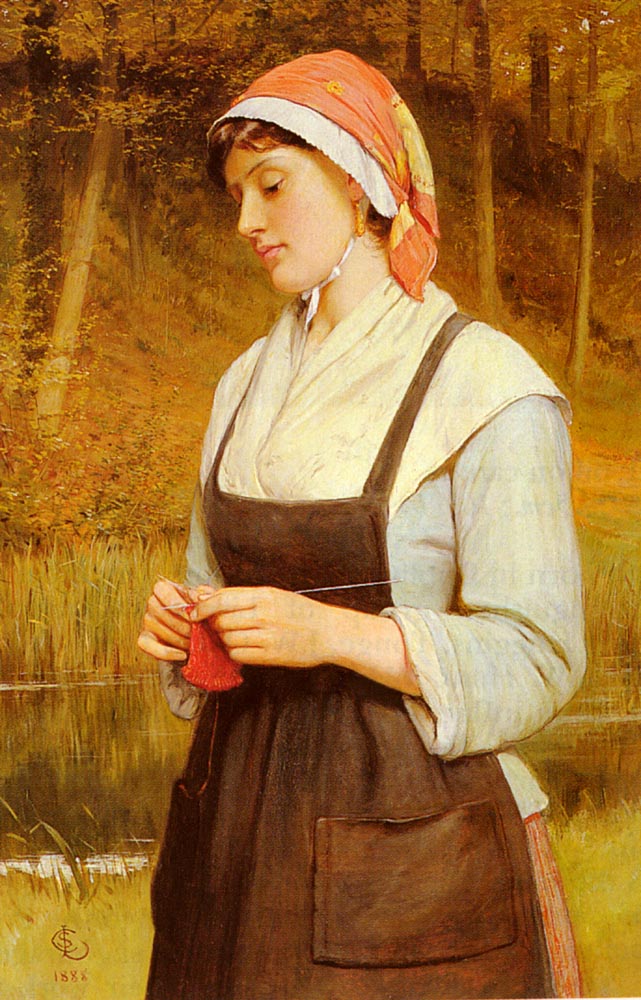
This is an 1888 oil painting by Charles Sillem Lidderdale.
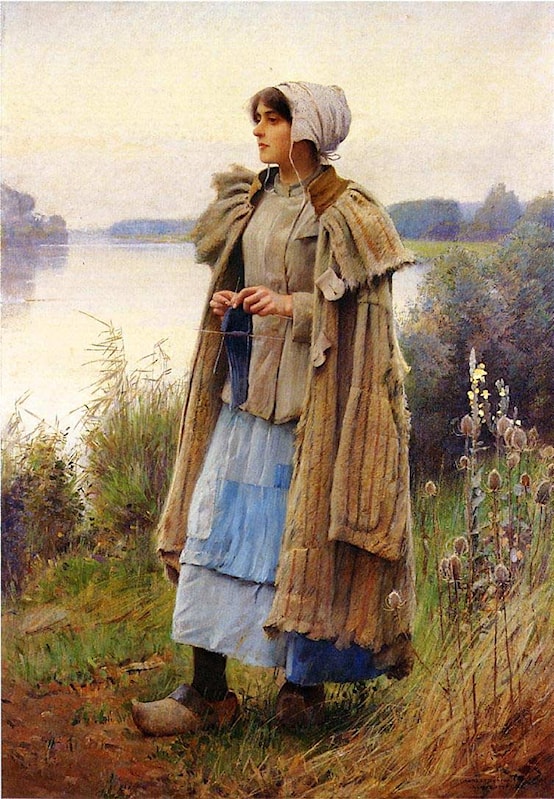
This painting by Charles Sprague Pearce is called “Knitting in the Fields.” Also, can we talk about that amazing coat the knitter is wearing? Beautiful!!!
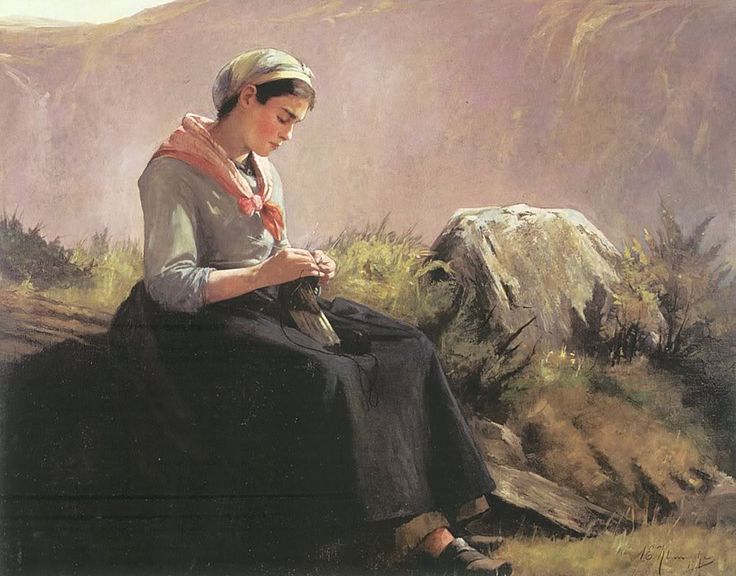
Most of the nineteenth-century paintings of knitters were painted by men, or at least, that's what art history has recorded. However, there were some recognized women painters during this time. For example, this painting, called “Catinou Knitting” is by Anna Elizabeth Klumpke.
Women and Girls Knitting Together In Art History
As we know, knitting doesn't have to be a solitary pursuit, even though it's enjoyable. Alternatively, it can be a lot of fun to knit with others. After all, that's why we all enjoy knitalongs and gatherings in yarn stores. And even though the Internet wasn't around back in the 19th century, women and girls did knit together socially in pairs and groups.
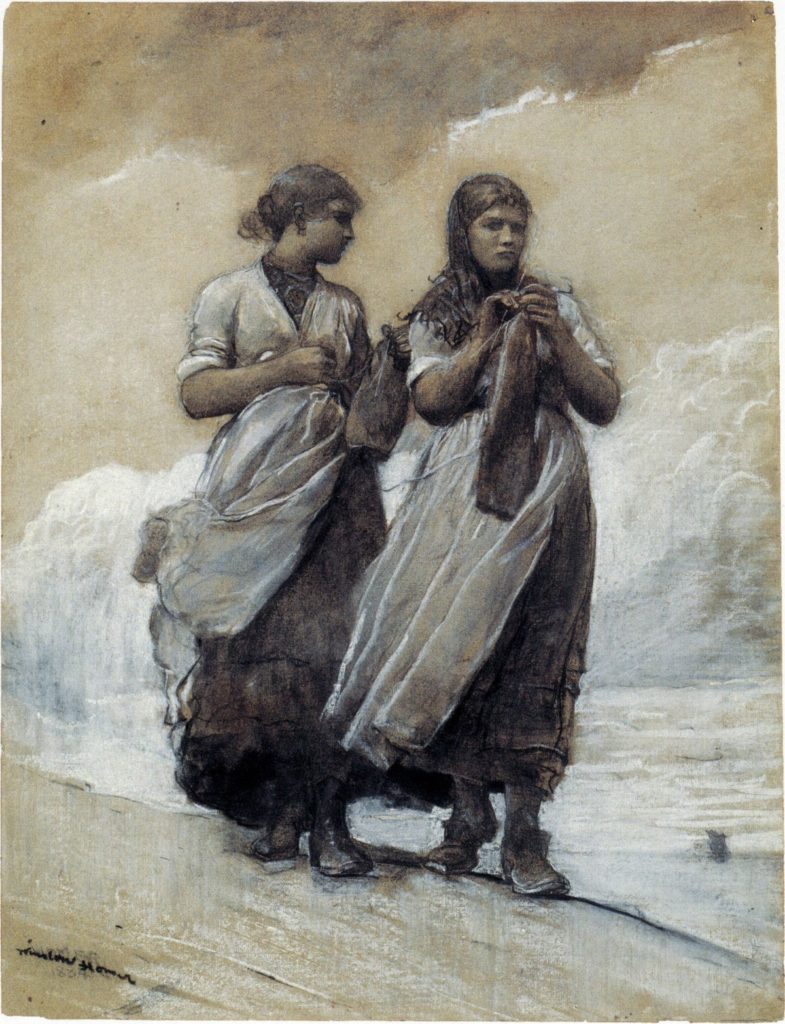
This is Winslow Homer's 1884 painting, “Fishergirls on Shore.” Can't you imagine the types of things they're discussing as they walk and knit together?
In the book “The History of Knitting in Art,” by Tulasi Zimmer, you can see other paintings of women knitting together. For example, you'll find Jozef Israels' “Three Women Knitting By The Sea,” which looks like a delightful way to pass an afternoon. There are also three people in the Claude Bail 1972 oil painting called, “An Interior with Marken Girls Knitting.”
Men Knitting in Art History
The aforementioned book shows that most paintings of knitters at this time feature women. However, men have always been knitters, and two particular images reflect this.
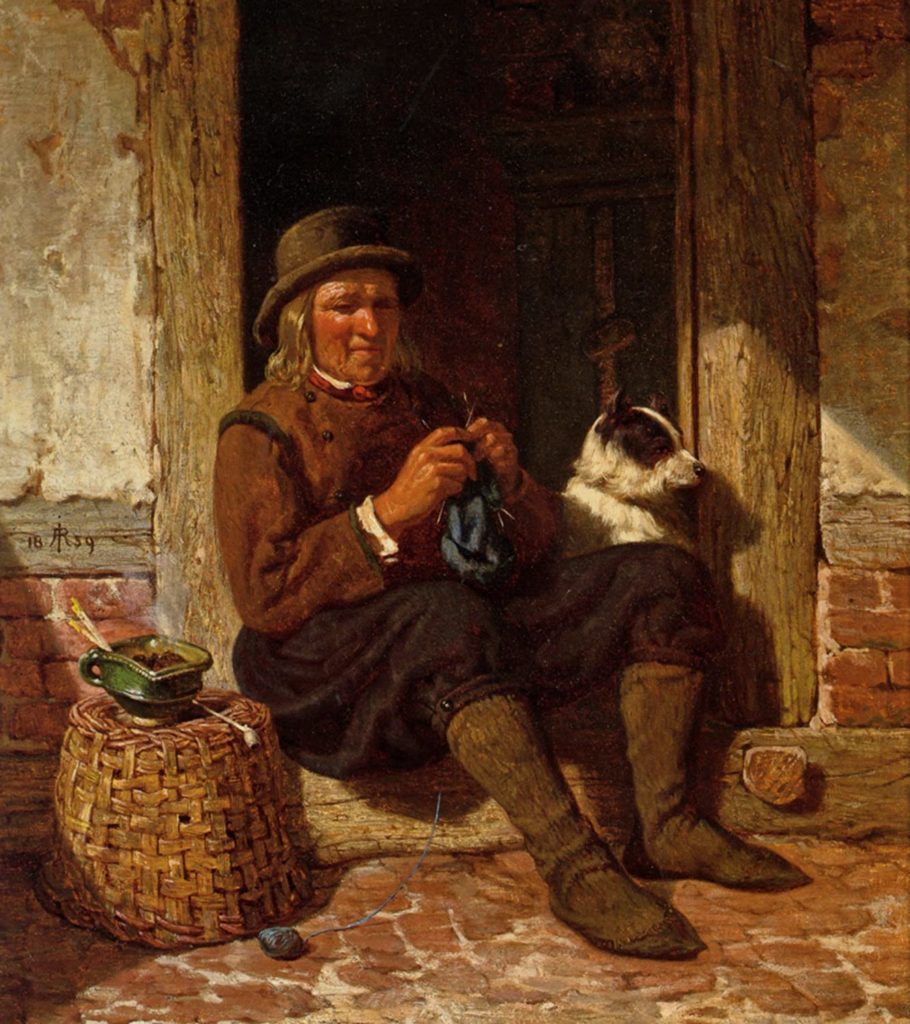
This is “A Man Seated in a Doorway Knitting With His Dog” by Rudolf Jordan. The other painting shown in that book is Cal Spitzweg's “The Knitting Look-Out,” which depicts a soldier seated by a cannon, looking out across the landscape, holding the green fabric he's knitting on his lap.
Get The Knitting in Art Book
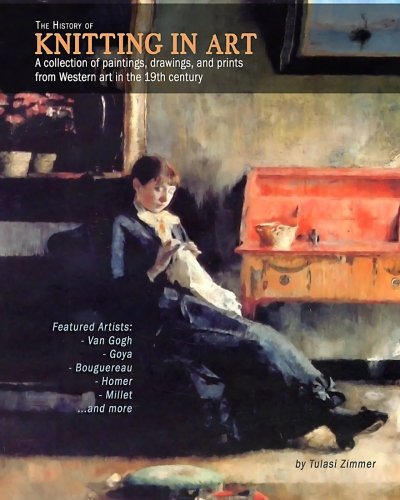
This book is available on Amazon.
What do you think each of these people was knitting in these images?!
You Might Also Like:
- Annie Modesitt: A History On Two Needles
- The Secret Stitch by C Jane Reid
- Generations of Crochet and How It Heals Families
Frequently Asked Questions
When did knitting first appear in history?
Knitting is older than most people realize! The earliest confirmed examples of knitted fabric date to around the 11th to 13th century CE… found in Egypt and the Middle East. Those early fragments used a technique called nalbinding which predates true knitting. True knitting with needles and interlocking loops appears clearly in European paintings and artifacts by the 1300s-1400s. The famous Knitting Madonnas (paintings of the Virgin Mary knitting!) from 14th century Italy are some of the most charming early visual records of knitting as a practice.
What are the famous “Knitting Madonnas” in art history?
The Knitting Madonnas are a series of European paintings from the 1300s-1400s that depict the Virgin Mary knitting… often in the round with multiple needles, sometimes working on what appear to be stockings for the Christ child. These paintings are fascinating not just theologically but as historical records of knitting technique. Mary of Burgundy's Book of Hours and various altarpieces include these images. They're beloved by modern knitters because they show that knitting has been a respected, meaningful activity throughout human history.
Was knitting historically considered men's or women's work?
Historically, knitting was actually a male-dominated professional trade in Europe! The first knitting guilds in the Middle Ages were exclusively male. Professional knitters (mostly men) made high-quality stockings, caps, and garments for sale. As machine knitting automated the commercial production in the 18th and 19th centuries, hand knitting transitioned to being associated primarily with women and domestic work. Today we recognize knitting as a craft that belongs to everyone… its history is far more complex and interesting than the “grandma's hobby” stereotype suggests.
How did knitting contribute to the war effort in the 20th century?
Enormously! Both World Wars saw massive organized knitting campaigns. In WWI and WWII, women and even children were encouraged to knit socks, gloves, helmet liners, and other items for soldiers. The Red Cross coordinated huge knitting drives. Yarn and needle manufacturers issued free wartime patterns. Knitting became a patriotic act and a way for people on the home front to contribute tangibly to the war effort. This period created some of the most interesting historical patterns still studied and reproduced today.
Are there museums or collections dedicated to knitting history?
Yes! The Knitting and Crochet Guild in the UK has an extraordinary collection of historical patterns, tools, and textiles. The Victoria and Albert Museum in London has significant textile collections including knitted items. The Maison des Traditions Populaires in France and various Nordic folk museums house important knitting heritage collections. Ravelry's historical pattern archive (many free downloads) is a wonderful digital resource. And academic researchers like Richard Rutt (author of “A History of Hand Knitting”) have done important work documenting the craft's global history.
Categories: Knitting