Tournament of Stitches 2026 || Knitting || Netflix and Chill Play 3 of 6

The free event includes access to the Netflix & Chill concentration level, which features relaxing stitch patterns that are easy to memorize and enjoyable to work.
These stitches are designed to be:
• rhythmic
• beginner-friendly
• relaxing to stitch
They’re perfect for crafting while watching your favorite show, chatting with friends, or simply enjoying a peaceful stitching session.
You can fully participate in the event using this concentration and still learn new stitches while stitching alongside the community.
But if you want to explore even more stitch techniques, there is also an optional upgrade available.
The VIP Advantage: Stitching With Your Mood
The VIP upgrade inside Marly Bird House unlocks all concentration levels.

This allows you to choose your stitching experience each week.
Feeling relaxed?
Work a Netflix & Chill stitch.
Feeling creative?
Try a Smooth Jazz pattern.
Feeling focused?
Dive into Shhh, Be Quiet!
This flexibility is what makes Tournament of Stitches so unique… and it’s why the finished projects are always so beautiful.
Play #3 – Netflix & Chill (Knit)
Ready to keep stitching… with just a little more texture? 😎🧶
In Play #3 of the Netflix & Chill concentration, we introduce the Studded Diamonds stitch pattern—a beautiful knit and purl texture that adds depth and visual interest to your shawl.
This section is still beginner-friendly, but it does ask you to check in with your pattern as you go. The stitches flow nicely once you get started, but it’s not quite a “set it and forget it” repeat.
Think of it as relaxed stitching… with just enough attention to keep things interesting. 😉
You’ll continue shaping your shawl while building this textured pattern, and by the end of the play, you’ll really start to see your project come to life.
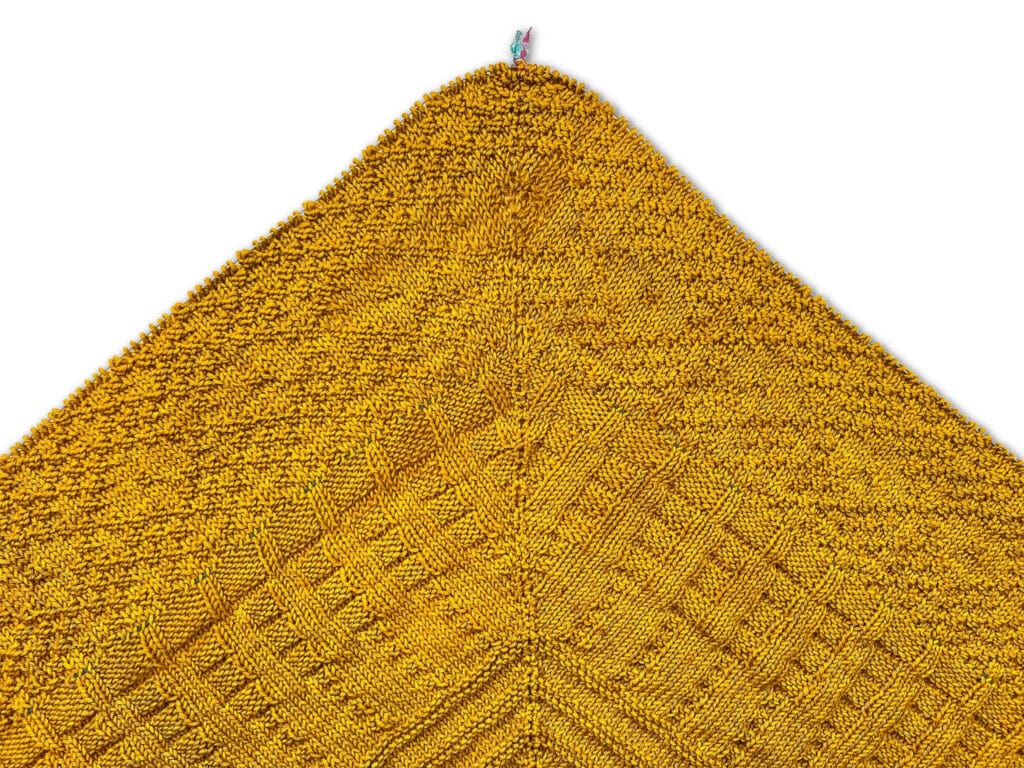
Designed by Marly Bird
SKILL LEVEL
Intermediate
GAUGE
18 sts = 4” [10 cm] in Stockinette st before blocking.
MATERIALS
Yarn
Malabrigo Yarn, Rios (100% Superwash Merino Wool, 210 yds / 192 m, 3½ oz/ 100 g, CYCA# 4 worsted)
7 balls: Frank Ochre (035)
Needles
U.S. 9 [5.5mm] 24” [60 cm] and 32″ [80 cm] circular or longer, or size to obtain gauge. Note: Shawl is worked back and forth in rows. Circular needles are used to accommodate the large number of sts as the shawl gets larger.
Notions
ABBREVIATIONS
K – Knit
P – Purl
RS – Right Side
Slm – Slip Marker
St(s) – Stitch(es)
WS – Wrong Side
SPECIAL INCREASES
⭐ (K1, p1) in next st:
Note: This is not the same as a knit-front-back increase.
Knit front leg of next st but do not drop it off the left needle, bring yarn to front between the needles, purl front leg of same st, then drop off (1 st increased).
⭐ (K1, p1, k1) in next st:
Knit front leg of next st but do not drop it off the left needle, bring yarn to front between the needles, purl front leg of same st but do not drop it off, bring yarn to back between the needles, knit front leg of same st again, then drop off (2 sts increased).
⭐ (P1, k1) in next st:
Purl in front leg of next st but do not drop it off the left needle, bring yarn to back between the needles, knit front leg of same st, then drop off (1 st increased).
PATTERN STITCHES
Studded Diamonds
Worked over a multiple of 16 sts plus 2.
Row 1 (RS): * P2, k6; repeat from * to last 2 sts, p2.
Row 2: K2, * p6, k2; repeat from * to end.
Row 3: * K2, p2; repeat from * to last 2 sts, k2.
Row 4: P2, * k2, p2; repeat from * to end.
Row 5: * K4, p2, k2; repeat from * to last 2 sts, k2.
Row 6: P2, * p2, k2, p4; repeat from * to end.
Row 7: * K2, p2; repeat from * to last 2 sts, k2.
Row 8: P2, * k2, p2; repeat from * to end.
Row 9: * P2, k2; repeat from * to last 2 sts, p2.
Row 10: K2, * p2, k2; repeat from * to end.
Row 11: * K2, p2; repeat from * to last 2 sts, k2.
Row 12: P2, * k2, p2; repeat from * to end.
Row 13: * K4, p2, k2; repeat from * to last 2 sts, k2.
Row 14: P2, * p2, k2, p4; repeat from * to end.
Row 15: * K6, p2, k2, p2, k4; repeat from * to last 2 sts, k2.
Row 16: P2, * p4, k2, p2, k2, p6; repeat from * to end.
Row 17: * P2, k6; repeat from * to last 2 sts, p2.
Row 18: K2, * p6, k2; repeat from * to end.
Row 19: * K6, p2, k2, p2, k4; repeat from * to last 2 sts, k2.
Row 20: P2, * p4, k2, p2, k2, p6; repeat from * to end.
Row 21: * K4, p2, k2; repeat from * to last 2 sts, k2.
Row 22: P2, * p2, k2, p4; repeat from * to end.
Row 23: * K2, p2; repeat from * to last 2 sts, k2.
Row 24: P2, * k2, p2; repeat from * to end.
Row 25: * P2, k2; repeat from * to last 2 sts, p2.
Row 26: K2, * p2, k2; repeat from * to end.
Row 27: * K2, p2; repeat from * to last 2 sts, k2.
Row 28: P2, * k2, p2; repeat from * to end.
Row 29: * K4, p2, k2; repeat from * to last 2 sts, k2.
Row 30: P2, * p2, k2, p4; repeat from * to end.
Row 31: * K2, p2; repeat from * to last 2 sts, k2.
Row 32: P2, * k2, p2; repeat from * to end.
Repeat Rows 1-32 for Studded Diamonds.Studded Diamonds Chart: https://www.stitchfiddle.com/en/c/sogfxo-5dpn31
CHARTS
Play 3 Chart: https://www.stitchfiddle.com/en/c/sogflj-a2ngfd
Condensed Play 3 Chart: https://www.stitchfiddle.com/en/c/sogfph-77k37i
Studded Diamonds Chart: https://www.stitchfiddle.com/en/c/sogfxo-5dpn31
VIDEO TUTORIALS
- How to Knit the Traditional Garter Tab and Edging for a Shawl: https://youtu.be/jRsR5-W6GxU
- How to Knit: https://youtu.be/M3brKFKg5Yc
- How to Purl: https://youtu.be/LuDt-8jqh4g
- How to Tink >> https://youtu.be/c7Gud7k4Y8k <<
- How to Add a Lifeline: https://youtu.be/FiqYUE_aHAw
- How to Bury Ends: https://youtu.be/8_NBGUKjO-E
- Wet Blocking Tips >> https://www.youtube.com/watch?v=b-0FRRfzC-c <<
Click Here to Watch Play #3 Video on YouTube
CONSTRUCTION OVERVIEW
This shawl is worked:
- Top-down
- Beginning with a garter tab cast-on
- Increased along both wingspan edges and center
- Transitioning through multiple stitch pattern sections
NOTES
- Always slip sts purlwise unless otherwise indicated.
- Place markers as instructed, as they are critical for maintaining stitch counts.
- Stitch count increases occur on designated rows.
- Lifelines are highly recommended at section transitions (see Video Tutorials).
- As stitch count grows, switch to longer circular needles for comfort.
✨ Designer’s Note: A Little Extra Focus Goes a Long Way
Even though this section is made up entirely of knits and purls (yay!), this is one of those stitch patterns where you’ll want to keep your eyes on the pattern as you work.
The pattern is not hard… but it does ask for a bit more attention. The repeat isn’t something most knitters will memorize right away, and that’s totally okay! Think of it as a “check-in-as-you-go” kind of pattern. Once you glance at the row and get started, the stitches flow nicely—but skipping ahead without looking can lead to a little “uh-oh” moment.
So go ahead and enjoy your Netflix… just maybe keep one eye on your knitting 😉
✨ Before You Begin Play Three
Alright, my friend—before you jump into this next section, let’s take a quick moment to set you up for success. 💛
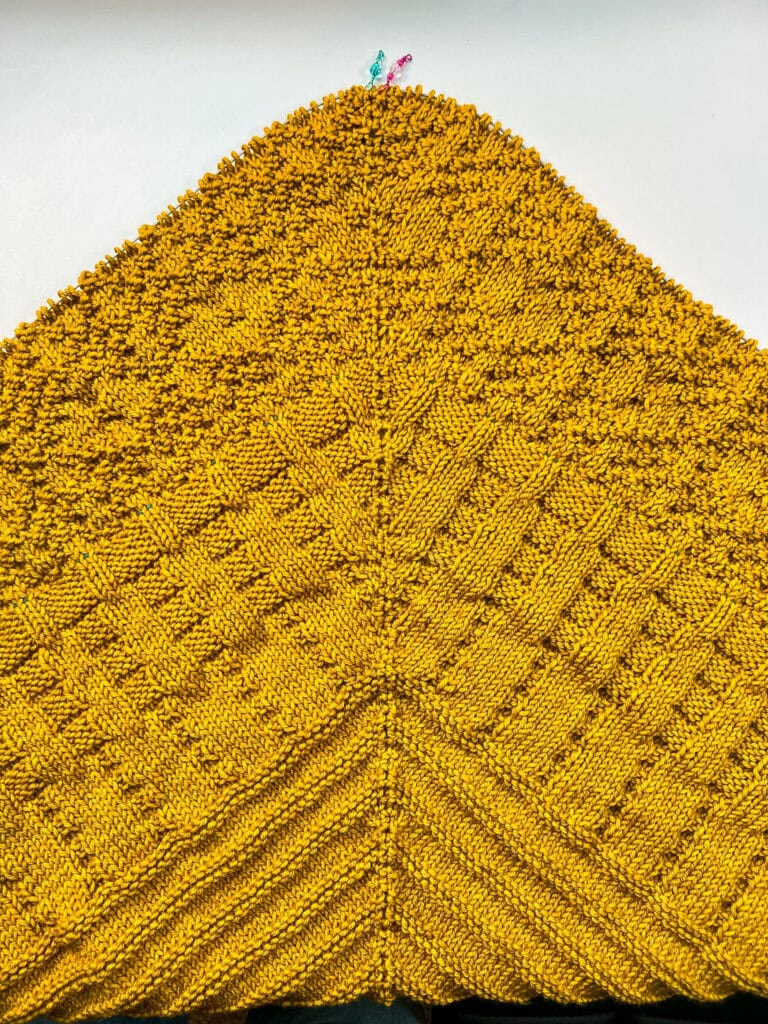
- You should be working directly from the stitches you completed at the end of Play Two. Do not restart or rework anything—just continue right where you left off.
- Take a second to confirm your stitch count. This is super important! If your stitch count is off here, it can throw off the rest of the pattern.
- Highly recommended: Add a lifeline before you begin this play.
Think of it as your knitting safety net—if something feels off later, you’ll be so glad it’s there!- Also, do not put the lifeline through the stitch markers!
✨ Designer Tip: A lifeline now can save you from ripping back later. Future you will thank you 😉 Once everything checks out, you’re ready to keep stitching—let’s go!

NETFLIX AND CHILL SHAWL PATTERN || Play #3
PLAY 3: STUDDED DIAMONDS
Play 3 Chart: https://www.stitchfiddle.com/en/c/sogflj-a2ngfd
Condensed Play 3 Chart: https://www.stitchfiddle.com/en/c/sogfph-77k37i
Note: It is highly recommended to place a lifeline (see Video Tutorials) before beginning each play in order to save the work you have so far and protect it from dropped stitches.
Count at end of play 2: 221 sts.
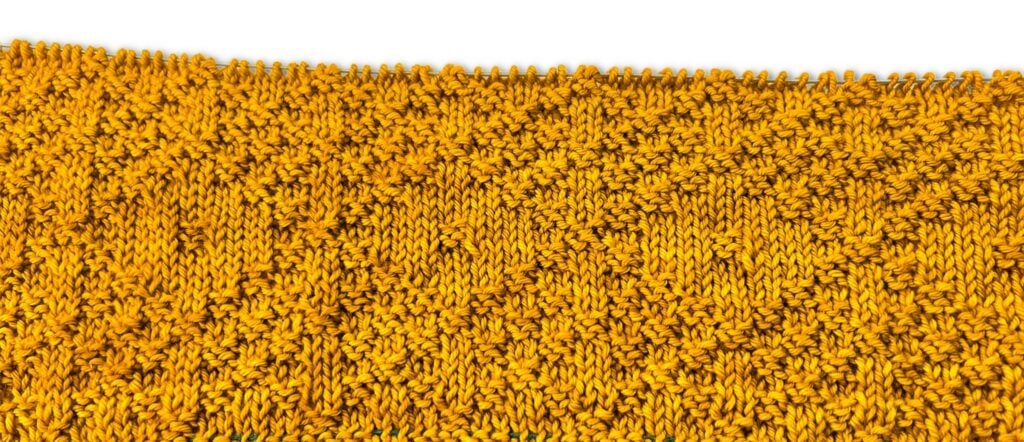
Row 107 (RS): K2, slm, k1, * p2, k6; repeat from * to last 3 sts before marker, p2, k1, slm, k1, slm, k1, p2, * k6, p2; repeat from * to last st before marker, k1, slm, k2.
Row 108 (increase row, WS): K2, slm, (k1, p1) in next st, * k2, p6; repeat from * to last 3 sts before marker, k2, p1, slm, (k1, p1, k1) in center st, slm, p1, k2, * p6, k2; repeat from * to last st before marker, (p1, k1) in next st, slm, k2.
Move center markers 1 st inward each.
Count: 225 sts (+4 sts increased)
Row 109 (RS): K2, slm, k1, p1, * k2, p2; repeat from * to marker, slm, k1, slm, * p2, k2; repeat from * to last 2 sts before marker, p1, k1, slm, k2.
Row 110 (increase row, WS): K2, slm, (k1, p1) in next st, k1, * p2, k2; repeat from * to marker, slm, (k1, p1, k1) in center st, slm, * k2, p2; repeat from * to last 2 sts before marker, k1, (p1, k1) in next st, slm, k2.
Move center markers 1 st inward each.
Count: 229 sts (+4 sts increased)
Row 111 (RS): K2, slm, k3, * k4, p2, k2; repeat from * to last 5 sts before marker, k4, p1, slm, k1, slm, p1, k4, * k2, p2, k4; repeat from * to last 3 sts before marker, k3, slm, k2.
Row 112 (increase row, WS): K2, slm, (k1, p1) in next st, p2, * p4, k2, p2; repeat from * to last 5 sts before marker, p4, k1, slm, (k1, p1, k1) in center st, slm, k1, p4, * p2, k2, p4; repeat from * to last 3 sts before marker, p2, (p1, k1) in next st, slm, k2.
Move center markers 1 st inward each.
Count: 233 sts (+4 sts increased)
Row 113 (RS): K2, slm, * k2, p2; repeat from * to last 2 sts before marker, k2, slm, k1, slm, k2, * p2, k2; repeat from * to marker, slm, k2.
Row 114 (increase row, WS): K2, slm, (k1, p1) in next st, p1, k2, * p2, k2; repeat from * to last 2 sts before marker, p2, slm, (k1, p1, k1) in center st, slm, p2, * k2, p2; repeat from * to last 4 sts before marker, k2, p1, (p1, k1) in next st, slm, k2.
Move center markers 1 st inward each.
Count: 237 sts (+4 sts increased)
Row 115 (RS): K2, slm, k1, * p2, k2; repeat from * to last 3 sts before marker, p2, k1, slm, k1, slm, k1, p2, * k2, p2; repeat from * to last st before marker, k1, slm, k2.
Row 116 (increase row, WS): K2, slm, (k1, p1) in next st, * k2, p2; repeat from * to last 3 sts before marker, k2, p1, slm, (k1, p1, k1) in center st, slm, p1, k2, * p2, k2; repeat from * to last st before marker, (p1, k1) in next st, slm, k2.
Move center markers 1 st inward each.
Count: 241 sts (+4 sts increased)
Row 117 (RS): K2, slm, k1, p1, * k2, p2; repeat from * to marker, slm, k1, slm, * p2, k2; repeat from * to last 2 sts before marker, p1, k1, slm, k2.
Row 118 (increase row, WS): K2, slm, (k1, p1) in next st, k1, * p2, k2; repeat from * to marker, slm, (k1, p1, k1) in center st, slm, * k2, p2; repeat from * to last 2 sts before marker, k1, (p1, k1) in next st, slm, k2.
Move center markers 1 st inward each.
Count: 245 sts (+4 sts increased)
Row 119 (RS): K2, slm, k3, p2, k2, * k4, p2, k2; repeat from * to last st before marker, k1, slm, k1, slm, k1, * k2, p2, k4; repeat from * to last 7 sts before marker, k2, p2, k3, slm, k2.
Row 120 (increase row, WS): K2, slm, (k1, p1) in next st, p2, k2, p2, * p4, k2, p2; repeat from * to last st before marker, p1, slm, (k1, p1, k1) in center st, slm, p1, * p2, k2, p4; repeat from * to last 7 sts before marker, p2, k2, p2, (p1, k1) in next st, slm, k2.
Move center markers 1 st inward each.
Count: 249 sts (+4 sts increased)
Row 121 (RS): K2, slm, k2, p2, k4, * k6, p2, k2, p2, k4; repeat from * to last 2 sts before marker, k2, slm, k1, slm, k2, * k4, p2, k2, p2, k6; repeat from * to last 8 sts before marker, k4, p2, k2, slm, k2.
Row 122 (increase row, WS): K2, slm, (k1, p1) in next st, p1, k2, p4, * p6, k2, p2, k2, p4; repeat from * to last 2 sts before marker, p2, slm, (k1, p1, k1) in center st, slm, p2, * p4, k2, p2, k2, p6; repeat from * to last 8 sts before marker, p4, k2, p1, (p1, k1) in next st, slm, k2.
Move center markers 1 st inward each.
Count: 253 sts (+4 sts increased)
Row 123 (RS): K2, slm, k1, * p2, k6; repeat from * to last 3 sts before marker, p2, k1, slm, k1, slm, k1, p2, * k6, p2; repeat from * to last st before marker, k1, slm, k2.
Row 124 (increase row, WS): K2, slm, (k1, p1) in next st, * k2, p6; repeat from * to last 3 sts before marker, k2, p1, slm, (k1, p1, k1) in center st, slm, p1, k2, * p6, k2; repeat from * to last st before marker, (p1, k1) in next st, slm, k2.
Move center markers 1 st inward each.
Count: 257 sts (+4 sts increased)
Row 125 (RS): K2, slm, k1, p1, k2, p2, k4, * k6, p2, k2, p2, k4; repeat from * to last 4 sts before marker, k4, slm, k1, slm, k4, * k4, p2, k2, p2, k6; repeat from * to last 10 sts before marker, k4, p2, k2, p1, k1, slm, k2.
Row 126 (increase row, WS): K2, slm, (k1, p1) in next st, k1, p2, k2, p4, * p6, k2, p2, k2, p4; repeat from * to last 4 sts before marker, p4, slm, (k1, p1, k1) in center st, slm, p4, * p4, k2, p2, k2, p6; repeat from * to last 10 sts before marker, p4, k2, p2, k1, (p1, k1) in next st, slm, k2.
Move center markers 1 st inward each.
Count: 261 sts (+4 sts increased)
Row 127 (RS): K2, slm, k3, * k4, p2, k2; repeat from * to last 5 sts before marker, k4, p1, slm, k1, slm, p1, k4, * k2, p2, k4; repeat from * to last 3 sts before marker, k3, slm, k2.
Row 128 (increase row, WS): K2, slm, (k1, p1) in next st, p2, * p4, k2, p2; repeat from * to last 5 sts before marker, p4, k1, slm, (k1, p1, k1) in center st, slm, k1, p4, * p2, k2, p4; repeat from * to last 3 sts before marker, p2, (p1, k1) in next st, slm, k2.
Move center markers 1 st inward each.
Count: 265 sts (+4 sts increased)
Row 129 (RS): K2, slm, * k2, p2; repeat from * to last 2 sts before marker, k2, slm, k1, slm, k2, * p2, k2; repeat from * to marker, slm, k2.
Row 130 (increase row, WS): K2, slm, (k1, p1) in next st, p1, k2, * p2, k2; repeat from * to last 2 sts before marker, p2, slm, (k1, p1, k1) in center st, slm, p2, * k2, p2; repeat from * to last 4 sts before marker, k2, p1, (p1, k1) in next st, slm, k2.
Move center markers 1 st inward each.
Count: 269 sts (+4 sts increased)
Row 131 (RS): K2, slm, k1, * p2, k2; repeat from * to last 3 sts before marker, p2, k1, slm, k1, slm, k1, p2, * k2, p2; repeat from * to last st before marker, k1, slm, k2.
Row 132 (increase row, WS): K2, slm, (k1, p1) in next st, * k2, p2; repeat from * to last 3 sts before marker, k2, p1, slm, (k1, p1, k1) in center st, slm, p1, k2, * p2, k2; repeat from * to last st before marker, (p1, k1) in next st, slm, k2.
Move center markers 1 st inward each.
Count: 273 sts (+4 sts increased)
Row 133 (RS): K2, slm, k1, p1, * k2, p2; repeat from * to marker, slm, k1, slm, * p2, k2; repeat from * to last 2 sts before marker, p1, k1, slm, k2.
Row 134 (increase row, WS): K2, slm, (k1, p1) in next st, k1, * p2, k2; repeat from * to marker, slm, (k1, p1, k1) in center st, slm, * k2, p2; repeat from * to last 2 sts before marker, k1, (p1, k1) in next st, slm, k2.
Move center markers 1 st inward each.
Count: 277 sts (+4 sts increased)
Row 135 (RS): K2, slm, k3, p2, k2, * k4, p2, k2; repeat from * to last st before marker, k1, slm, k1, slm, k1, * k2, p2, k4; repeat from * to last 7 sts before marker, k2, p2, k3, slm, k2.
Row 136 (increase row, WS): K2, slm, (k1, p1) in next st, p2, k2, p2, * p4, k2, p2; repeat from * to last st before marker, p1, slm, (k1, p1, k1) in center st, slm, p1, * p2, k2, p4; repeat from * to last 7 sts before marker, p2, k2, p2, (p1, k1) in next st, slm, k2.
Move center markers 1 st inward each.
Count: 281 sts (+4 sts increased)
Row 137 (RS): K2, slm, * k2, p2; repeat from * to last 2 sts before marker, k2, slm, k1, slm, k2, * p2, k2; repeat from * to marker, slm, k2.
Row 138 (increase row, WS): K2, slm, (k1, p1) in next st, p1, k2, * p2, k2; repeat from * to last 2 sts before marker, p2, slm, (k1, p1, k1) in center st, slm, p2, * k2, p2; repeat from * to last 4 sts before marker, k2, p1, (p1, k1) in next st, slm, k2.
Move center markers 1 st inward each.
Count: 285 sts (+4 sts increased)
Row 139 (RS): K2, slm, k1, * p2, k6; repeat from * to last 3 sts before marker, p2, k1, slm, k1, slm, k1, p2, * k6, p2; repeat from * to last st before marker, k1, slm, k2.
Row 140 (increase row, WS): K2, slm, (k1, p1) in next st, * k2, p6; repeat from * to last 3 sts before marker, k2, p1, slm, (k1, p1, k1) in center st, slm, p1, k2, * p6, k2; repeat from * to last st before marker, (p1, k1) in next st, slm, k2.
Move center markers 1 st inward each.Count: 289 sts (+4 sts increased)